
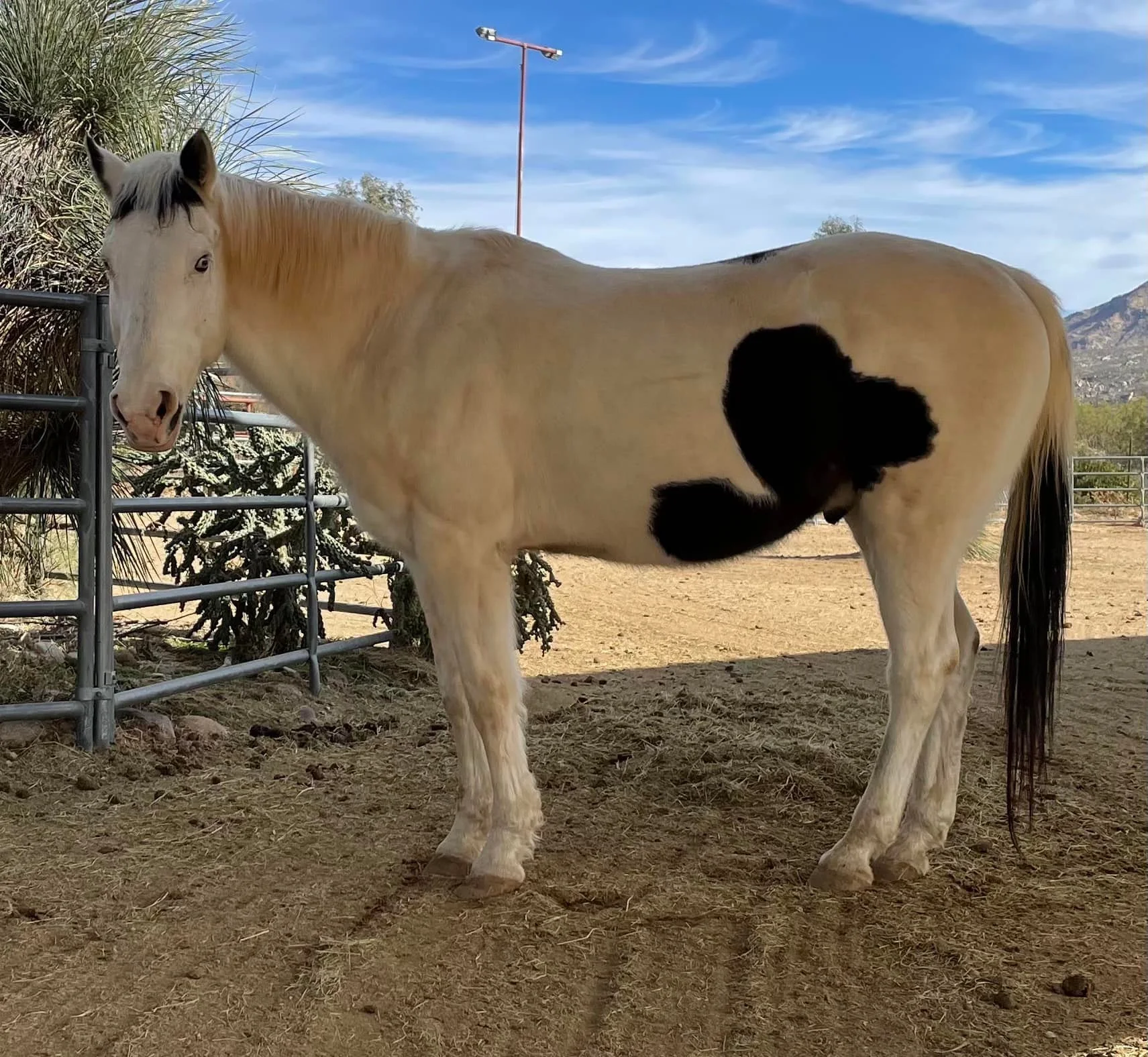
Wynn (dbL)
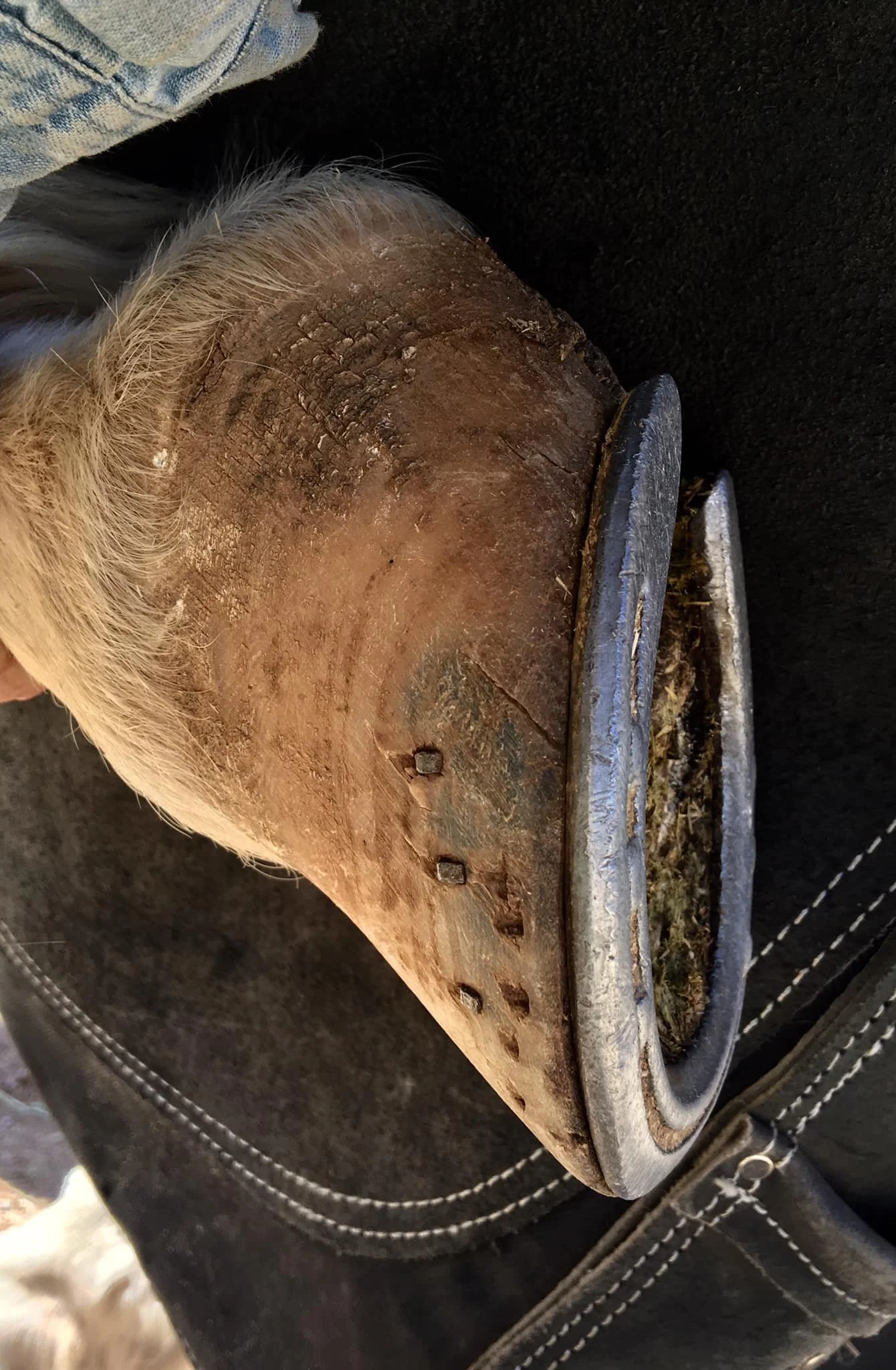
May 2021 - I pulled Wynn’s shoes and gave him a trim, but my phone died so I didn’t get the post trim pic. I went back a couple days later to trim his hinds so I got the post trim pics of his left front, then I trimmed it again.
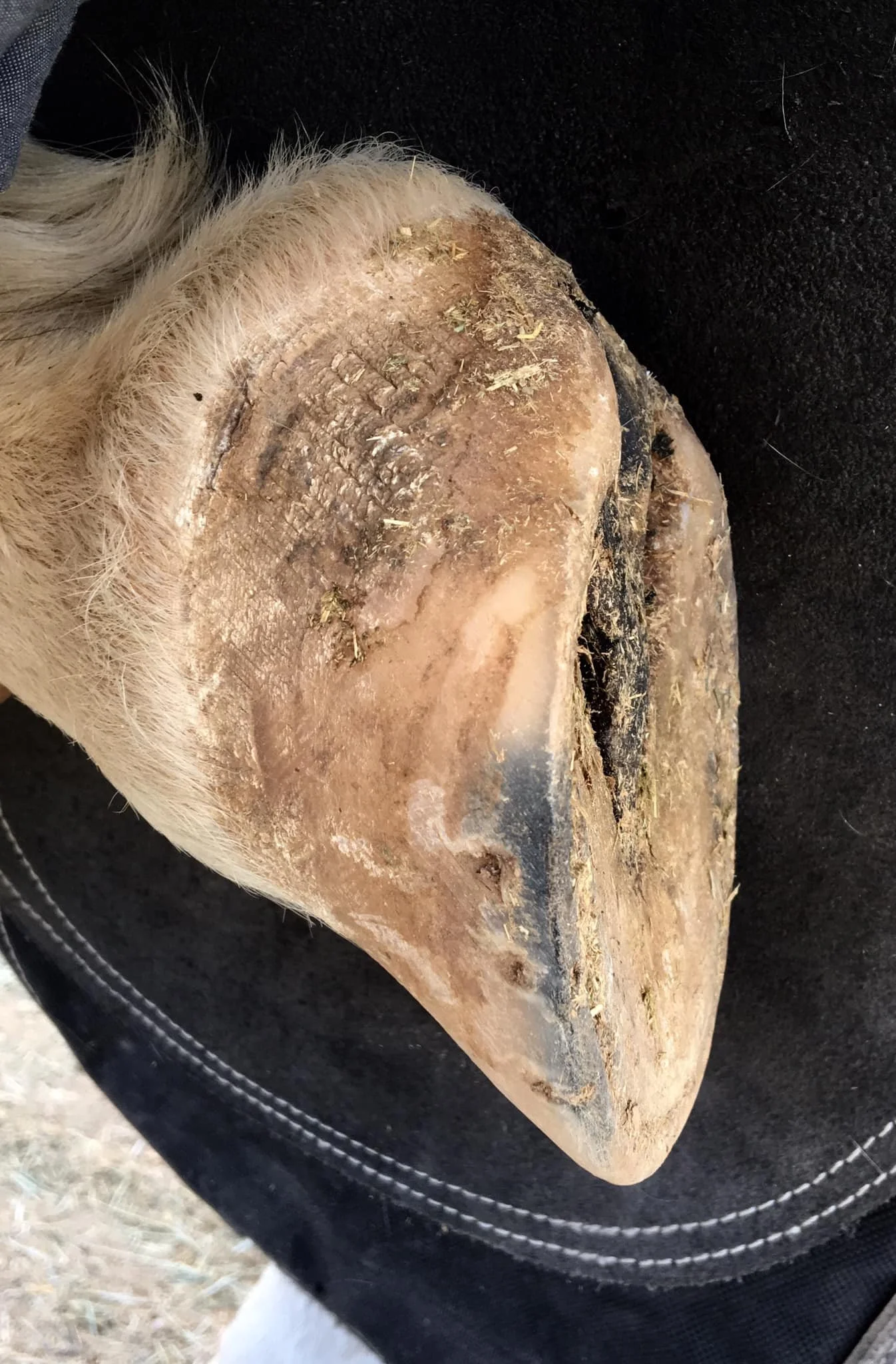
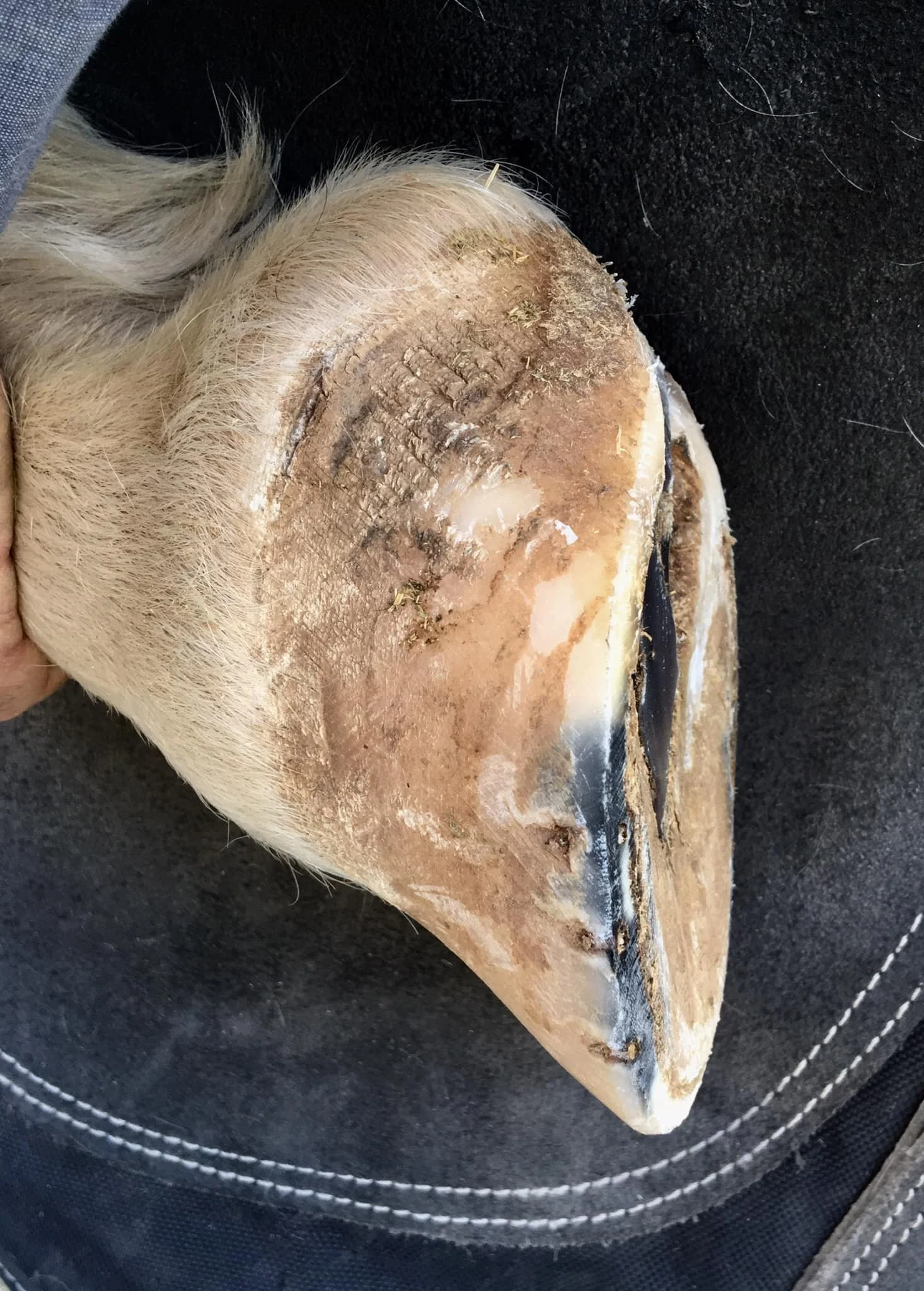
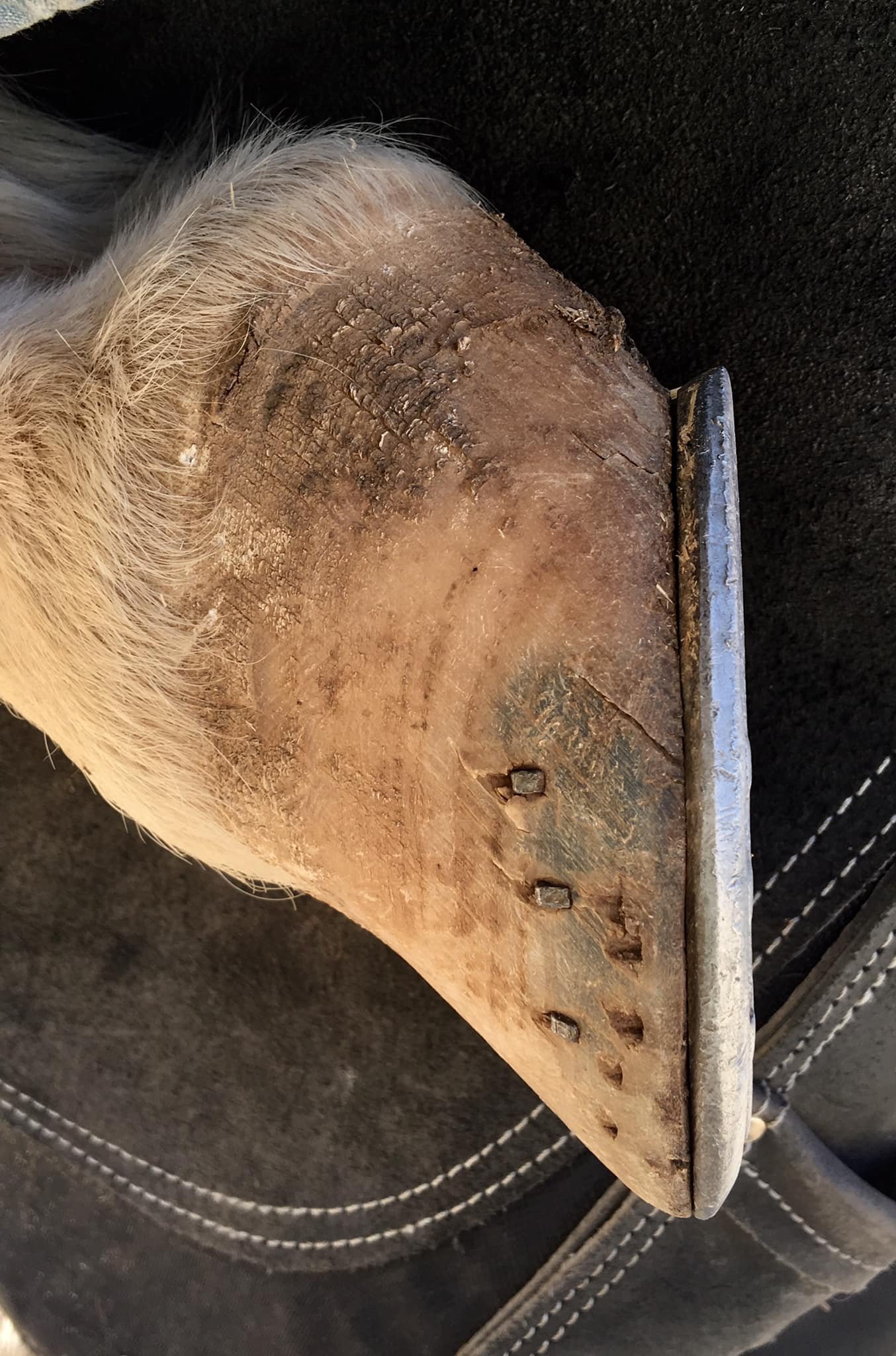
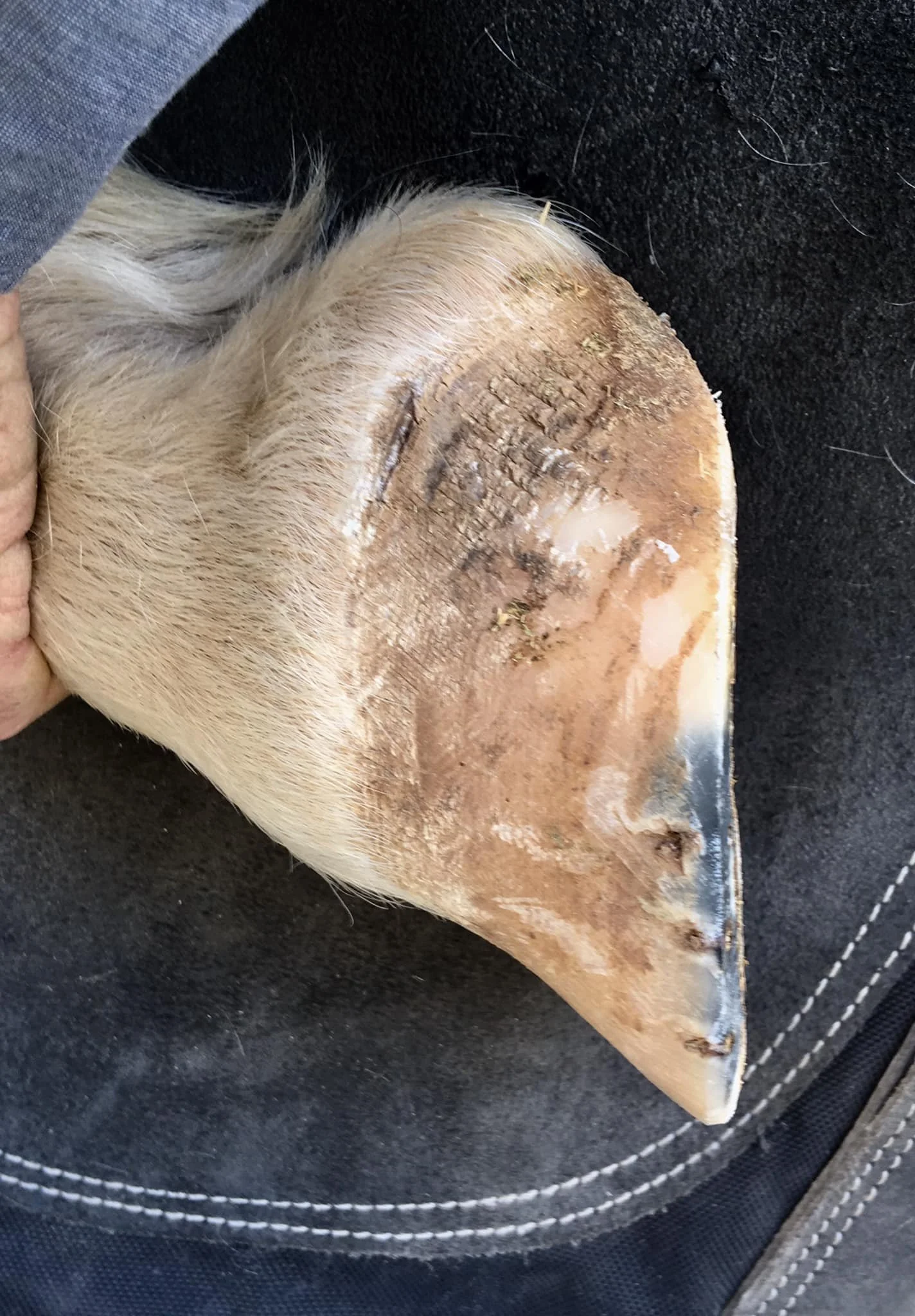
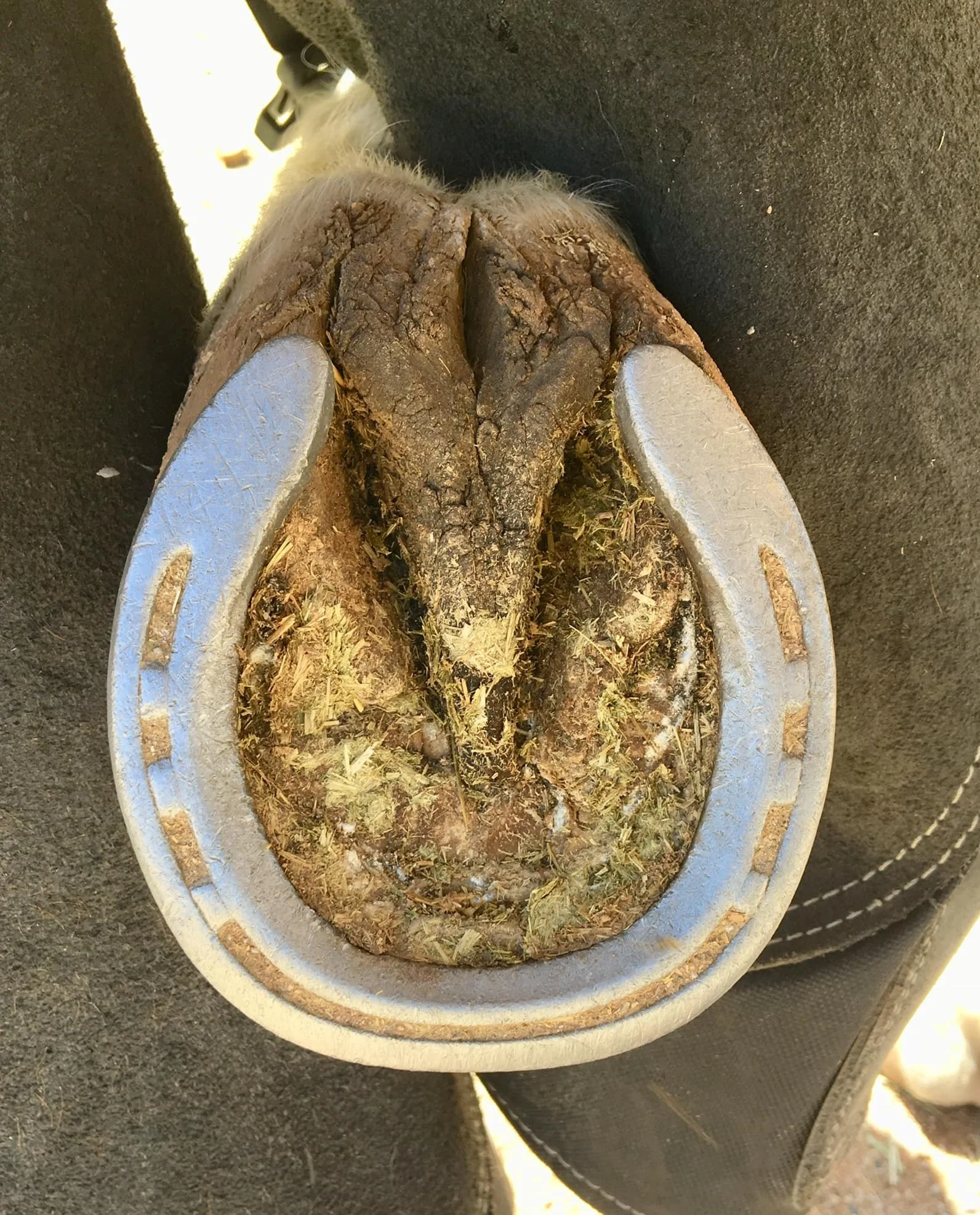
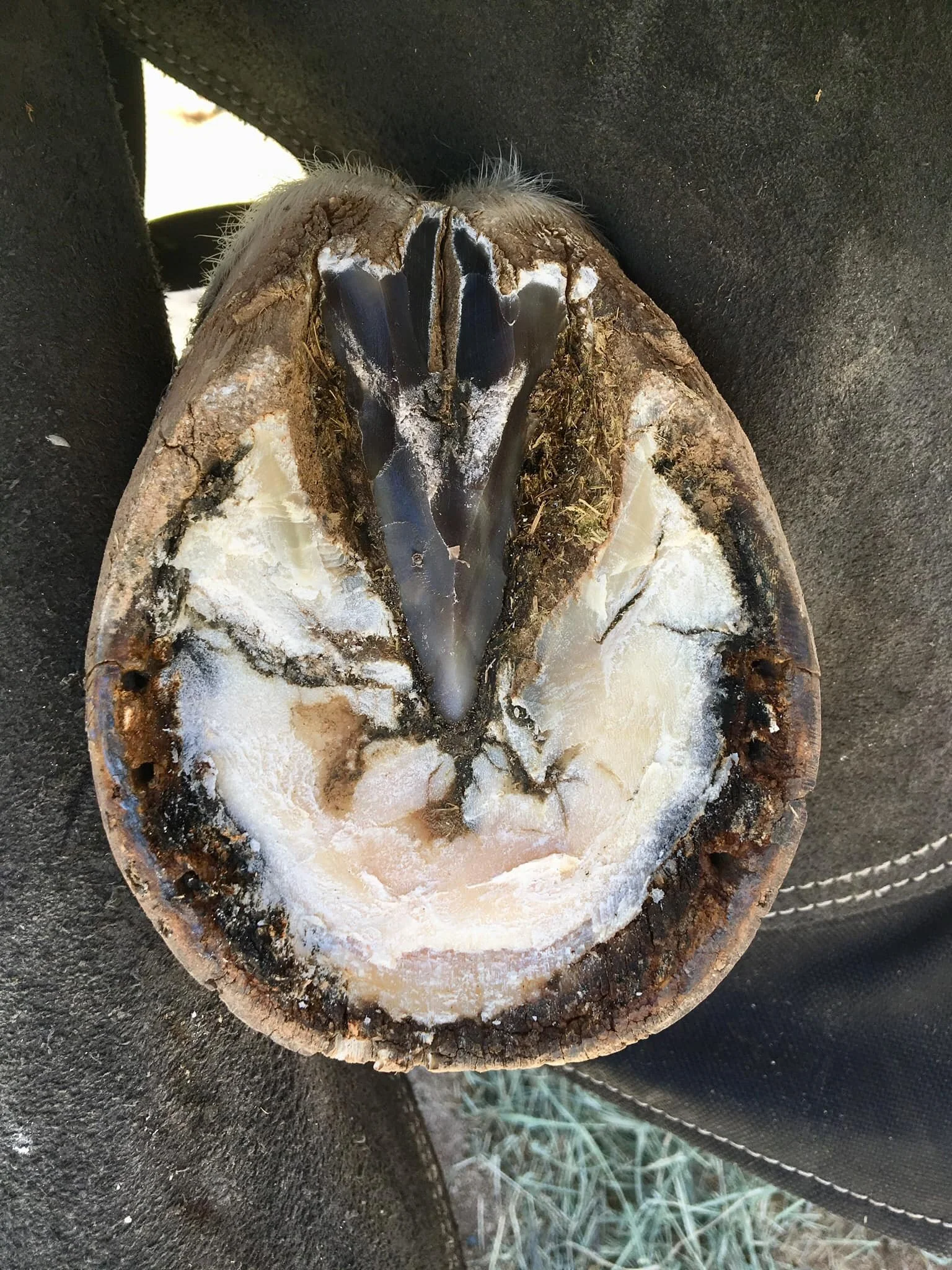
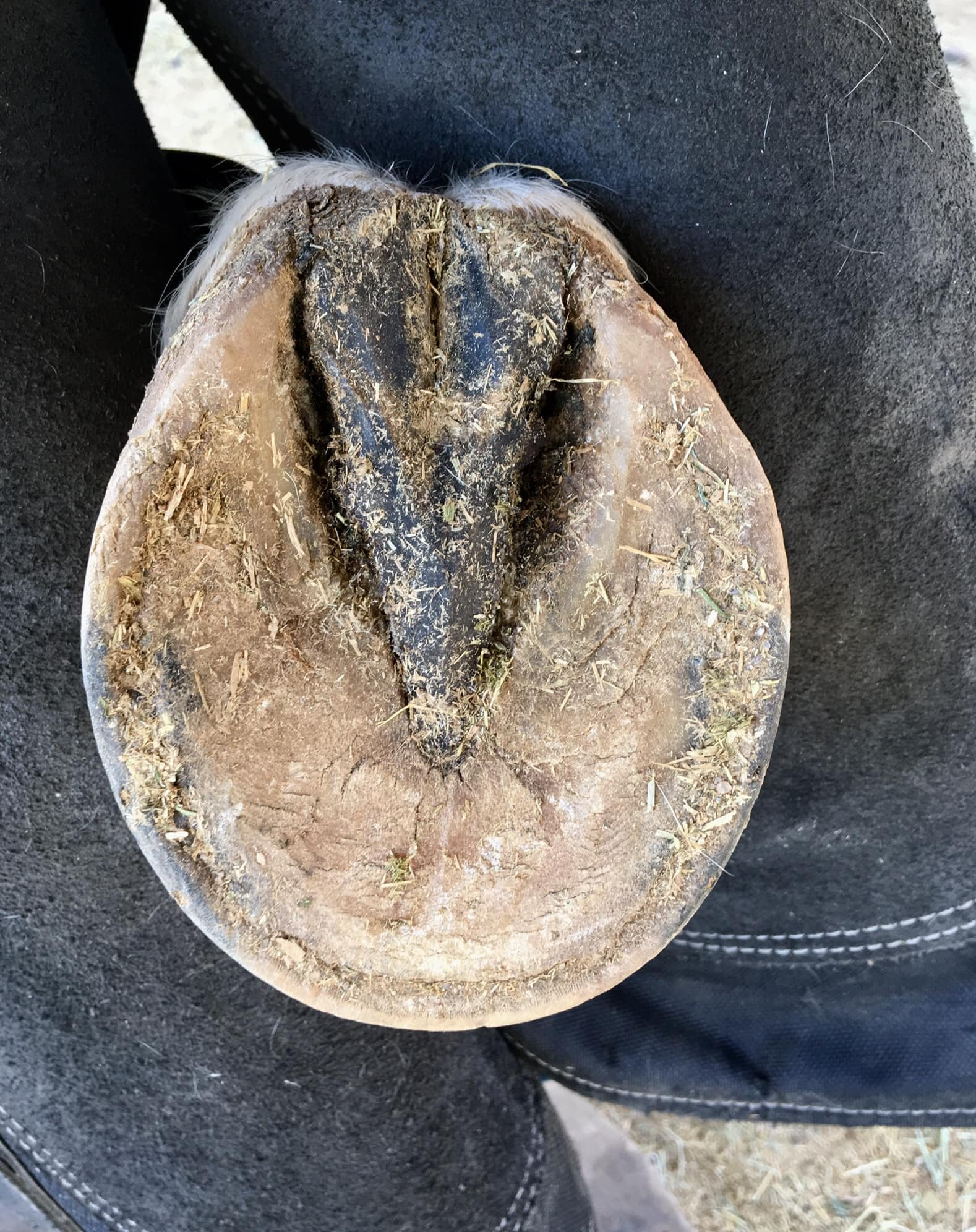
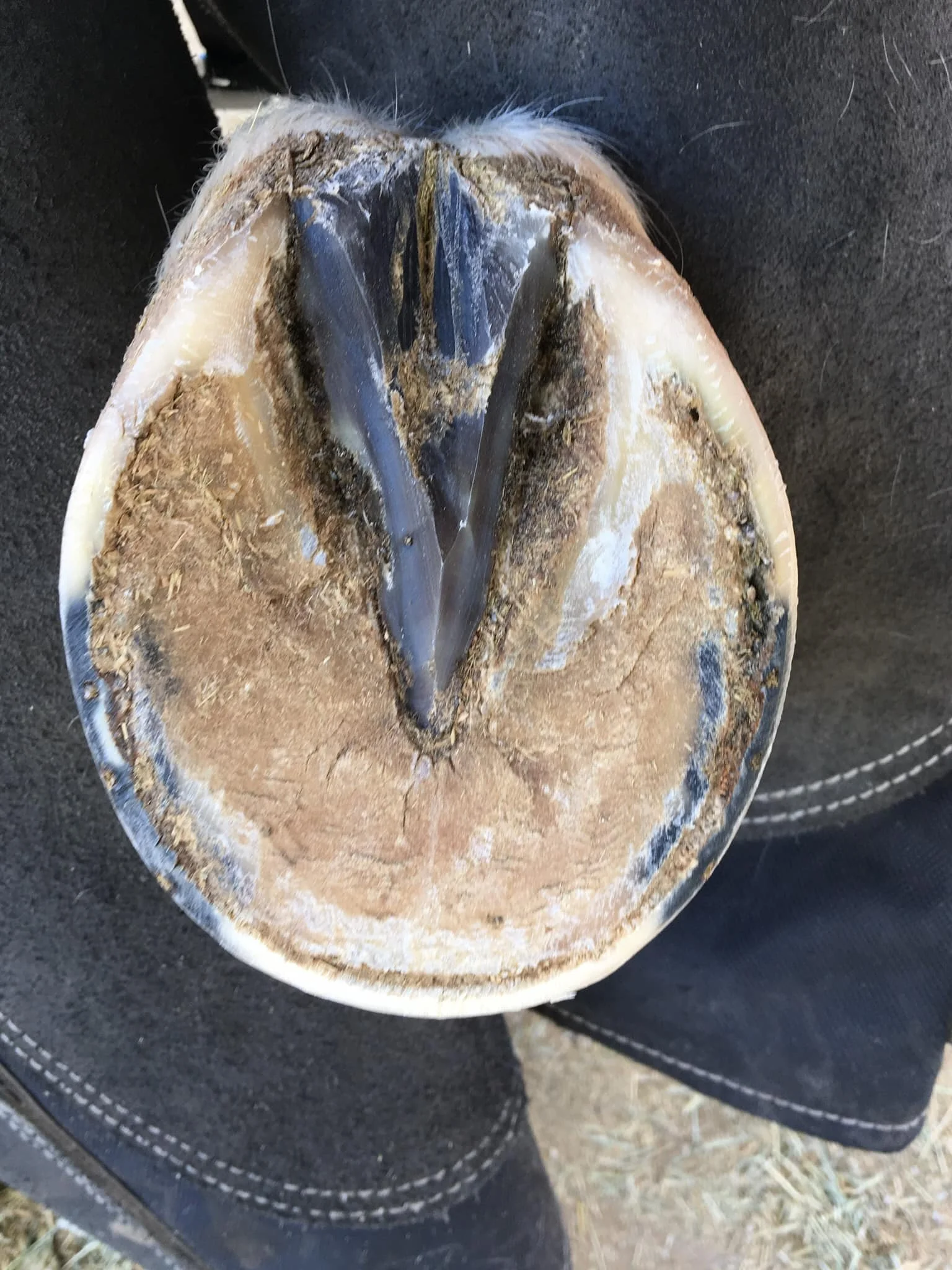
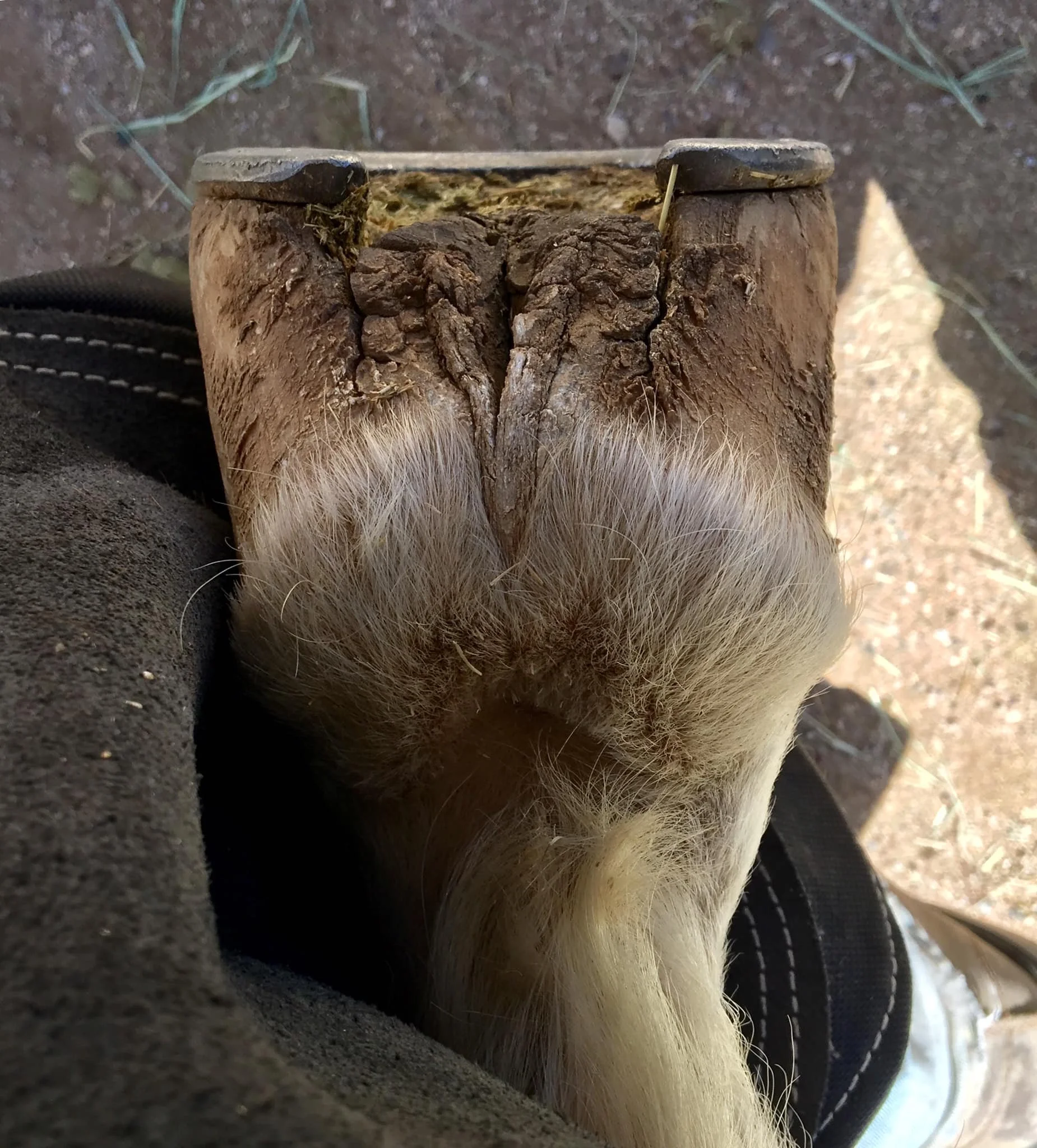
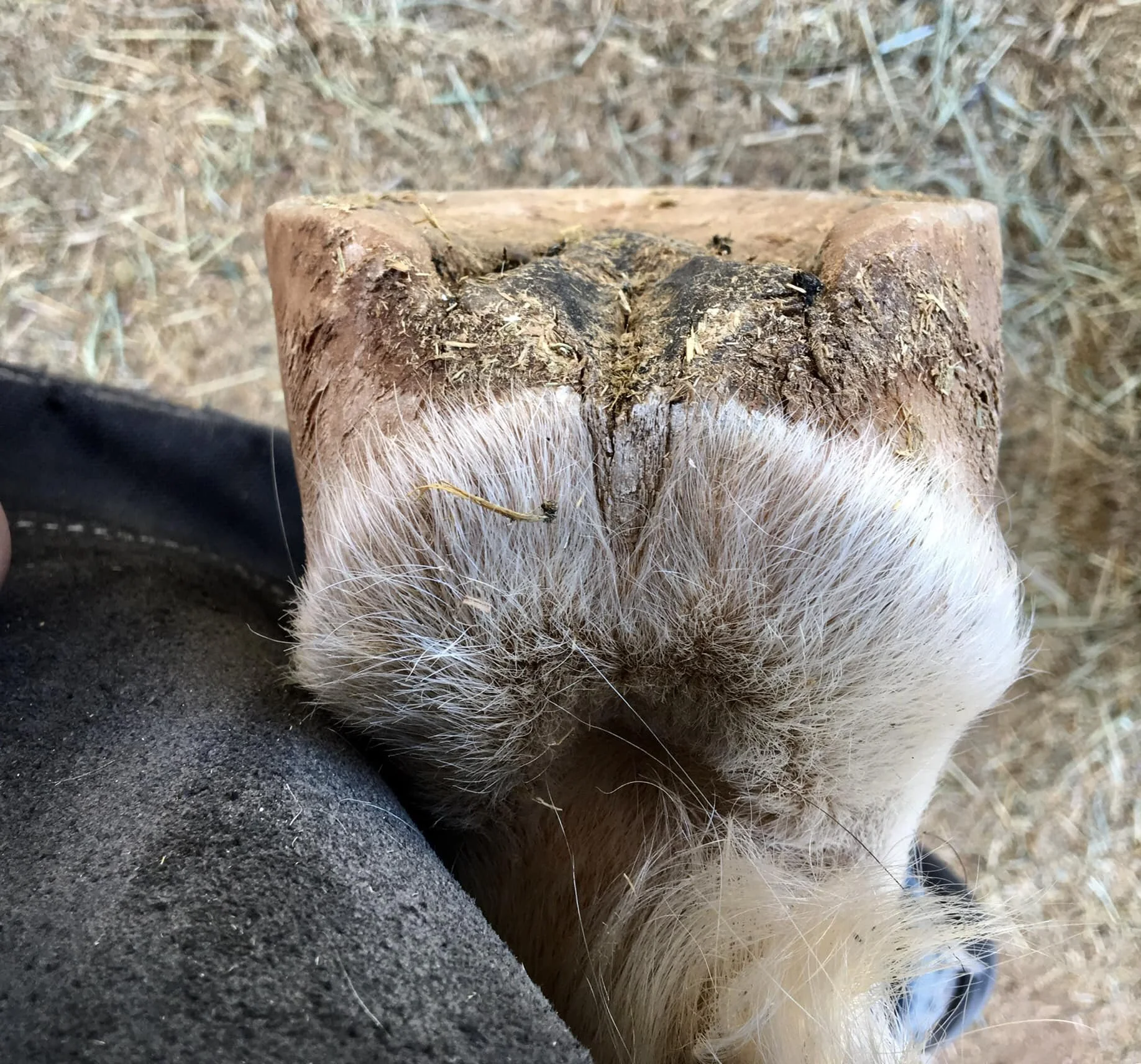
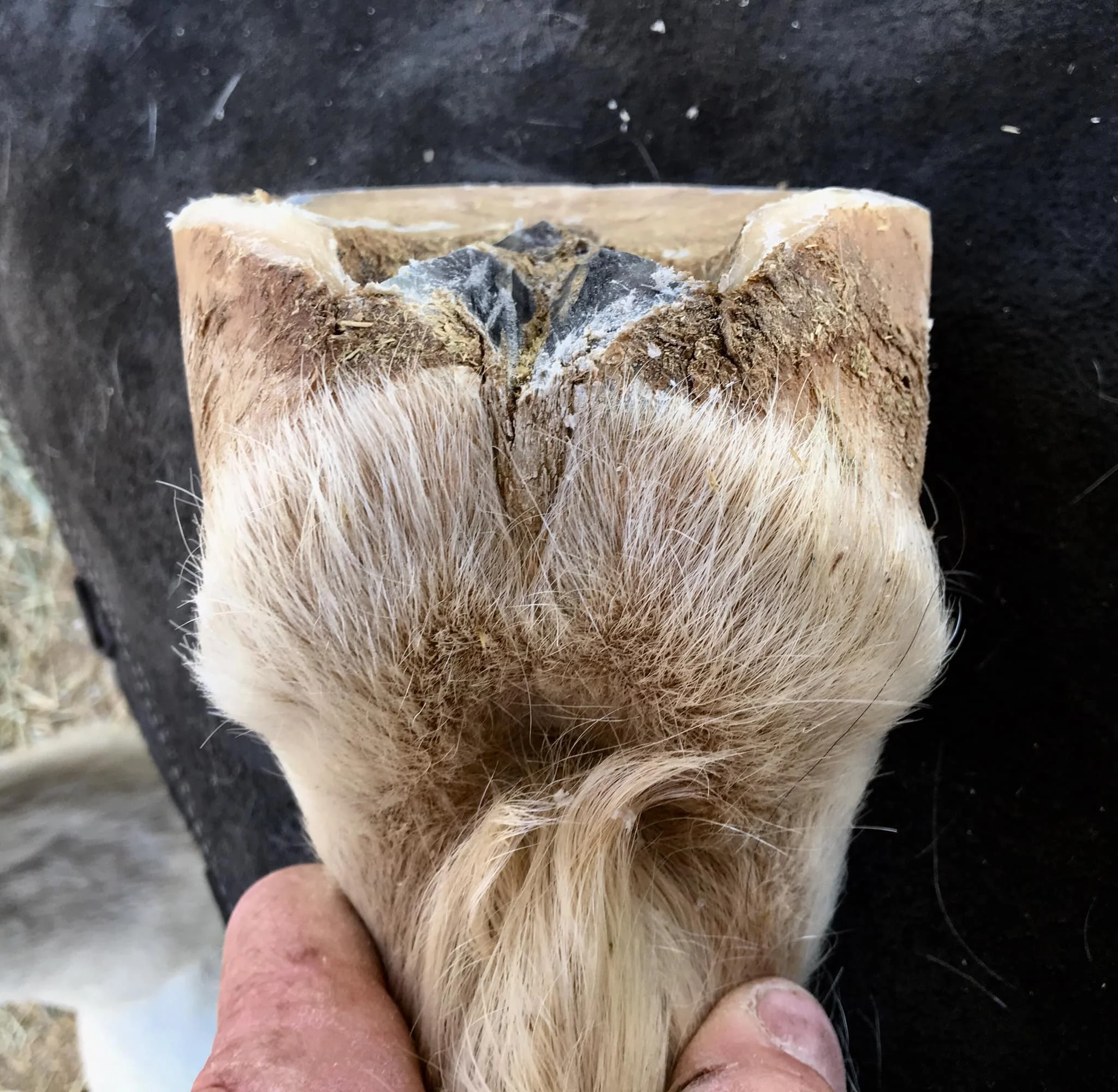
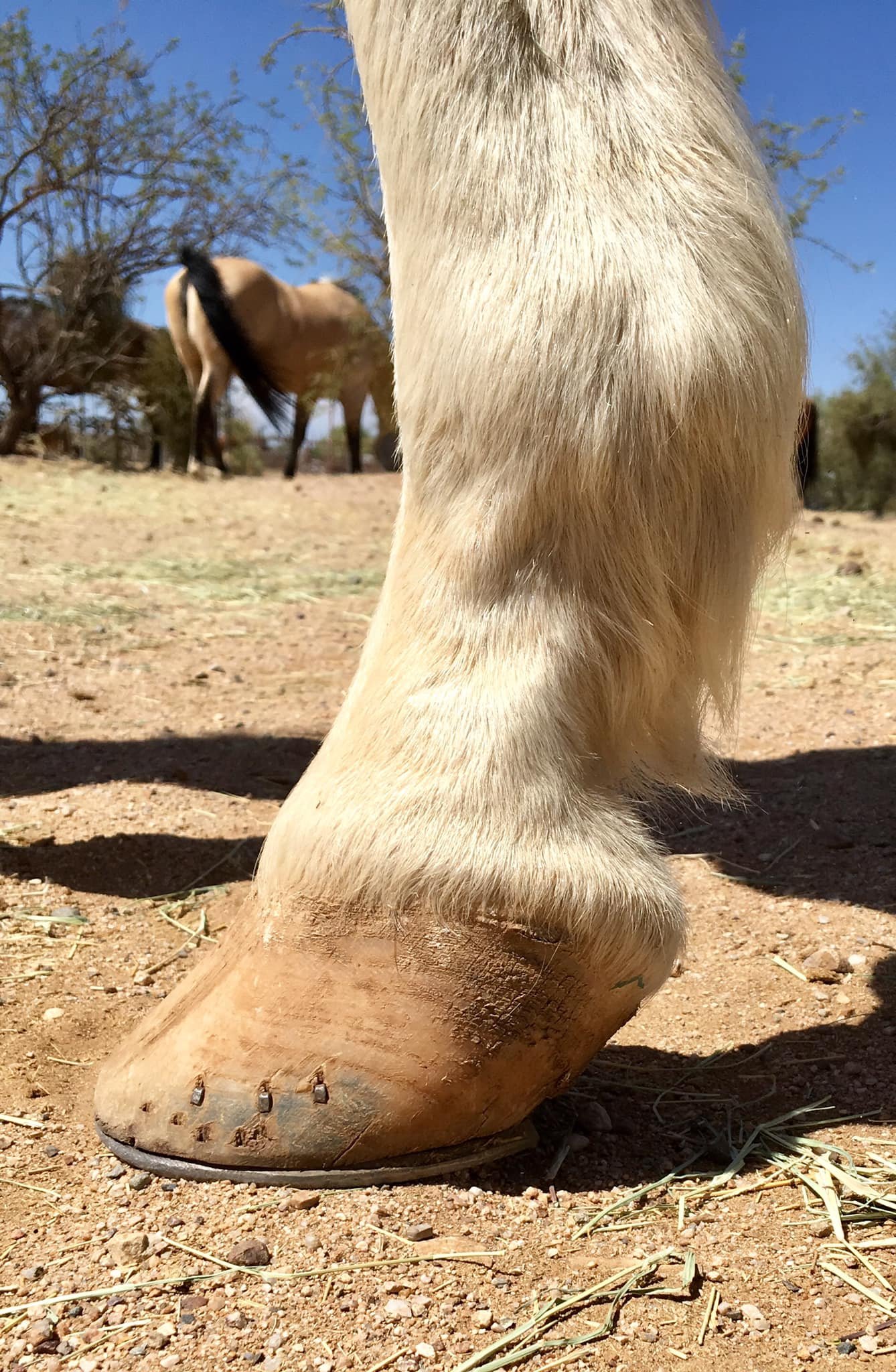
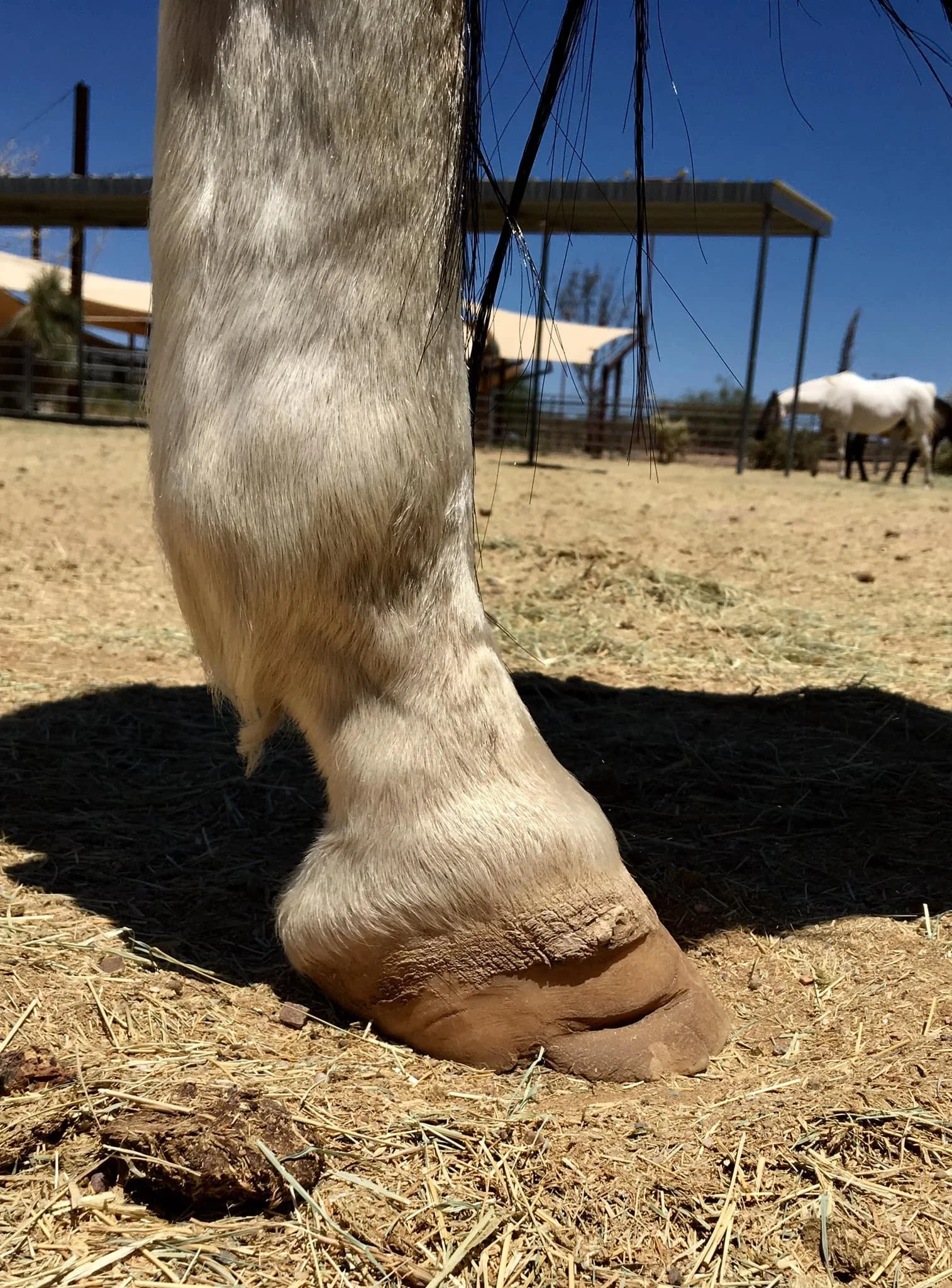
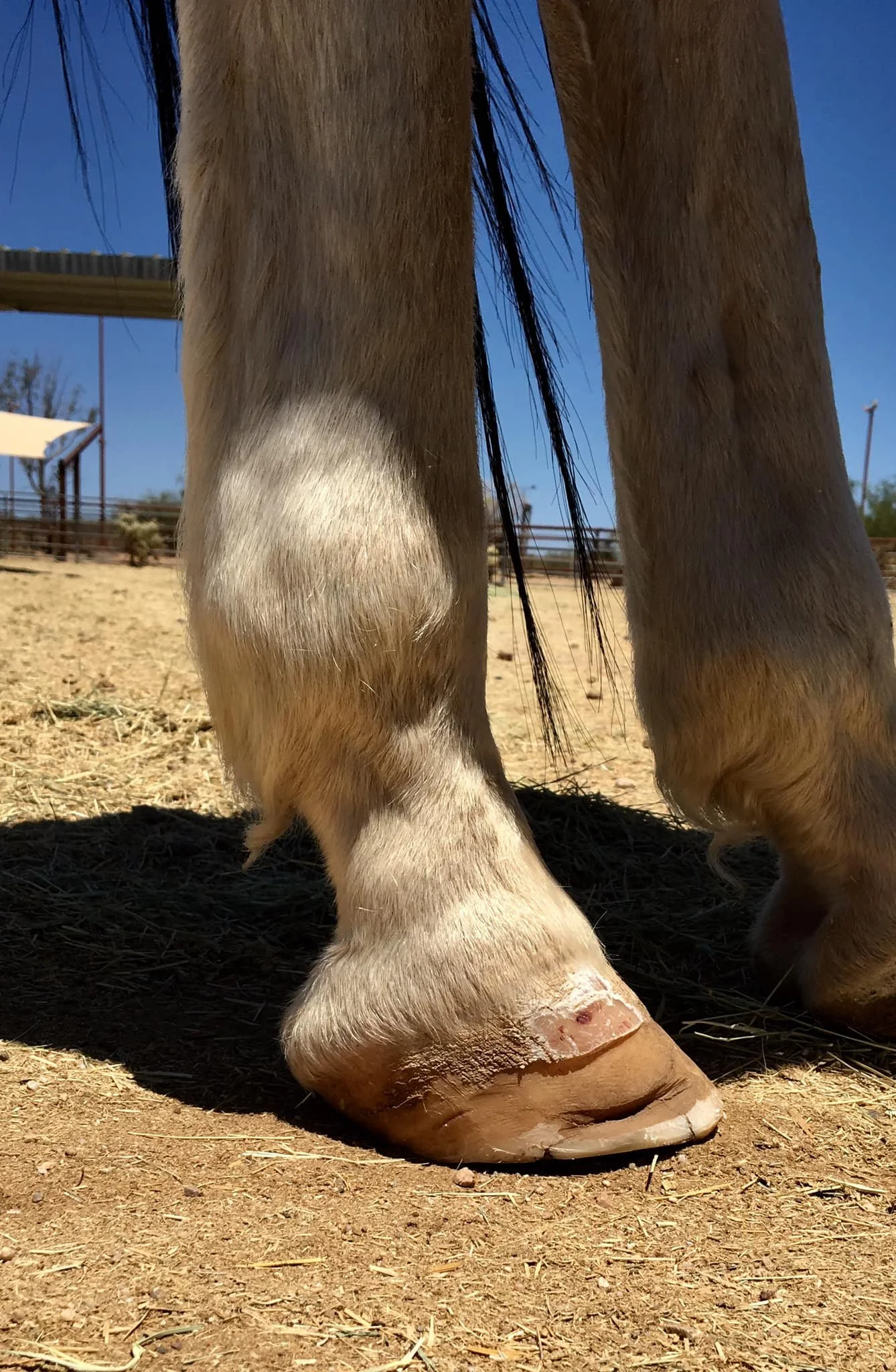
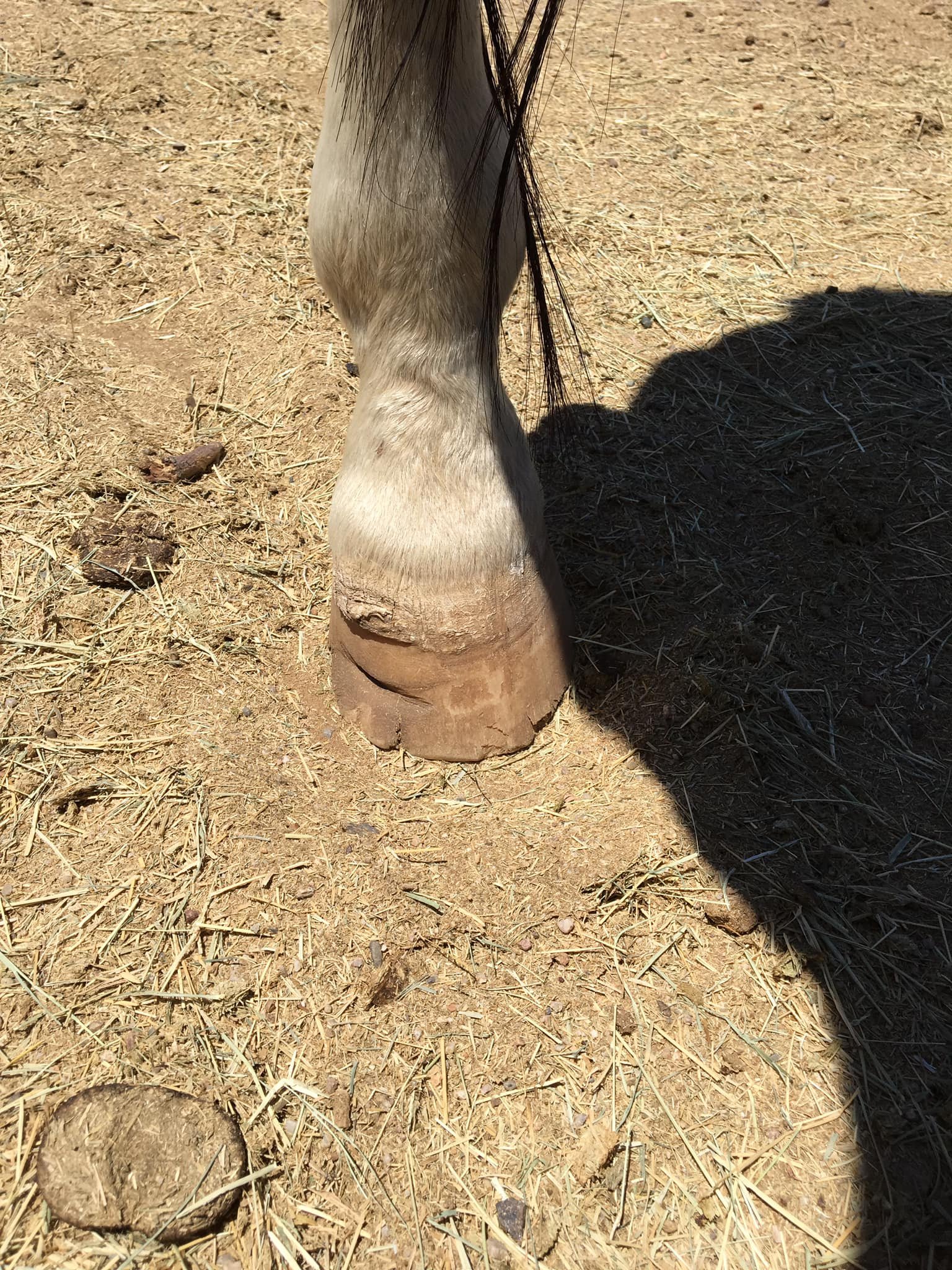
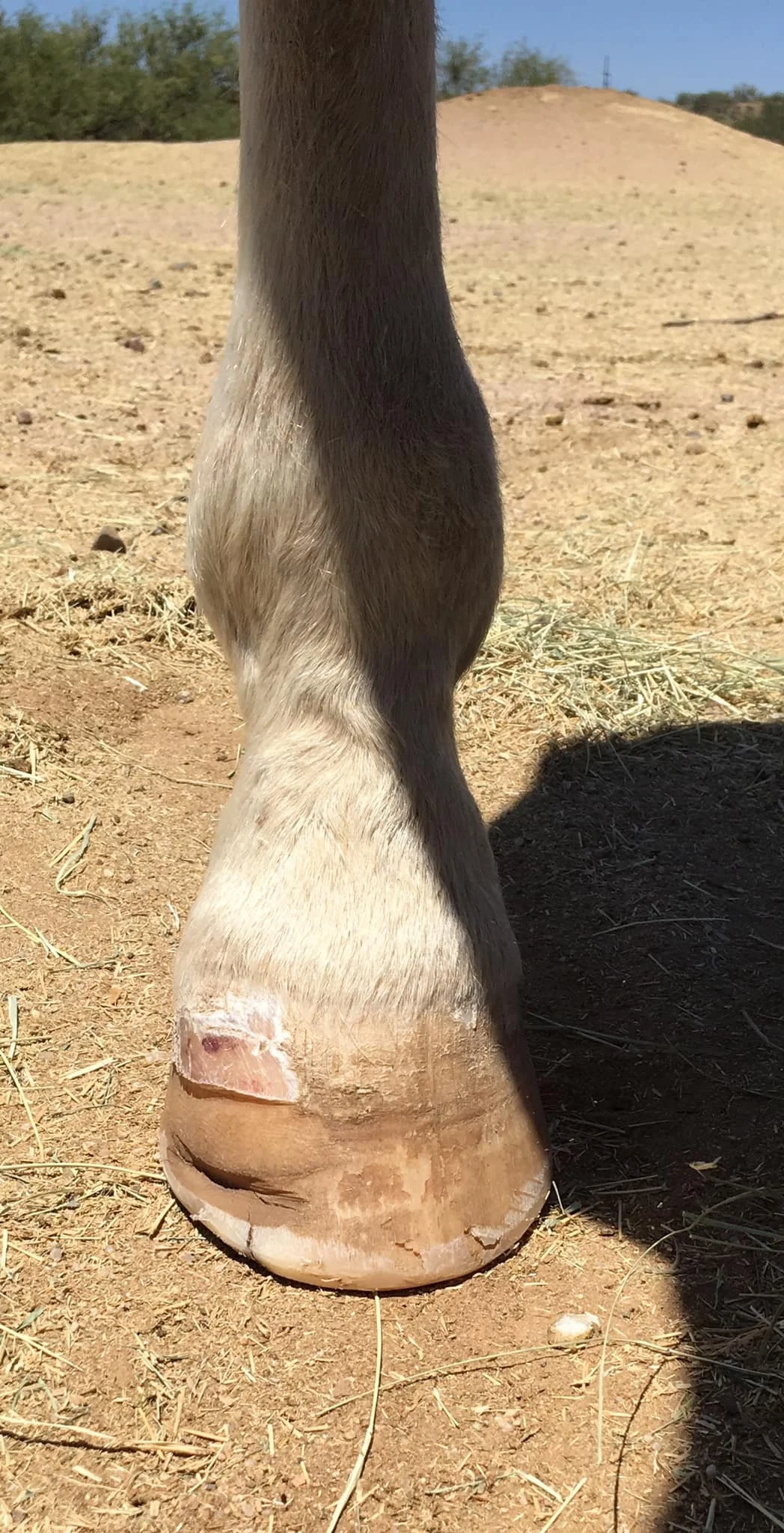
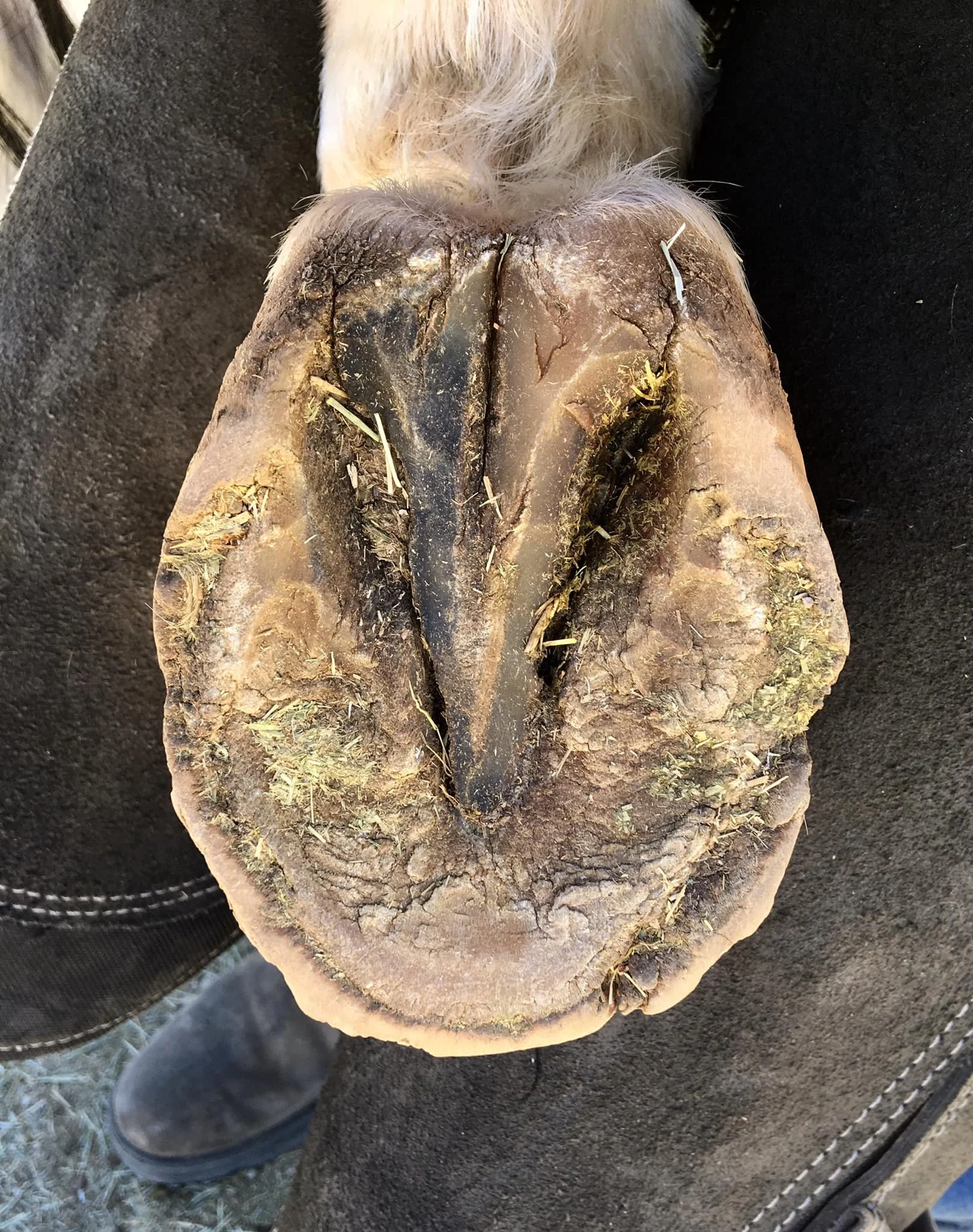
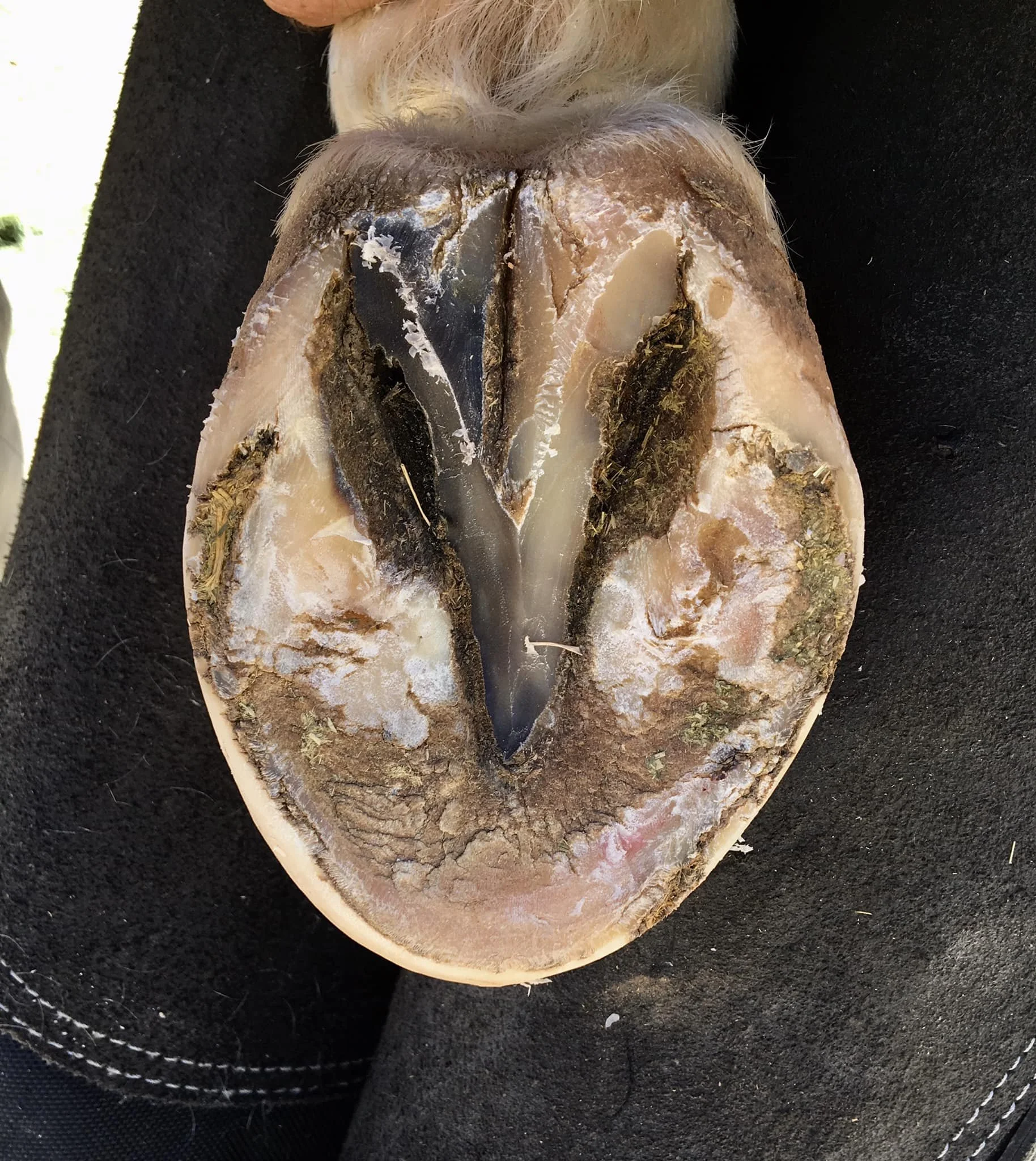
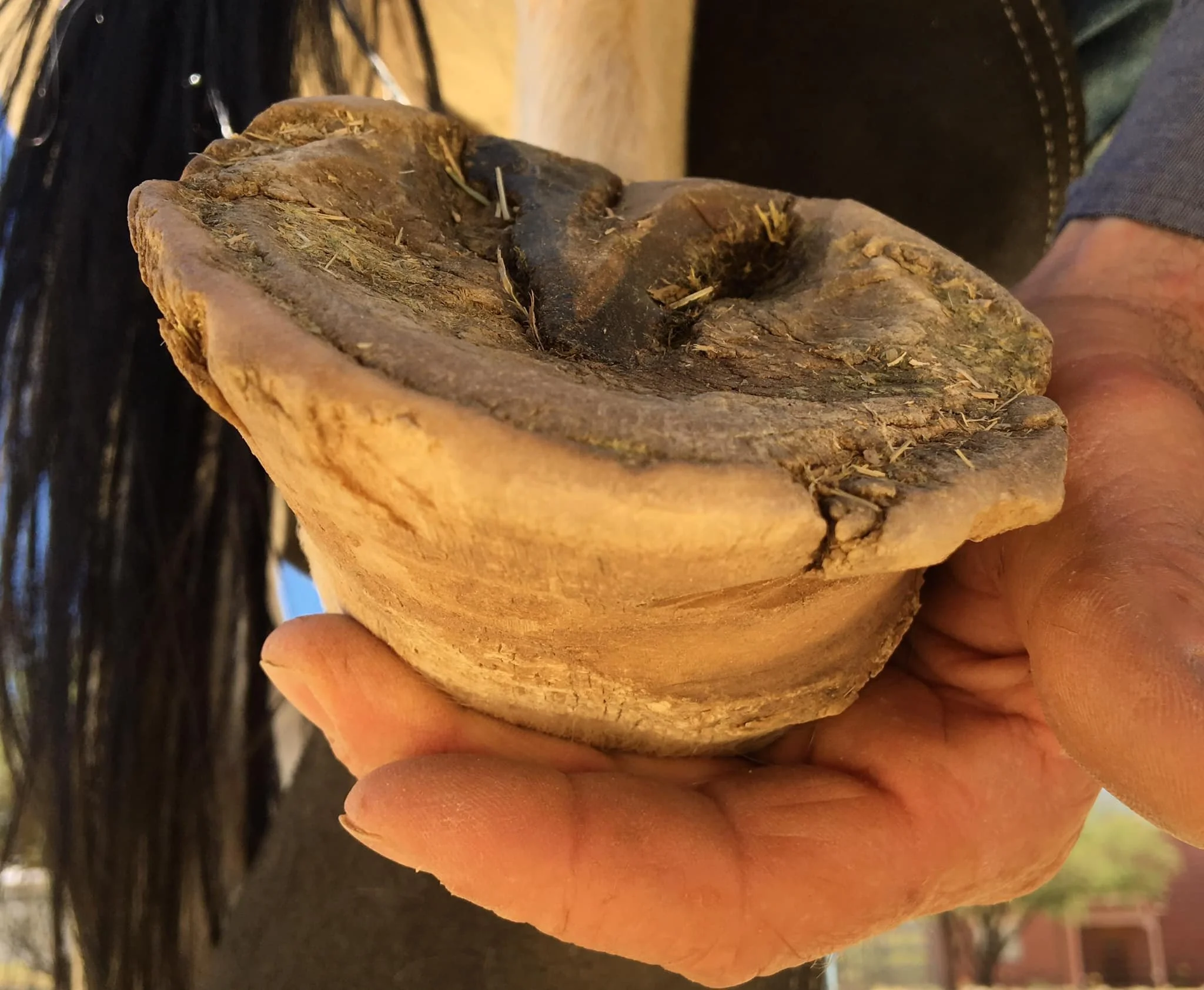
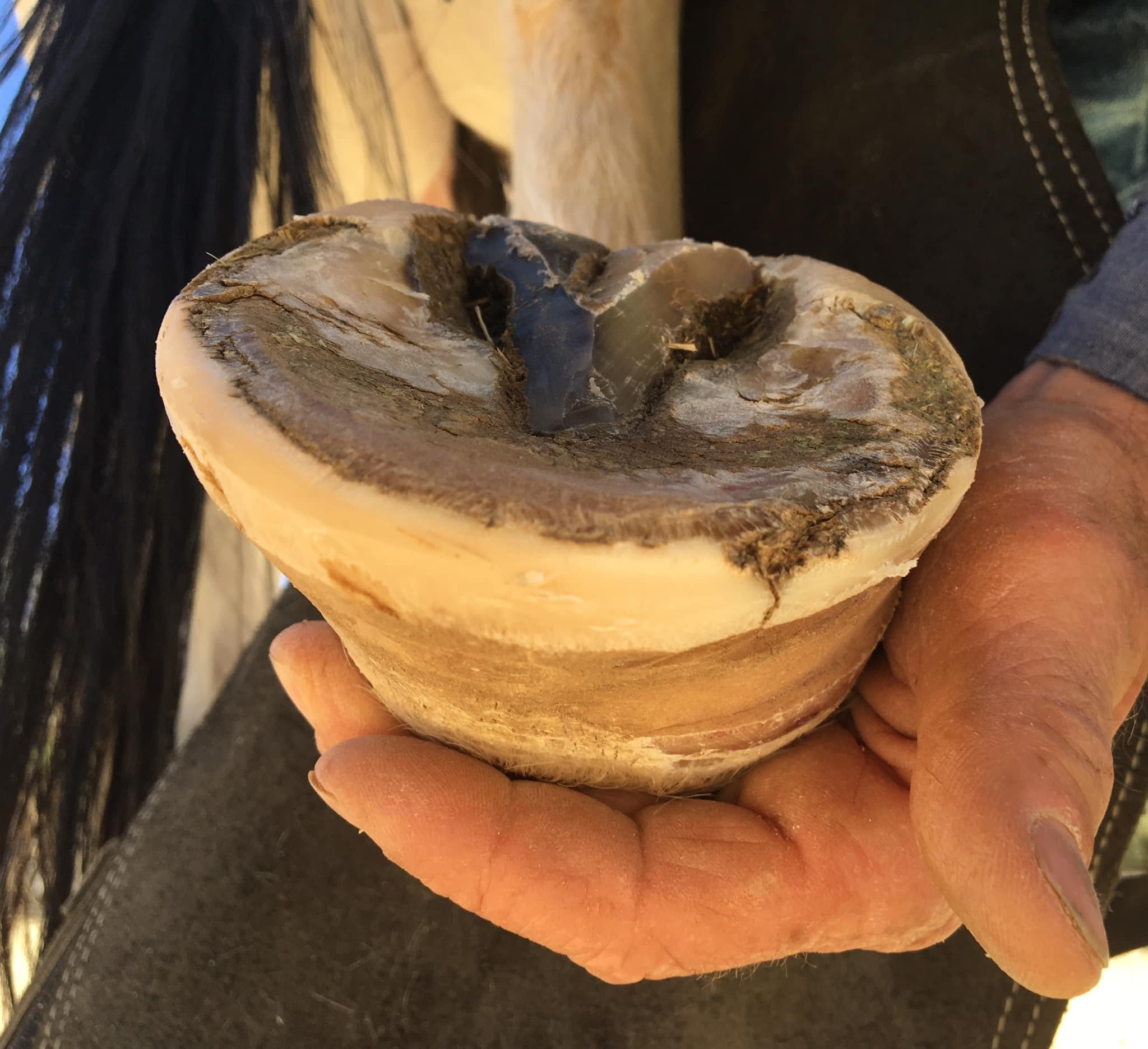
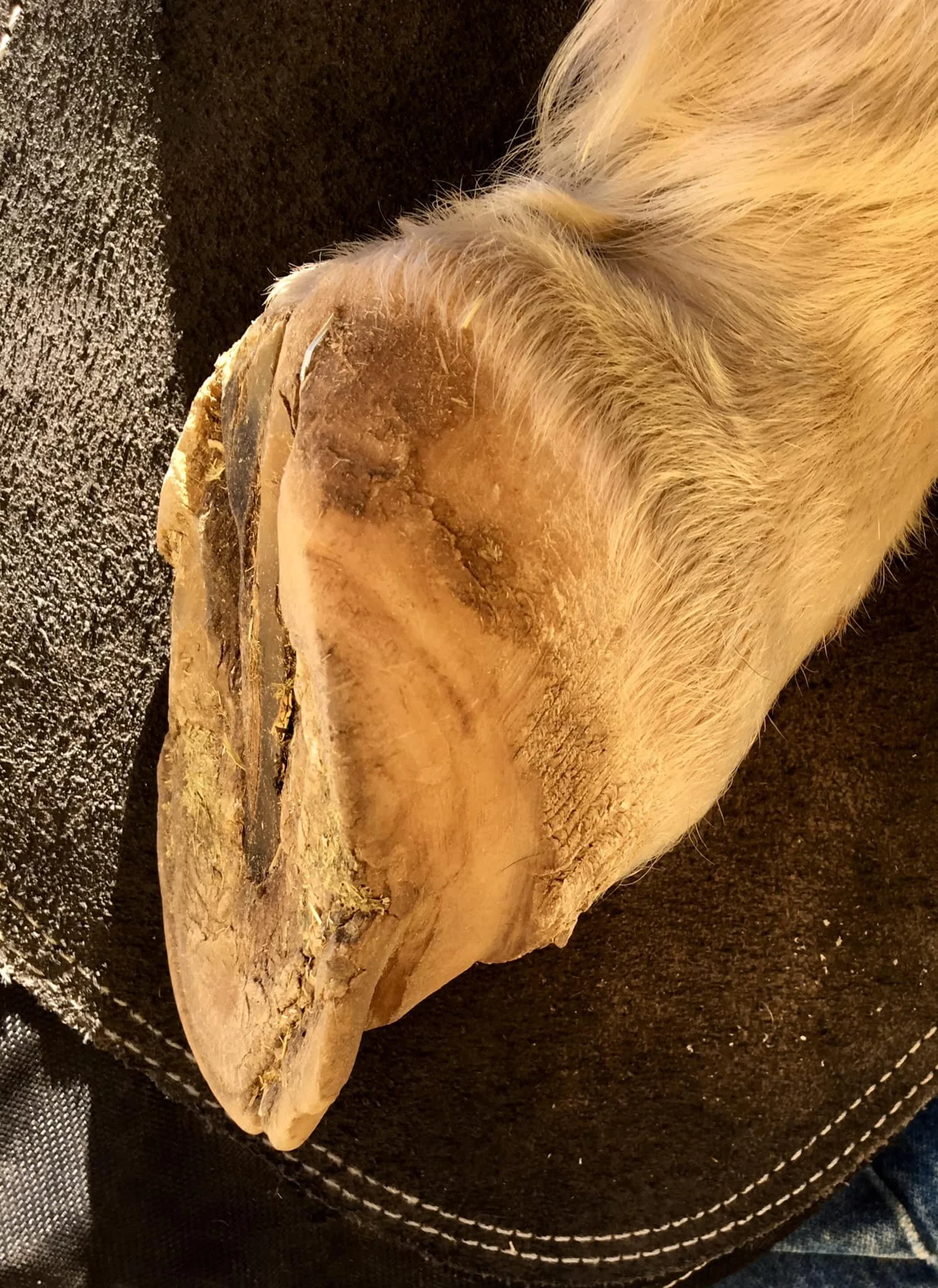
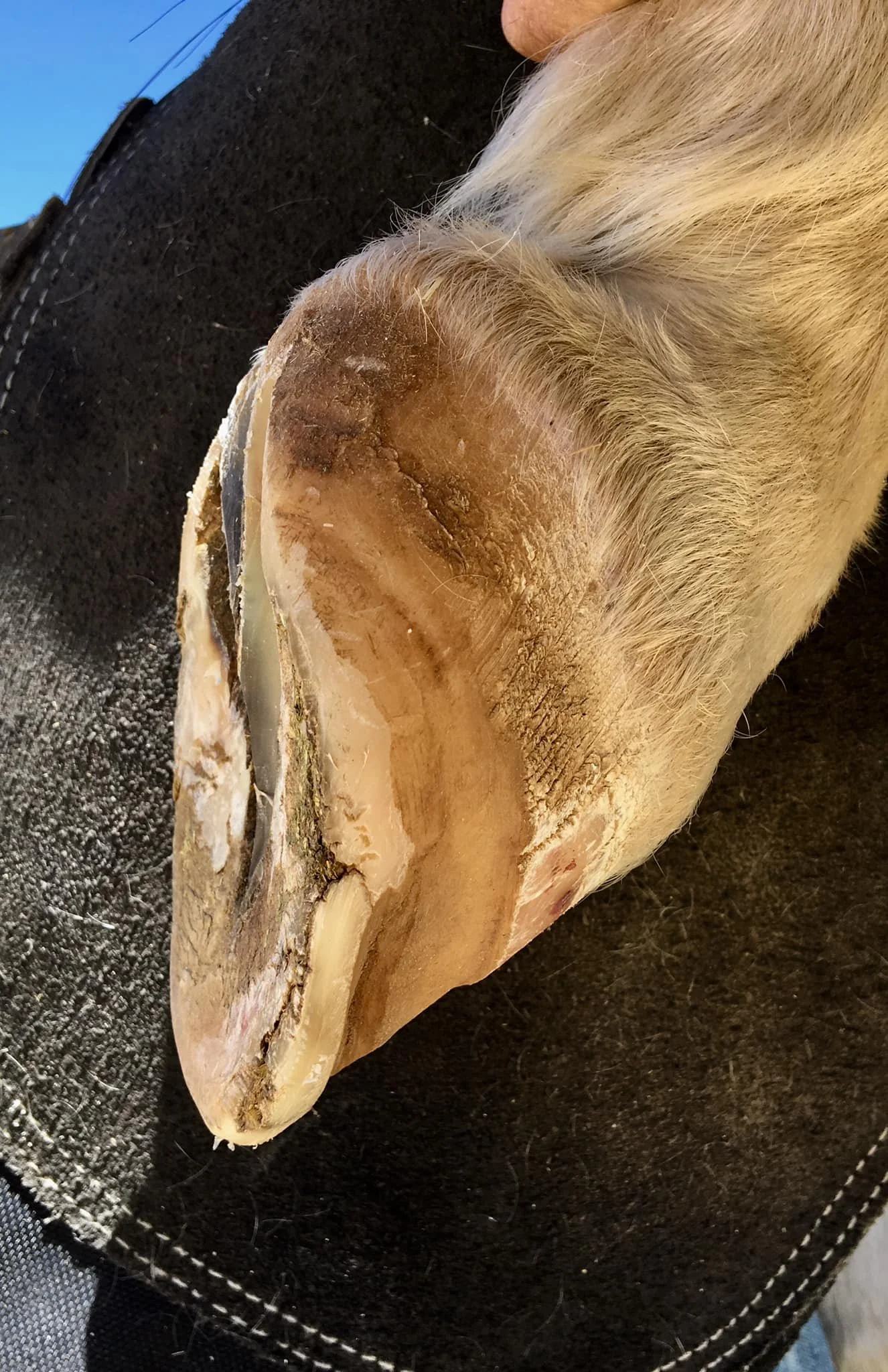
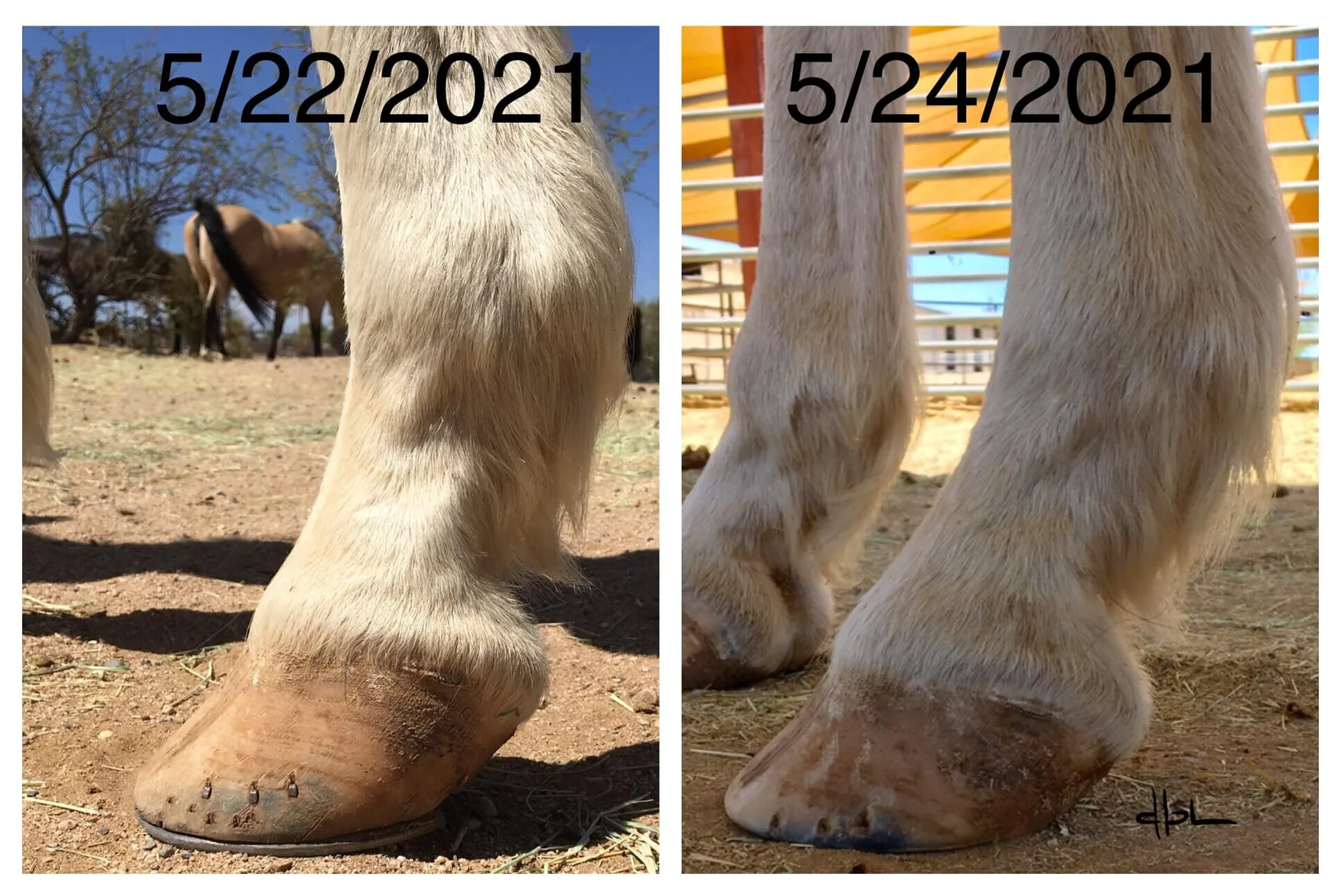
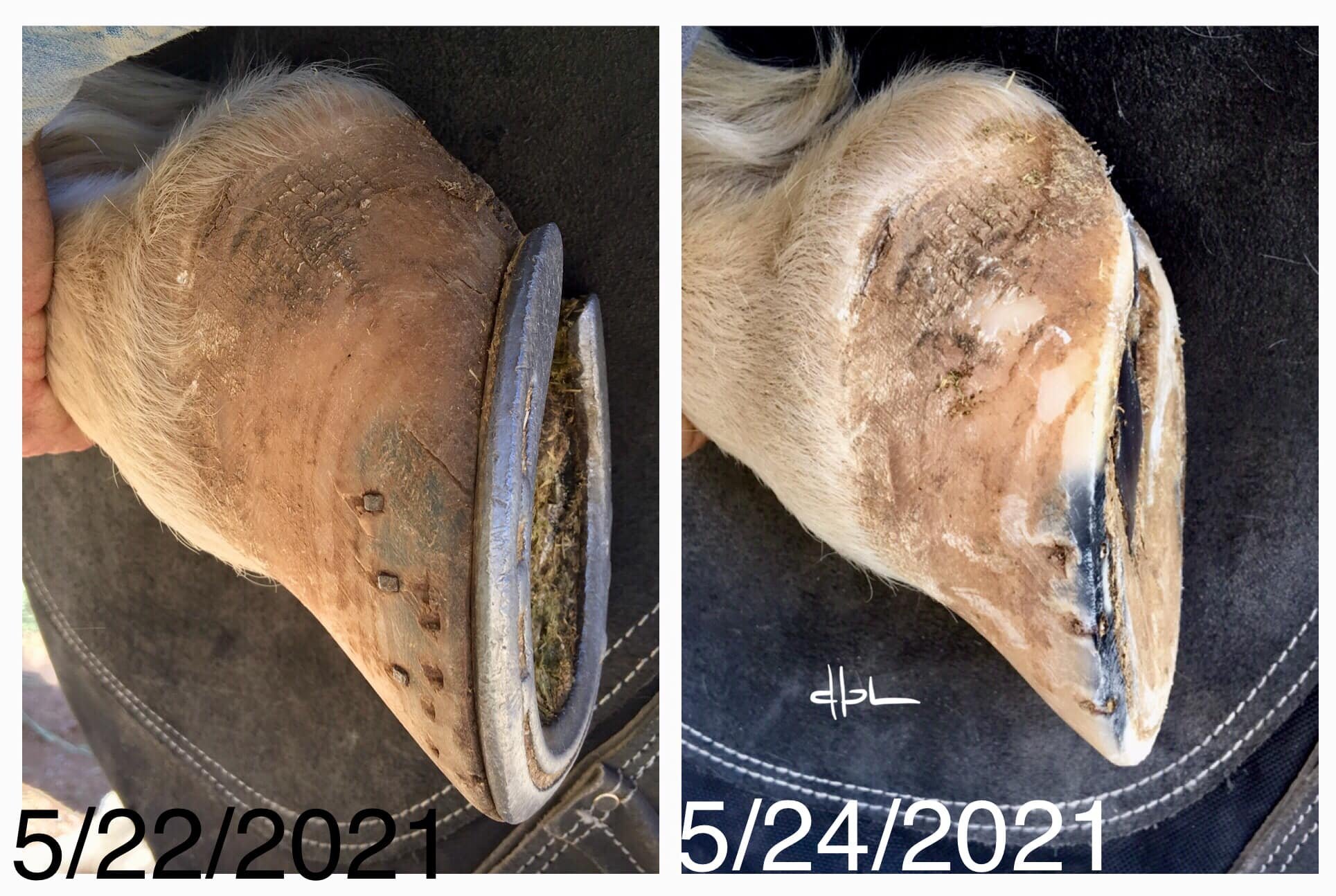
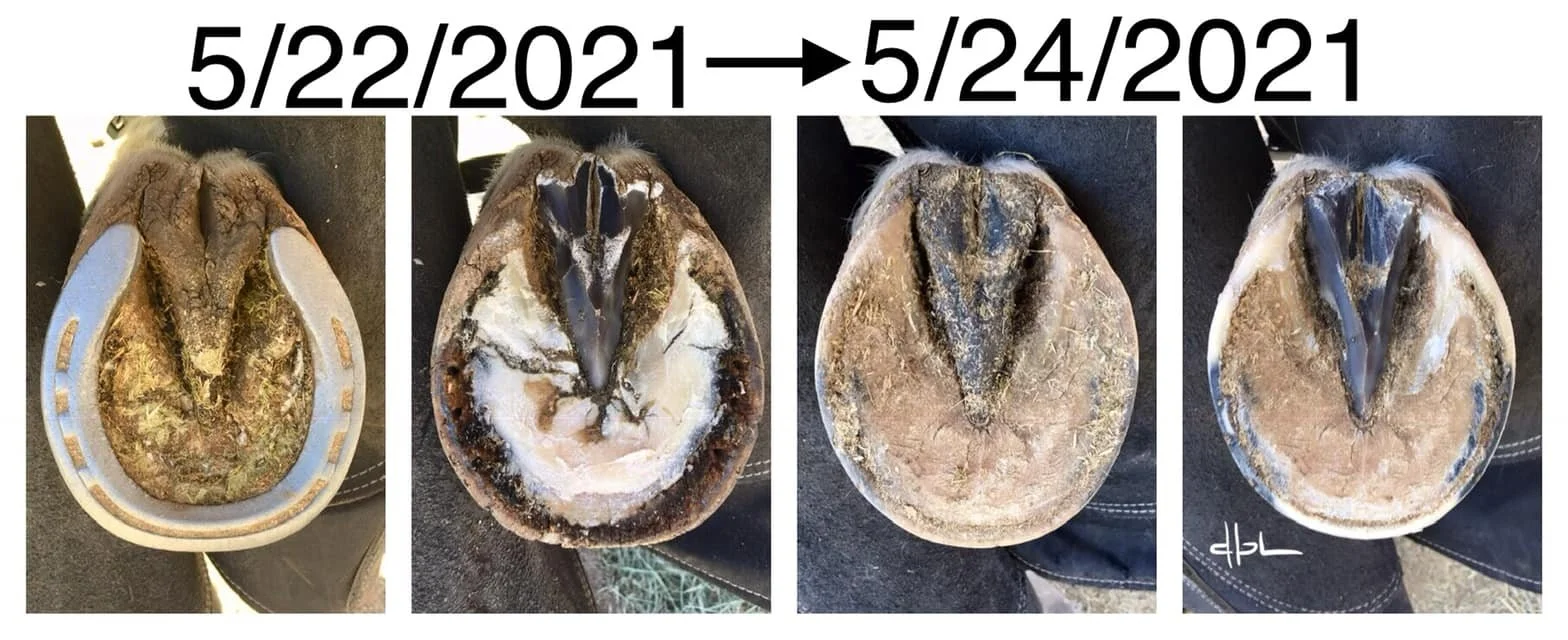
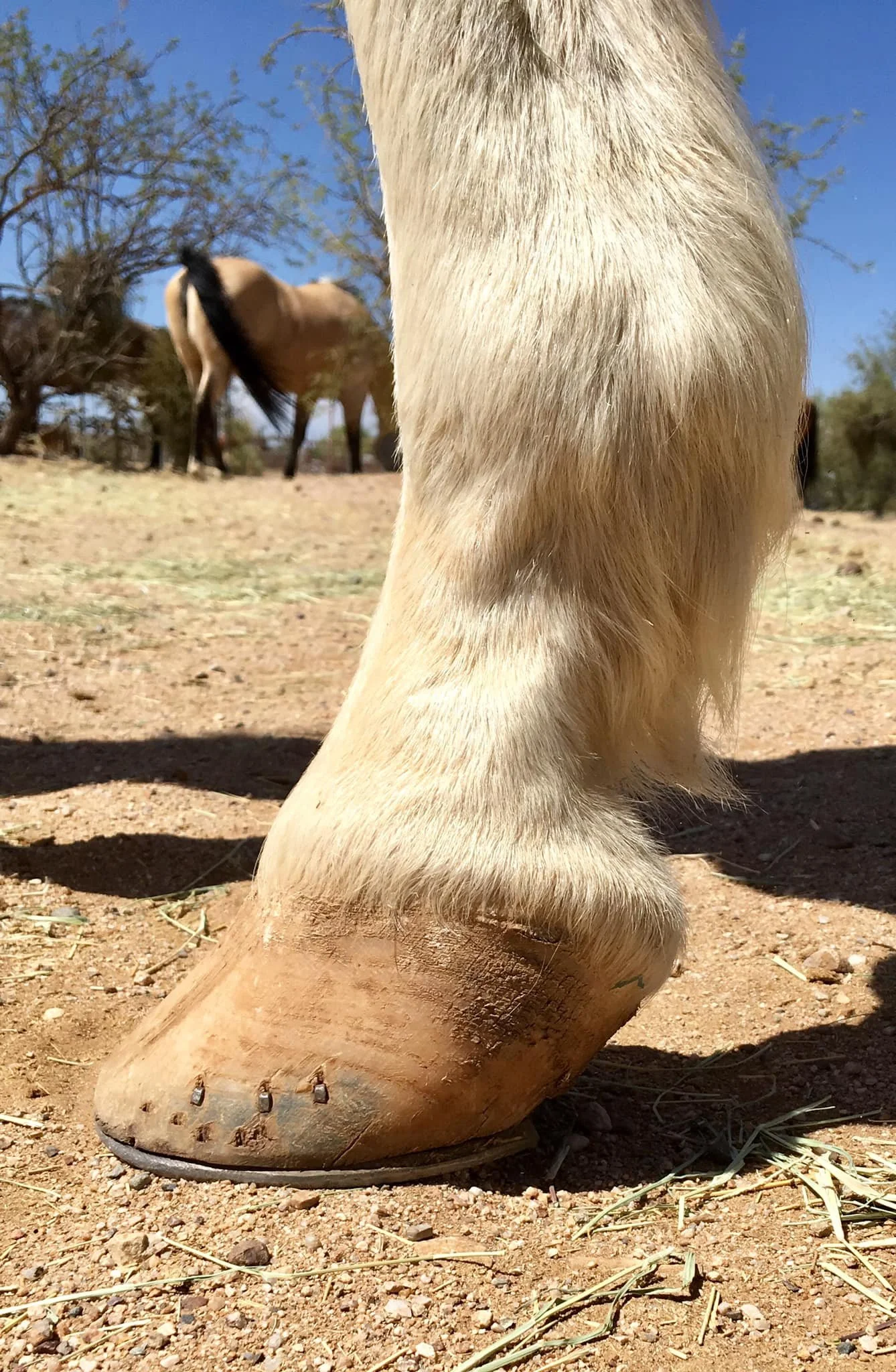
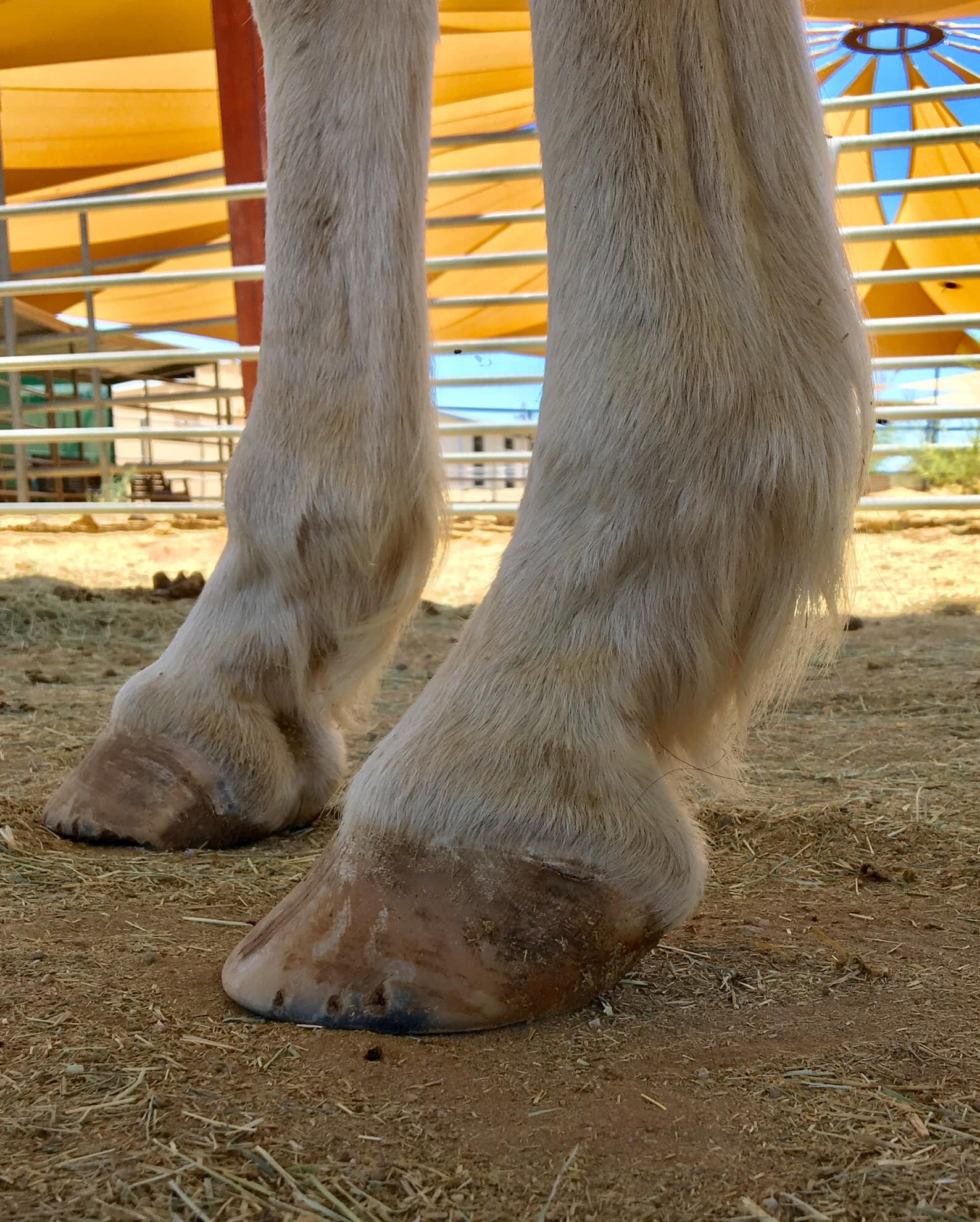
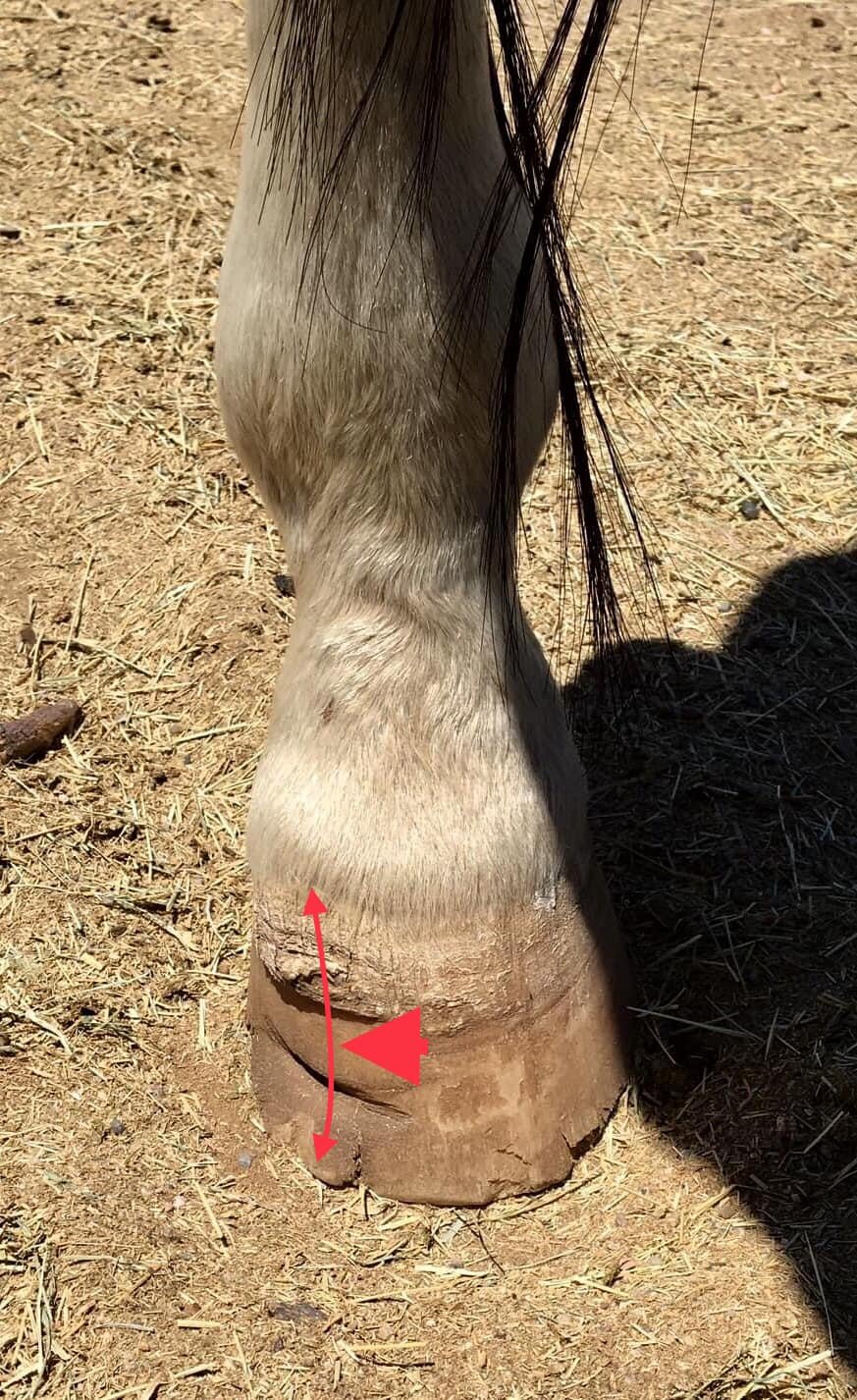
This is a right hind on a horse that leans more on the right hind than the left, so he’s right hind dominant. He is also base narrow in the hinds. So he leans more on the lateral side of the foot than the medial. The previous farrier was trimming him flat ( to his eye ) not respecting the horse’s natural conformation and not shaping the back of the foot correctly. Flat trimming with discomfort in the back of the foot caused the horse to lean on his toe, with more weight on the lateral toe quarter due to being base narrow and right hind dominant. Conservative trimming on long trim intervals ( 6-8 weeks ) allows the walls to become weight bearing. The horn tubules on the lateral side of a properly maintained right hind foot on a horse with these issues would naturally flow from the hairline to the ground on a slightly diagonal path following the inward angle of the leg. In this case the tubules were being forced to deviate and form a “kick stand” effect ( refer to markup ). This jammed the soft sensitive coronary band upwards, crushed the lamina at the bend of the tubules, and tore the lamina below the bend on the lateral side of this foot. These structures are all connected to the coffin bone so the same forces are effecting that structure too, adding bone erosion on the lateral side of the solar rim of P3 from the excessive weight bearing on the lateral side of the sole. This would be the human equivalent of bending your finger or toe nail backward and tearing and bruising your nail bed. The main difference is that a horse weighs 1000 lbs and stands on the equine equivalent of one human toe at the bottom of each leg.
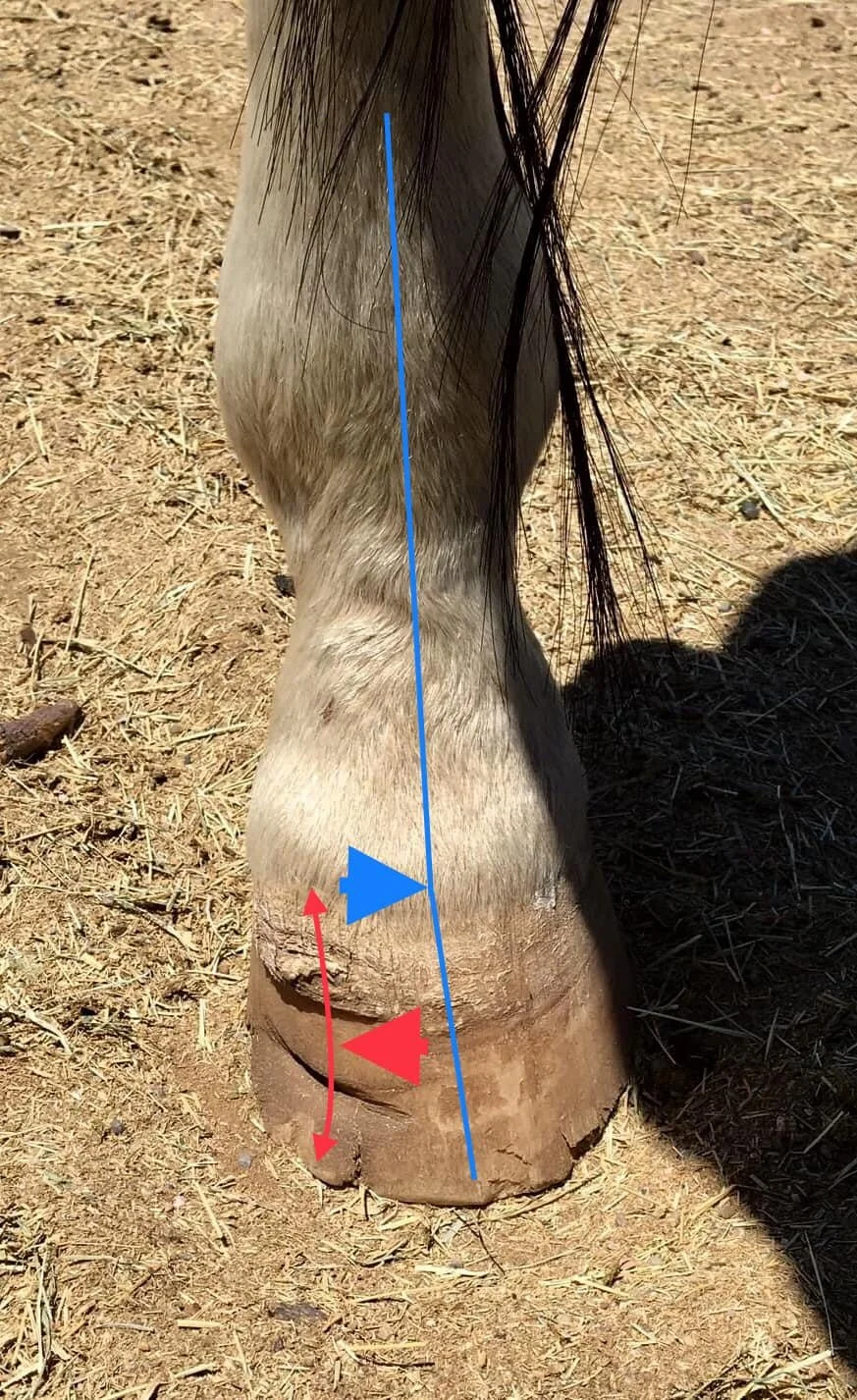
Markup showing leg coming down at an angle and breaking the line at the coffin joint ( blue ). The equal and opposite reaction in the hoof capsule ( red ). This causes, arthritis, P3 erosion, abscessing, wall flares, tendon/ligament strain, compensation that causes wear and tear on the entire body, behavioral issues resulting from chronic pain, and compromised movement that causes imbalanced wear. In my opinion, most horse’s are already coping with at least some, if not all, of these issues. Something to think about before saddling up. Recognizing all of this often puts the trimmer in a vulnerable position; do you advocate for the horse or worry more about keeping your job. If the trimmer speaks up and loses the job, they can’t help the horse anyway. If they fix the problems without bringing attention to it, the owner continues to make the same bad choices.
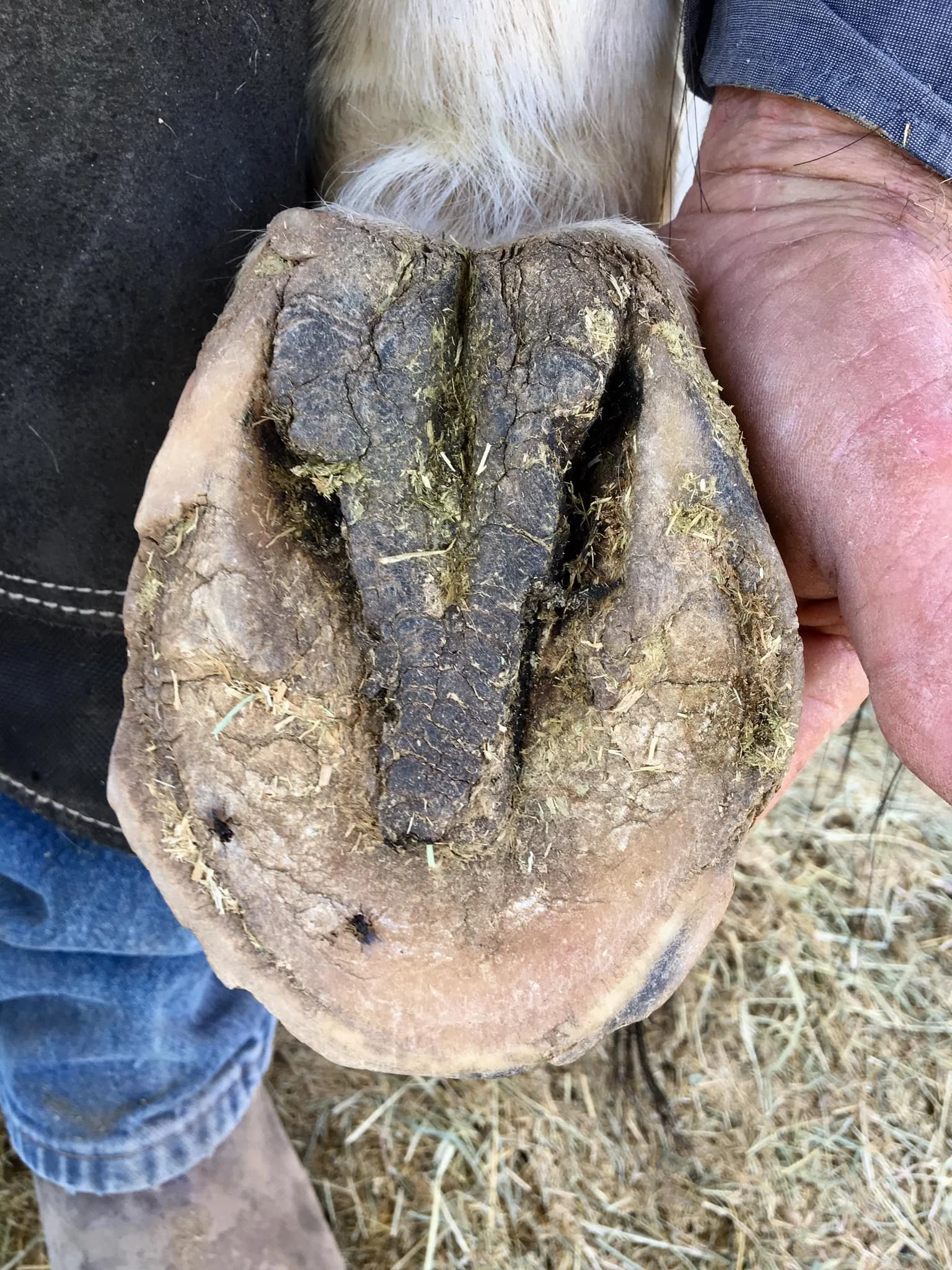
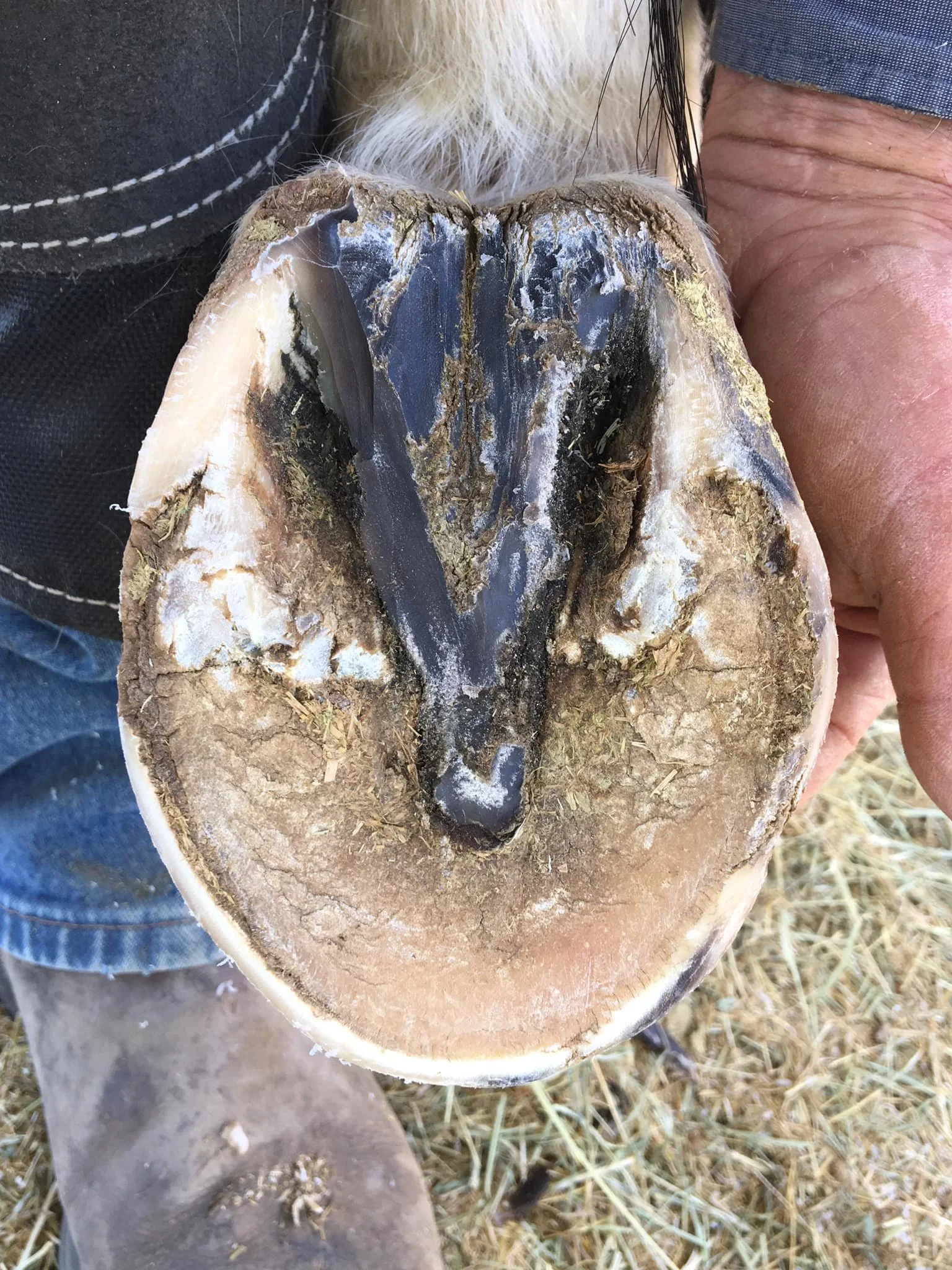
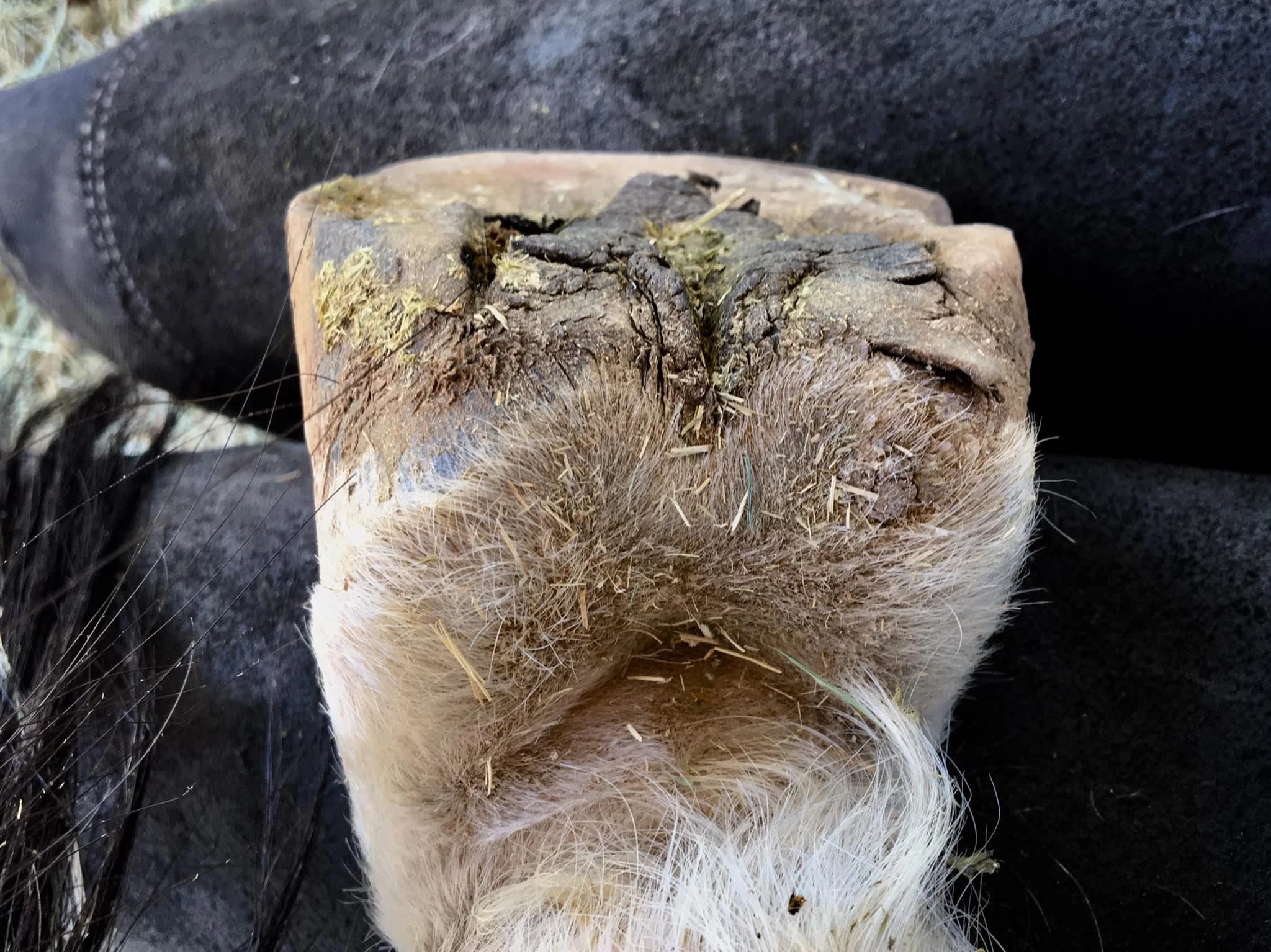
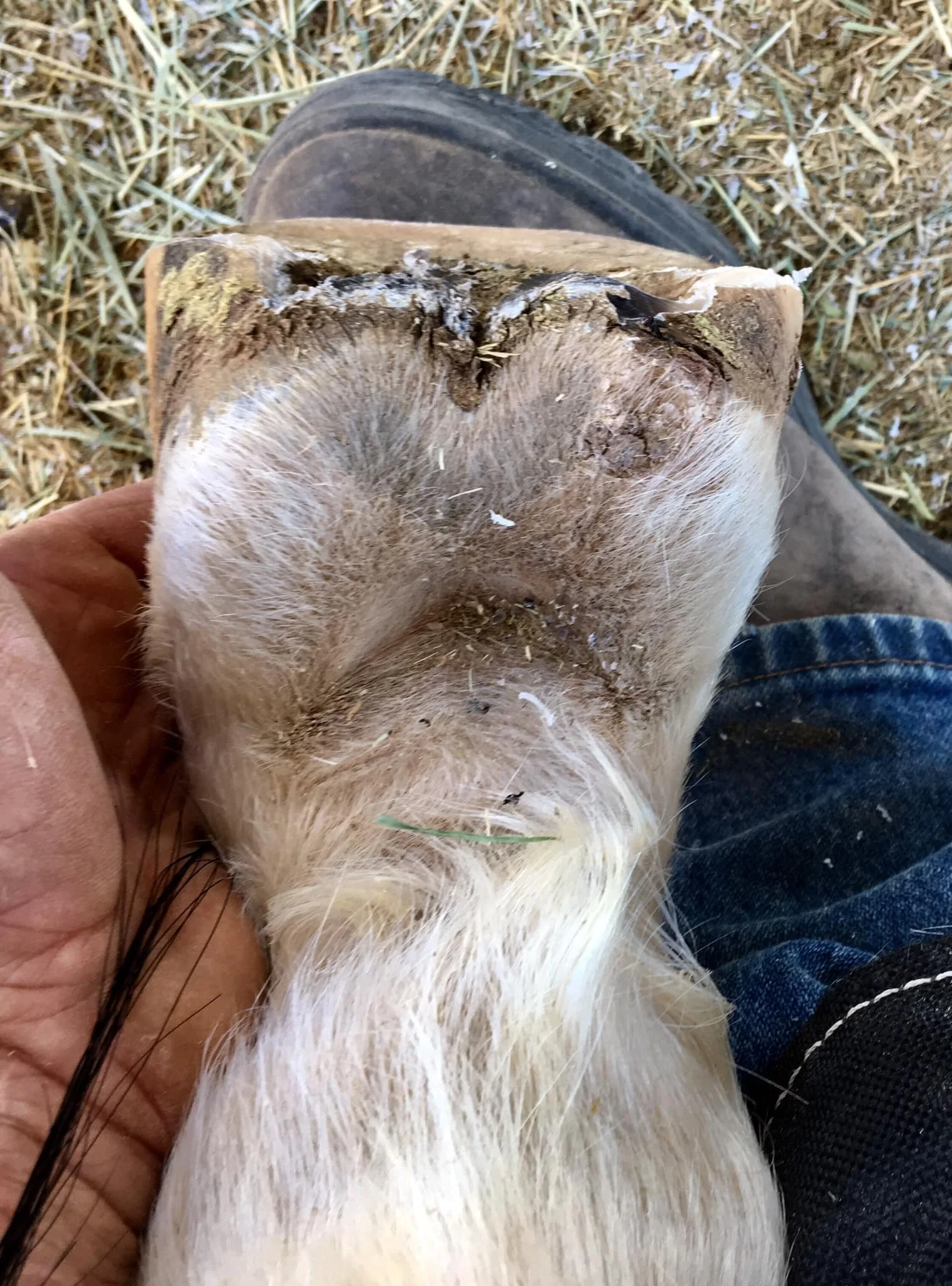
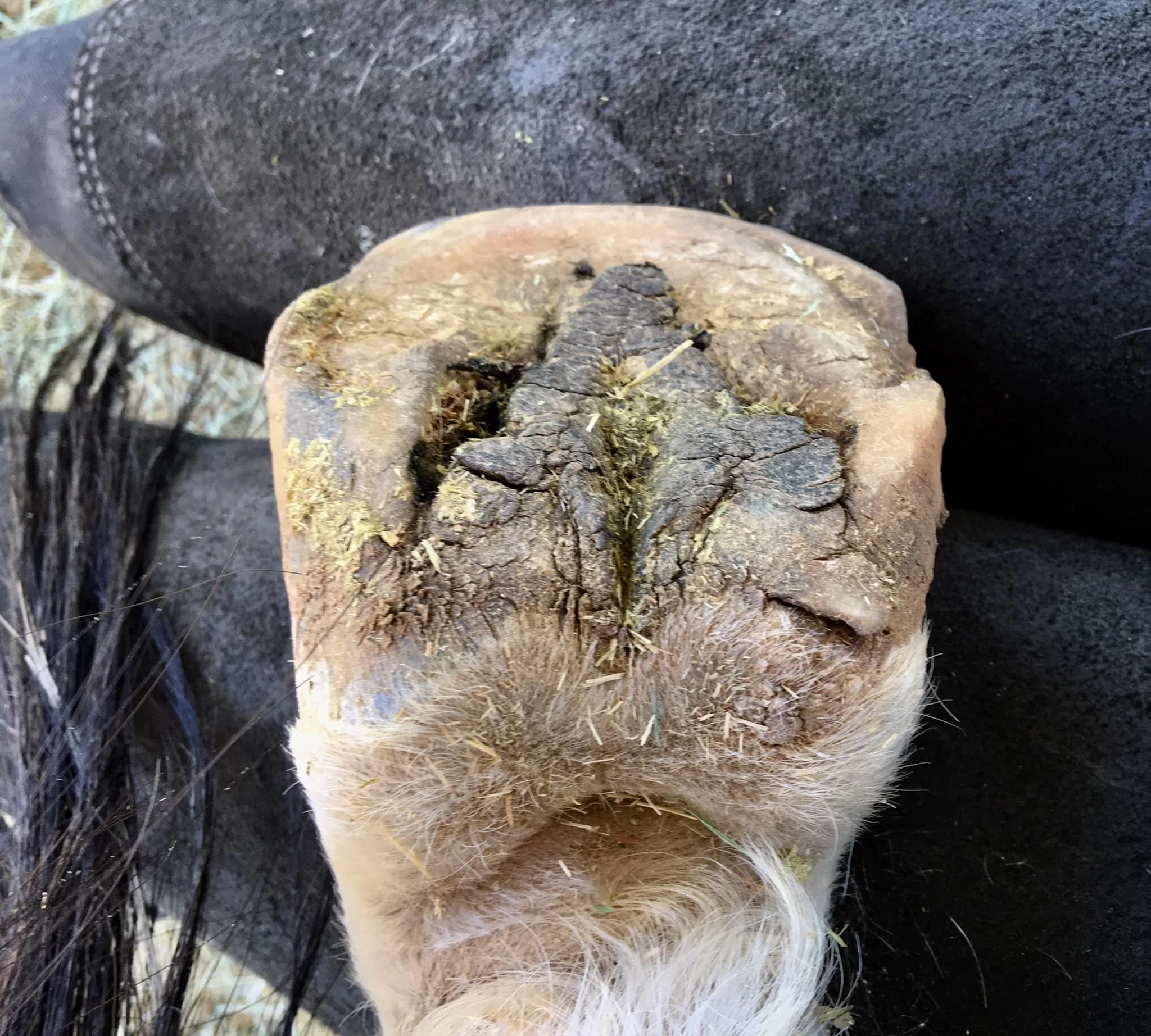
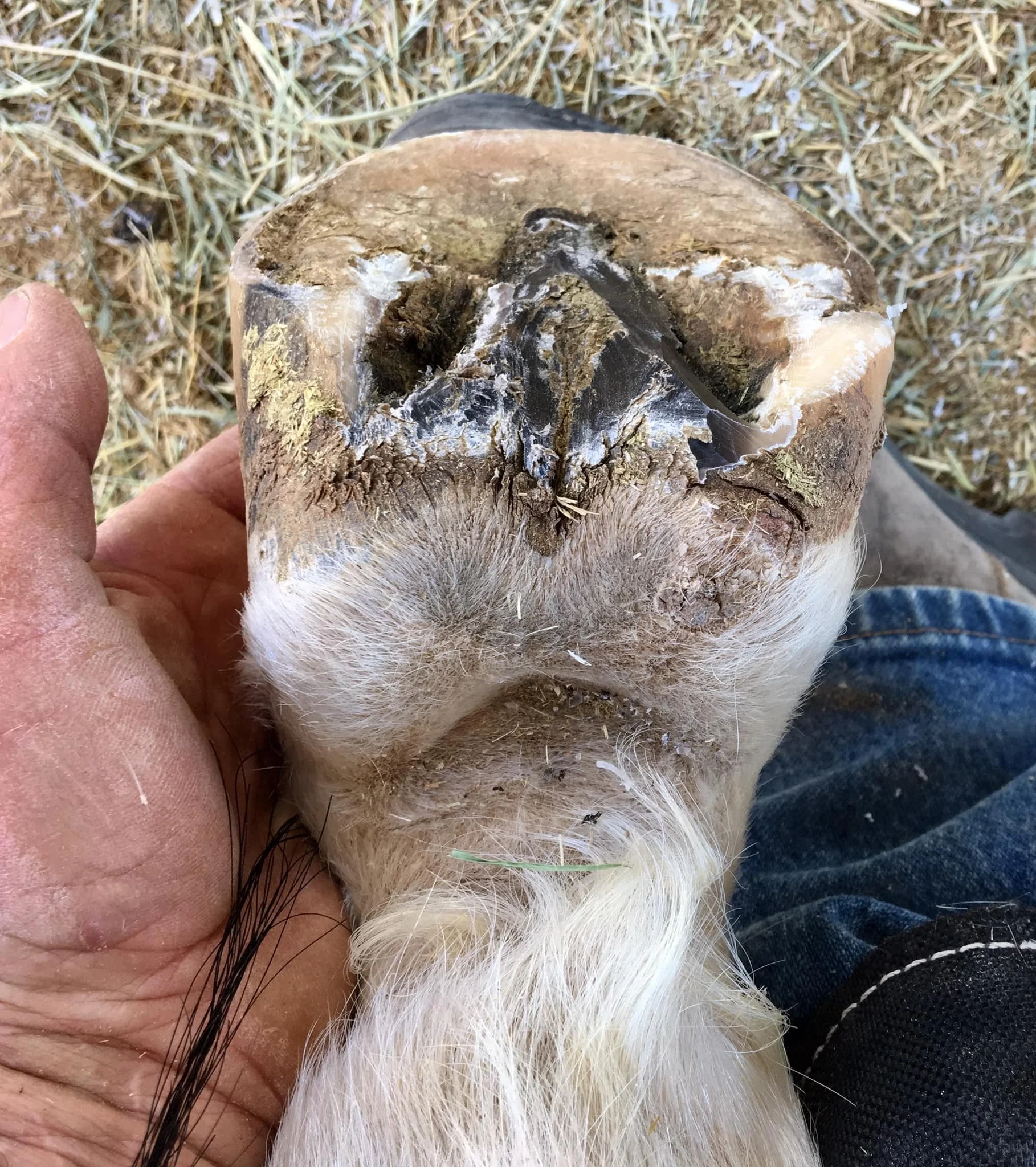
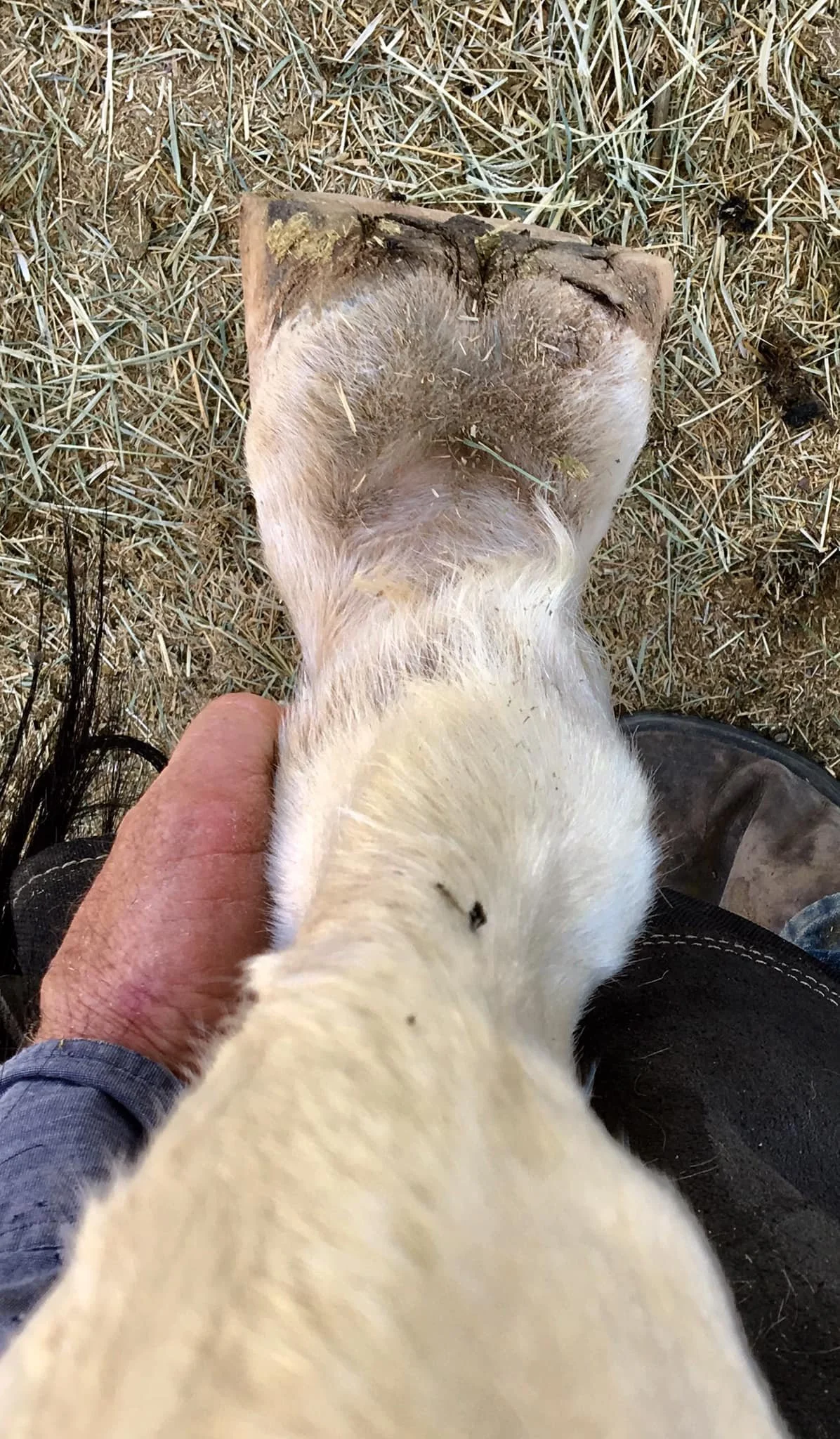
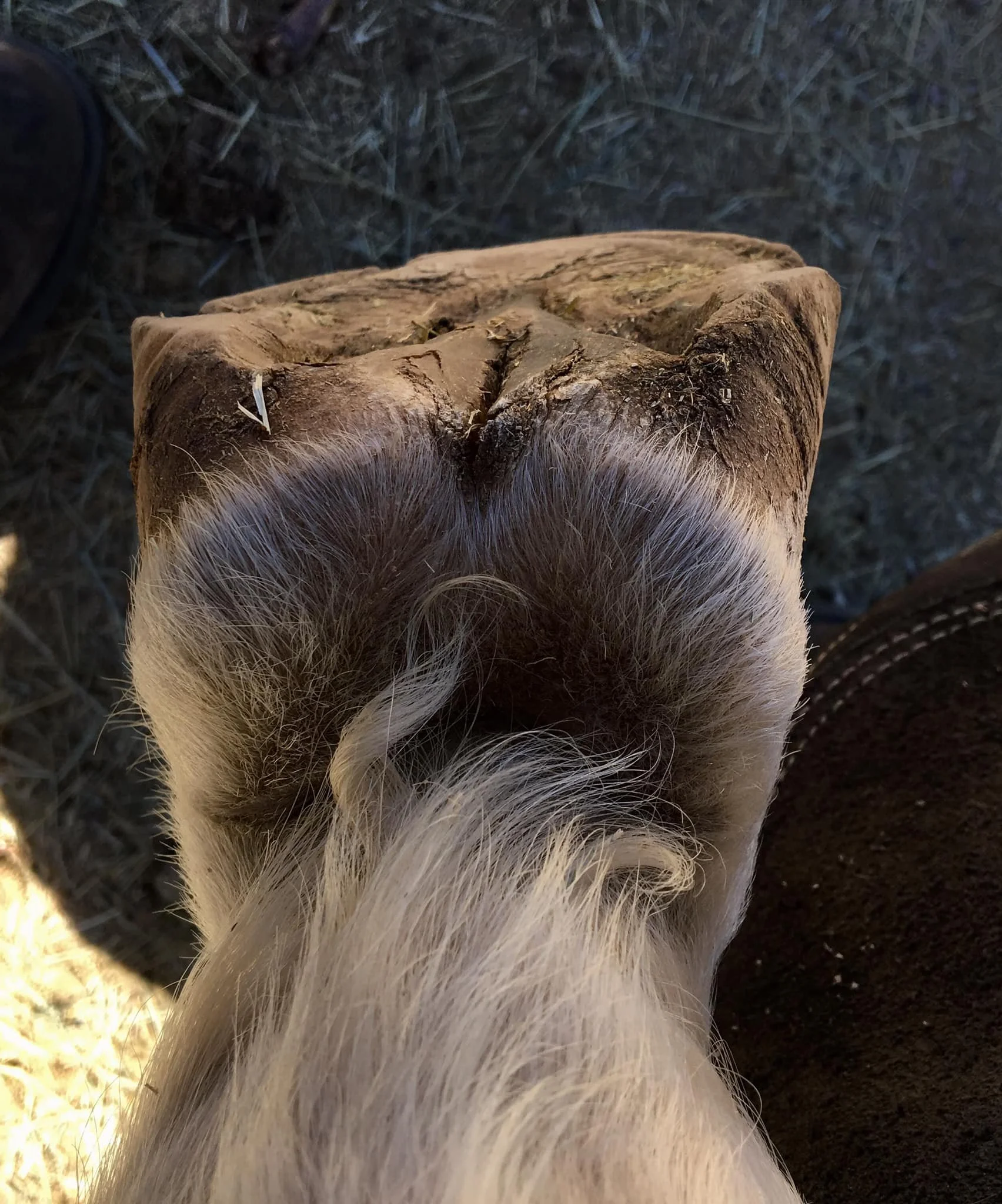
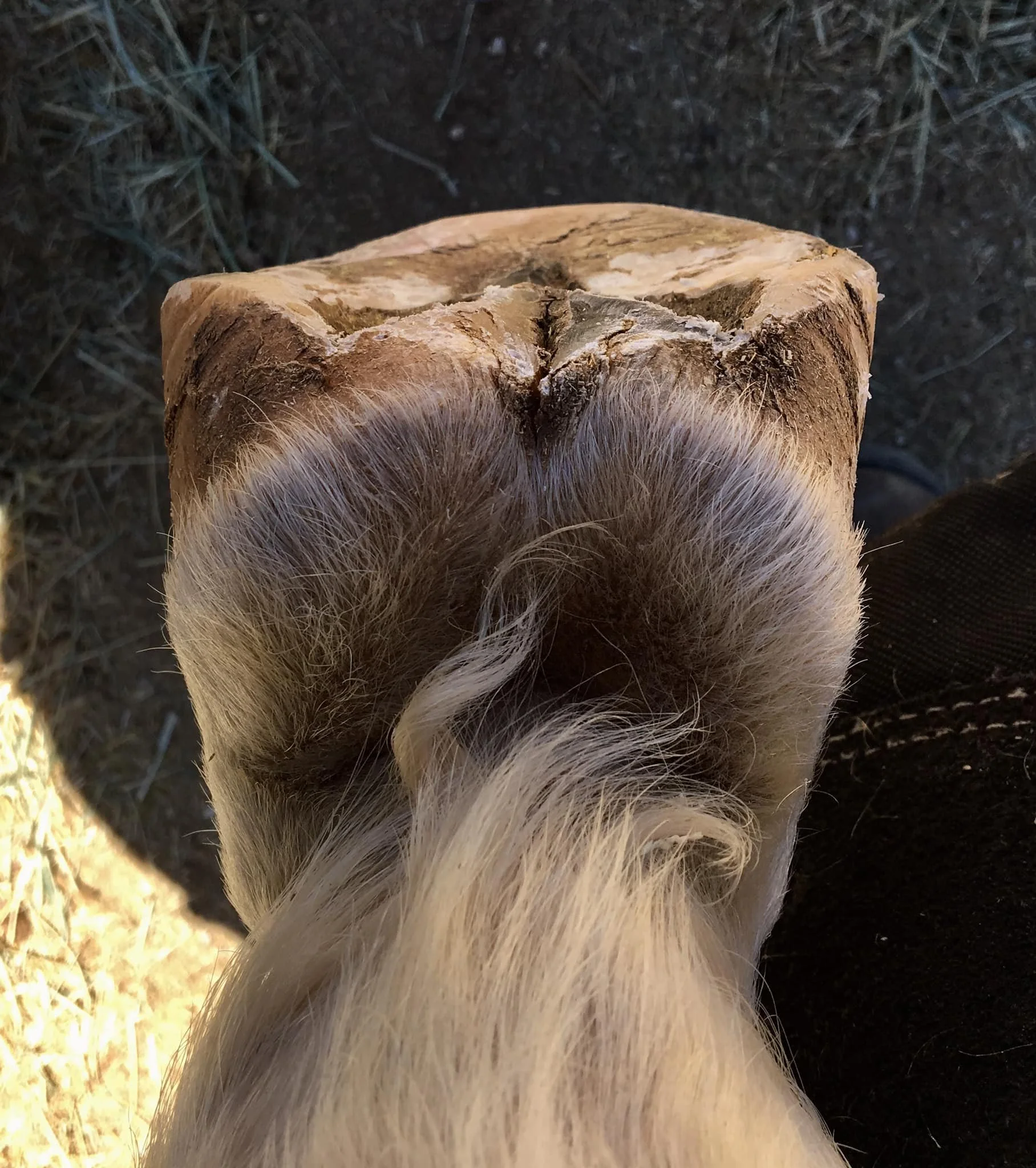
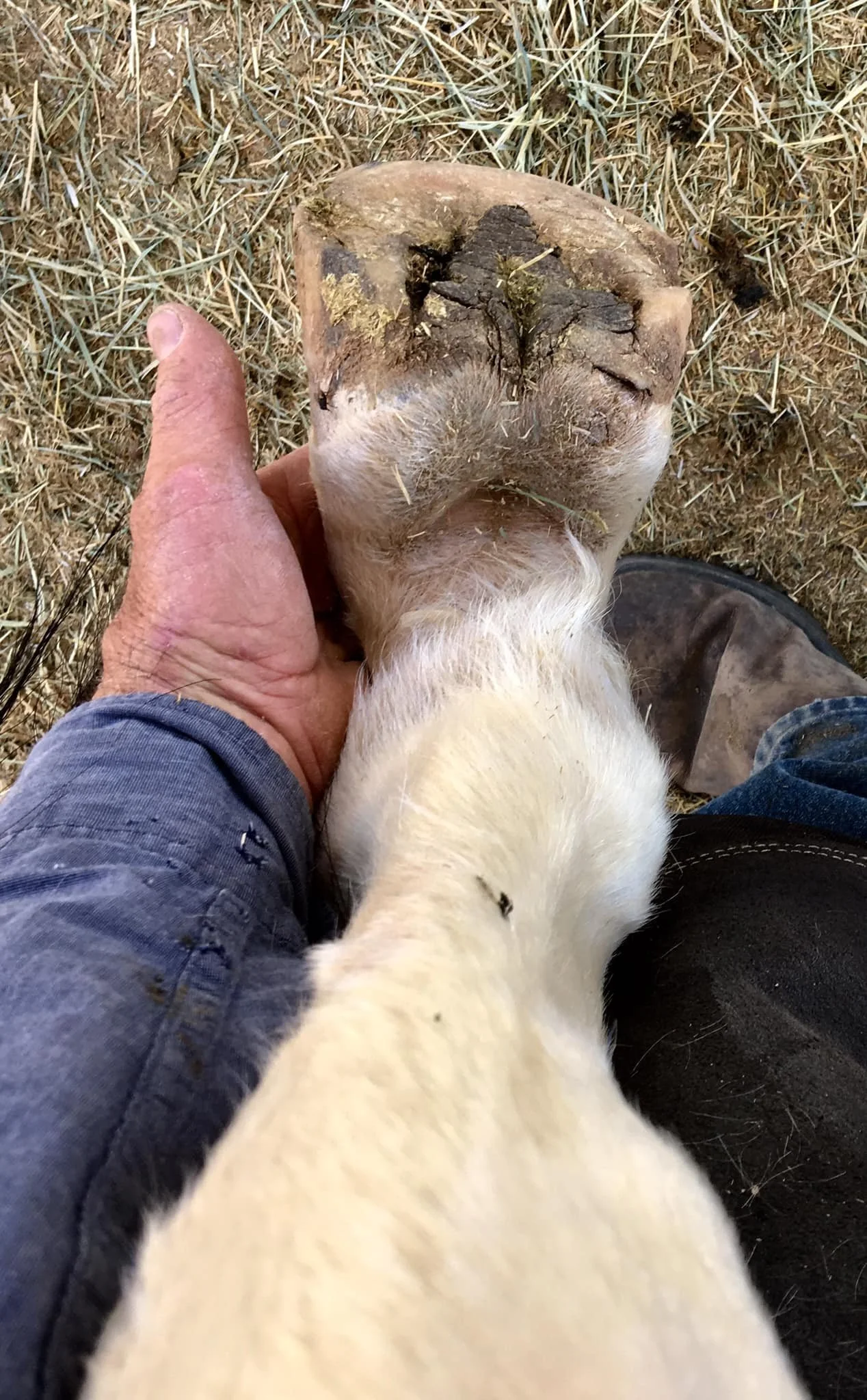
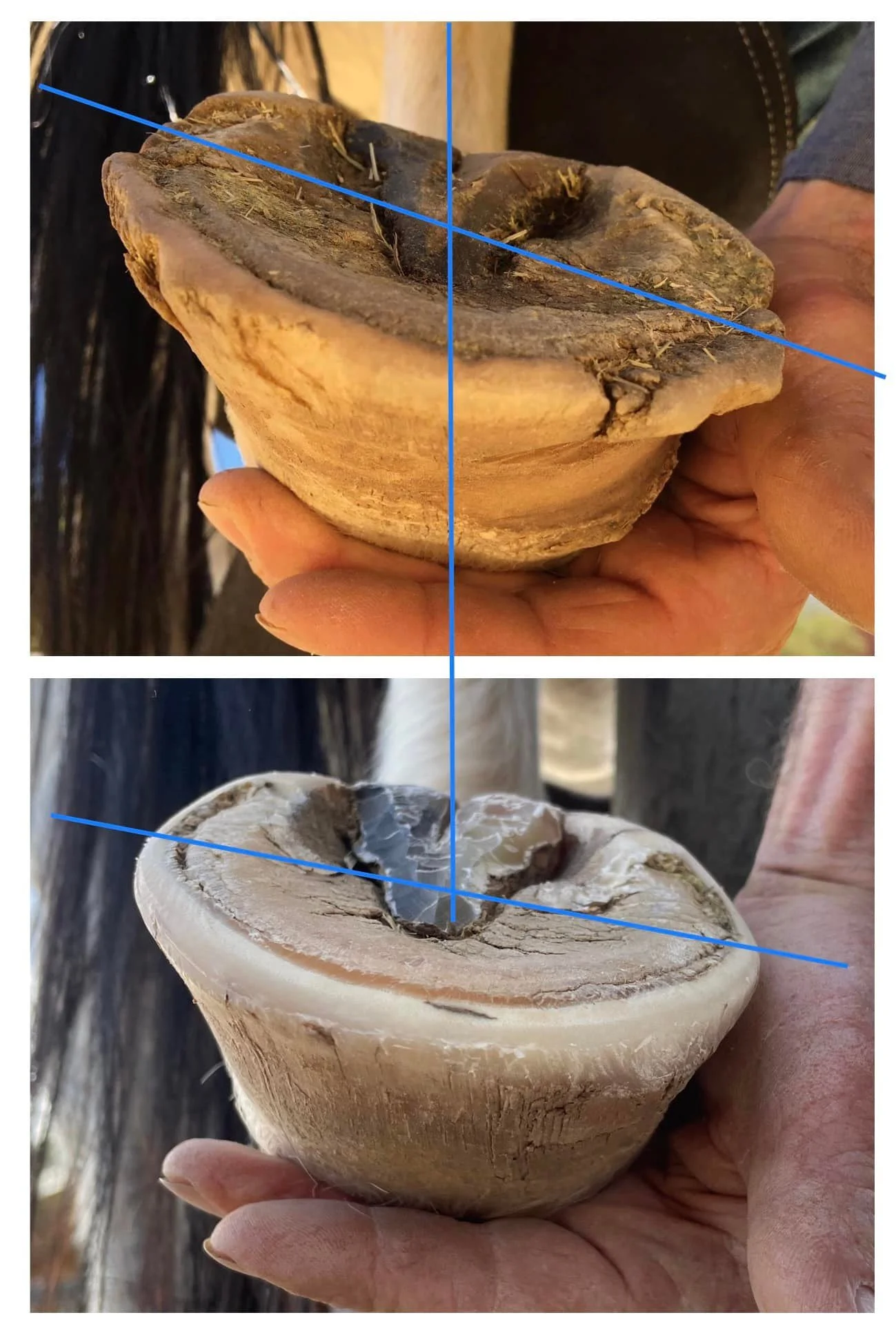
These two views were taken pre trim from the center of the hock looking down. You can really see how this horses hind legs were distorted from years of bad trimming. There will be considerable joint morphology all the way up the leg. Trimming to relieve pain and stress at every joint is my goal. Looking at how crooked the legs are can be paralyzing. I’ve learned over the years that everything I need to know to make comfortable corrections is in the sole. The horse is usually retaining dead sole to make up for the lack of live sole thickness. When I can find and trim to the border between the live and dead sole and then roll the wall to this peripheral edge, I can almost always make a comfortable correction. The hardest part is the overthinking. The horse is always trying to self level to make up for imbalance. This can make the outside of the hoof capsule appear balanced, even the bone can look balanced in a radiograph. The problem is that the retained dead sole retains and fills in according to pressure. Compensation will affect this. So will wear and so will trimming. In my experience, trimming to reveal the true crookedness allows the horse to load the foot without compensating. It’s a relief but now they’re crooked without the compensation. Compensation is meant for temporary relief from injuries. It’s not supposed to be a long term or permanent crutch. Once the horse’s stance is corrected to its true crookedness and the trimming encourages them to comfortably shift their weight to the back of the feet. Their soft tissue develops and creates a cushion that supports their weight and slowly stands them back up with gradually less crookedness. Picture an inflatable cushion the shape of a crooked foot. The more it fills with air, the more vertical it stands up. The twisting and grinding of the joints minimize as the soft tissue gains rubbery depth and the horse has relief. Once it reaches maximum expansion and conditioning, the horse is more buoyant. Their joints bounce and float more instead of just bearing down on bone against bone. This all can take years but if it’s done carefully and correctly, the horse can improve with every trim. Healing takes time. It usually takes me 6-8 months to heal from a serious knee, shoulder, or back strain. I just have to be aware and take it slow. Horses are the same but they rely on their humans to know how they feel inside and what kind of work is beneficial for their stage of development.
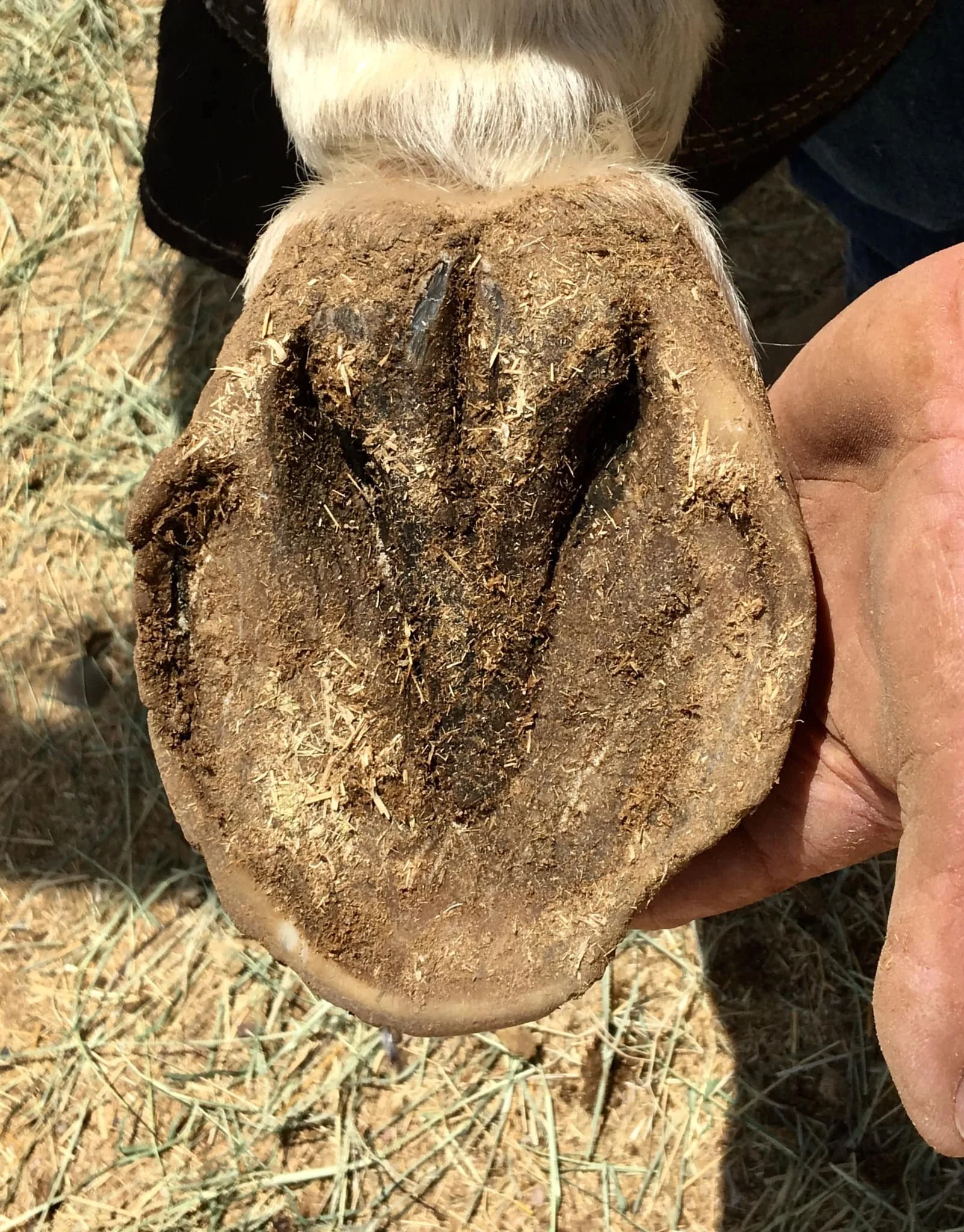
June 2021
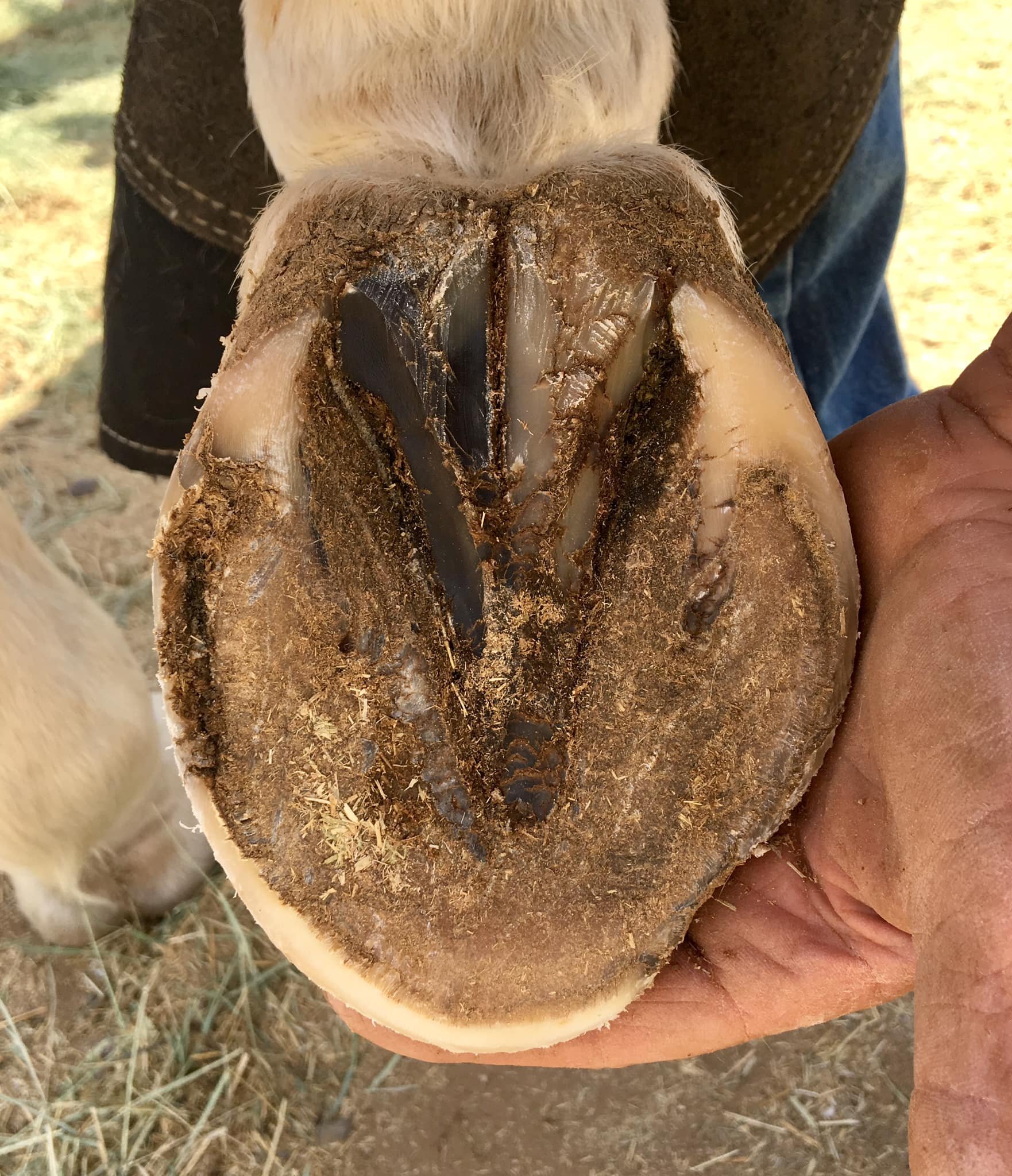
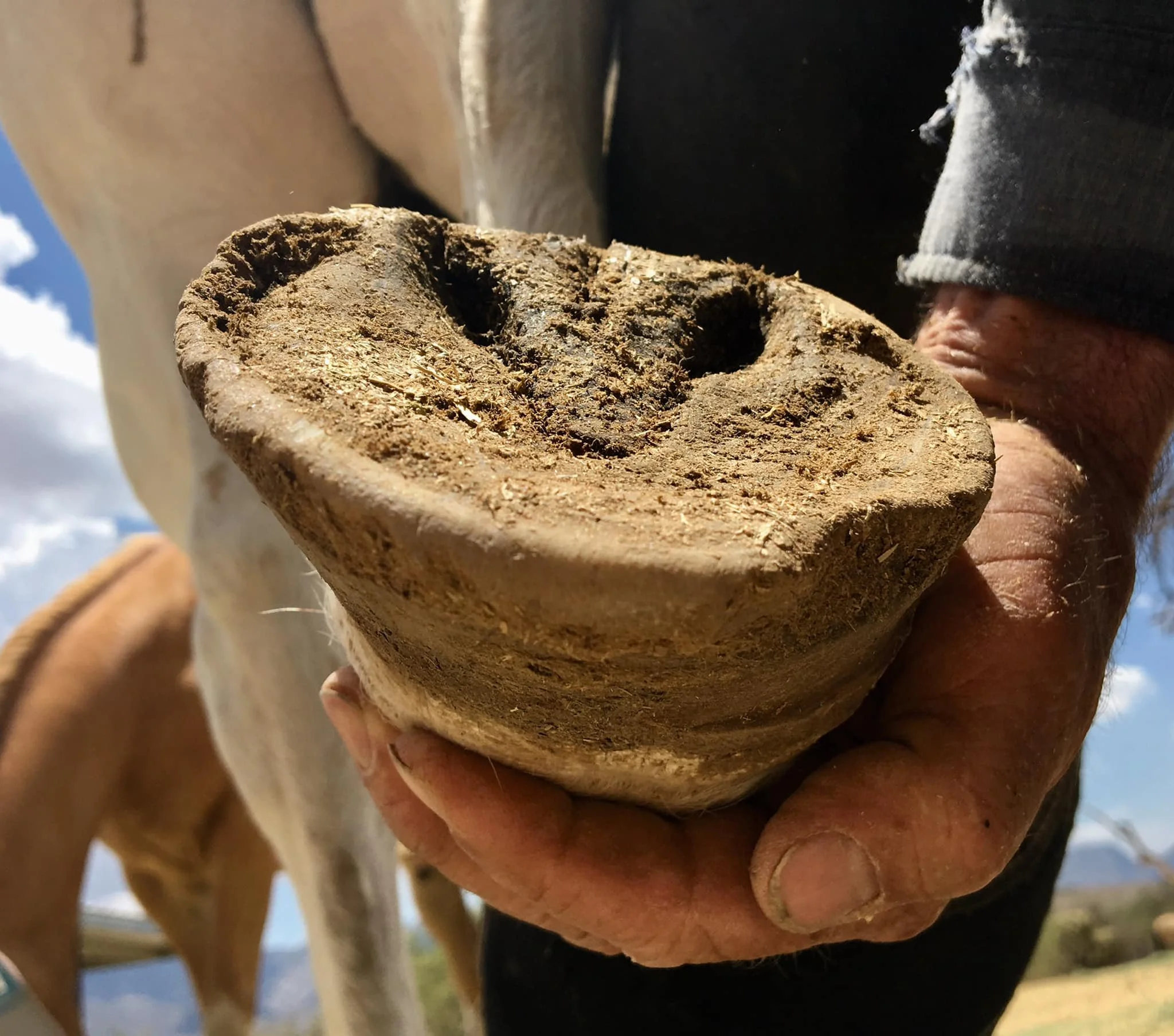
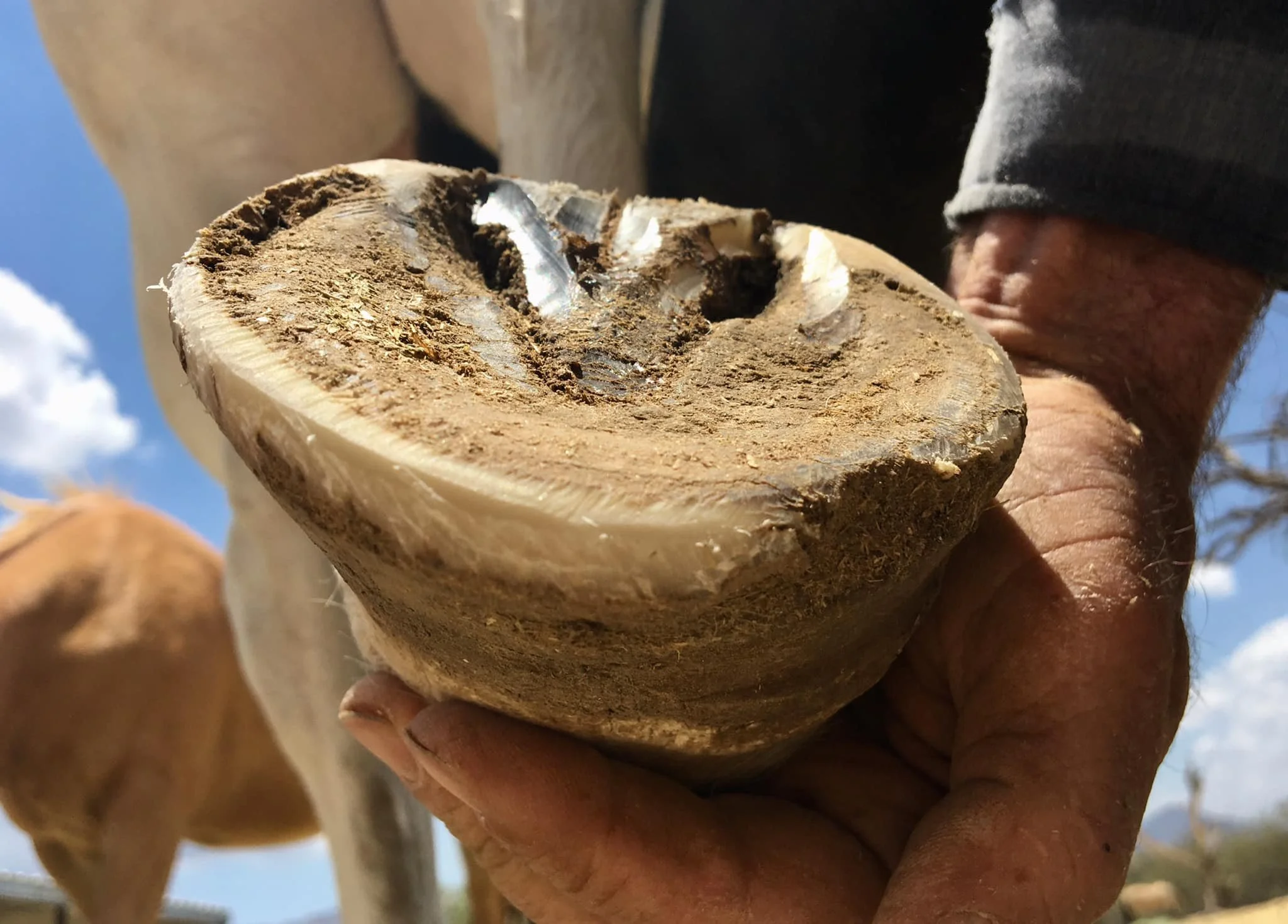
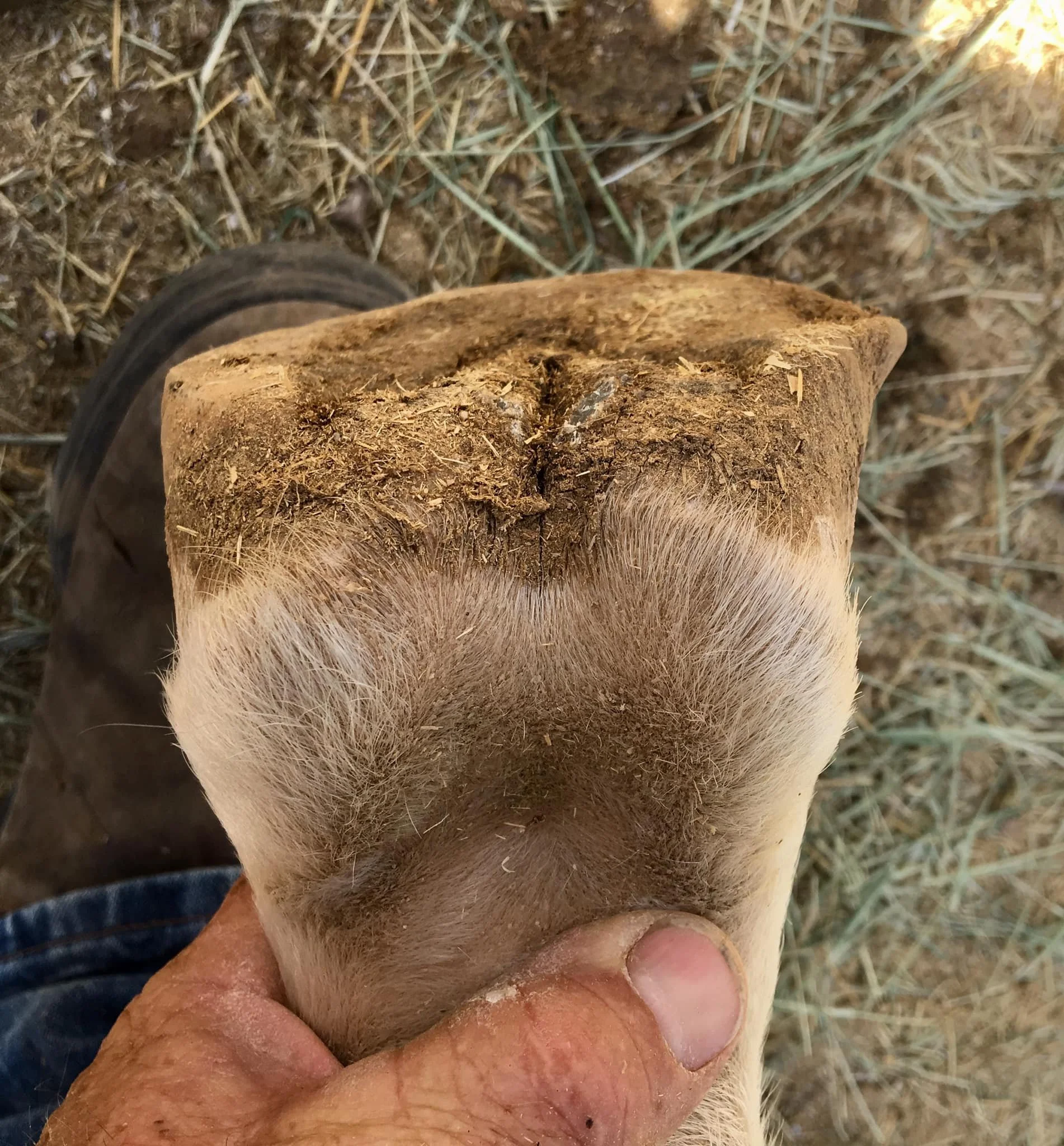
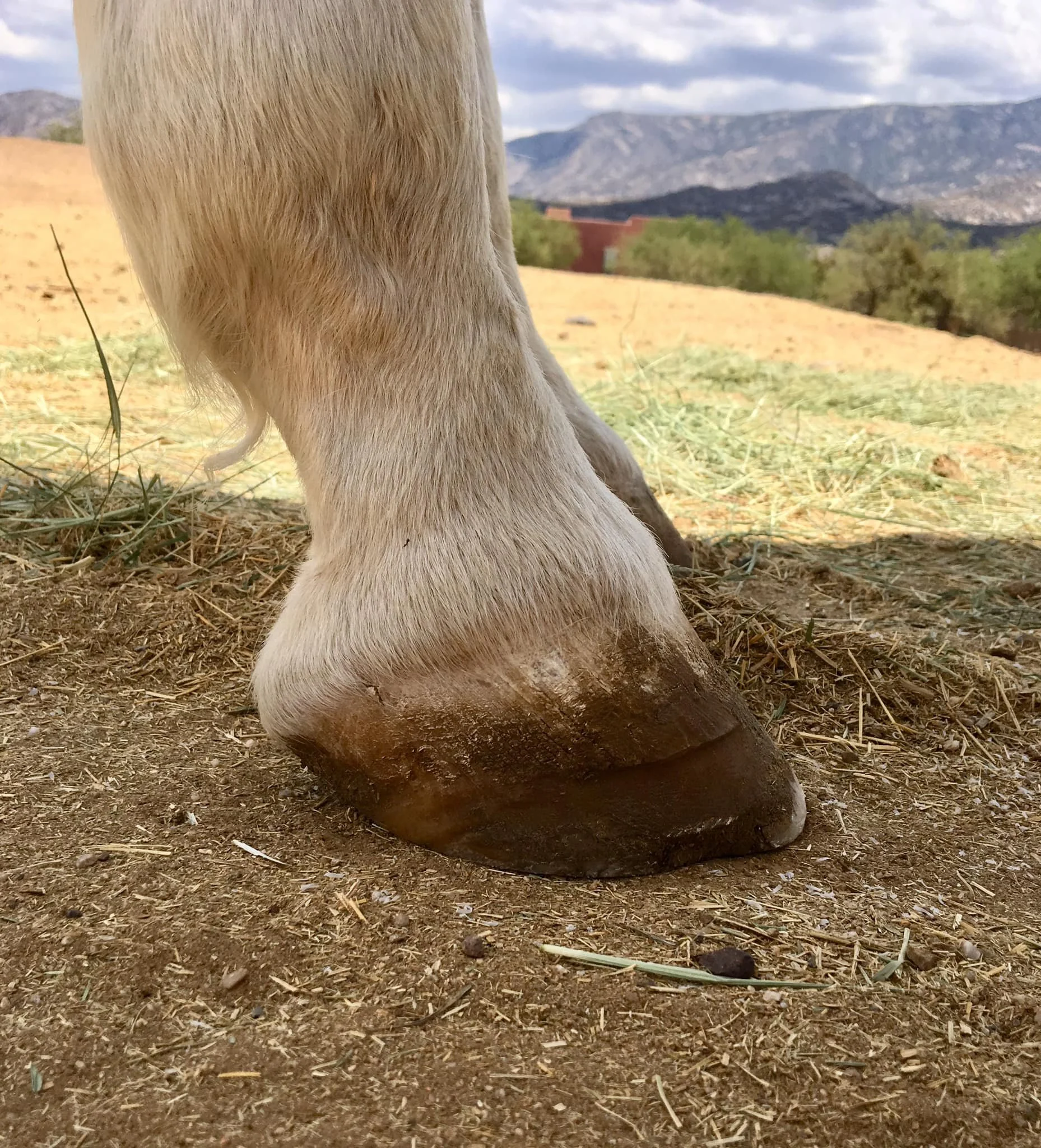
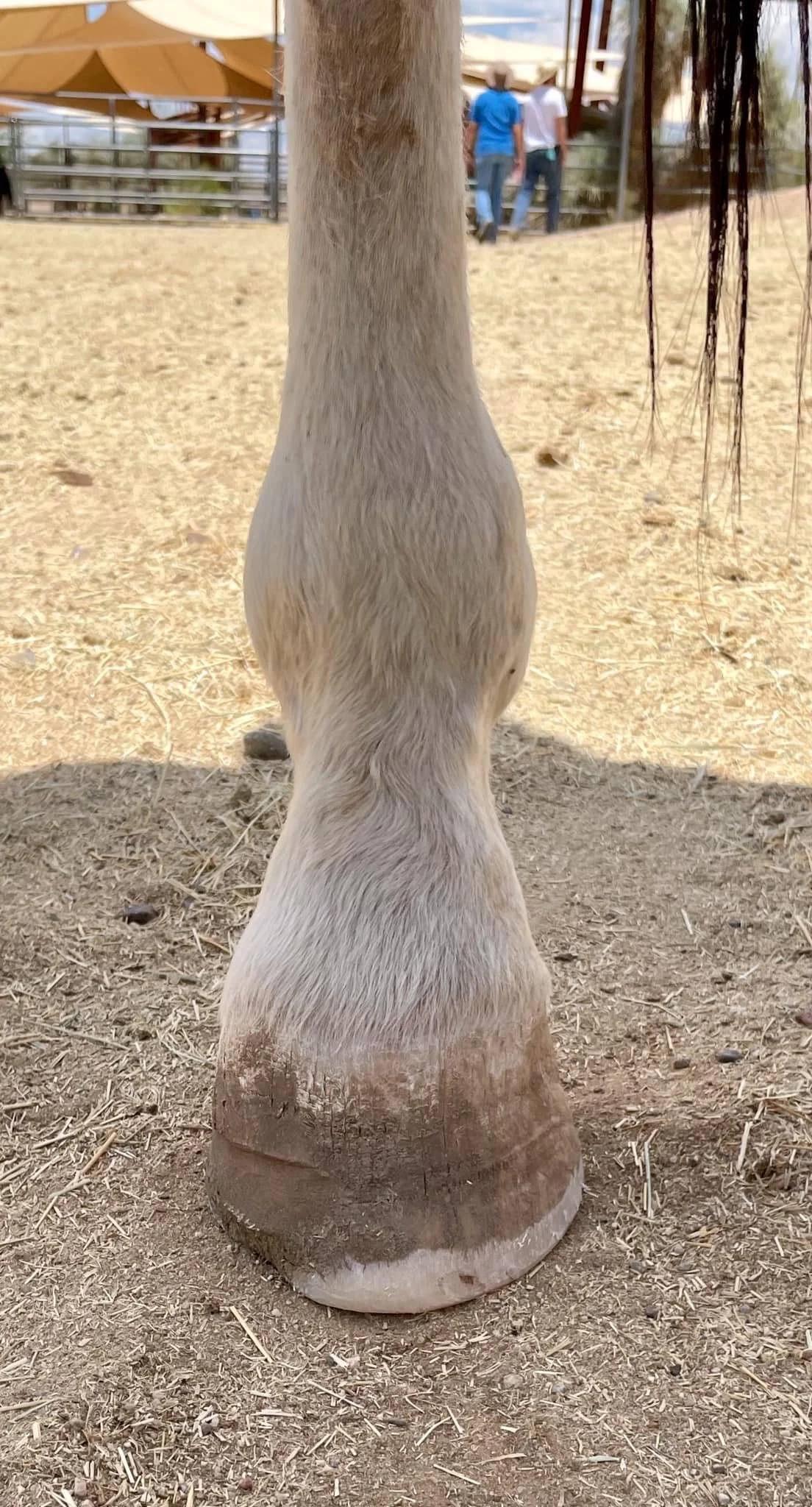
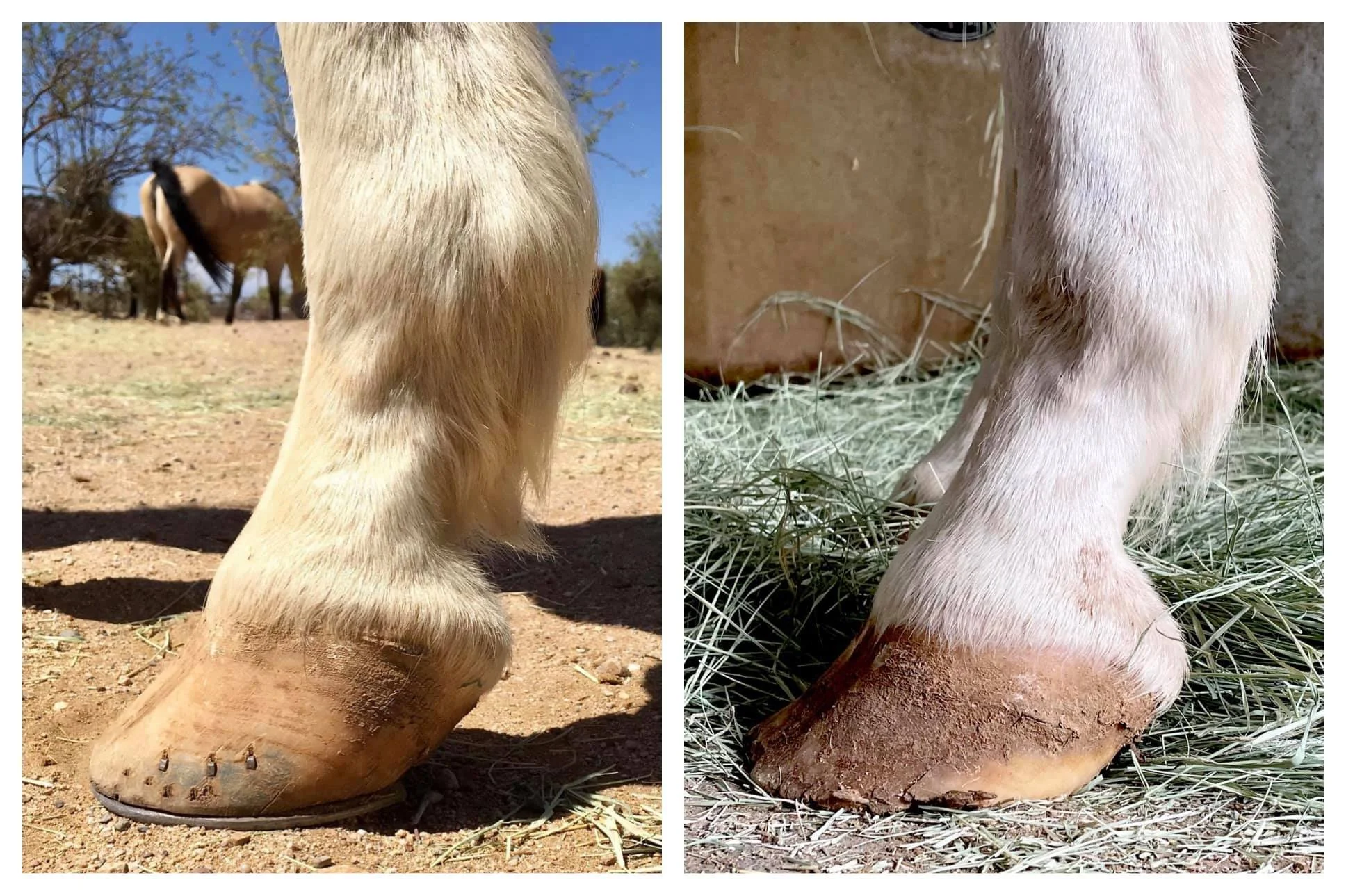
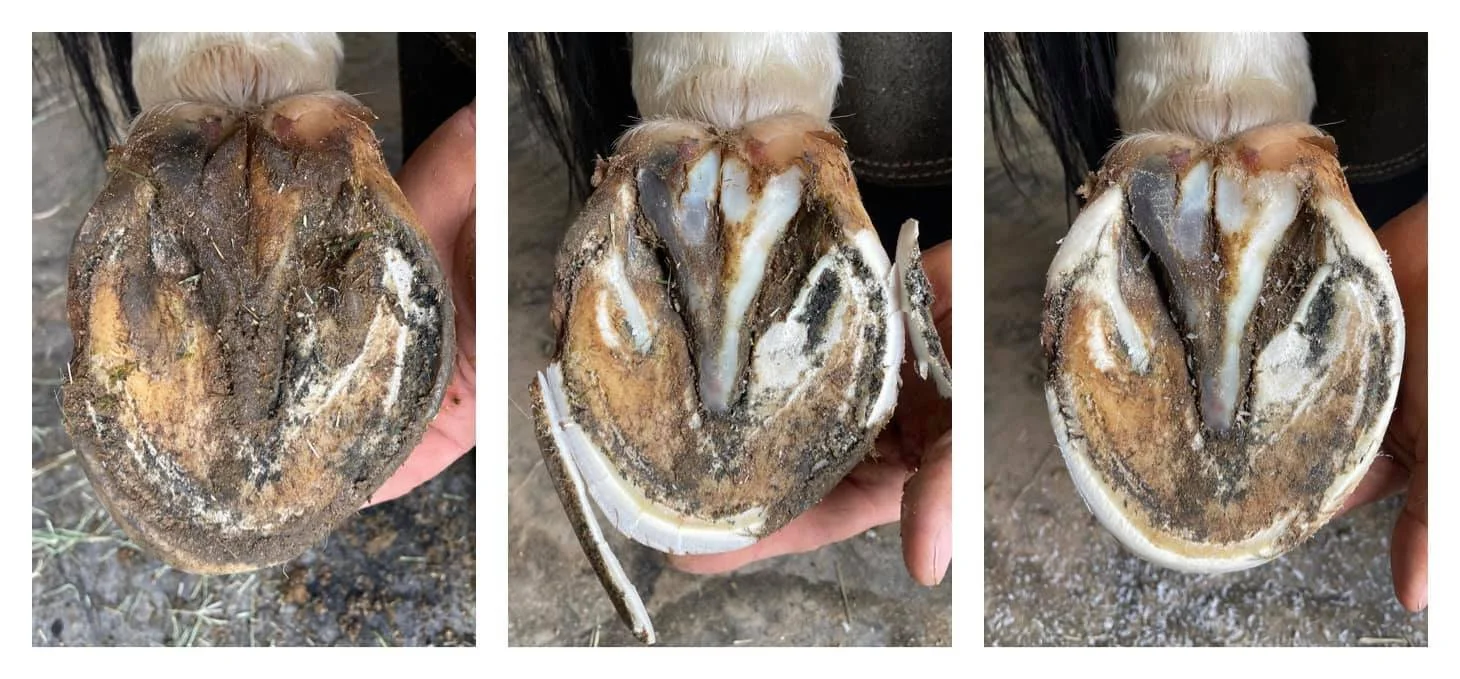
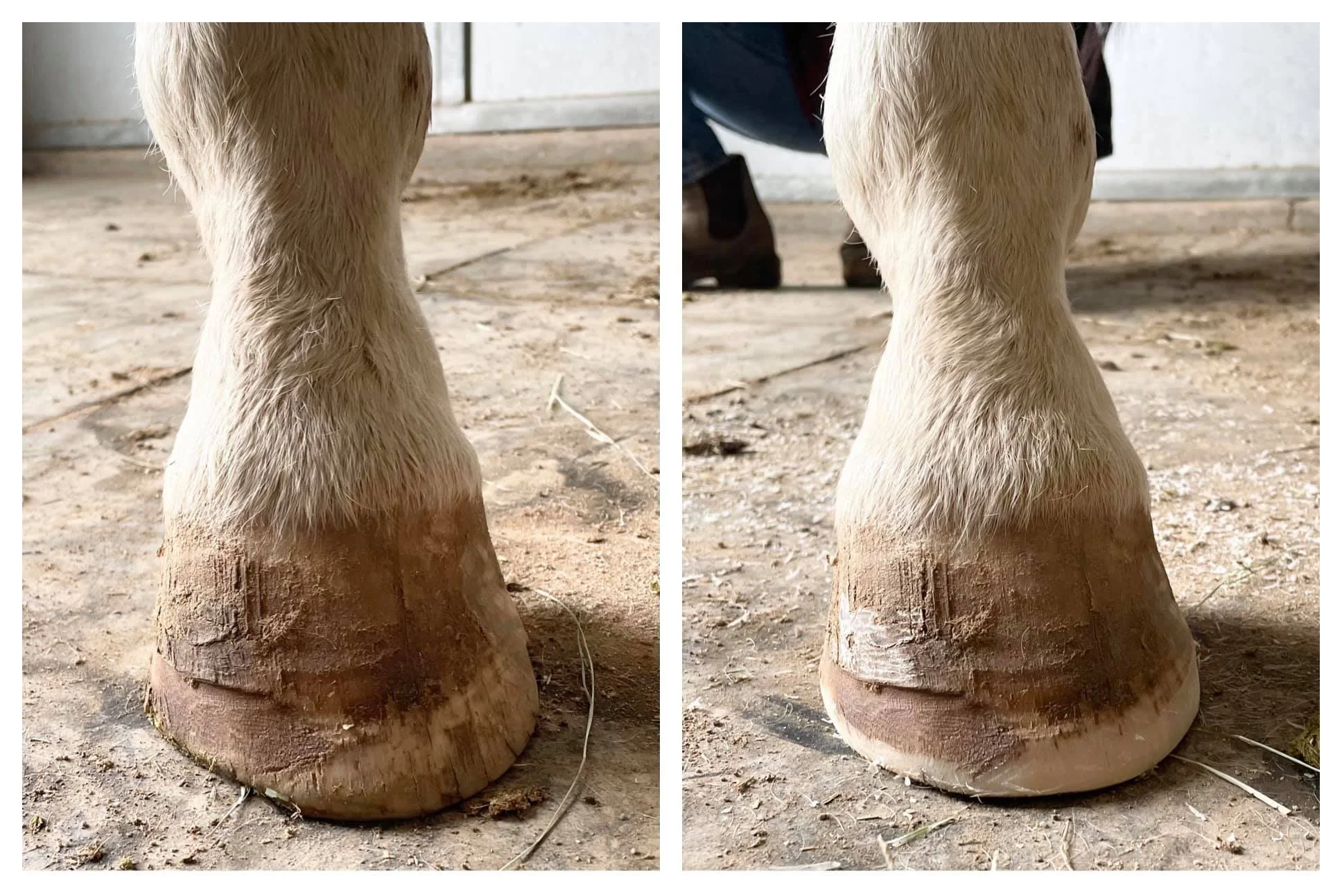
May 2021 - Jul7 2021 (7 weeks progress/3 trims)
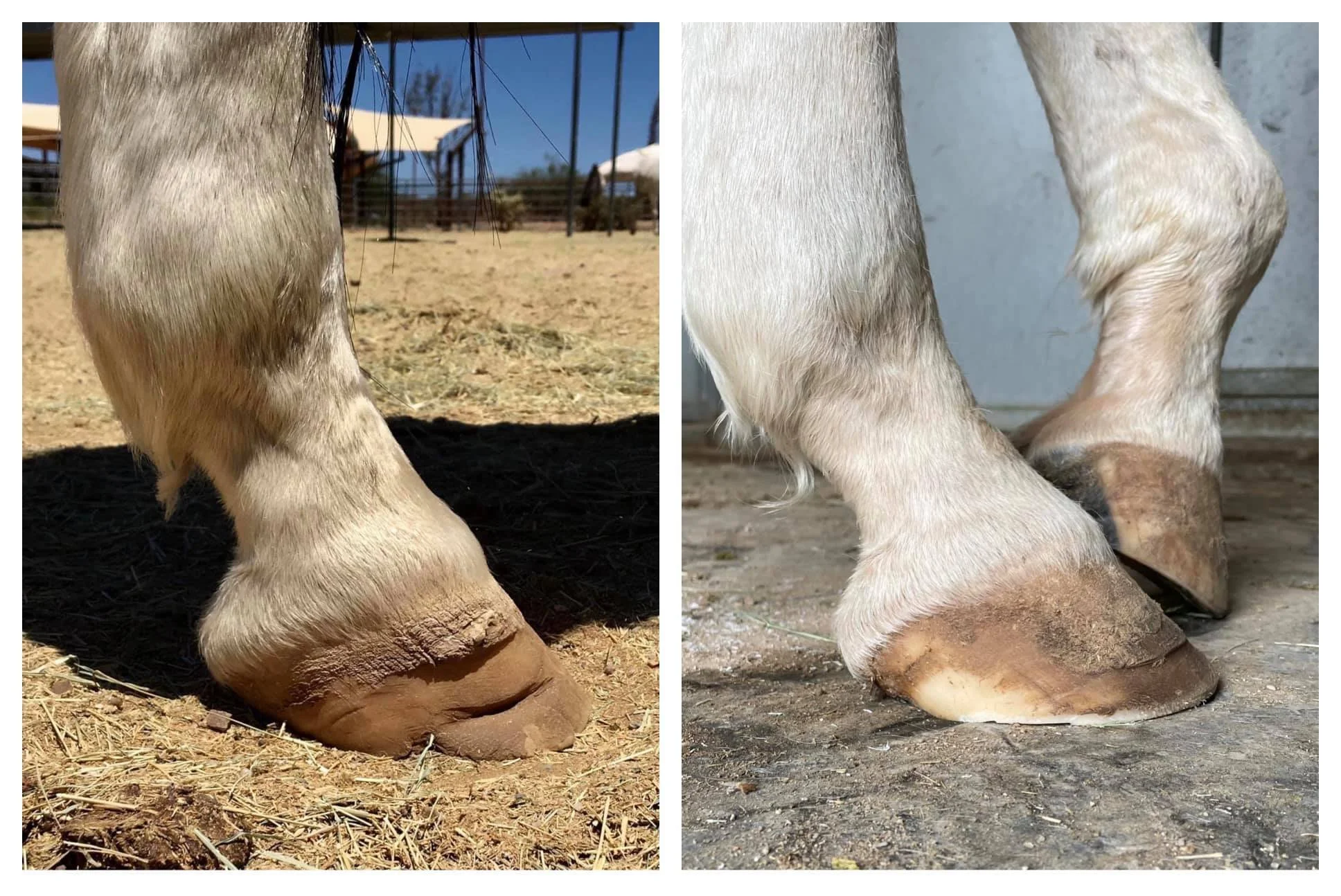
May 2021 - Jul7 2021 (7 weeks progress/3 trims)
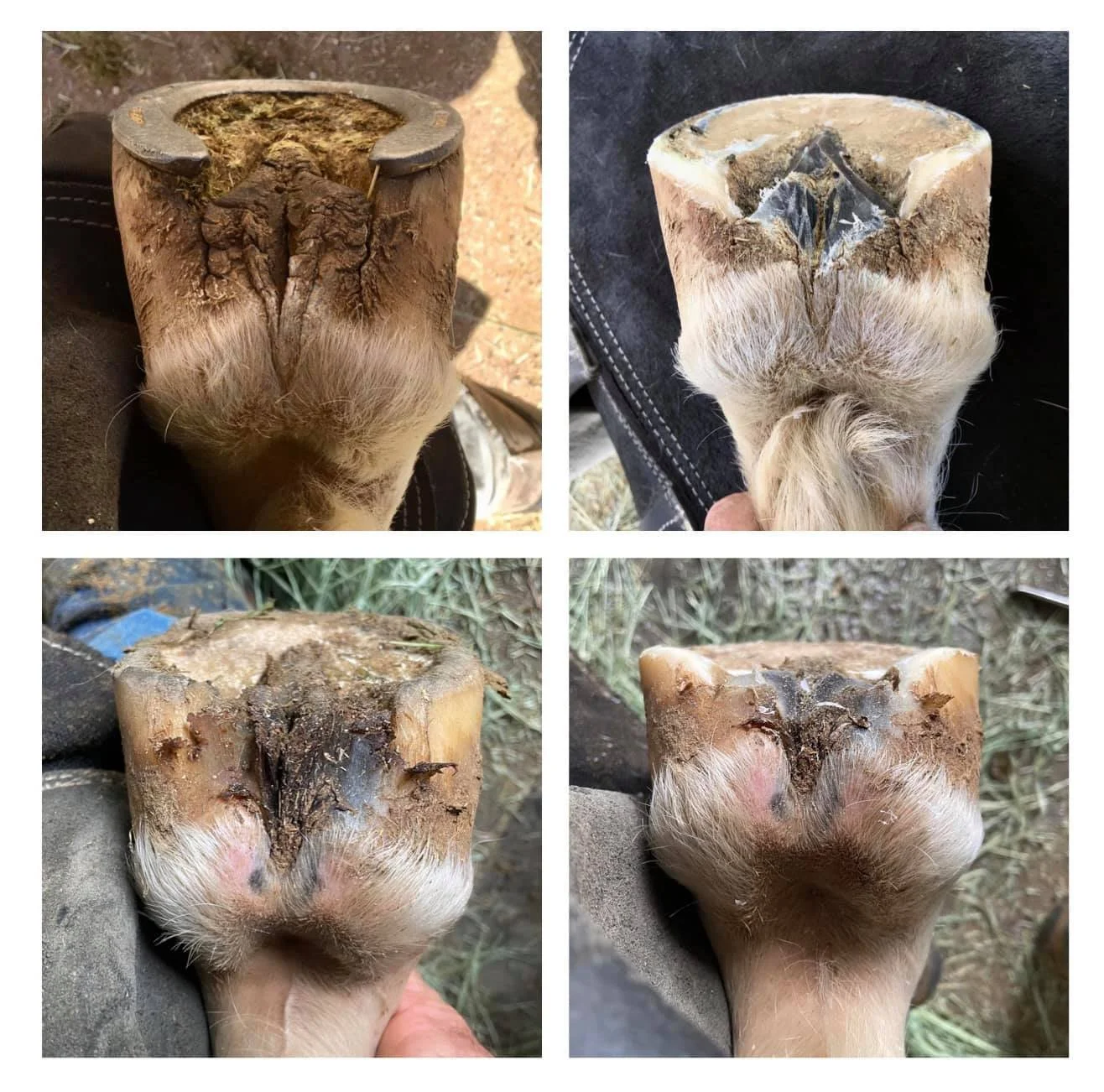
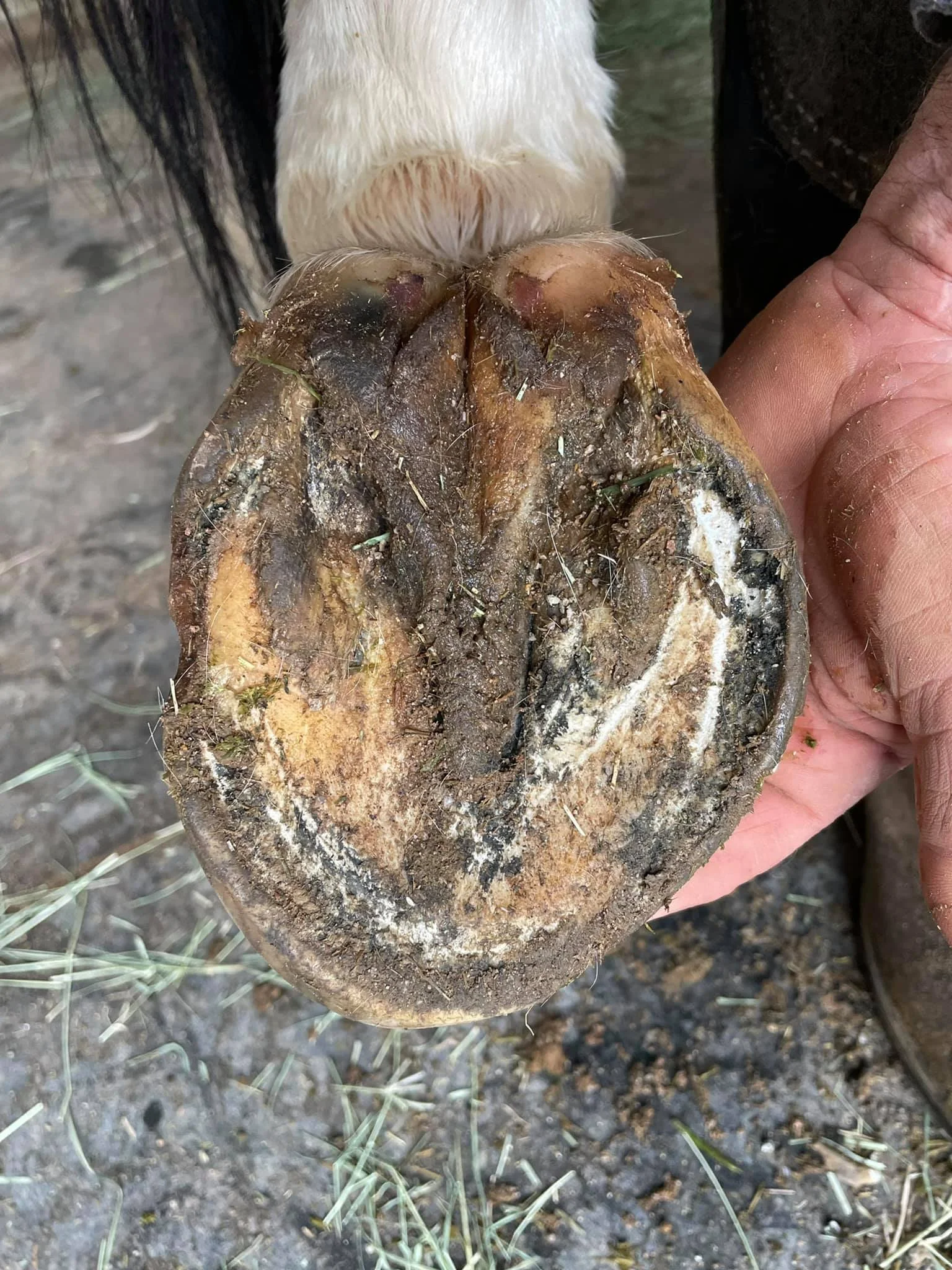
July 2021
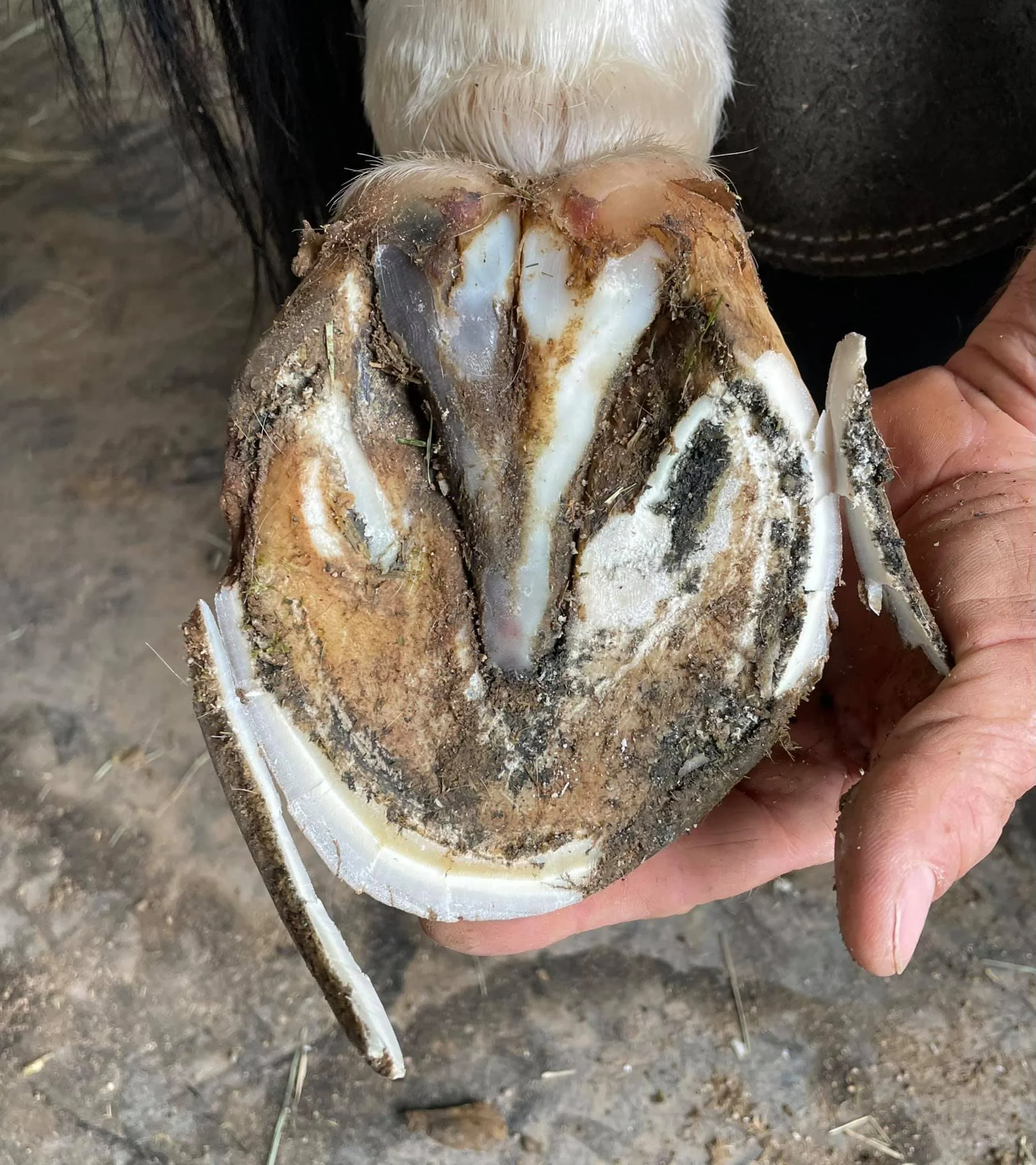
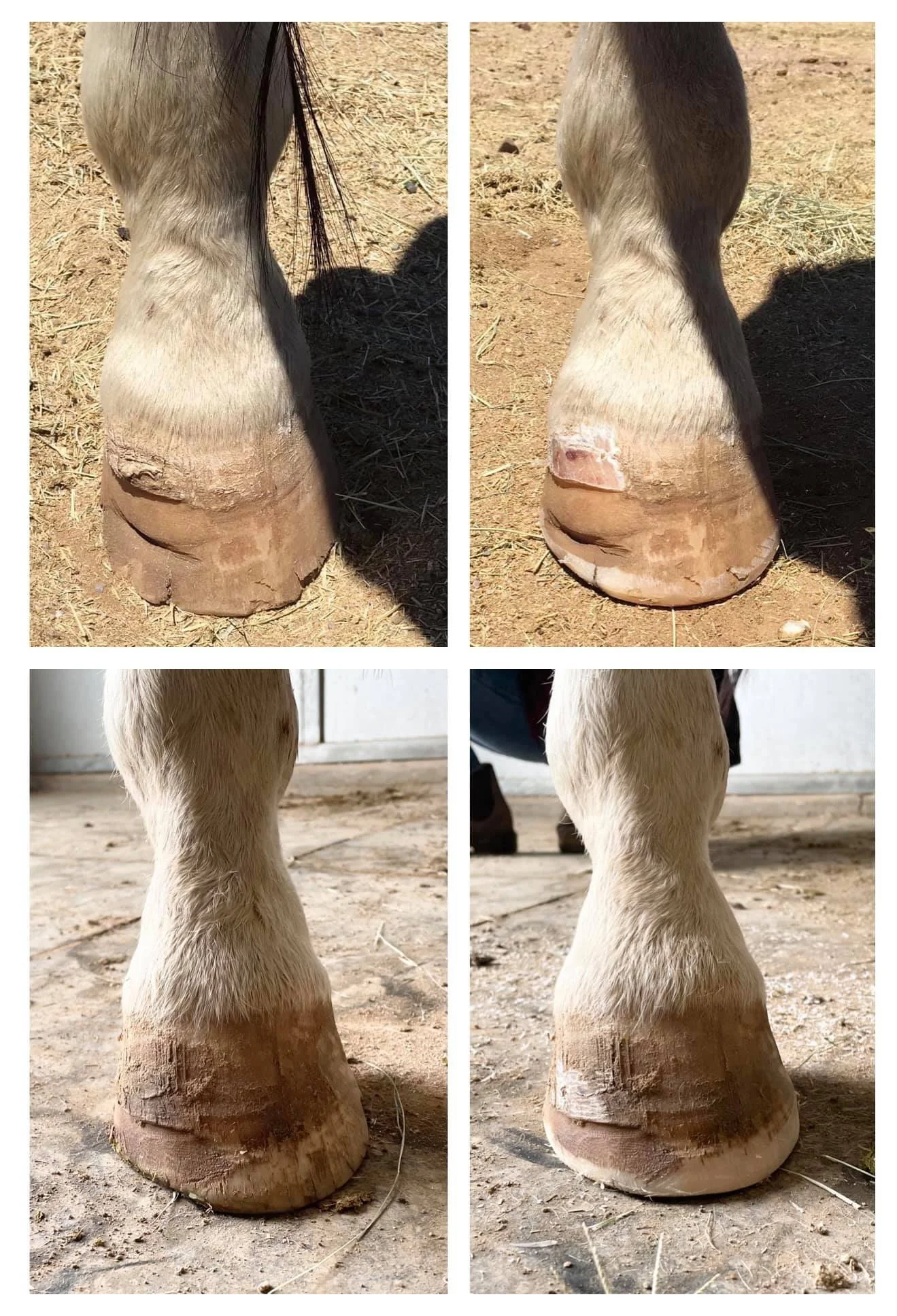
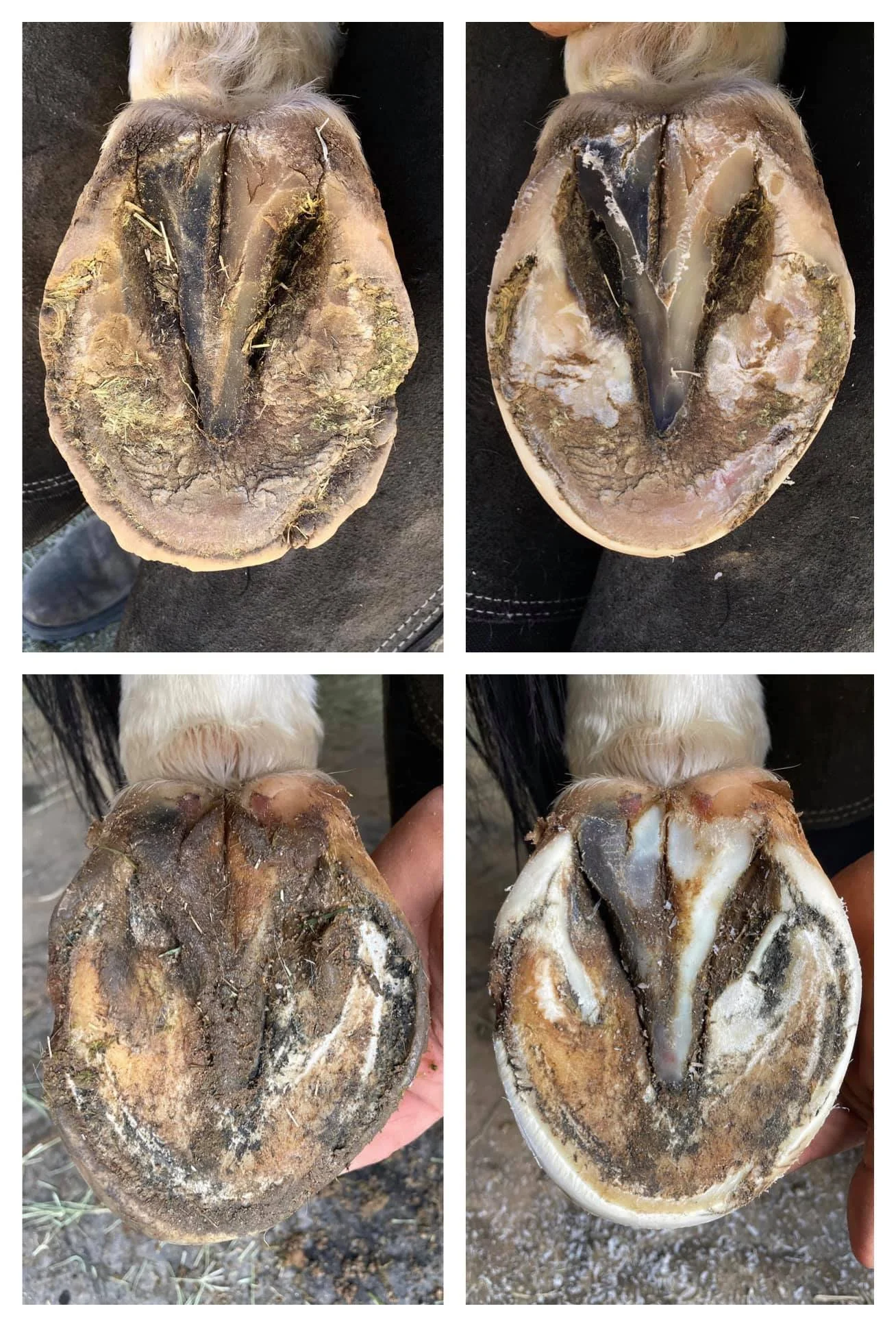
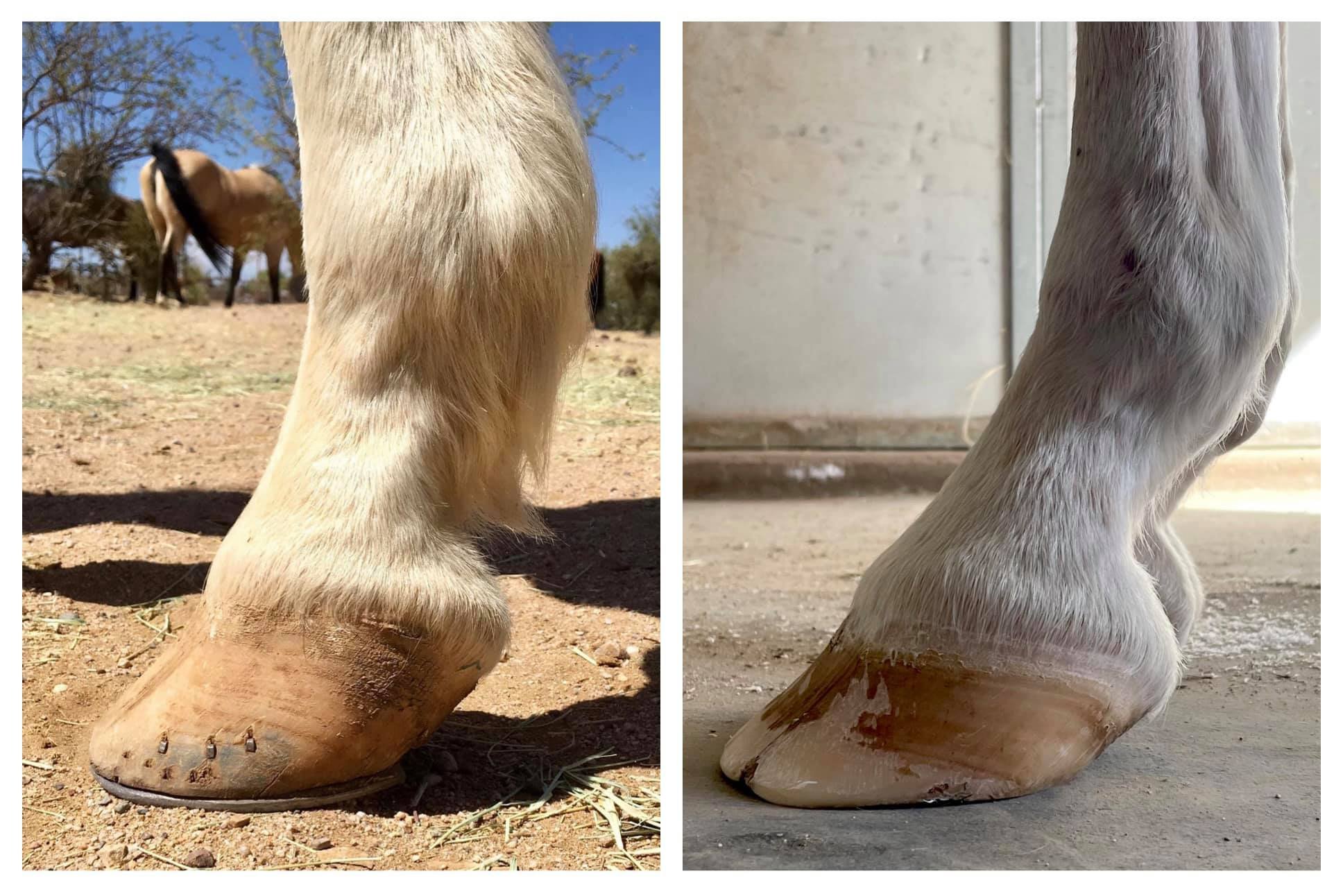
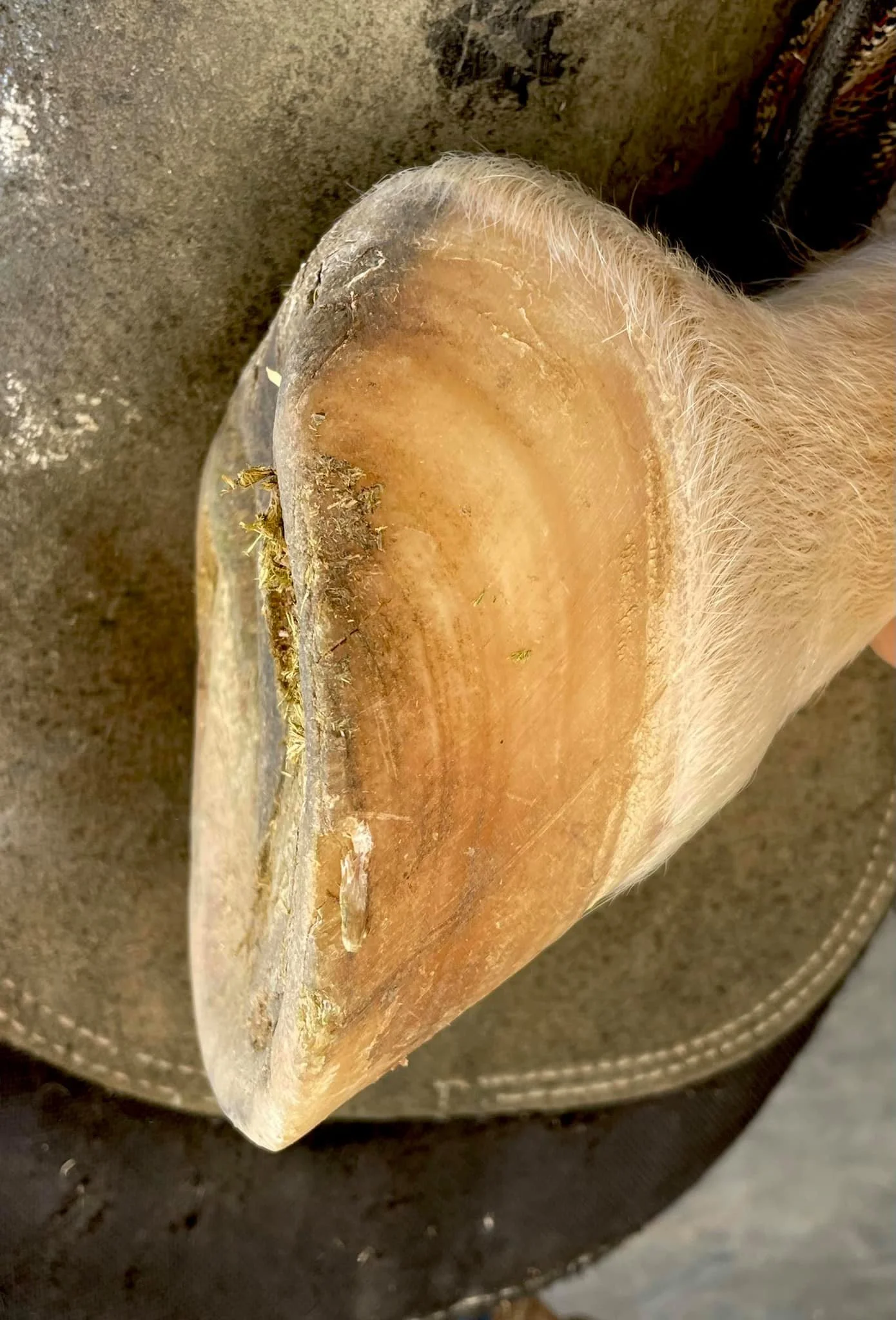
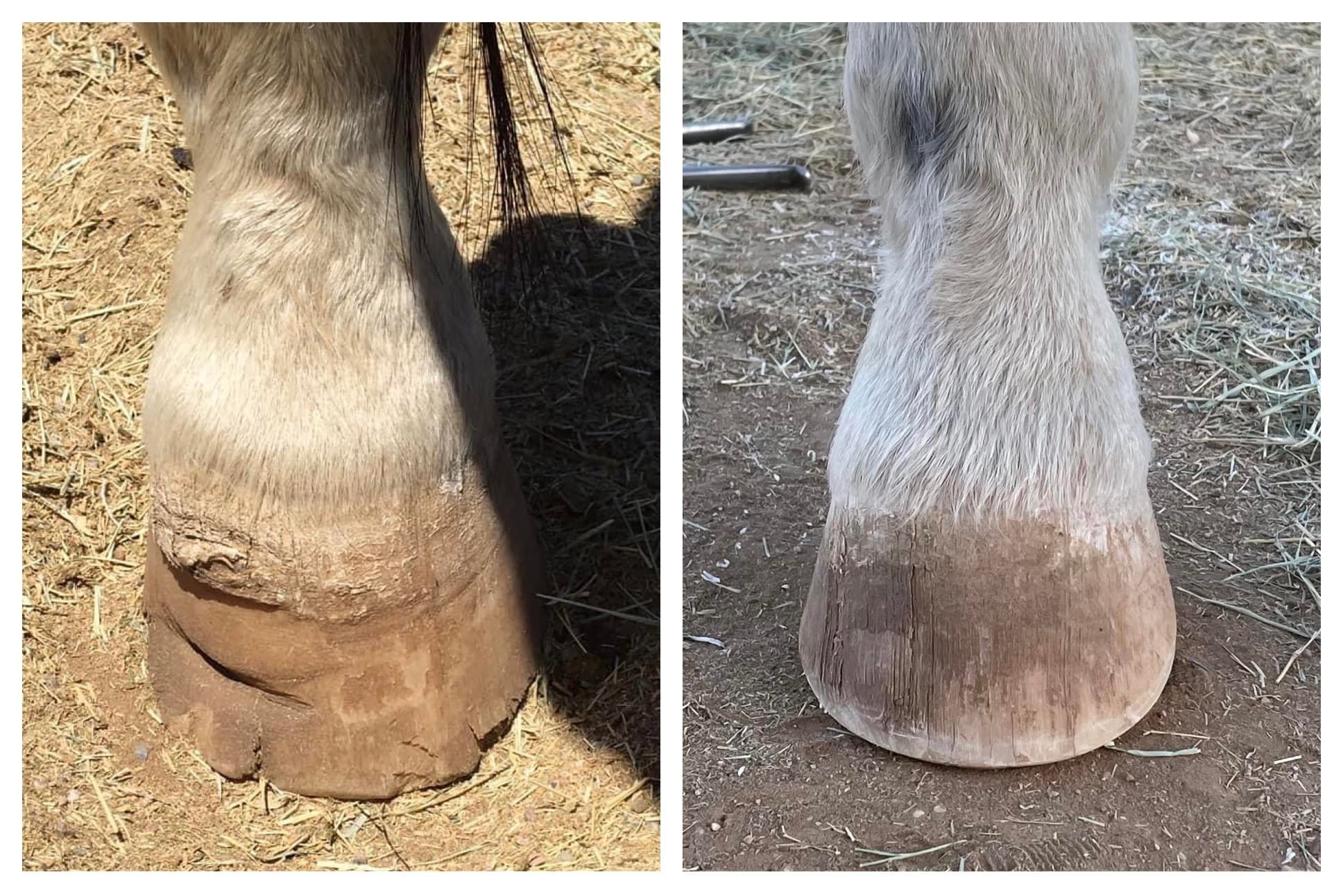
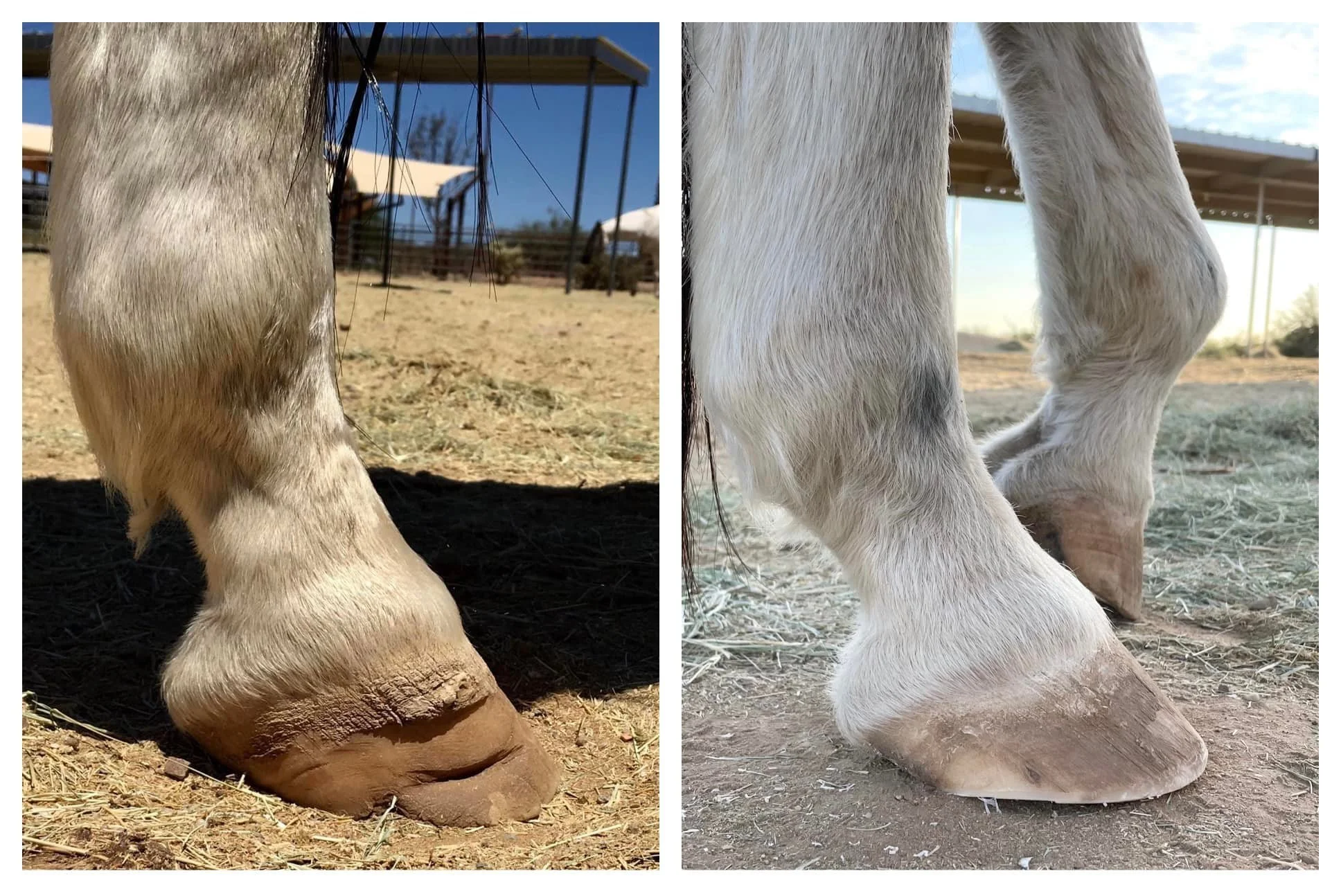
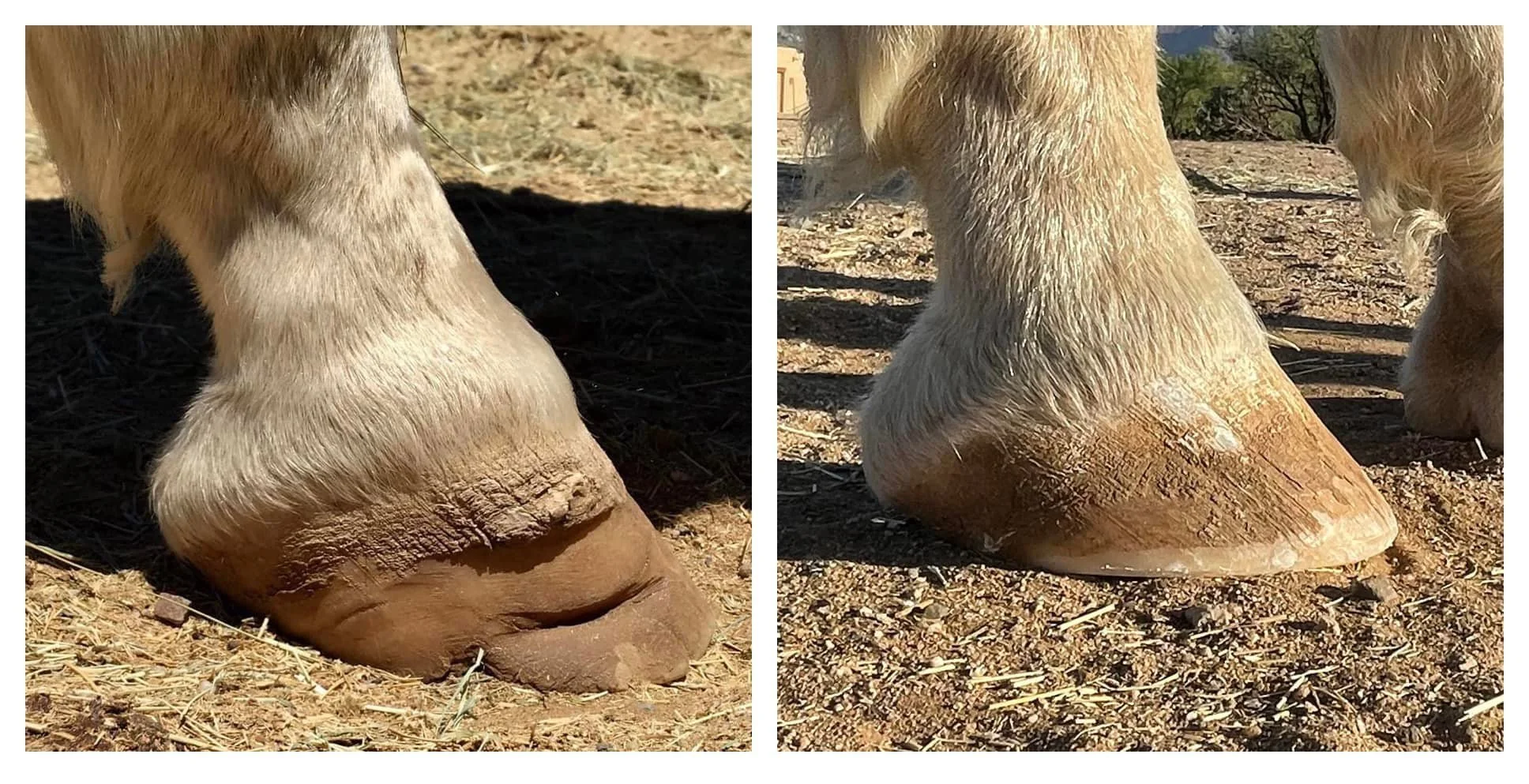
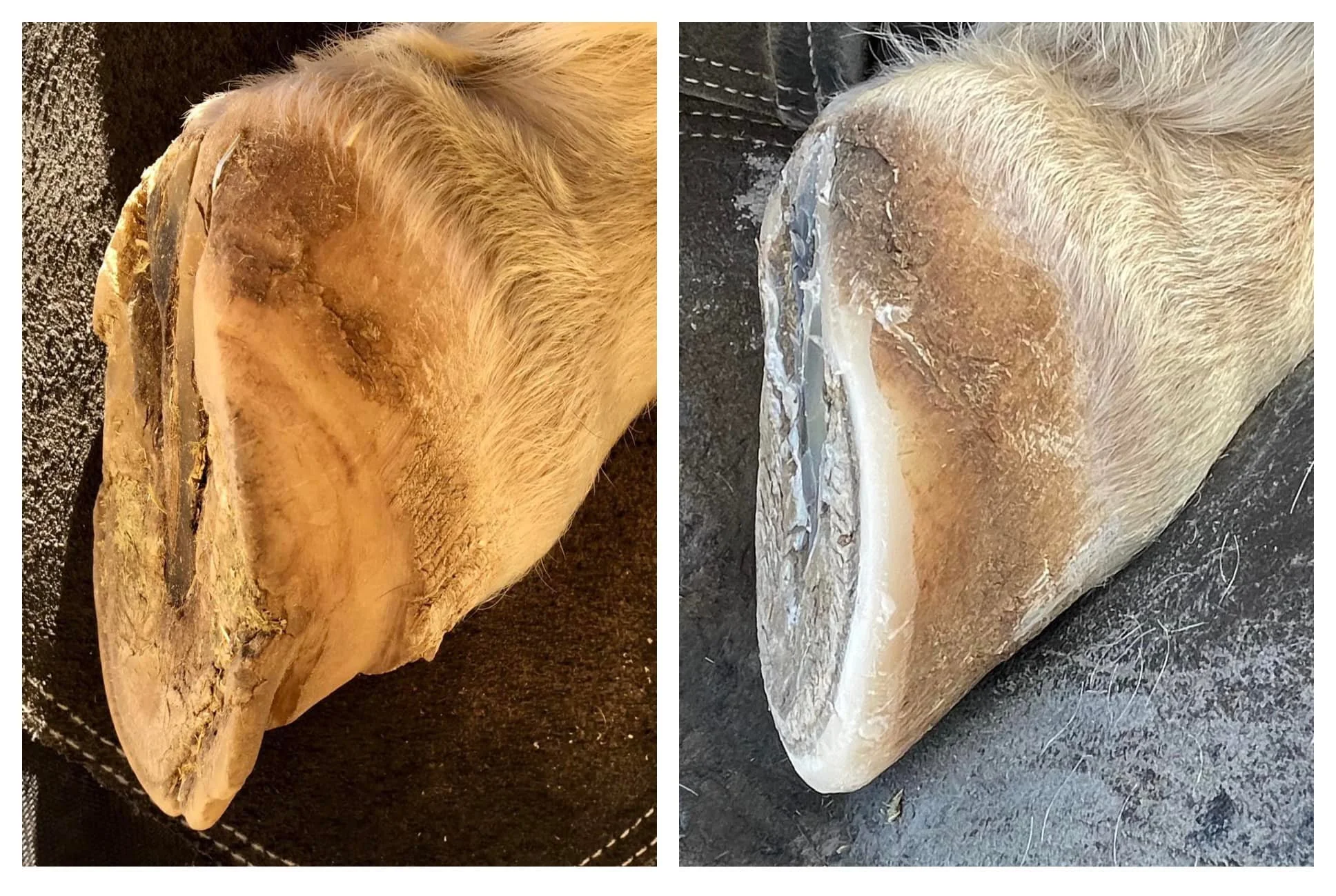
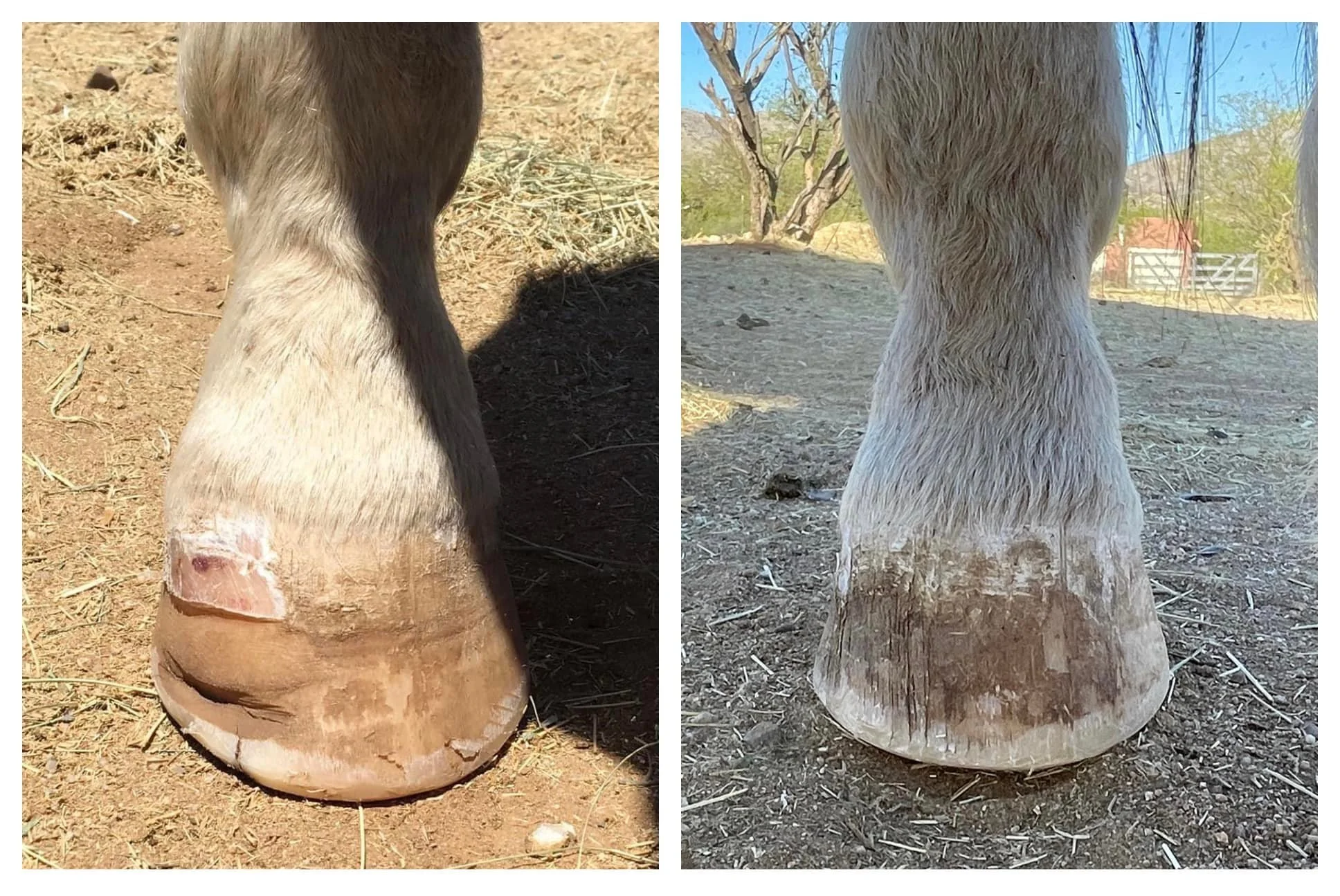
This is 7 weeks progress since my first trim on Wynn. The previous farrier was notching the wall below the horizontal crack to try and relieve pressure from the new wall growing in faster than the old wall was growing off. It wasn’t working. The problem was on the bottom. He wasn’t trimming the frog properly to get the weight bearing off of the toe and he was leaving the outer toe wall weight bearing, even the part below the horizontal crack that was already separated anyway. All my trimming is from the bottom and encourages the horse to load the majority of their weight bearing comfortably over the back of their feet. In these photos you can already see the wall relaxing down and the cracks and bulges disappearing after 7 weeks. The wall grows 1 mm every 3 days. This can be an advantage or a disadvantage depending on the trimming. This horse was extremely uncomfortable for years. He was running out of ways to compensate. This is how horses get euthanized for practitioner caused pathologies
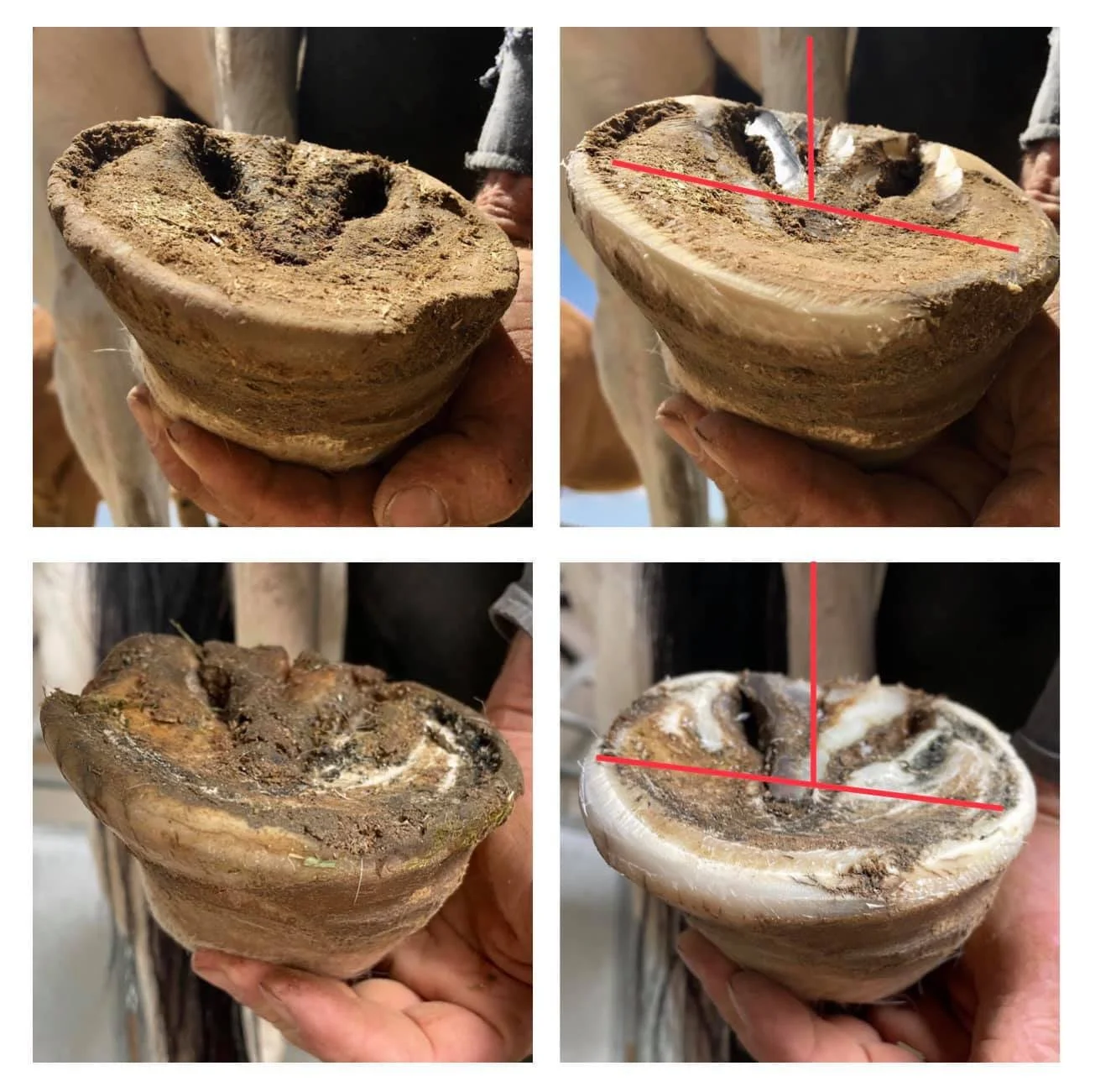
This mark up shows the sole plane becoming more perpendicular with the cannon bone. In my experience, this can be safely done ( even with older horses ) when the trimming and assessing are done from the bottom. I don’t look at the leg and try to correct the leg imbalance. I look at the sole and balance to the peripheral edge. The amount of leg correction that is possible will come from trimming to the peripheral edge of the sole and shaping the frog correctly to increase comfort in caudal weight bearing. When the leg joints reach their maximum correction, there won’t be any more corrections in the sole/wall relationship. This way, the hoof guides the corrections. The trimmer just needs to be good at reading the sole ( and the horse’s input ) correctly. This saves all the mental gymnastics of assessing angles and leg conformation, giving the trimmer more time to communicate with the horse and pick up on subtle cues concerning exactly where to remove dead tissue.
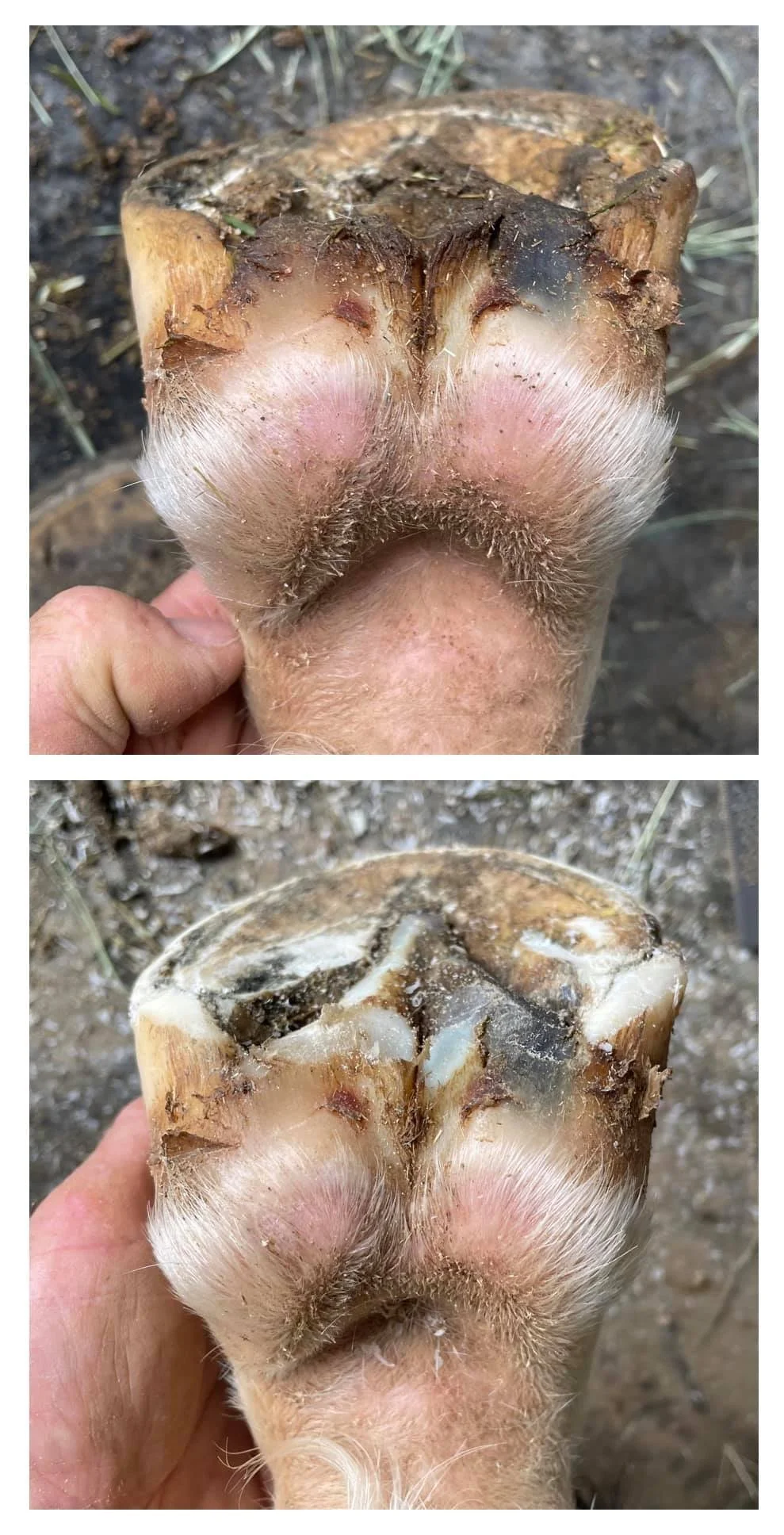
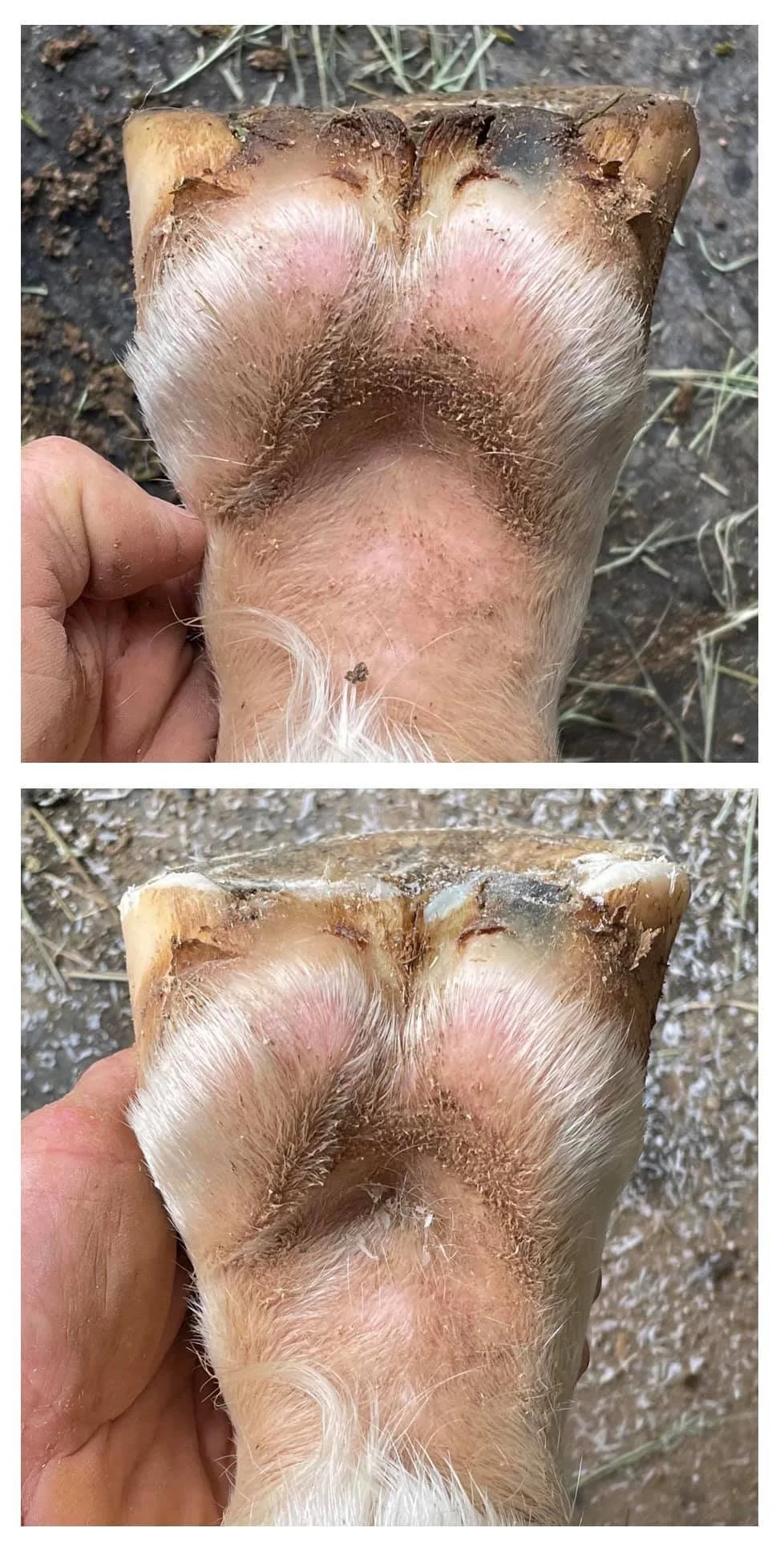
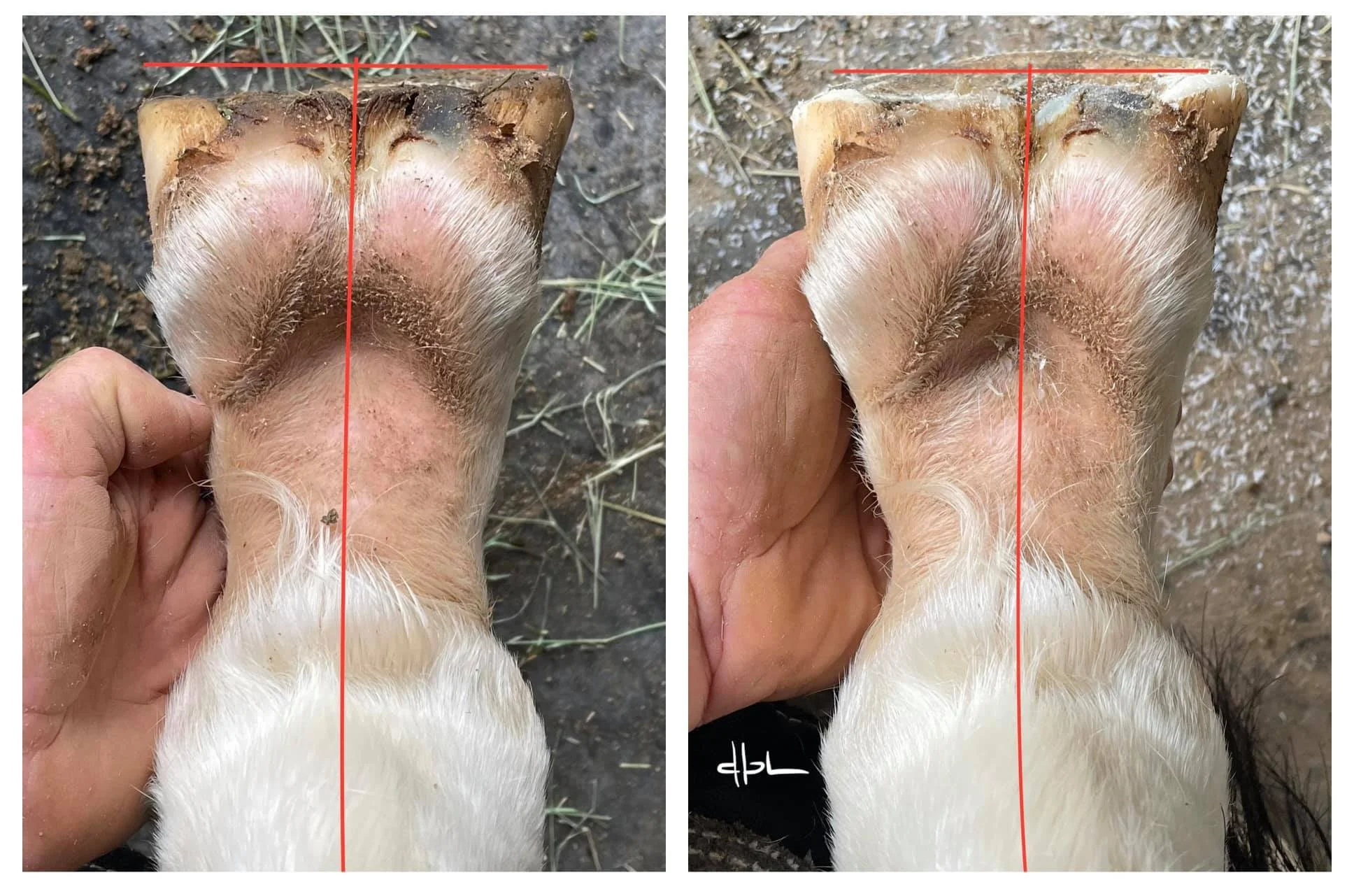
I don’t try to get a balanced foot right away. The leg joint morphology and ligament/tendon tension dictates the balance, which can be assessed in the readiness for the retained sole to exfoliate. I just encourage soft tissue development by shaping the palmar contours to receive the weight bearing as balanced and comfortable as possible at each trim. Eventually, if the trims are frequent enough, the foot will become as balanced to the leg as possible.
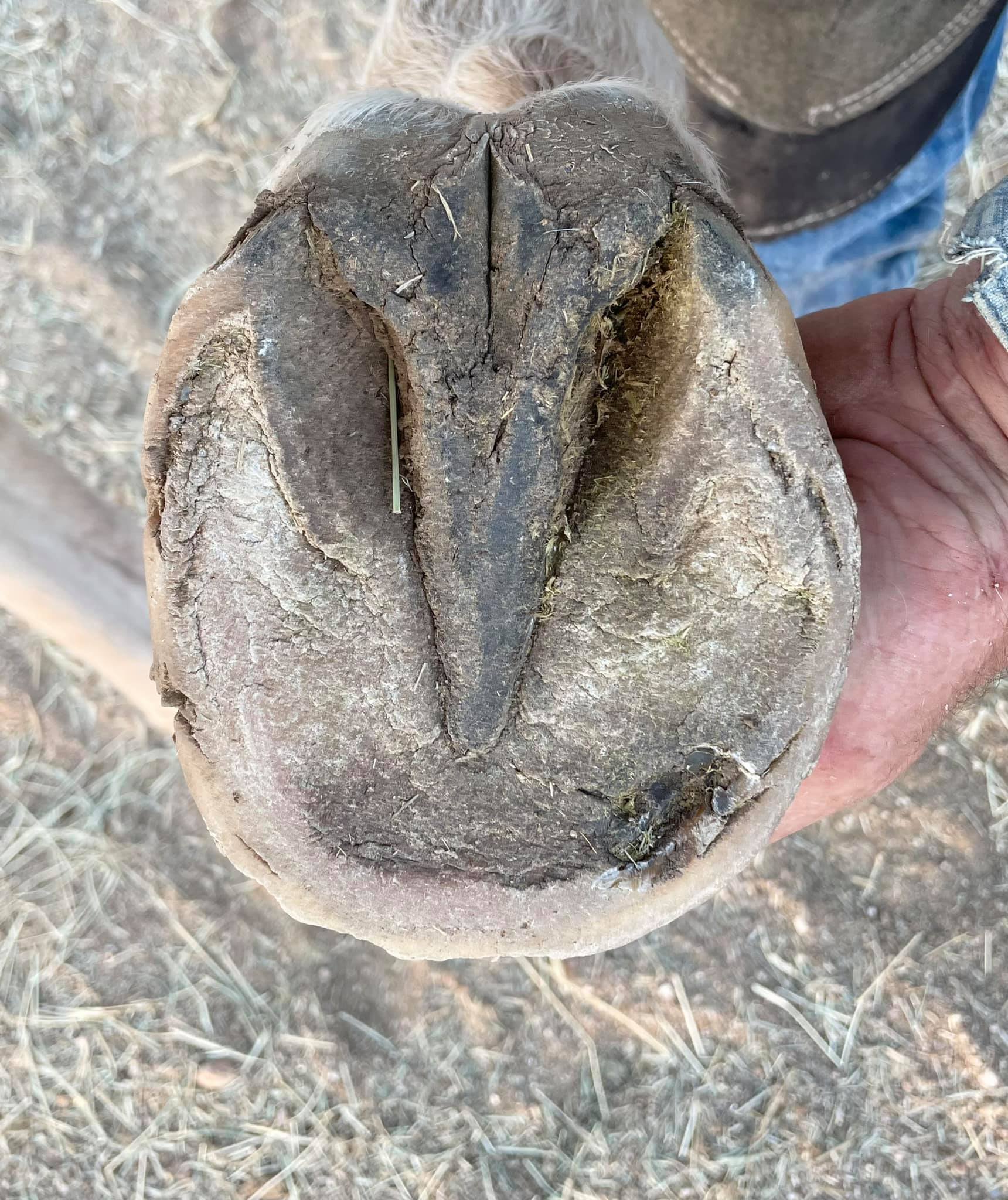
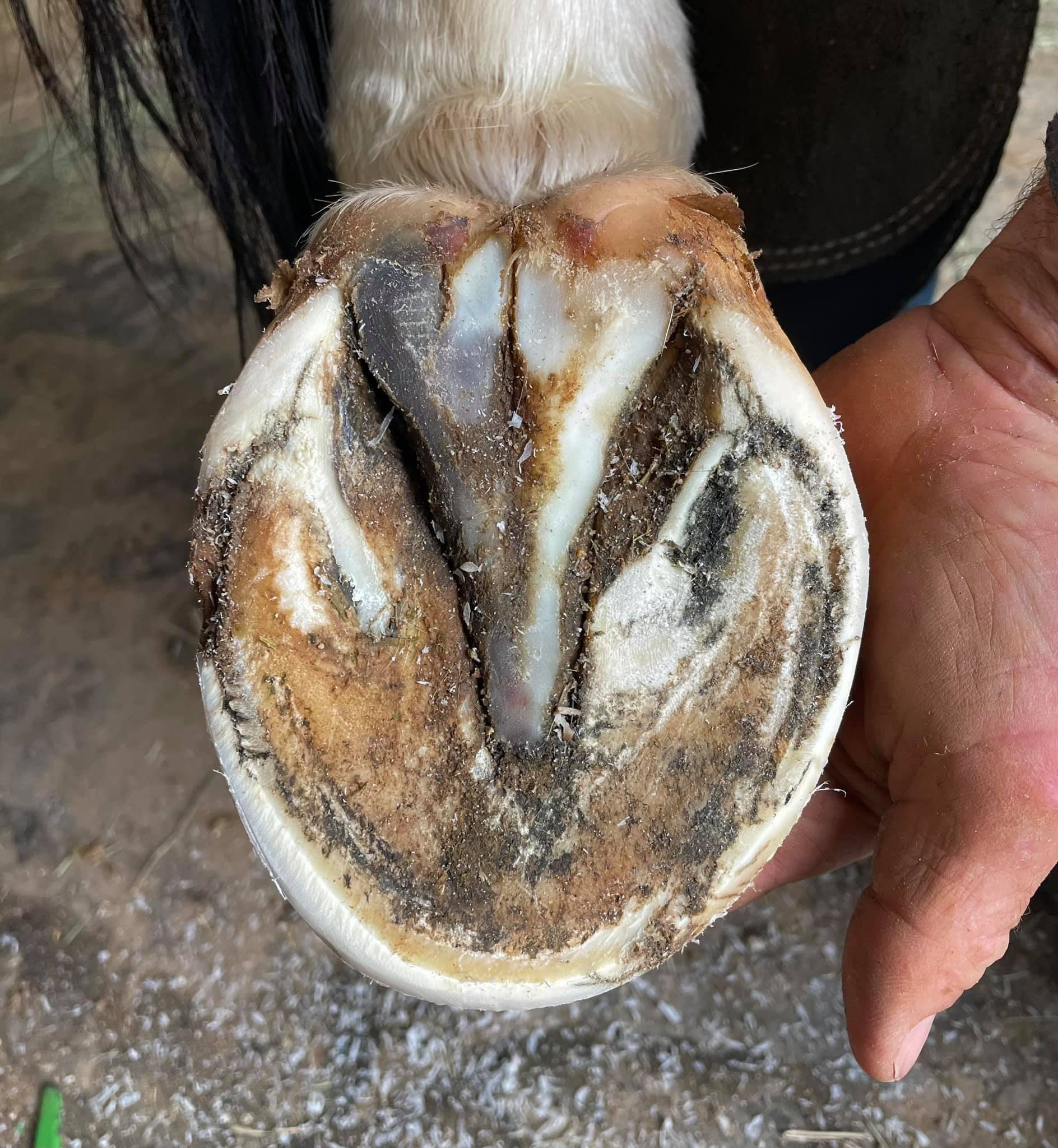
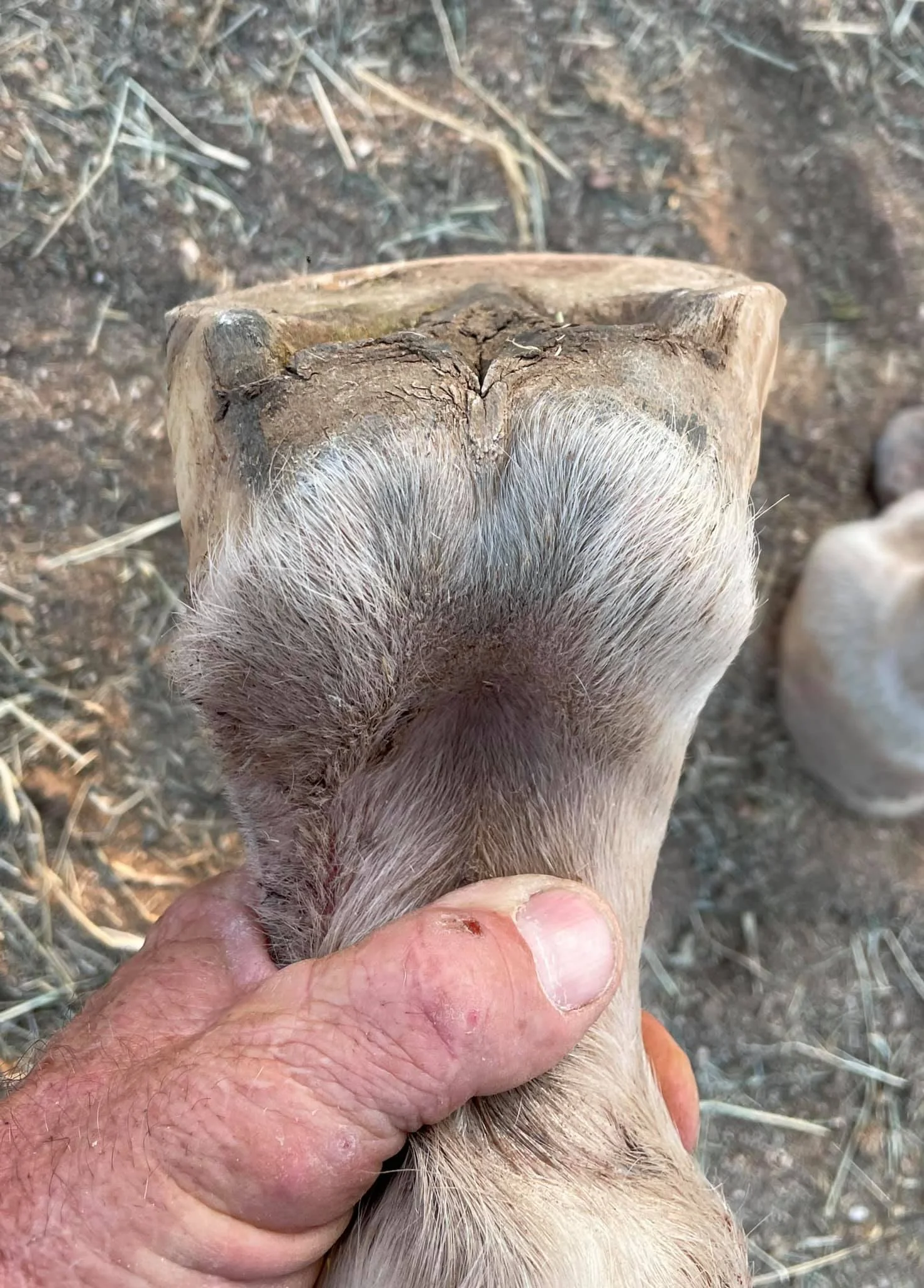
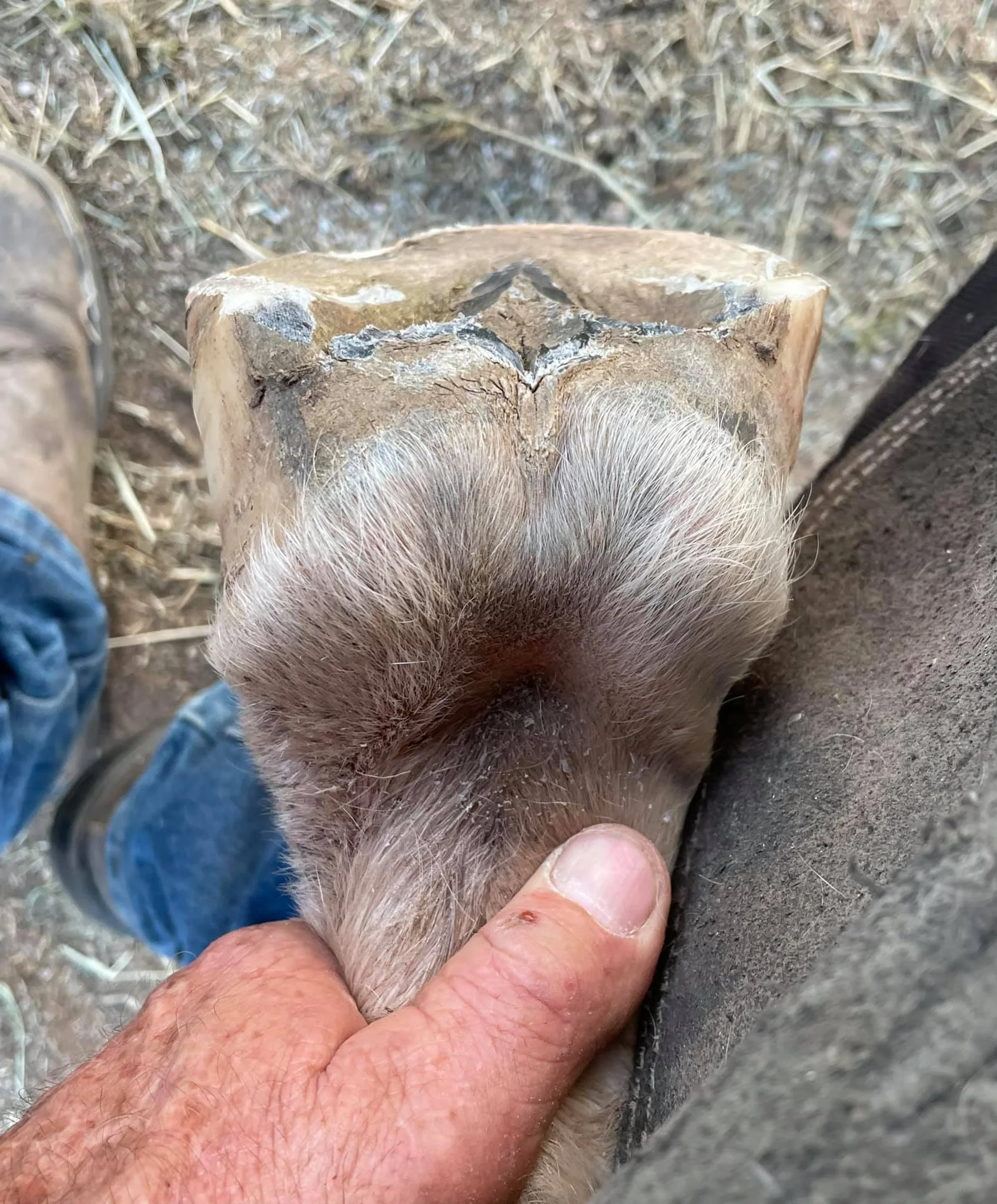
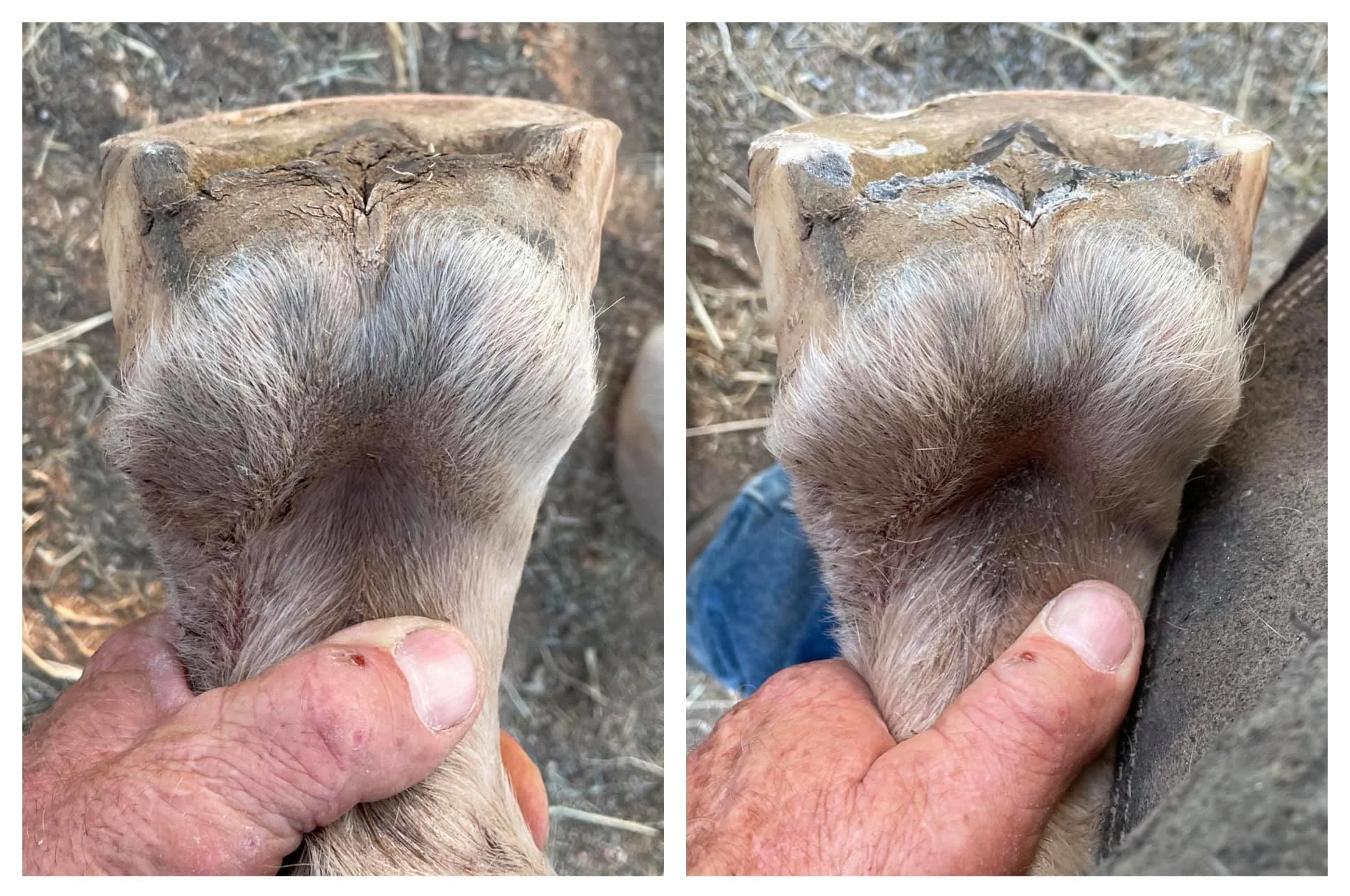
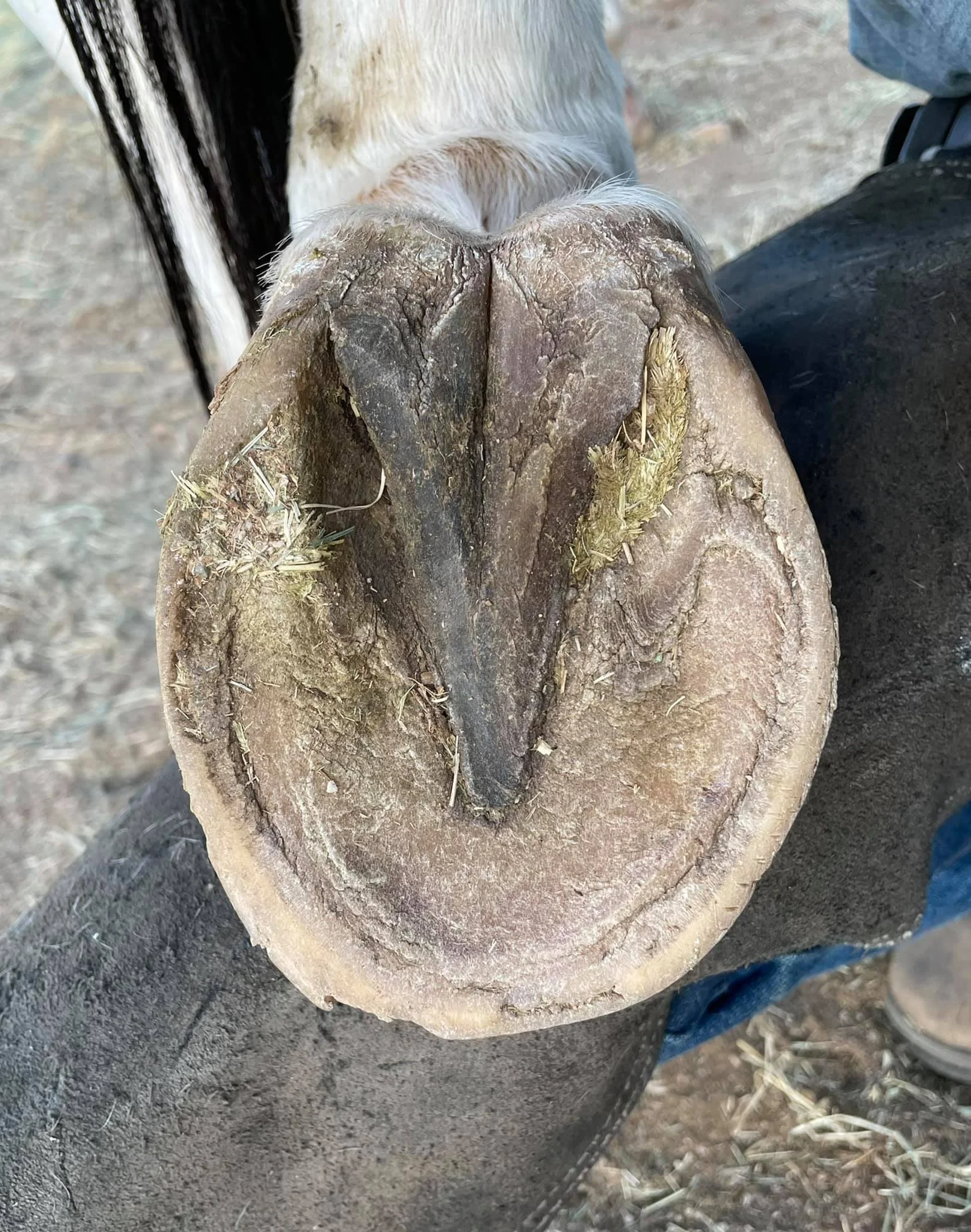
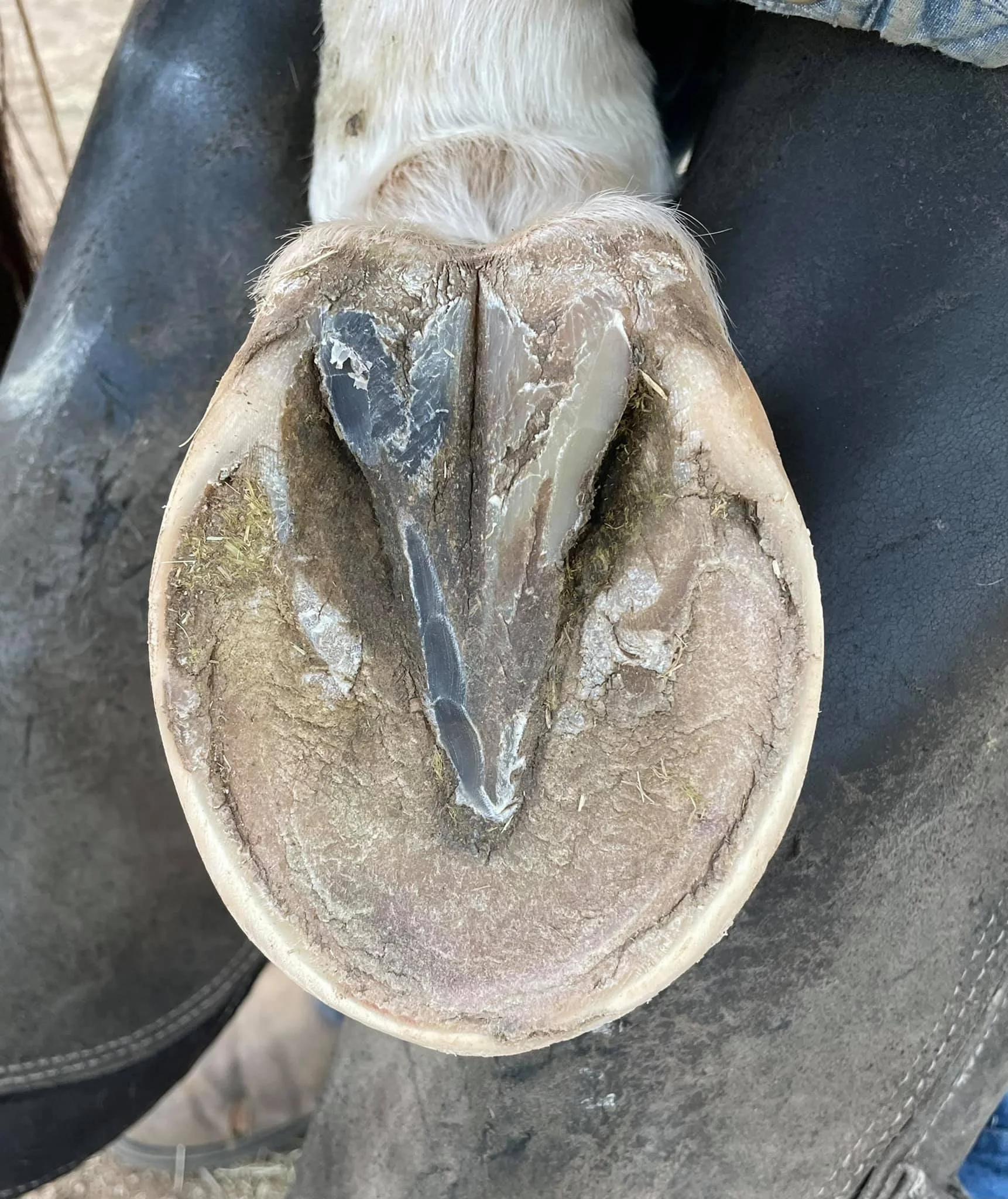
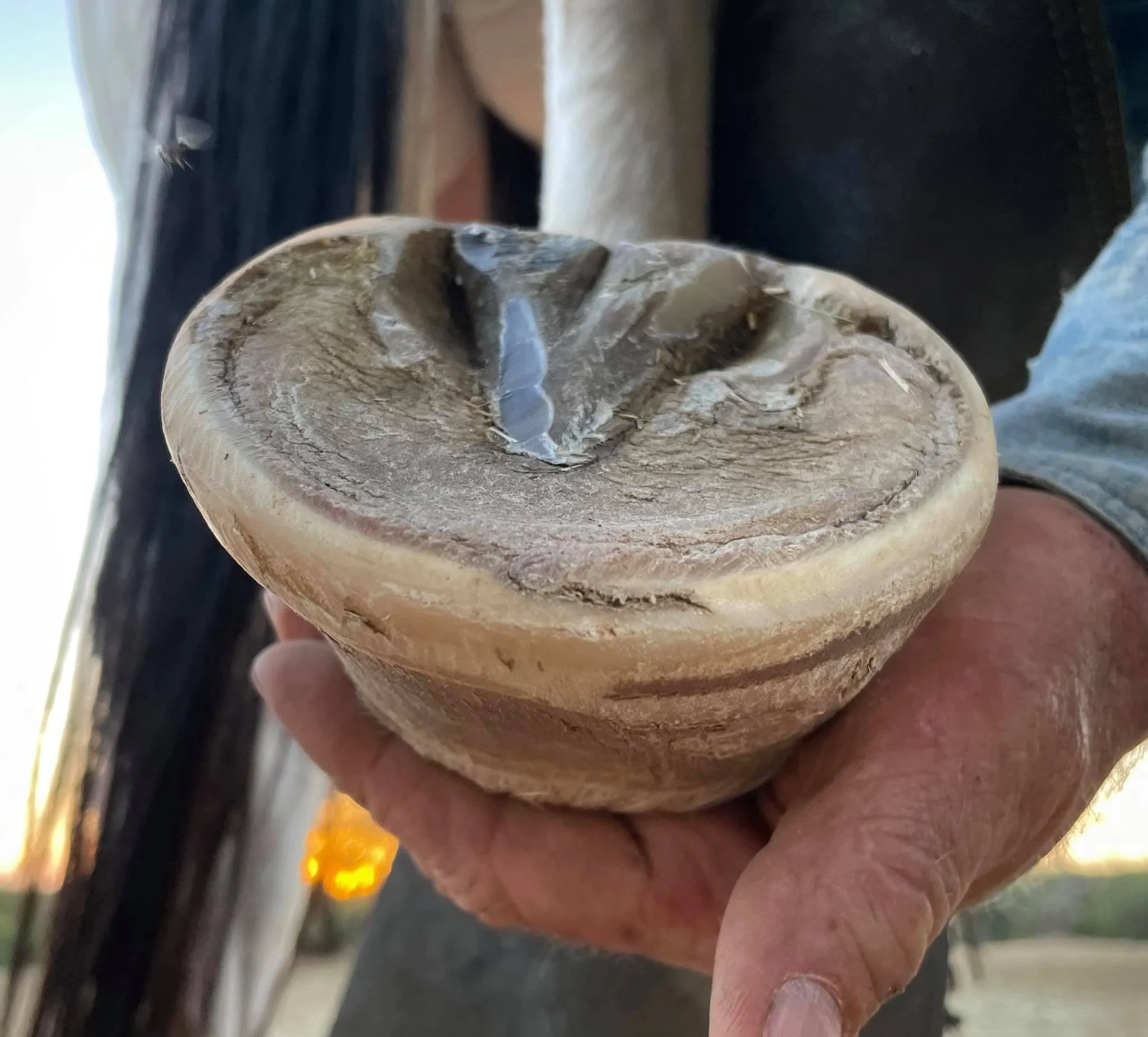
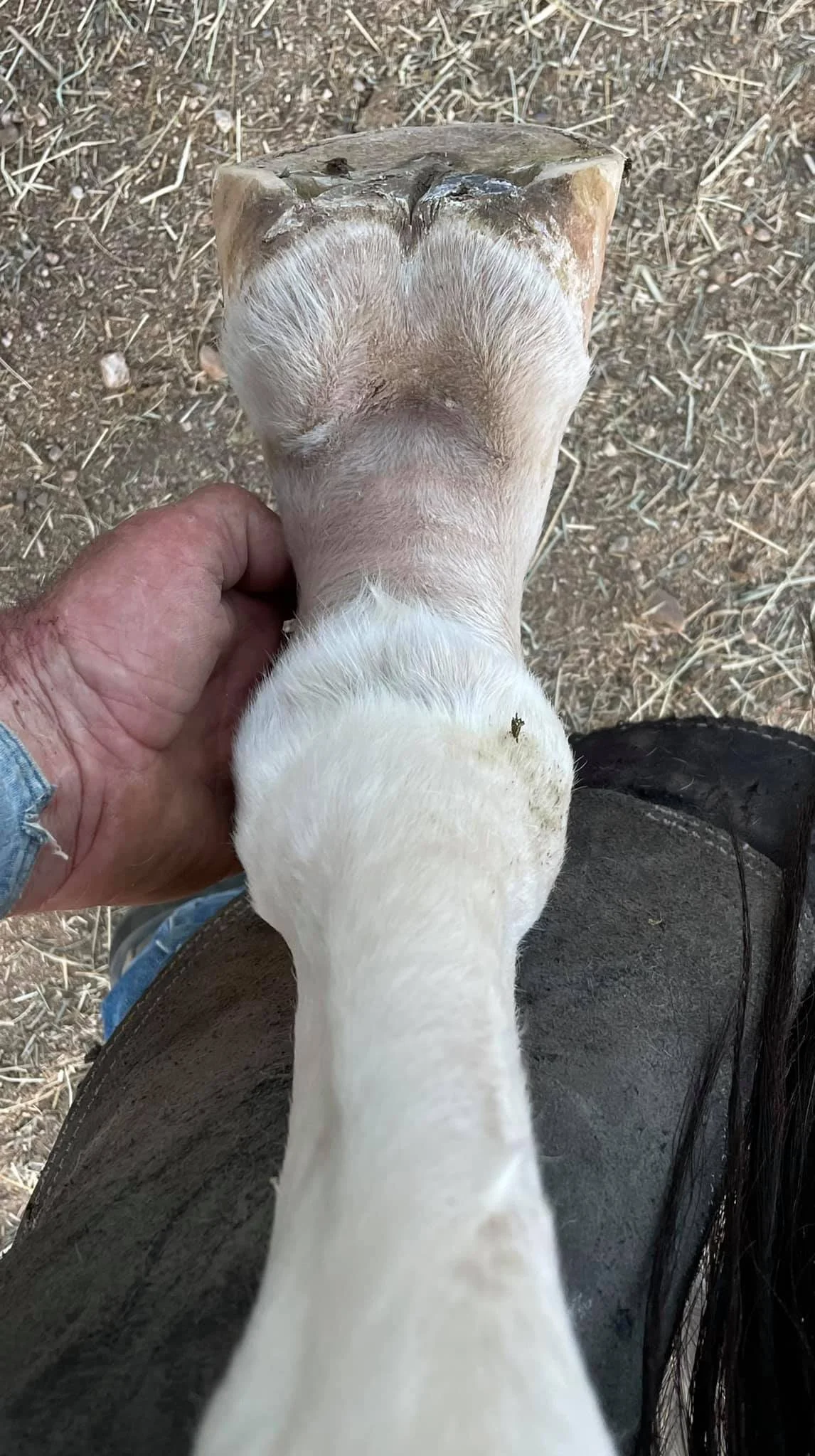
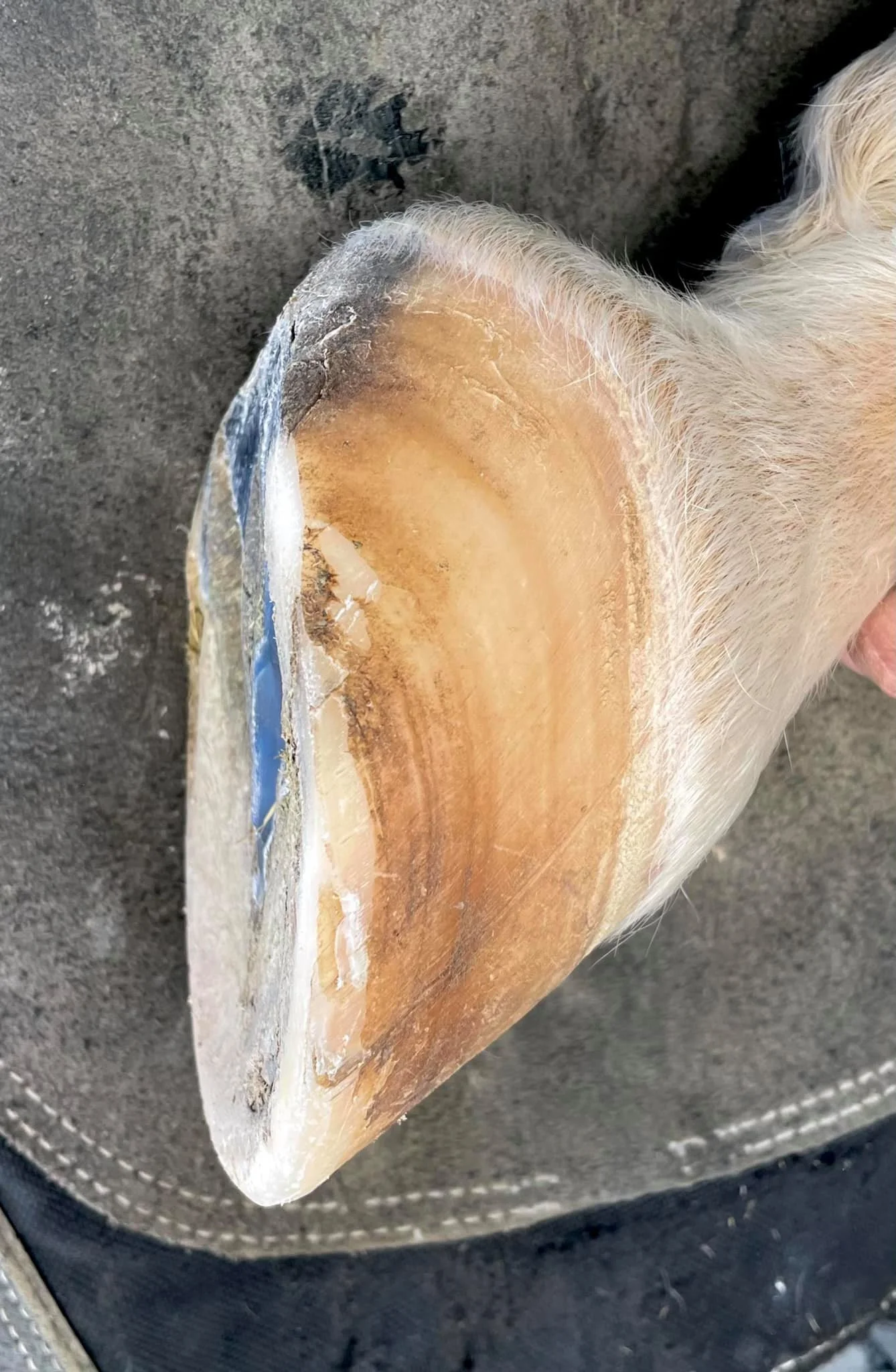
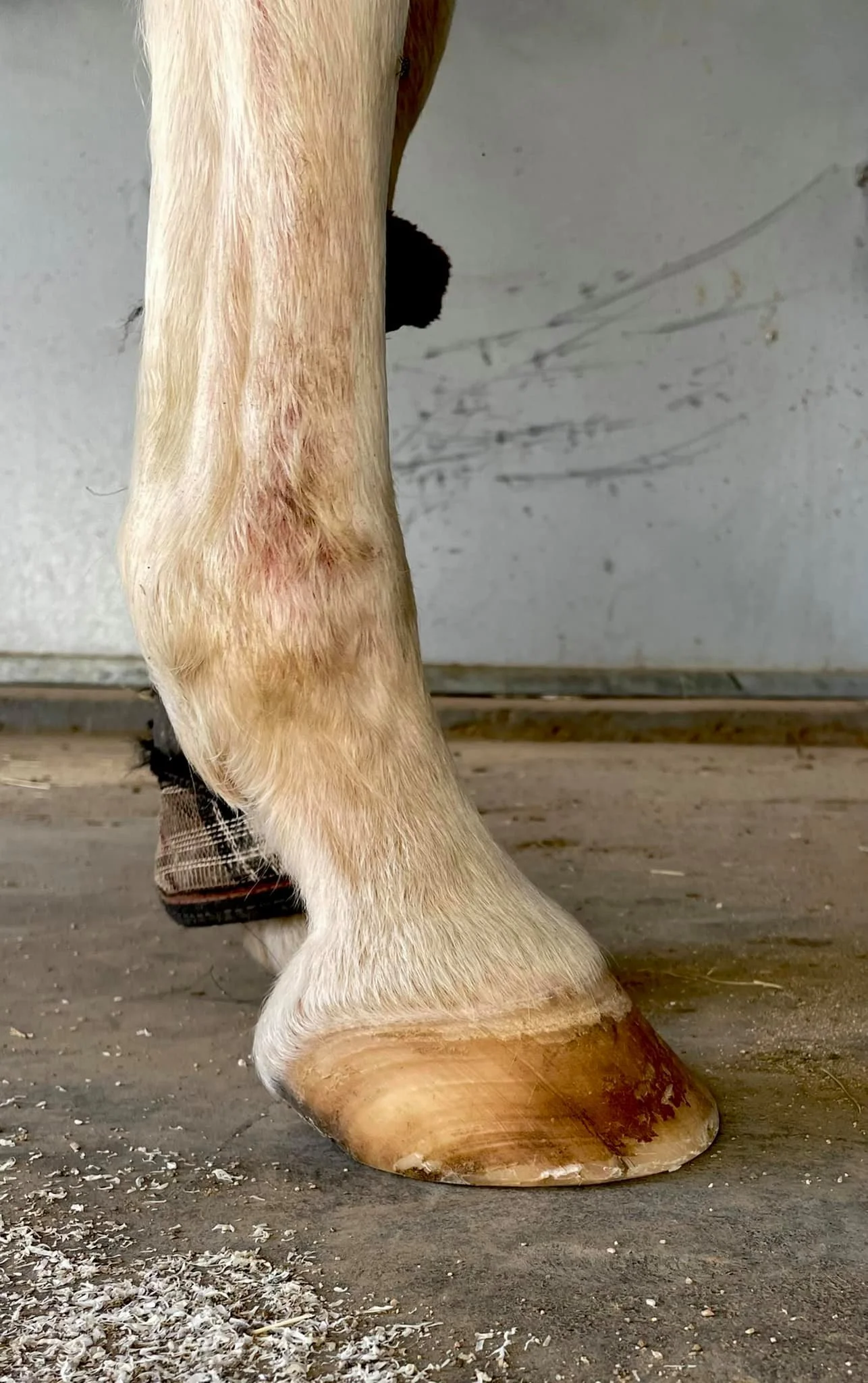
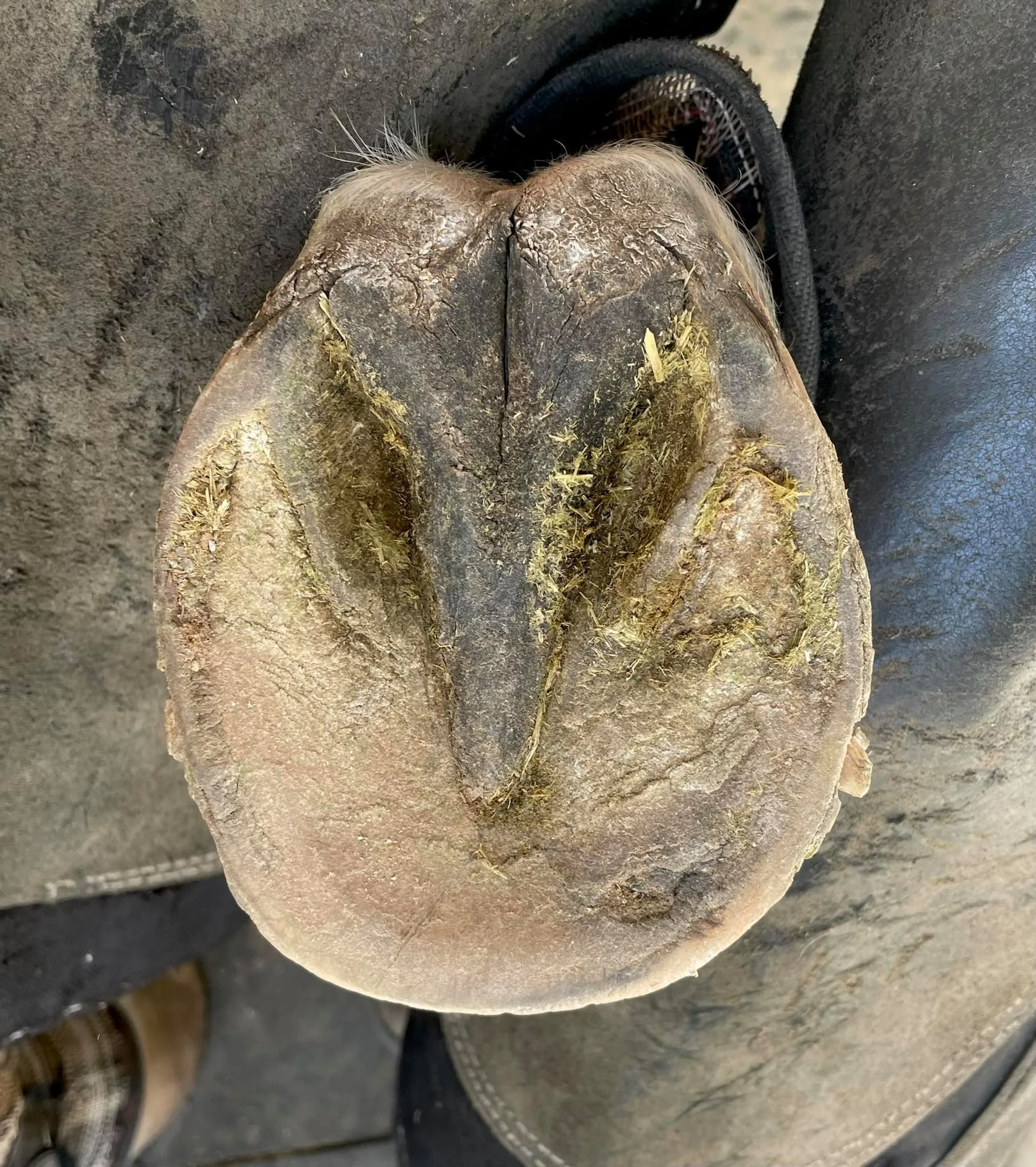
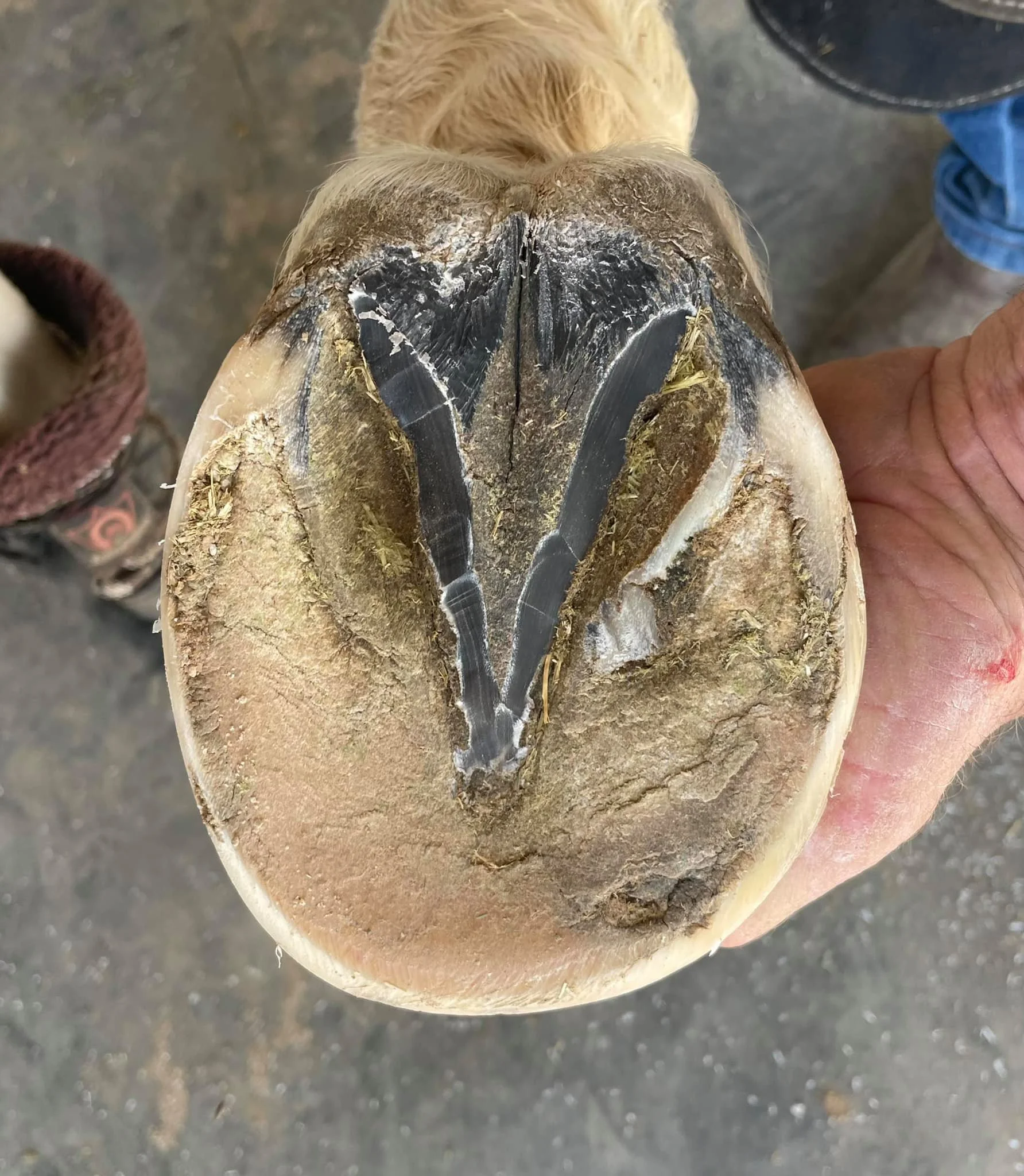
September 2021 - This is Wyn’s right front. That sore is from the lateral toe pillar of his coffin bone cutting into his sole. This results in bone erosion, corium damage, laminar damage, joint damage, obvious sole damage, and all the body damage that comes from chronic compensation from trying to avoid pain. These are all just symptoms of chronic heel imbalance. In this case, the medial heel has been consistently left longer than the lateral heel, causing the lateral toe pillar to support the majority of the weight bearing. Years of flat, slightly crooked trims, and 6-8 week shoeing intervals are the cause. The cure is frequent, conscientious corrections that respect what the horse can handle at that time while simultaneously pushing the limits to rehabilitate the horse.
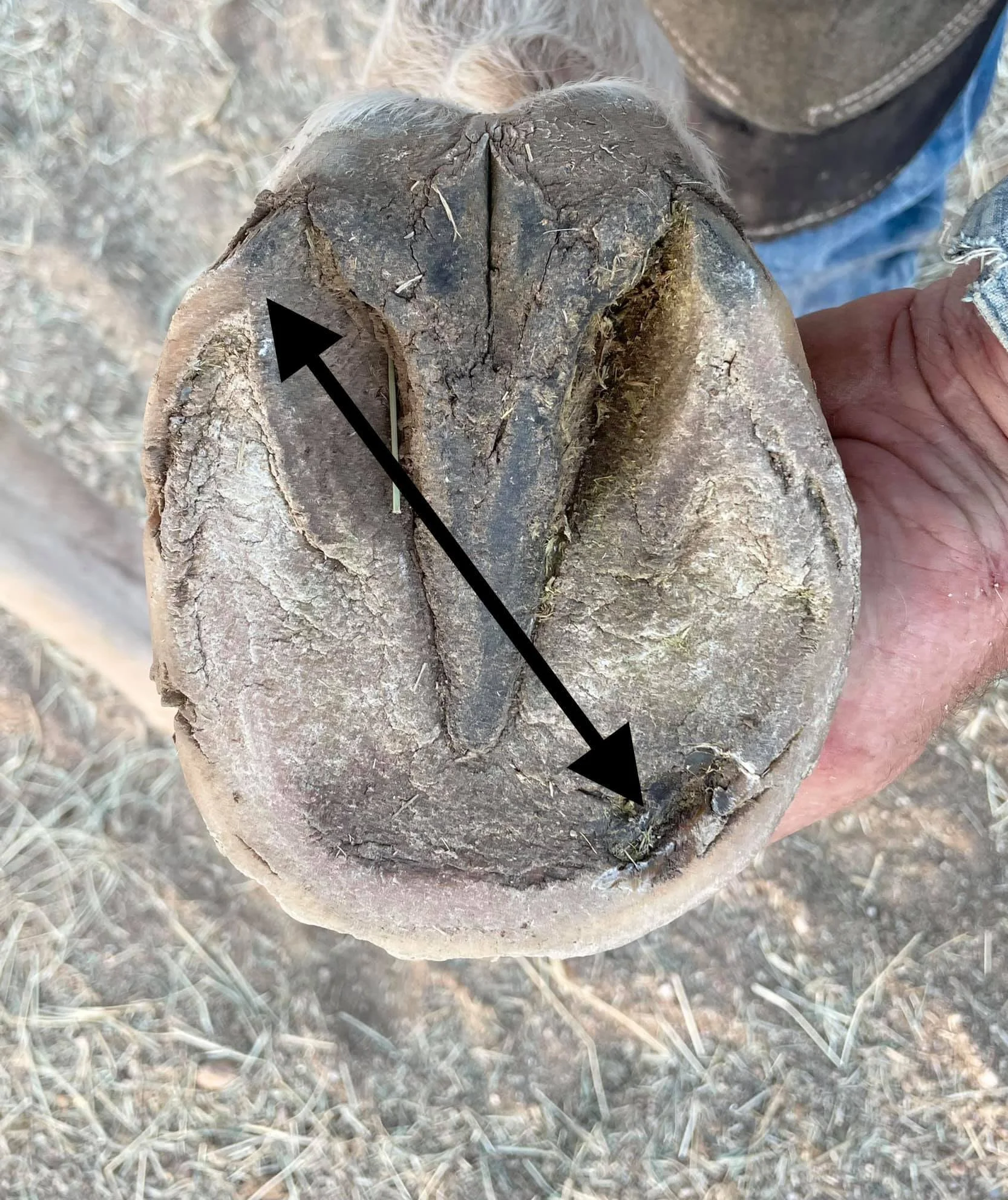
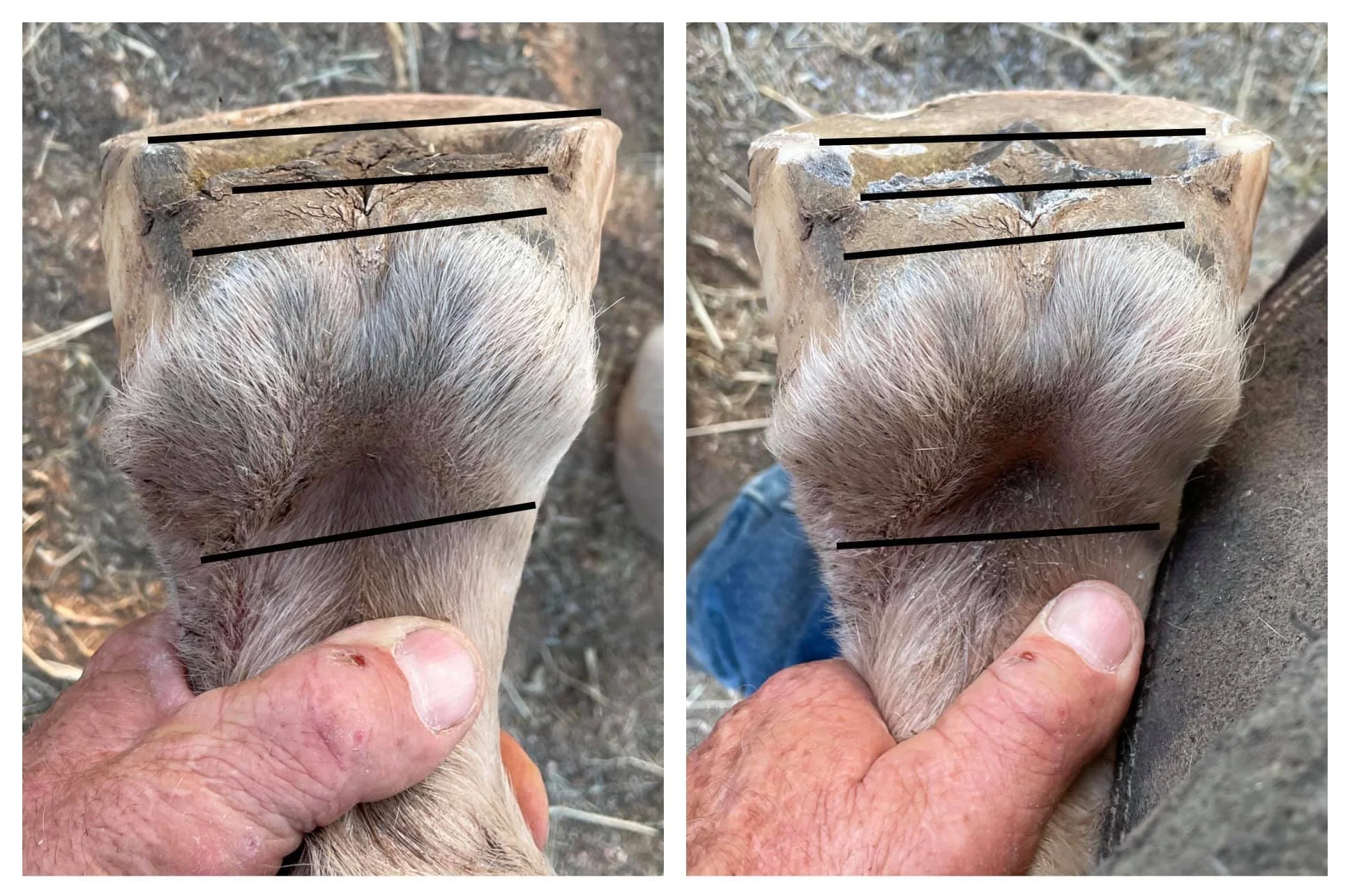
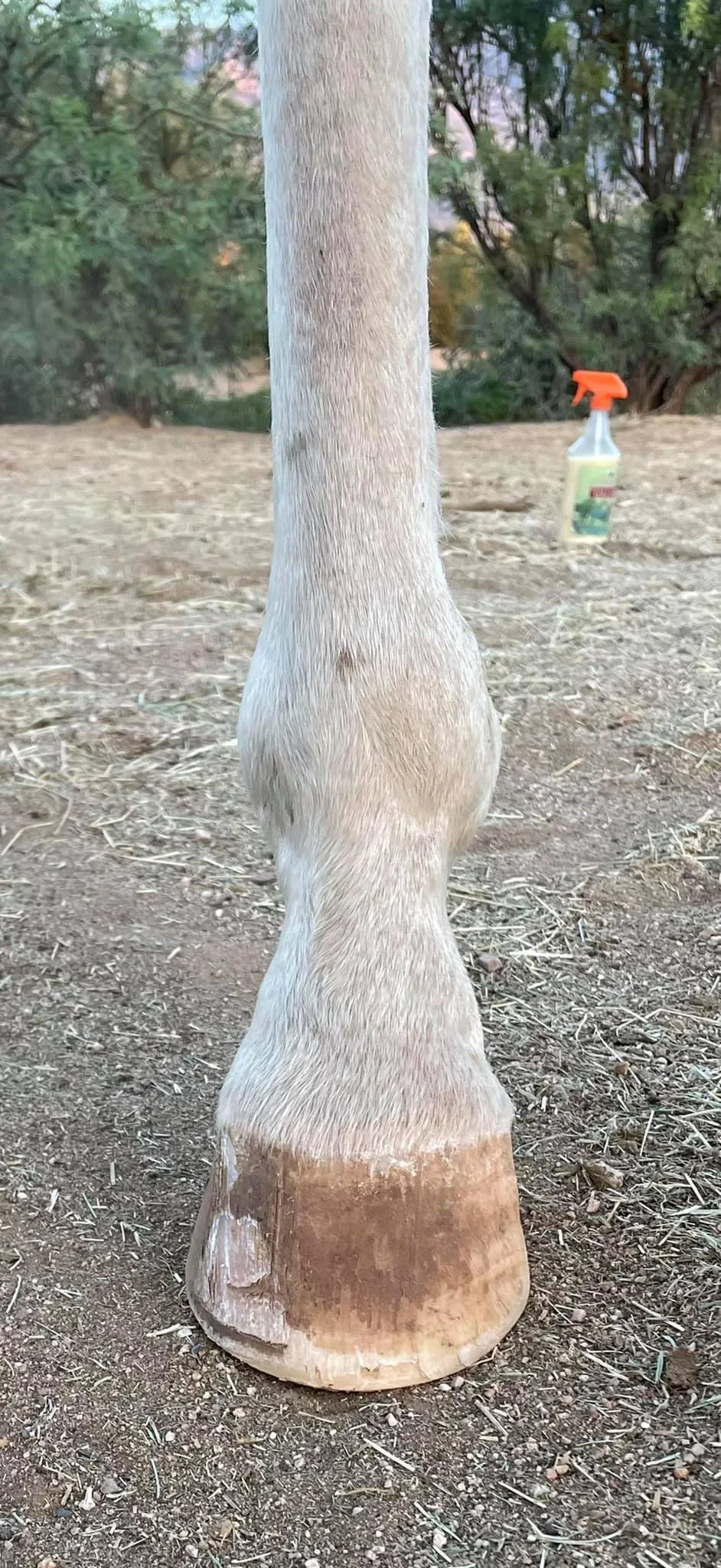
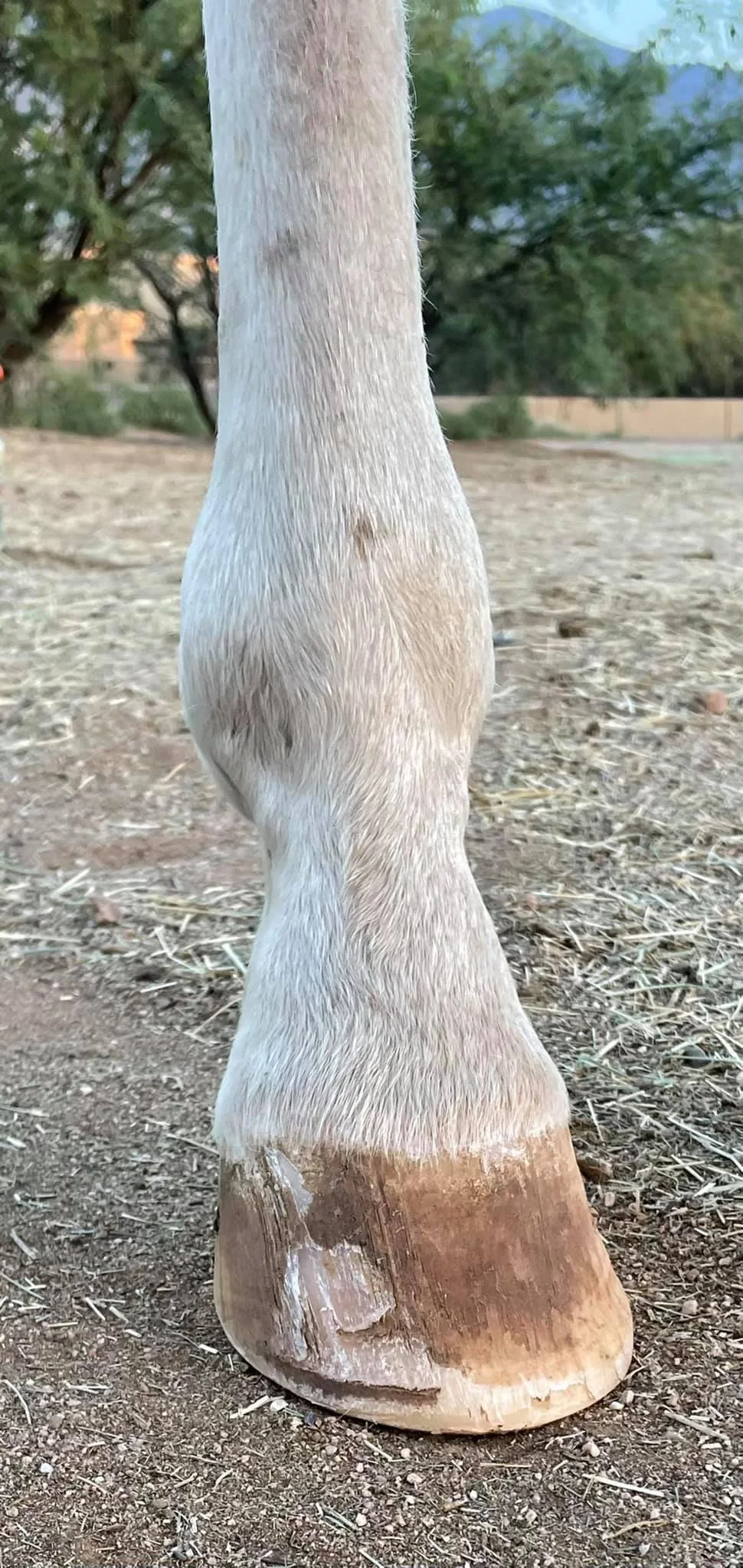
In my opinion a good rehab is a little like physical therapy. Not every day feels good when you’re reversing years of damage. Most owners have their own limits too, and some are more proactive about providing beneficial footing or boots…so it often comes down to how well you can walk the line with your trim. It is a balancing act between helping the horse and keeping the owners happy. A lot of trimmers let their personal boundaries get in the way of a successful rehab. Some have a very long list of things they require from the owner and won’t compromise. Some can’t set enough boundaries to get anything accomplished. They’re afraid that if they ask the owner to do their part they’ll give up on the horse. That does happen. It’s another line that can be difficult to walk.... I put the black lines on the before and after pics to show the crookedness from the ground to the top of the lateral cartilages and how minimal my corrections are. Due to their flexible nature of the lateral cartilages they have the ability to become more balanced over time. They are connected to the coffin bone which is considerably less flexible and likely to have some permanent morphology. The opposing limitations of these two structures provides the balance that can guide the trimmer’s decision making.
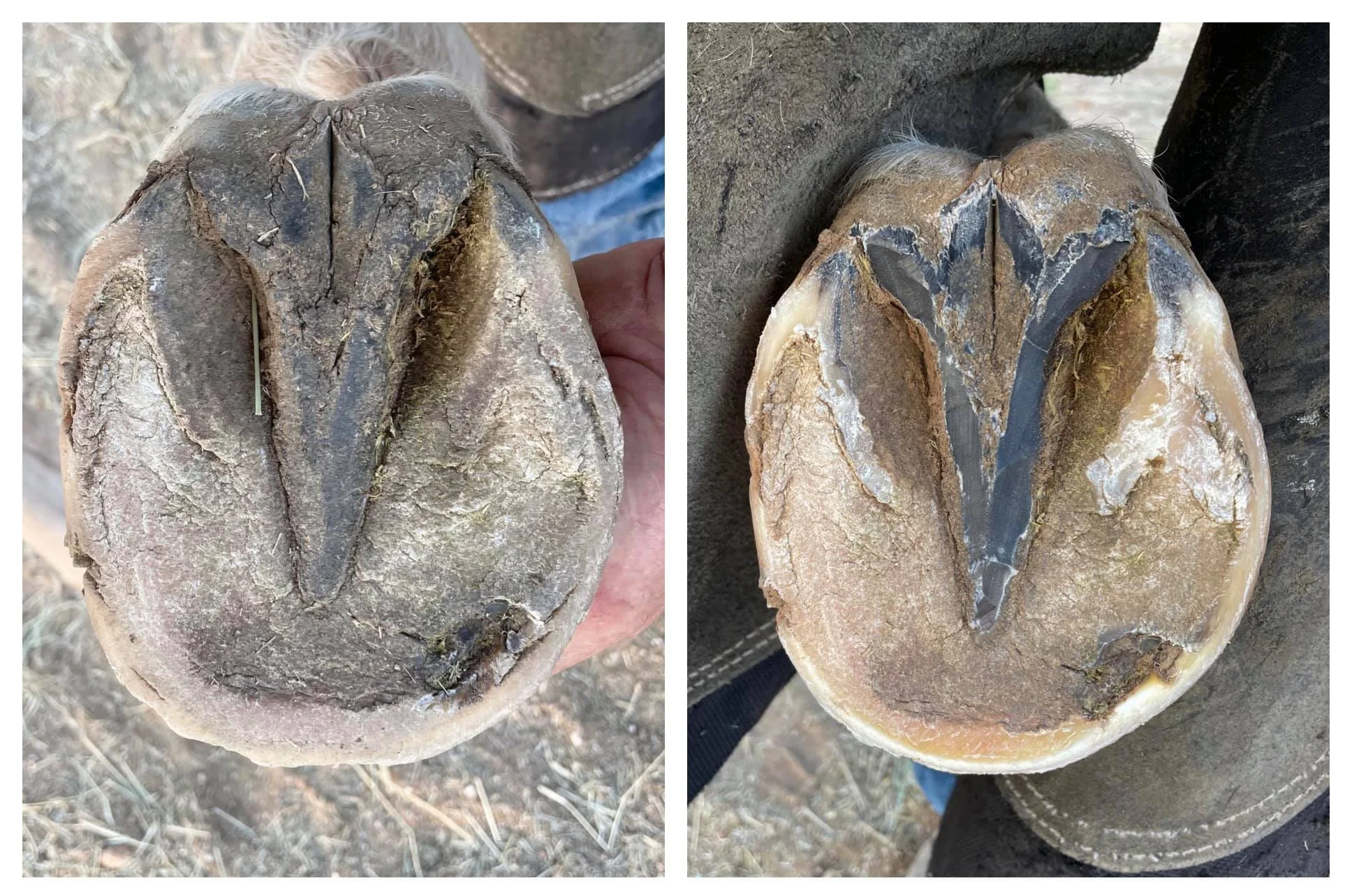
May 2021 - October 2021
October 2021
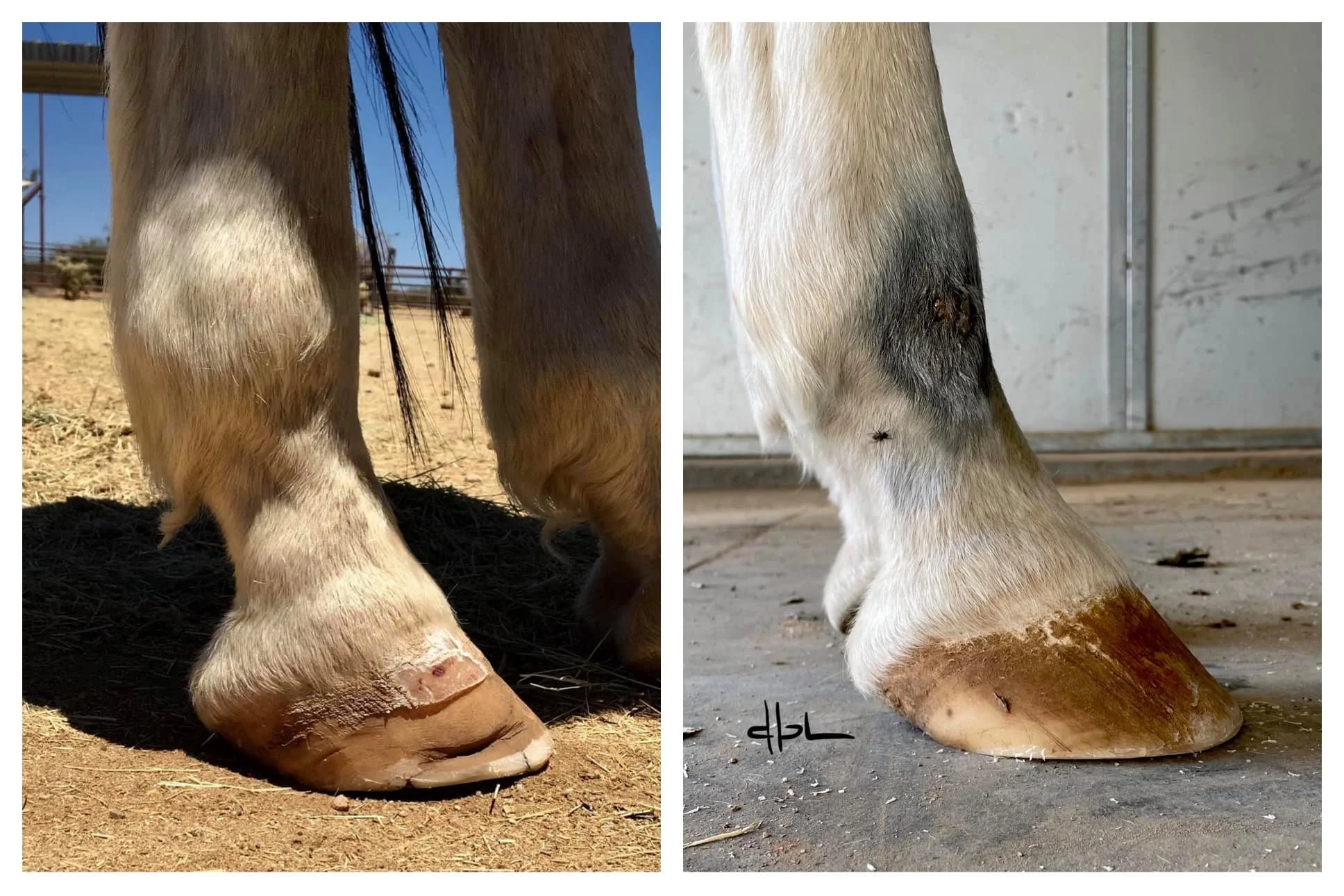
May 2021 - October 2021
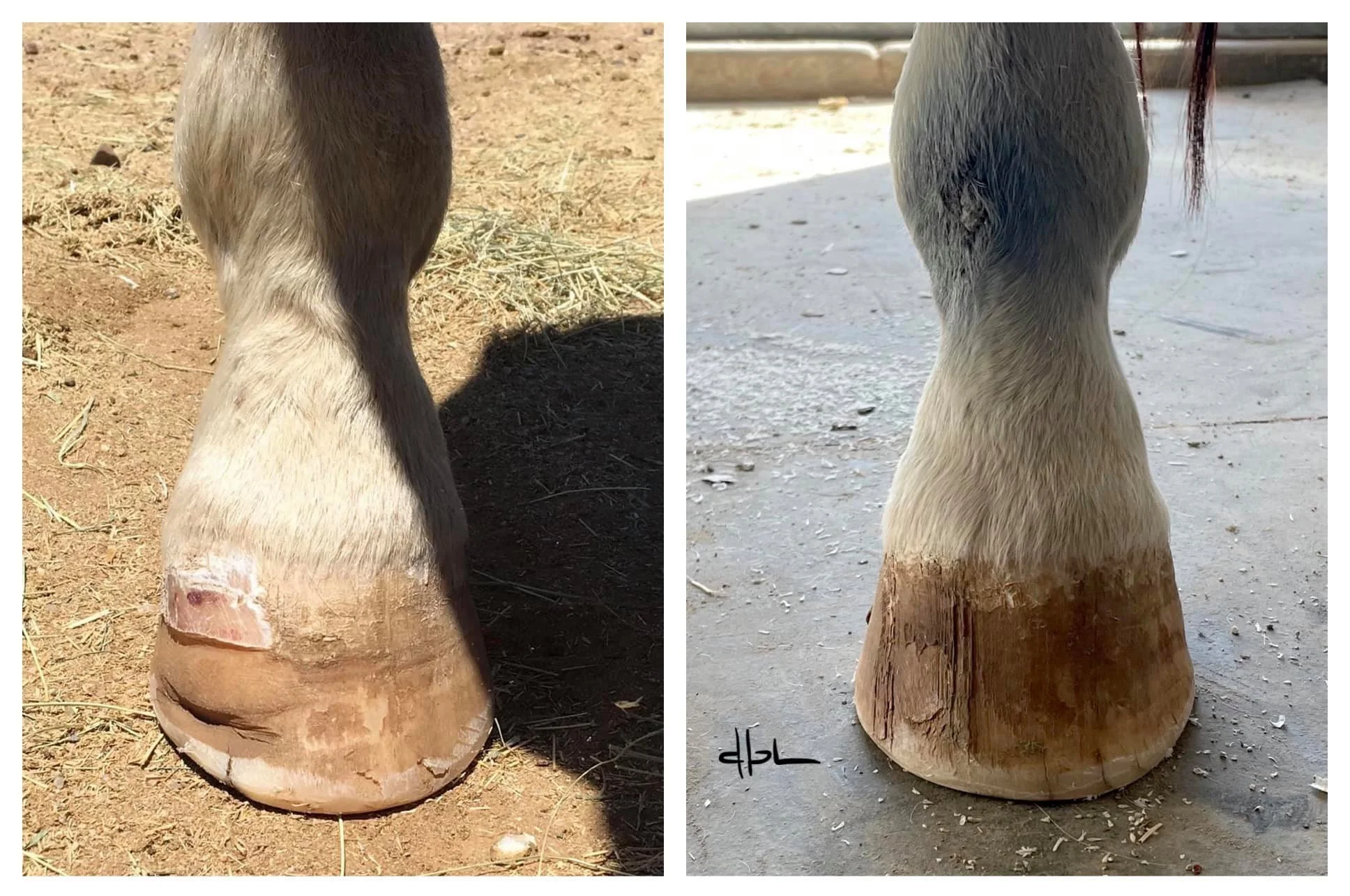
May 2021 - October 2021
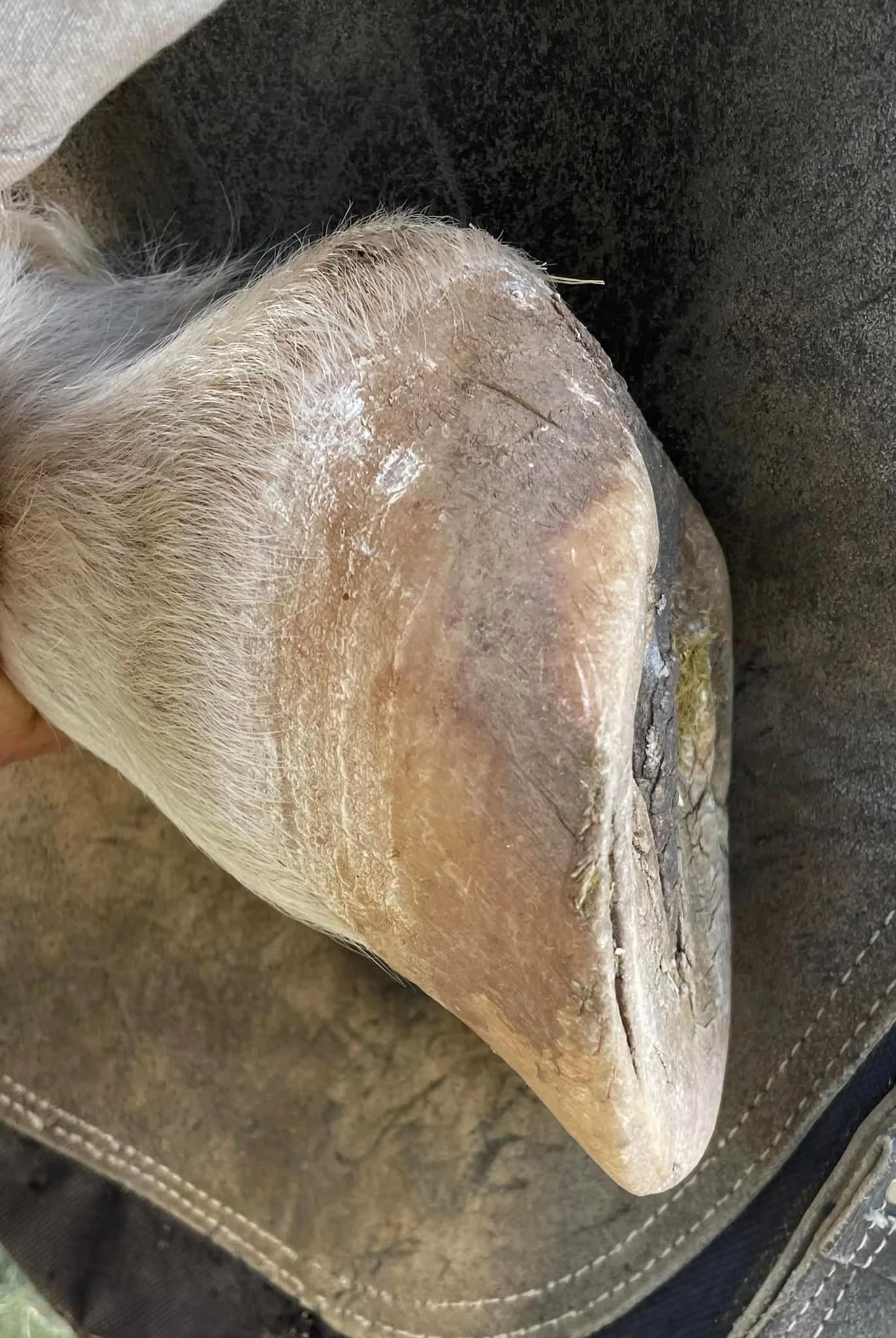
December 2021
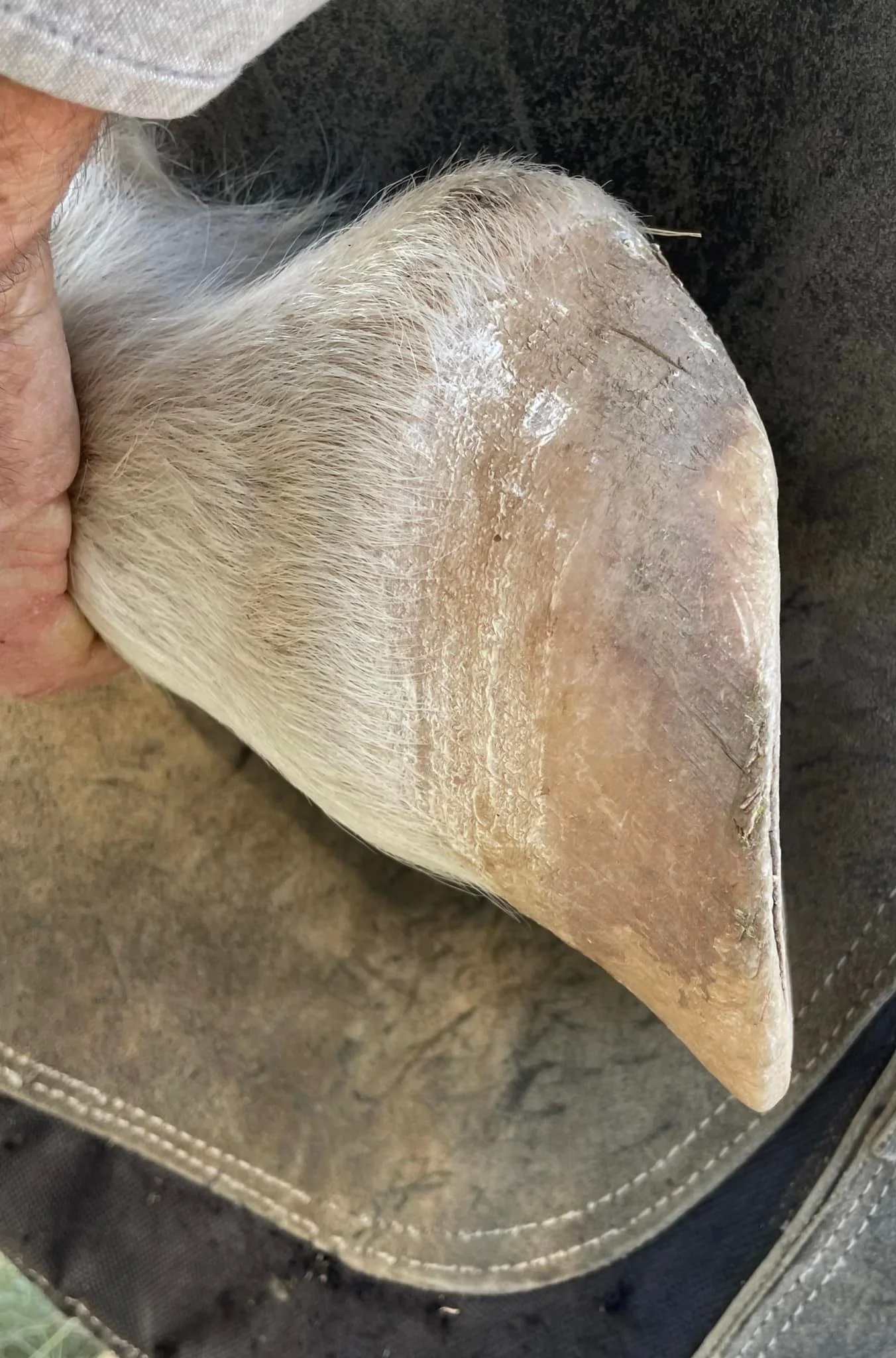
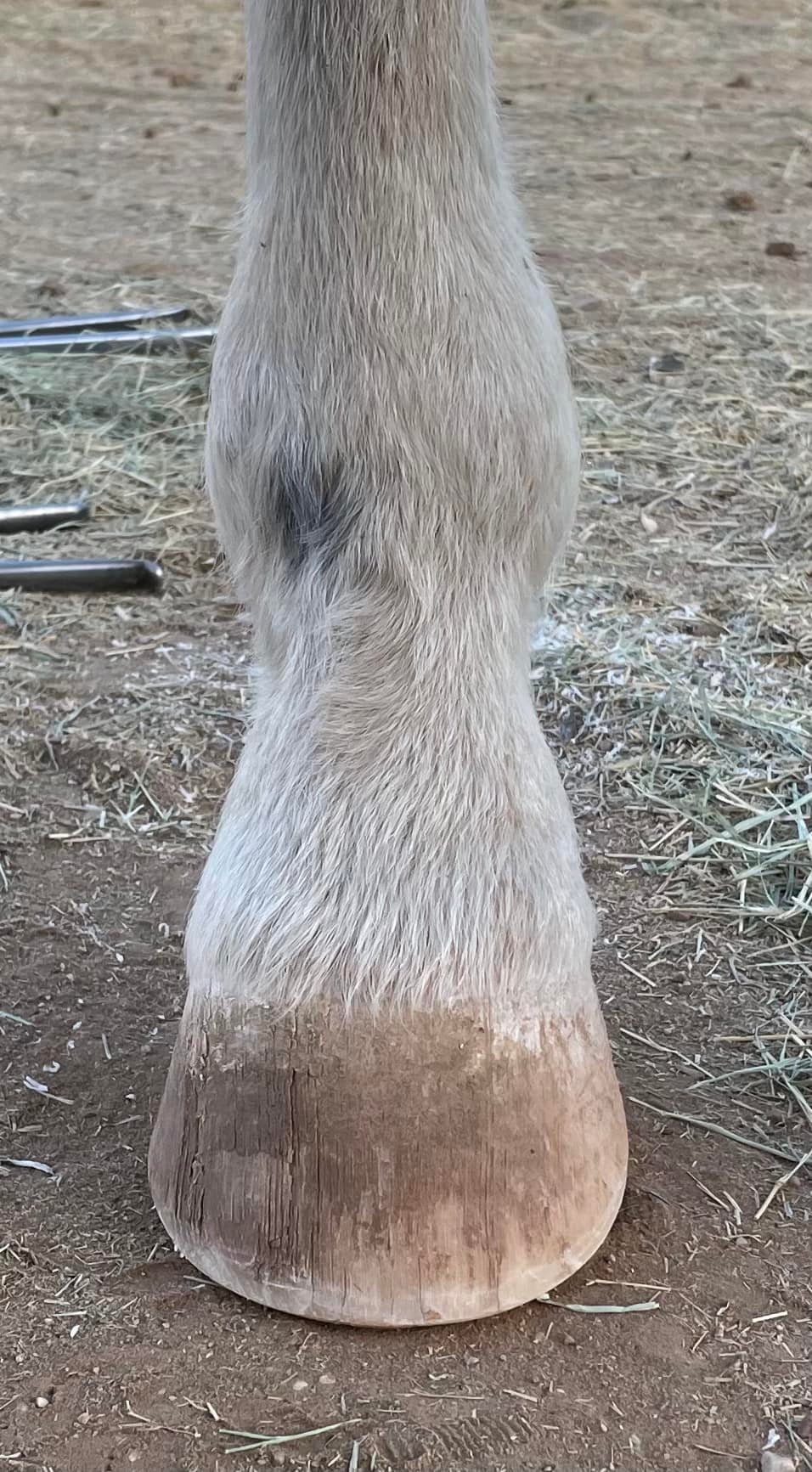
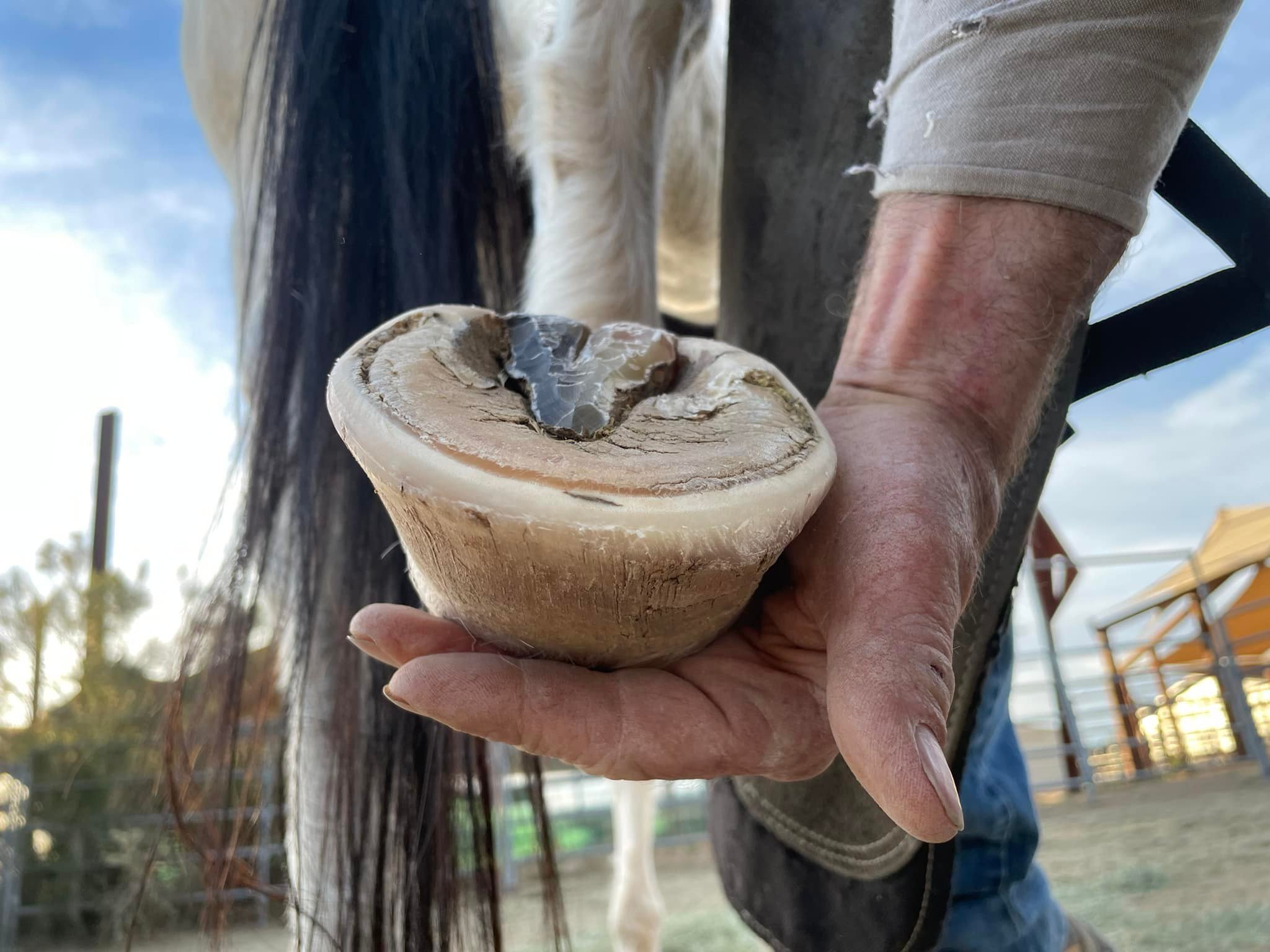
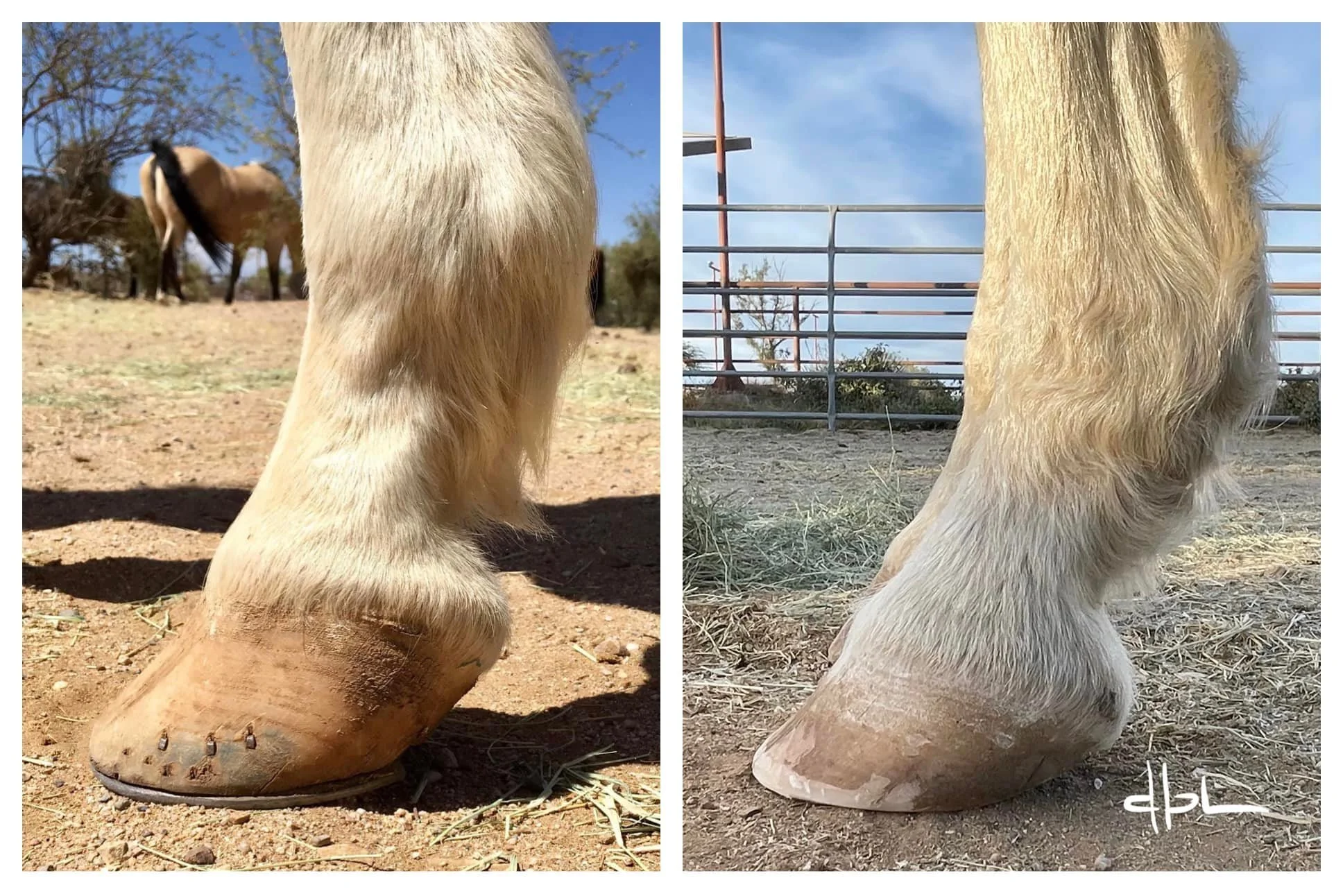
May 2021 - December 2021
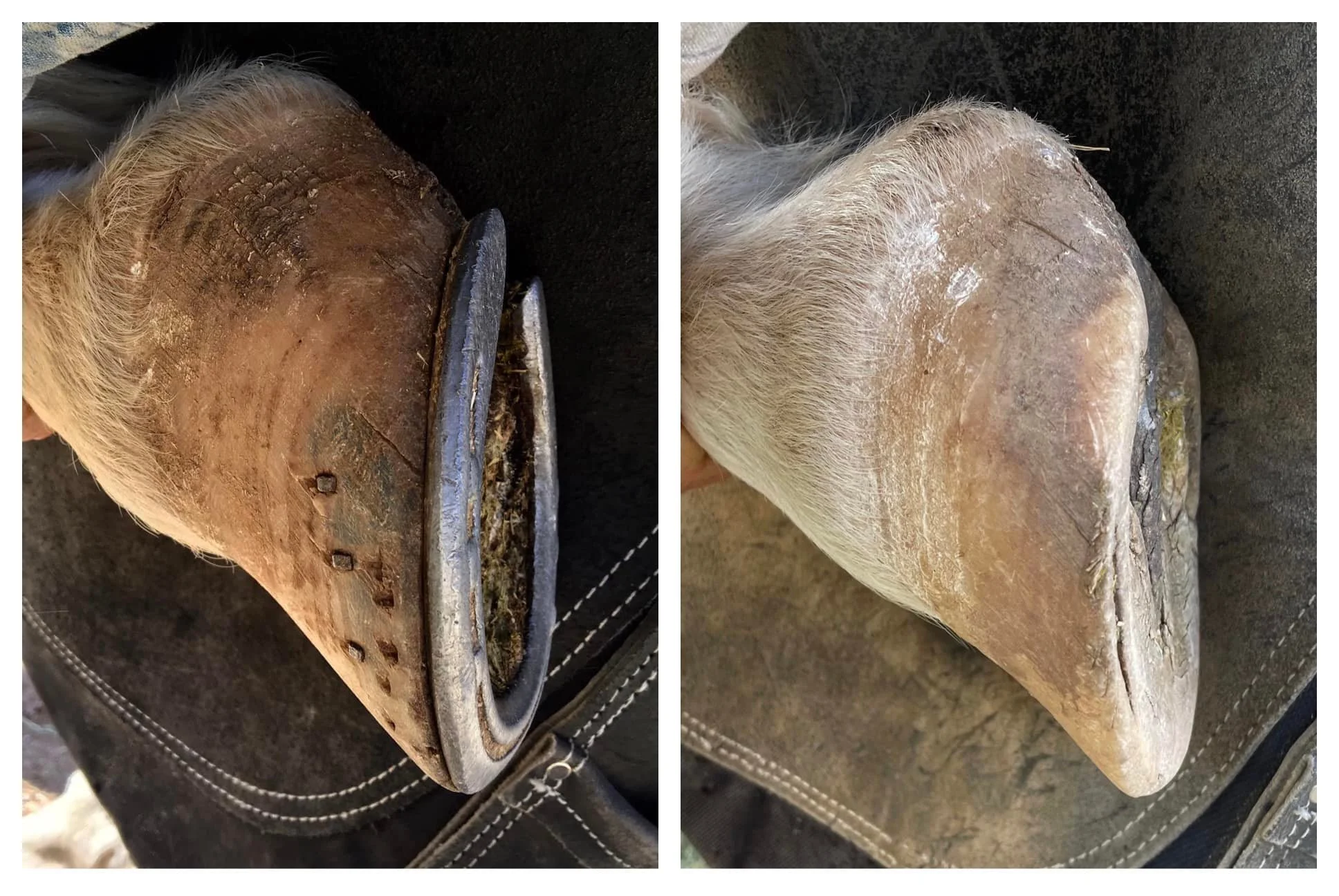
January 2022
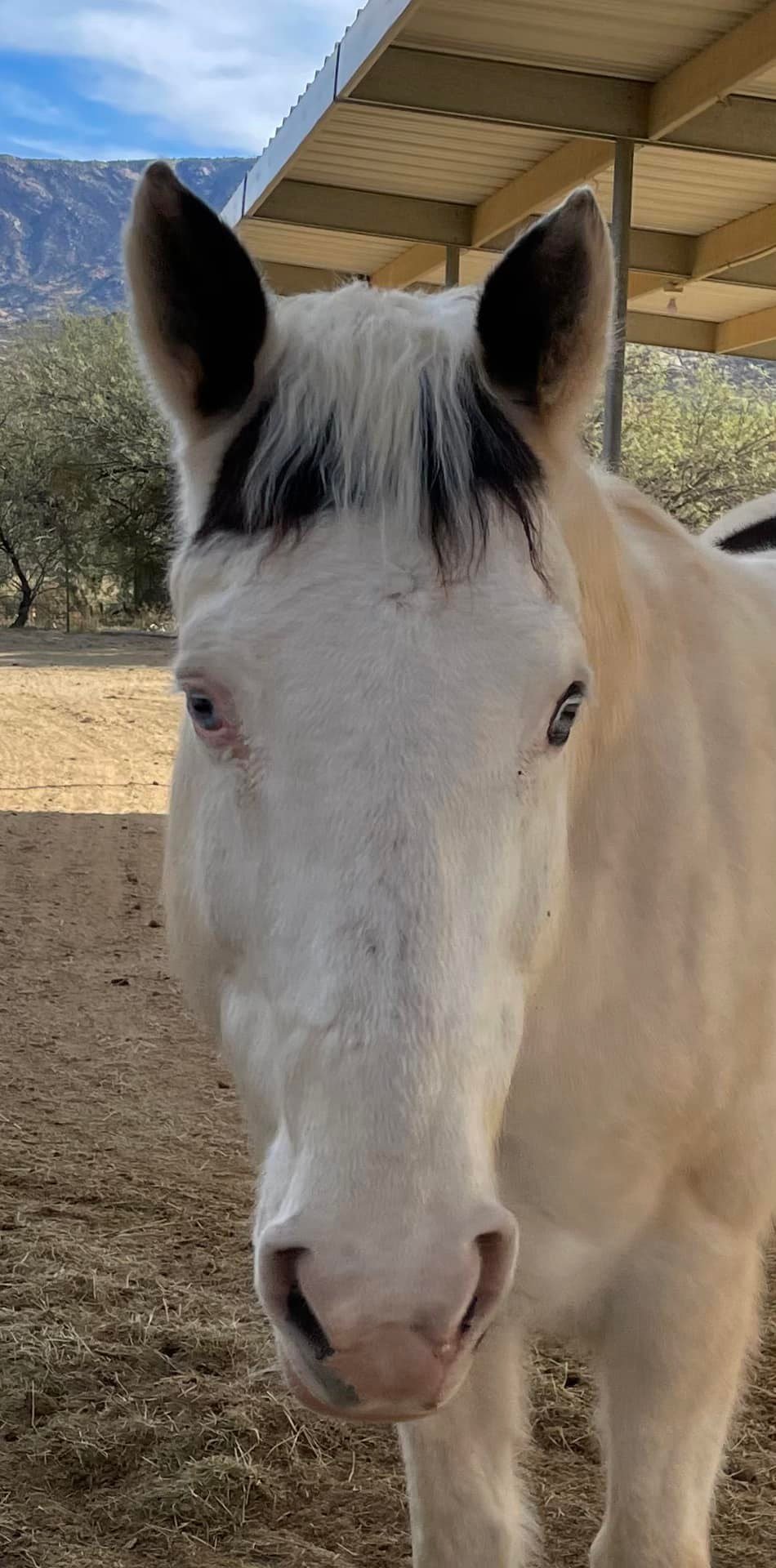
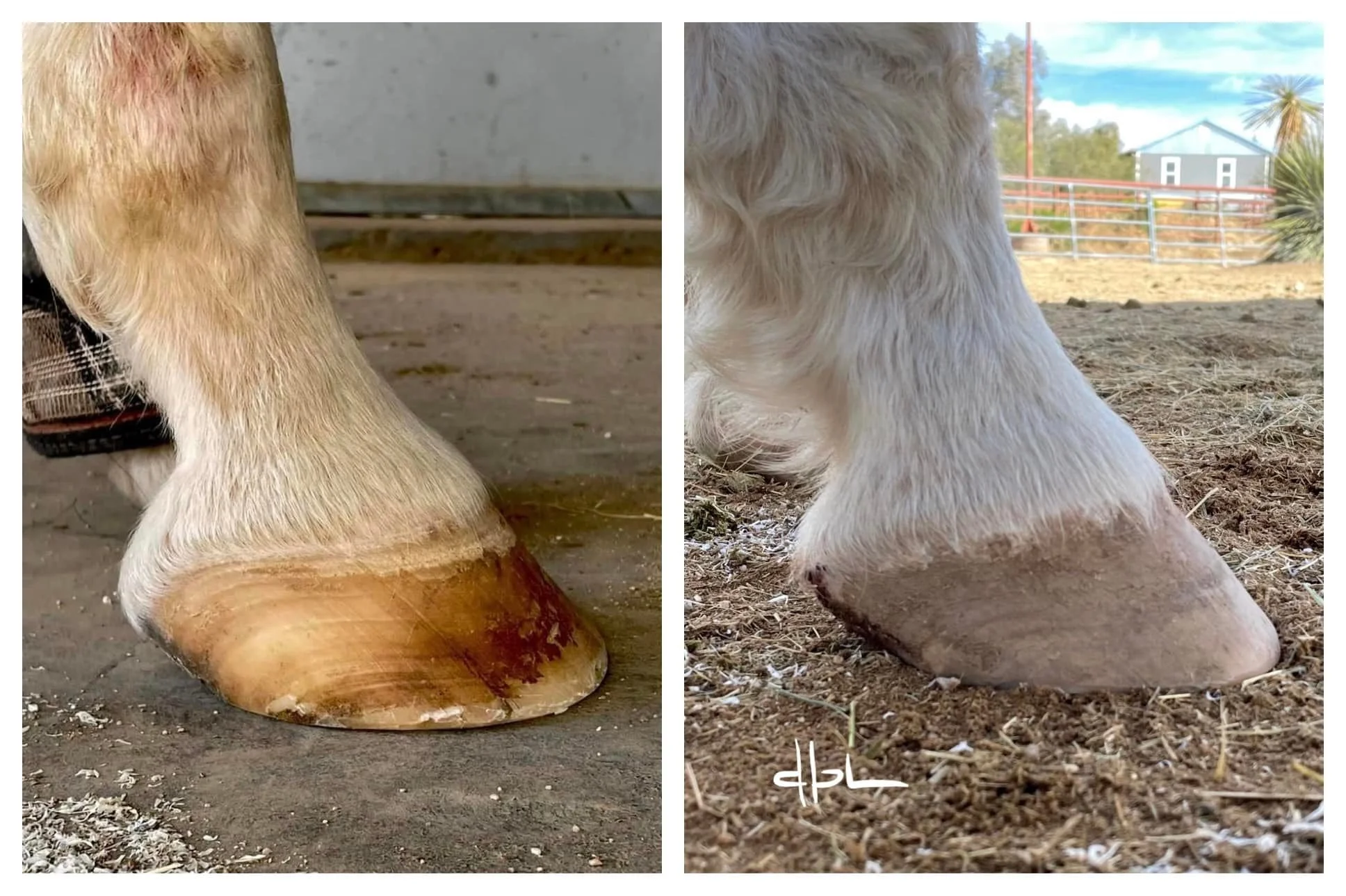
October 2021 - January 2022
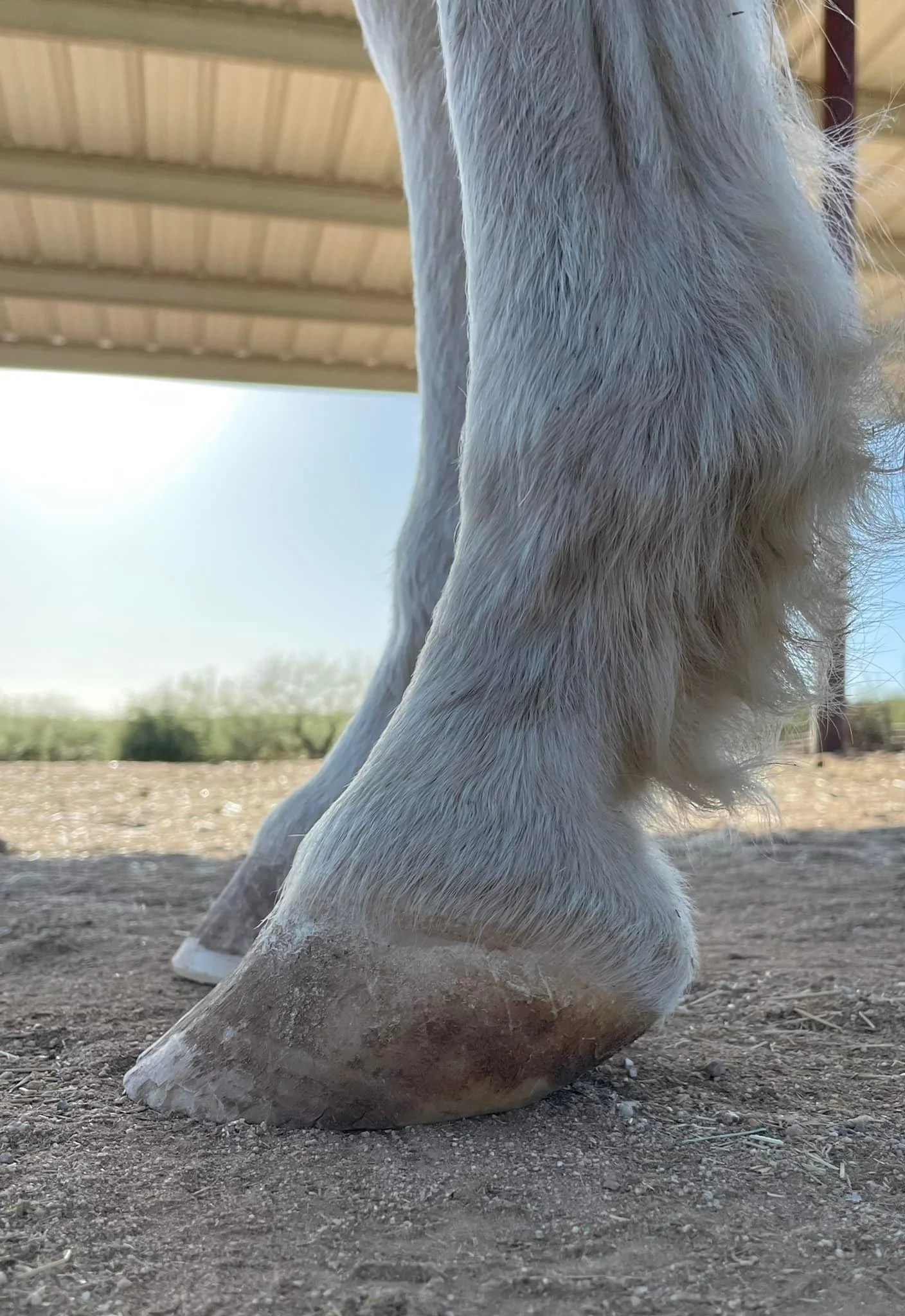
April 2022
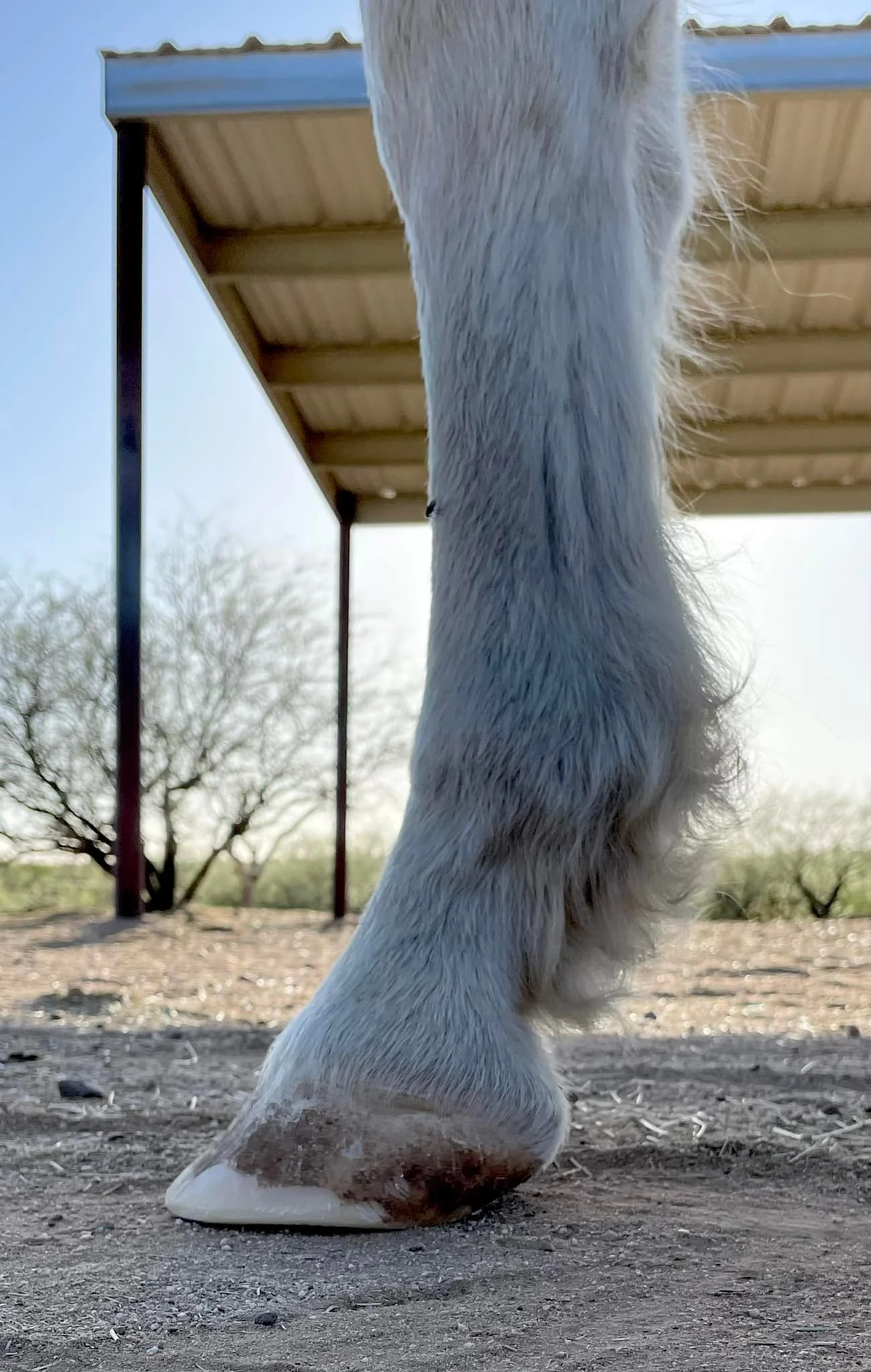
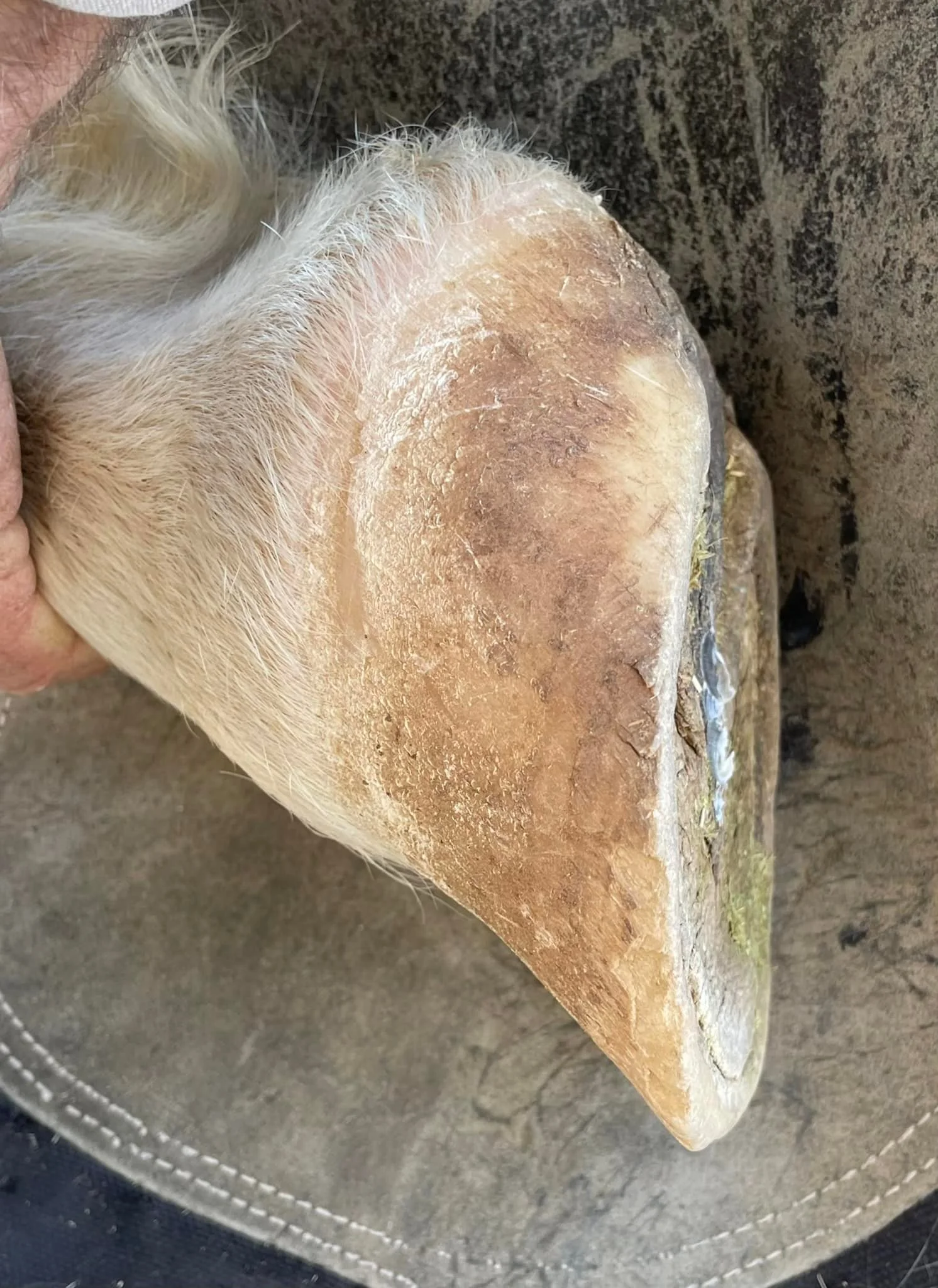
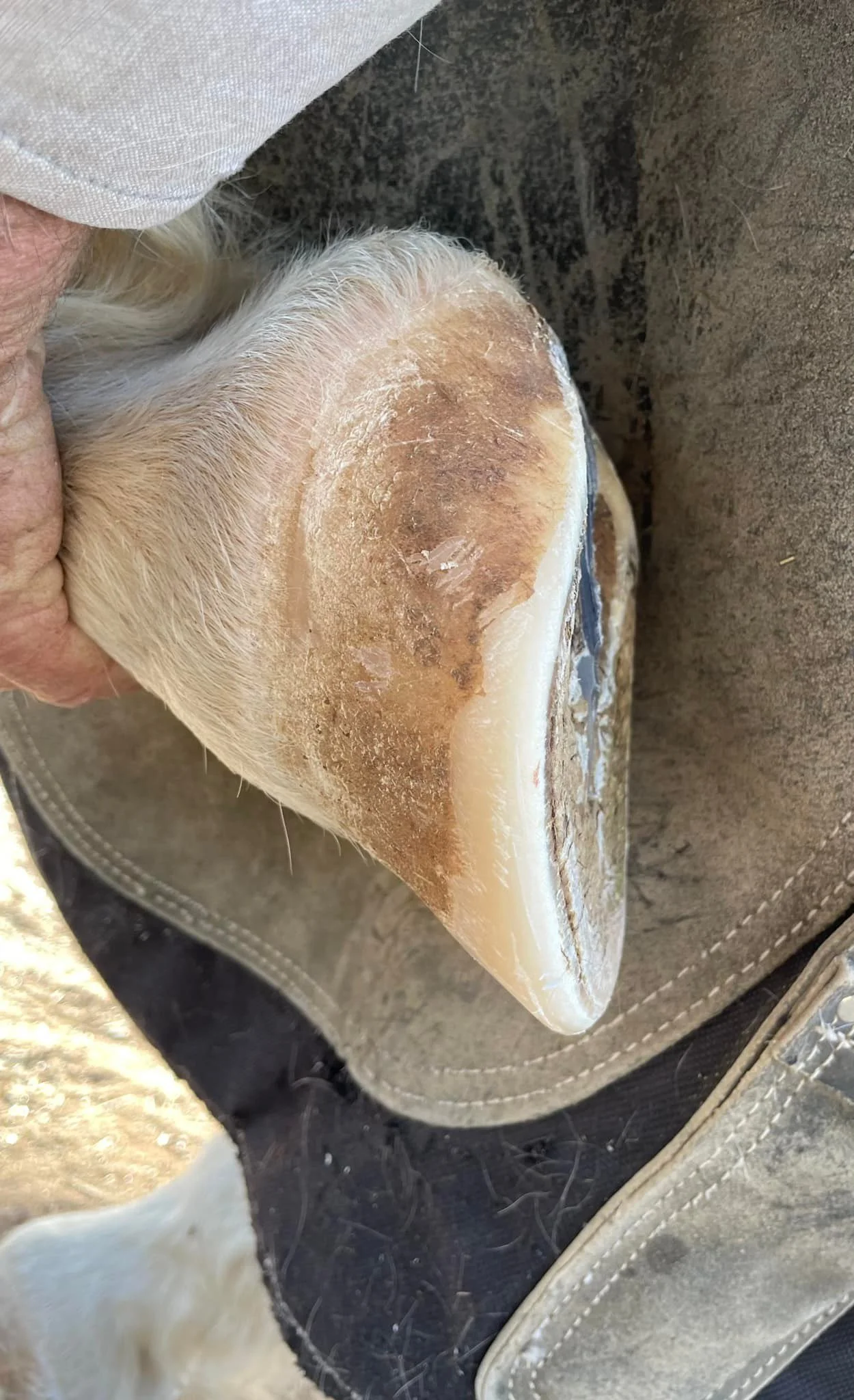
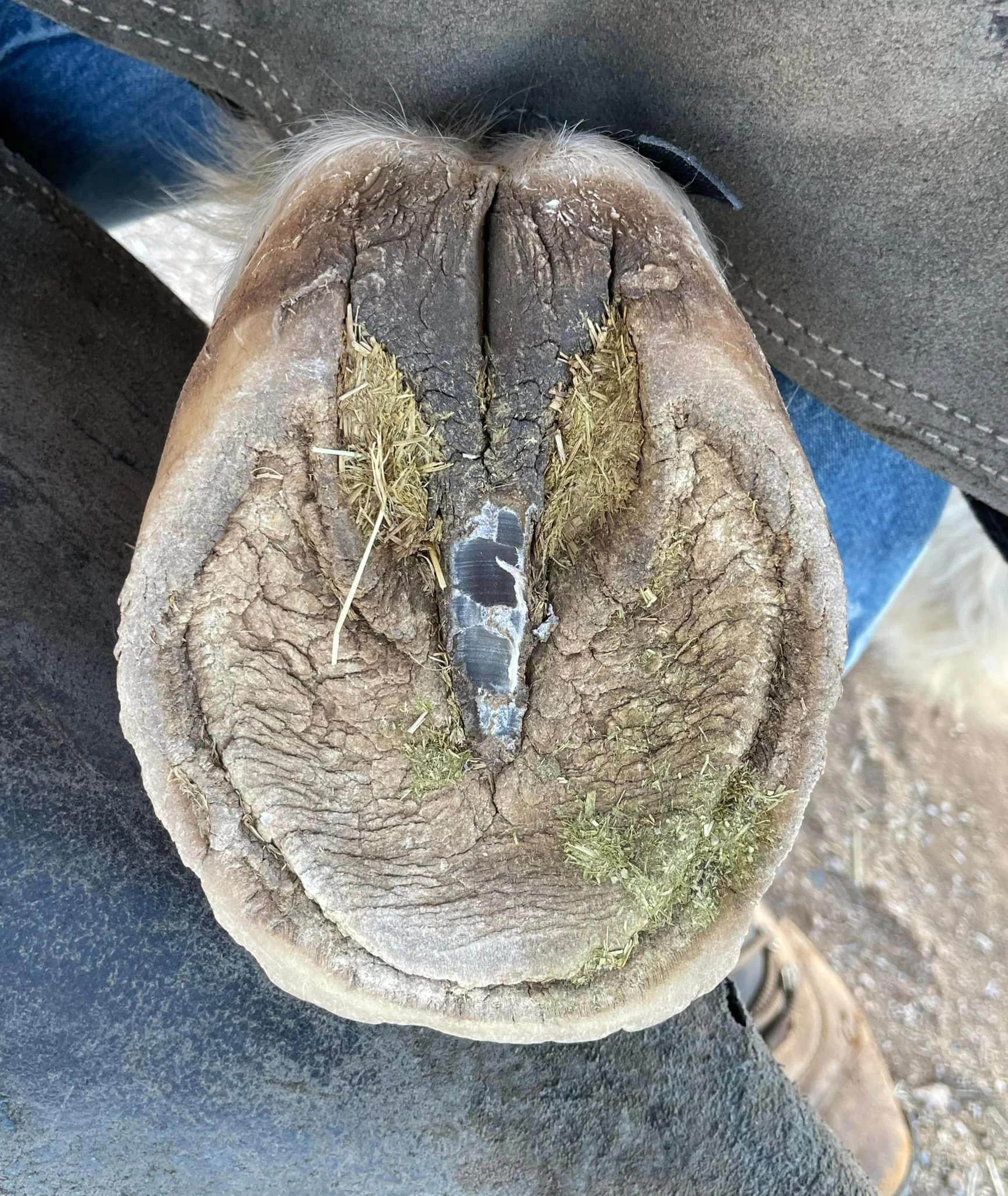
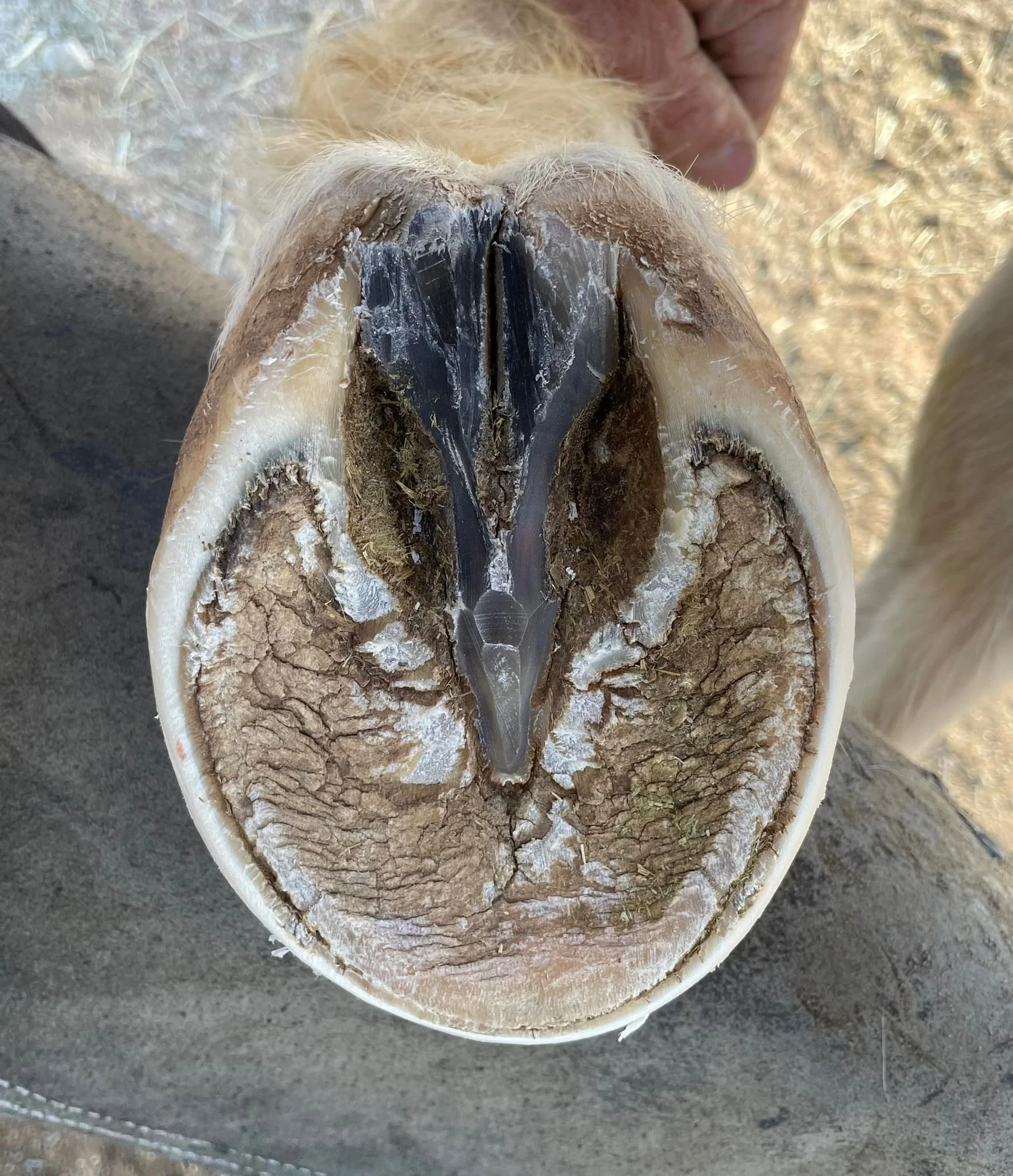
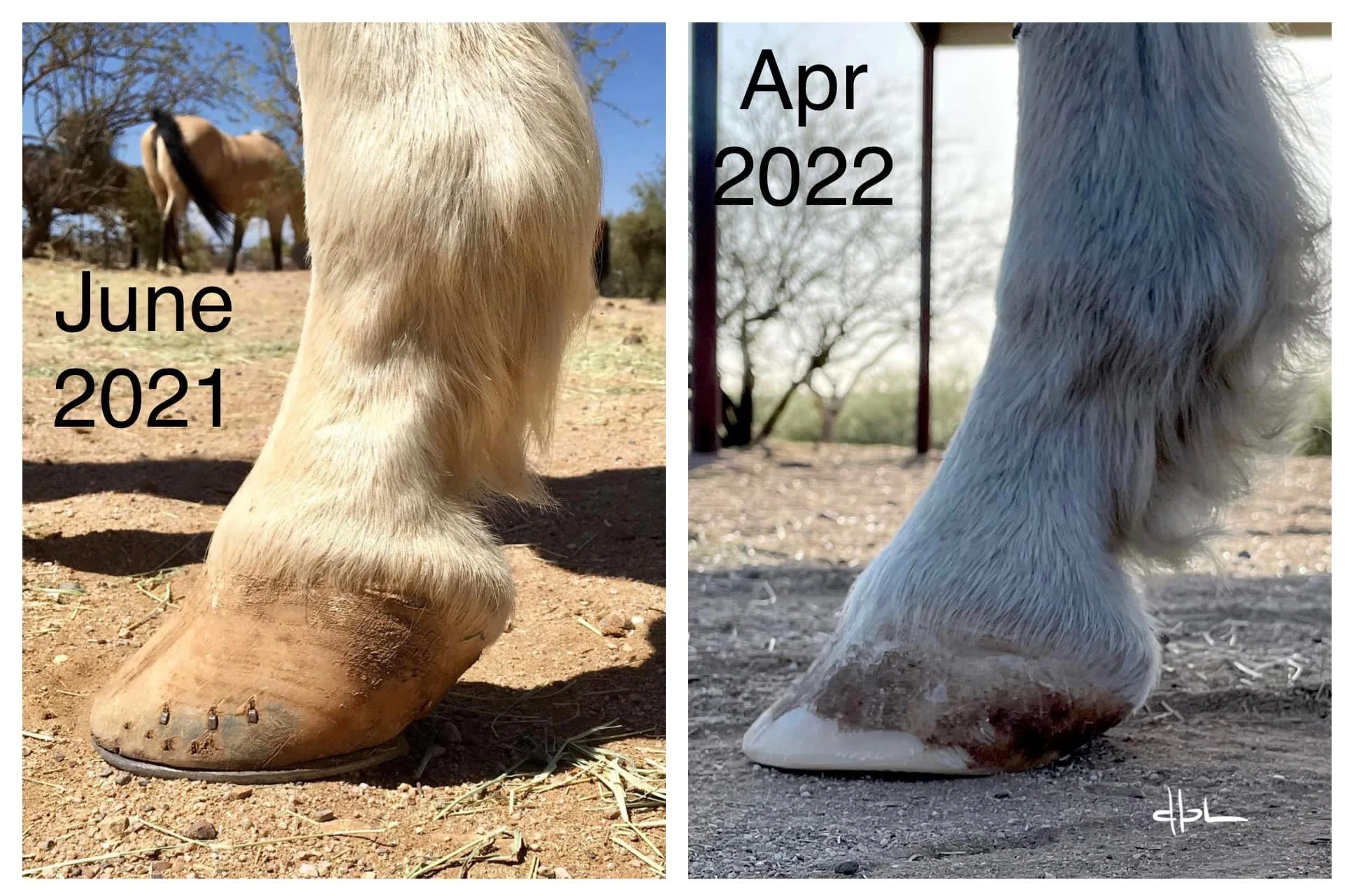
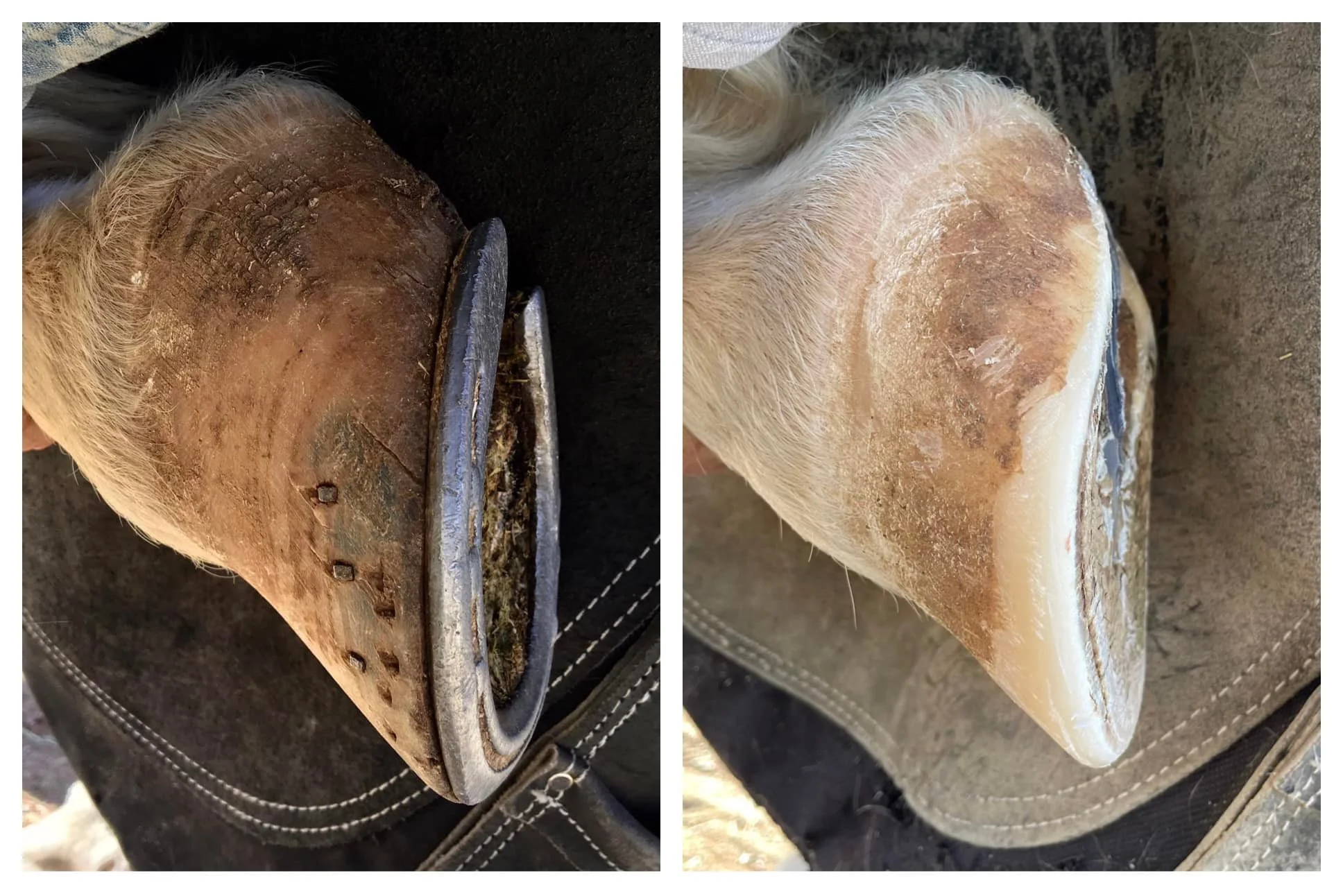
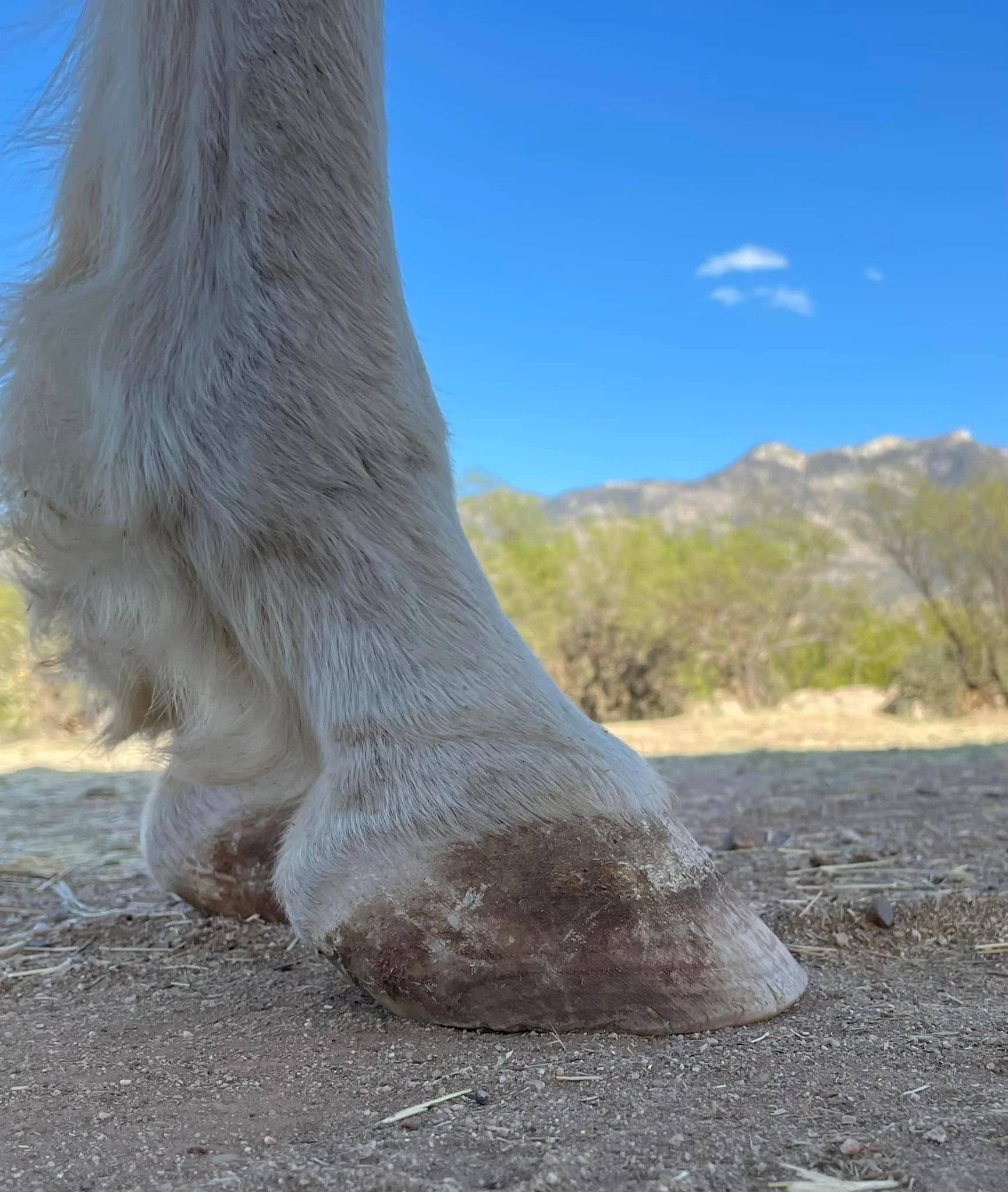
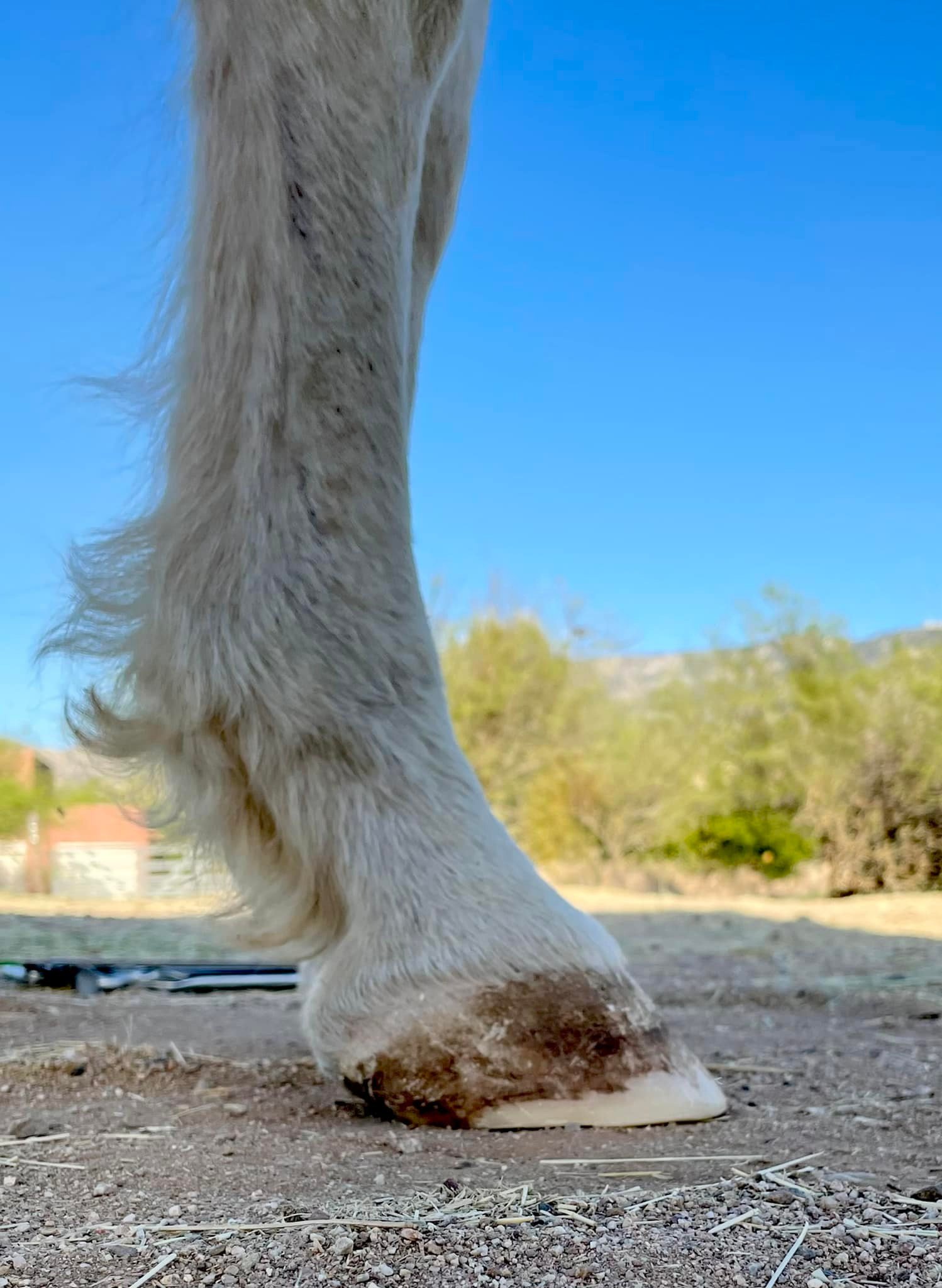
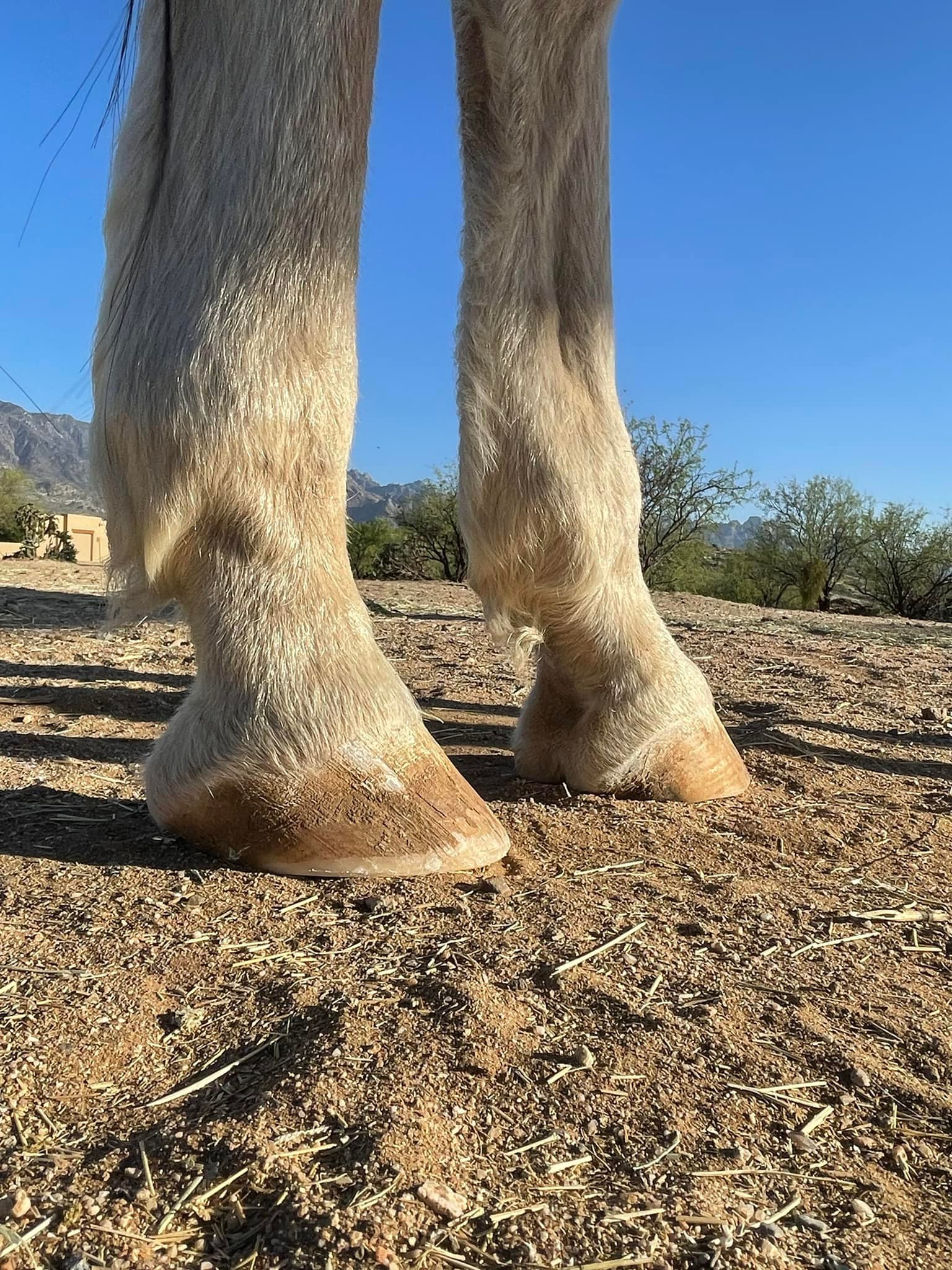
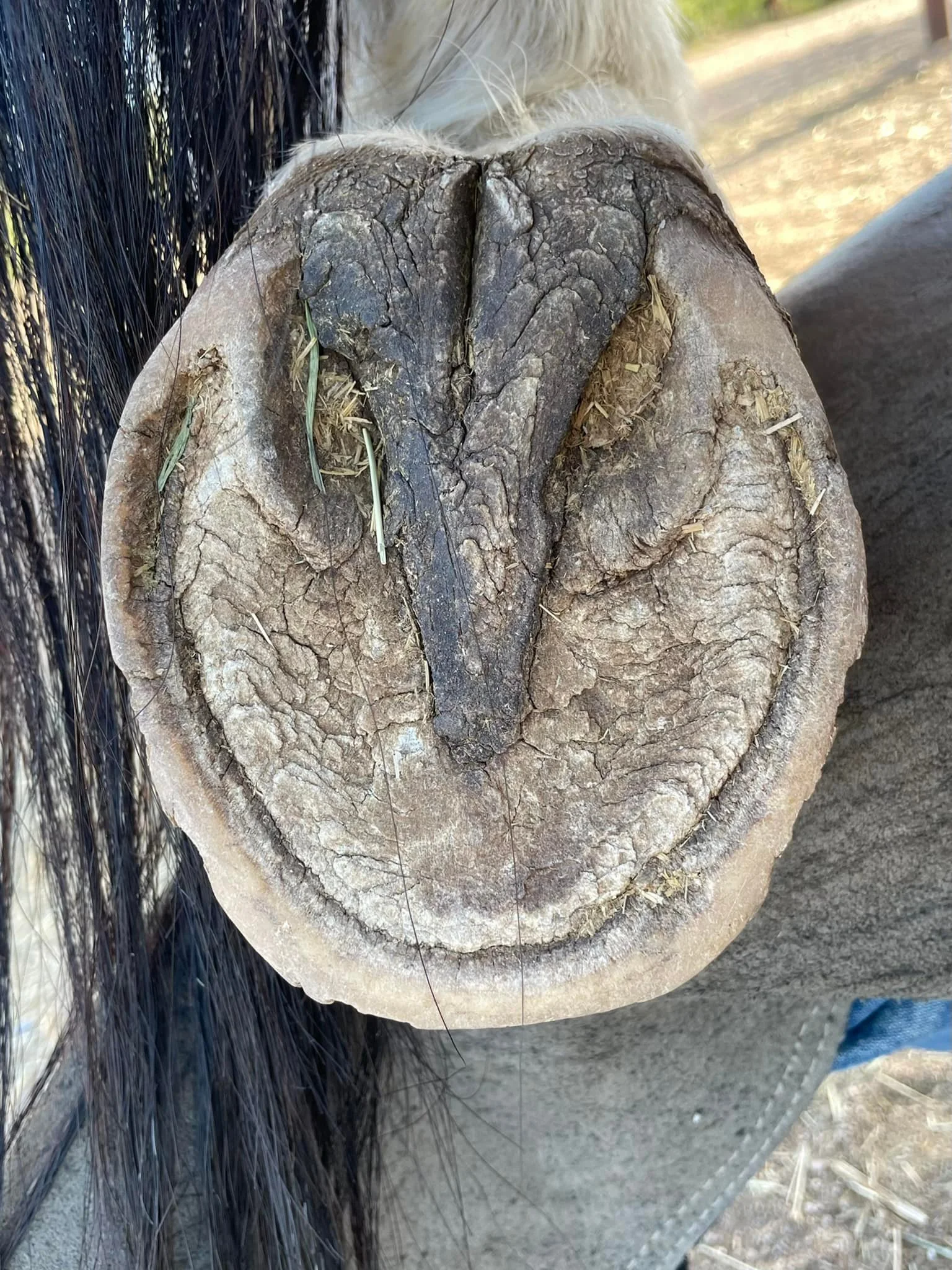
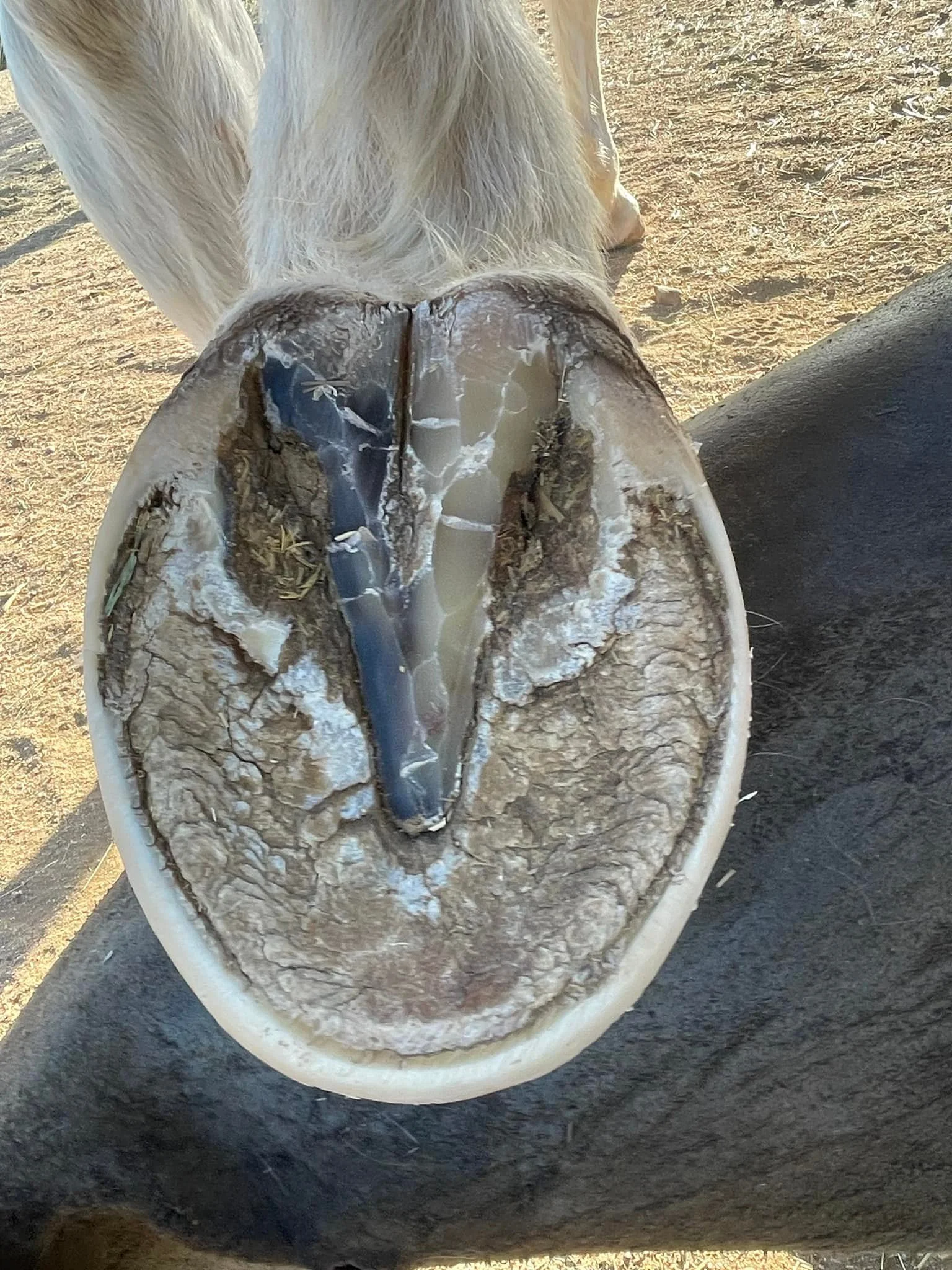
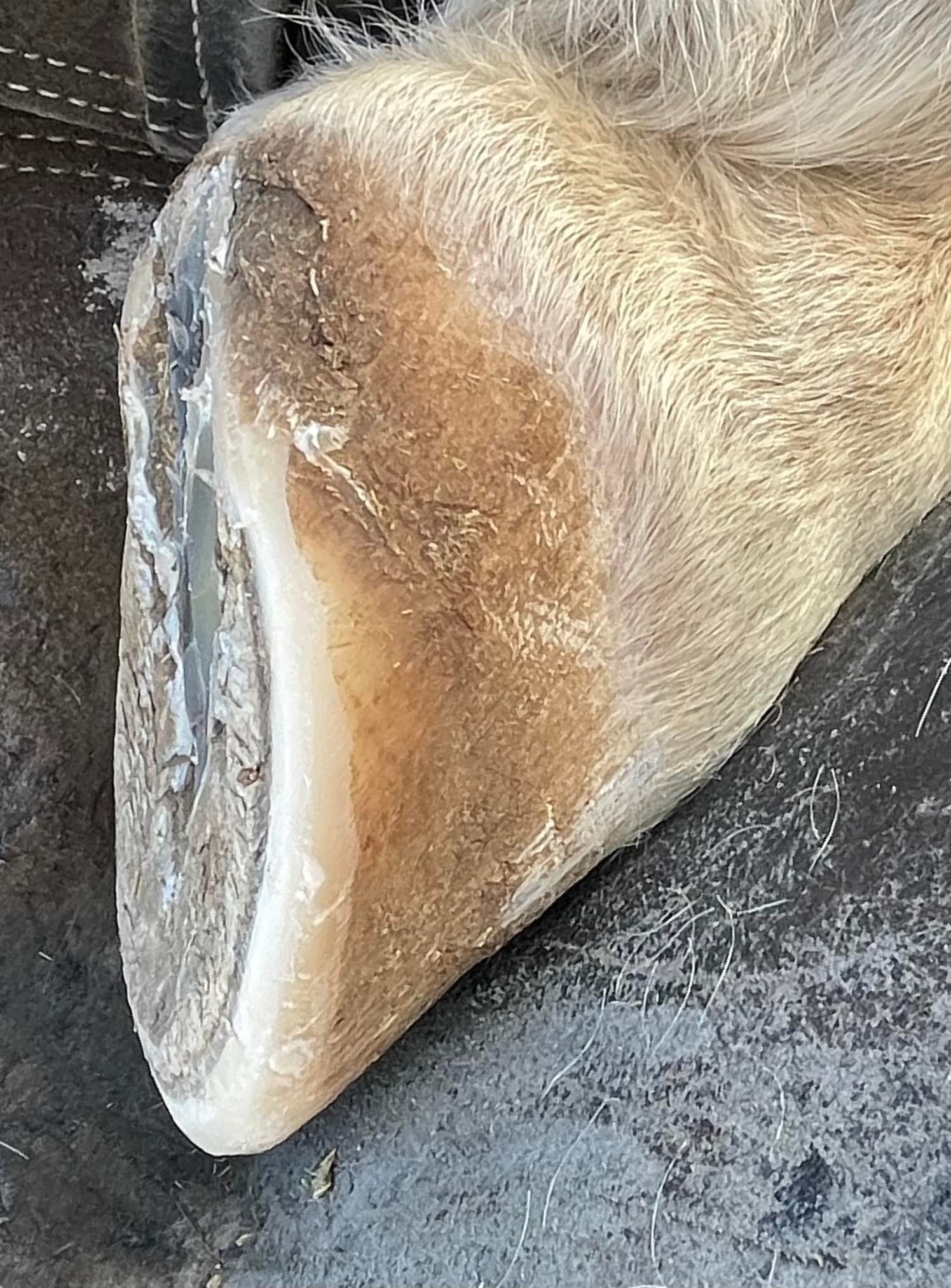
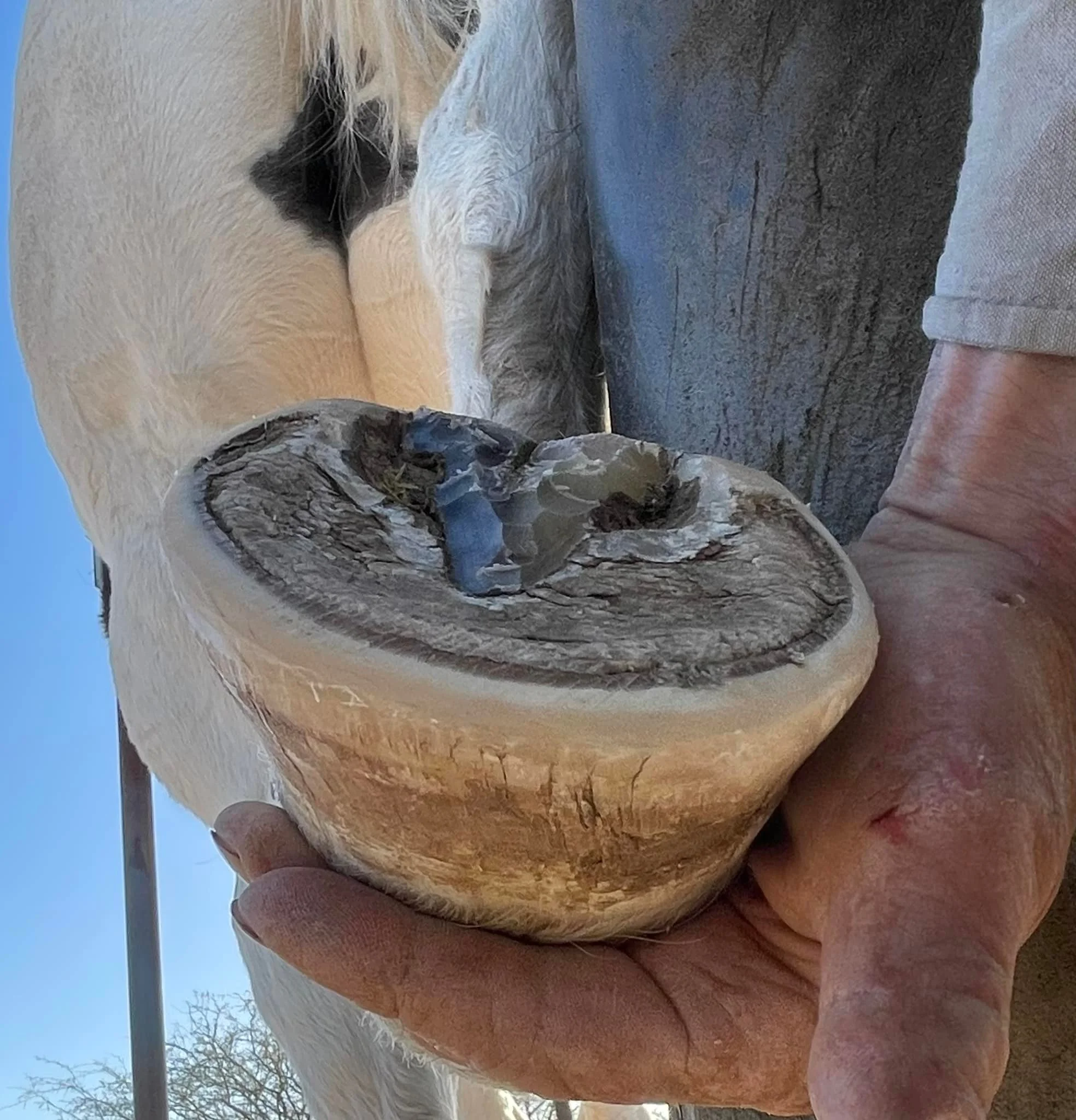
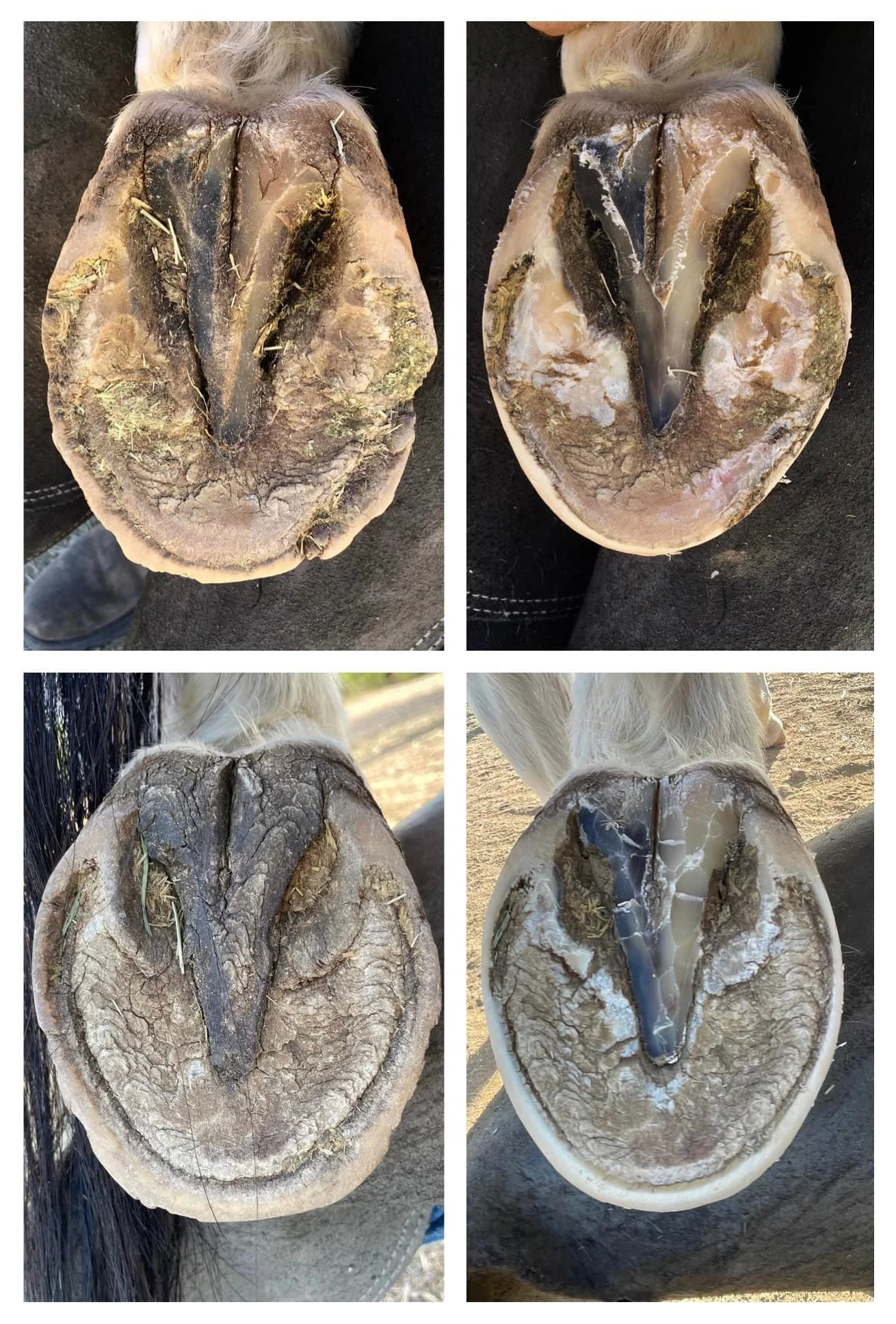
The frog trimming in the bottom pic isn’t my favorite ( my mistakes are only cosmetic. I didn’t trim into anything I didn’t want to. I just didn’t get the smooth swipes that I like to and I couldn’t take more without going deeper than I thought was beneficial ). I’m going to focus on how well the heel bulbs are balancing out, how much the sole and wall have filled in on the lateral side, how much better the lamina connection is and how much thicker and healthier the wall is. The frog will completely grow back in about 2 weeks ( hopefully even healthier ) and I’ll have another chance to do better trimming.
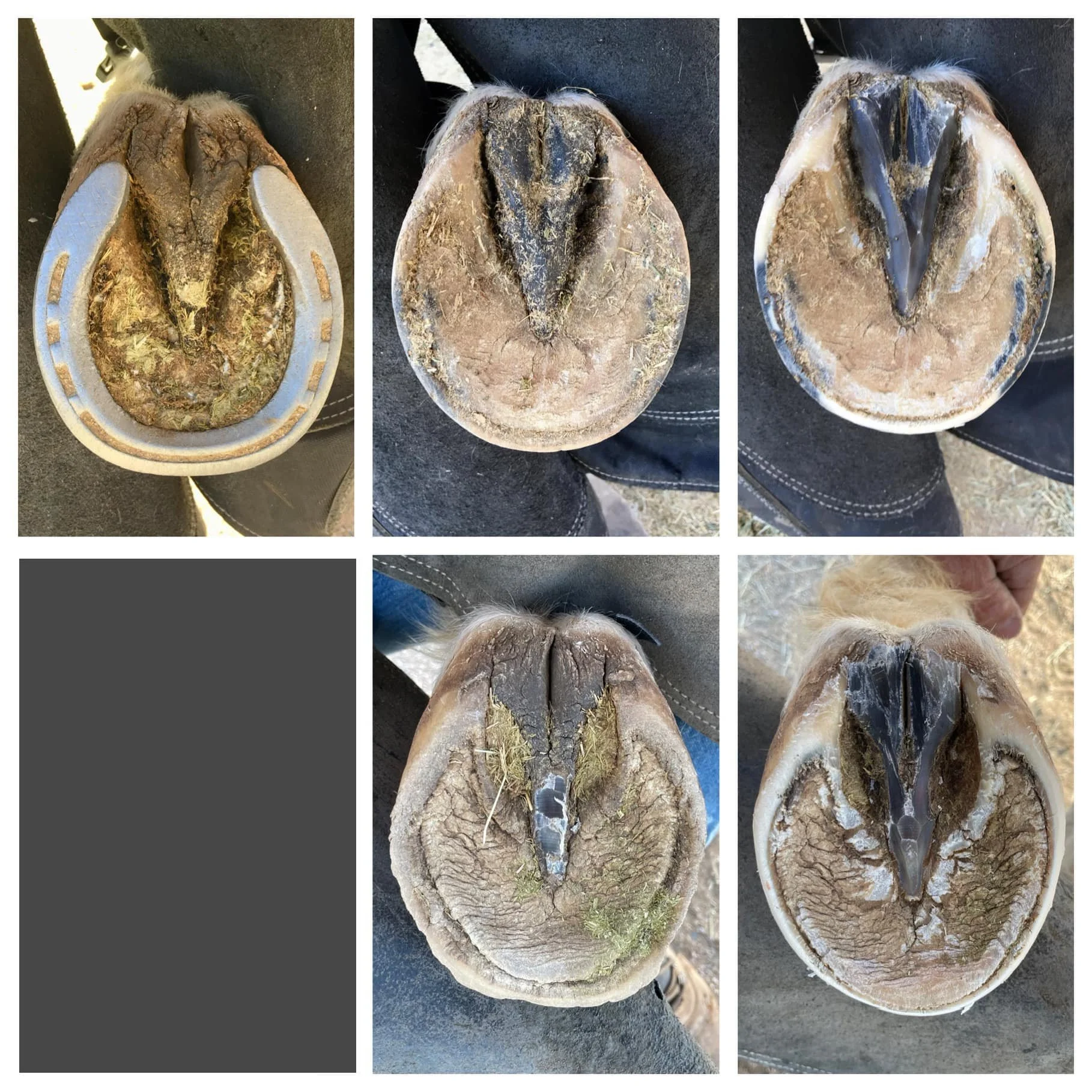
May 2021 - April 2022
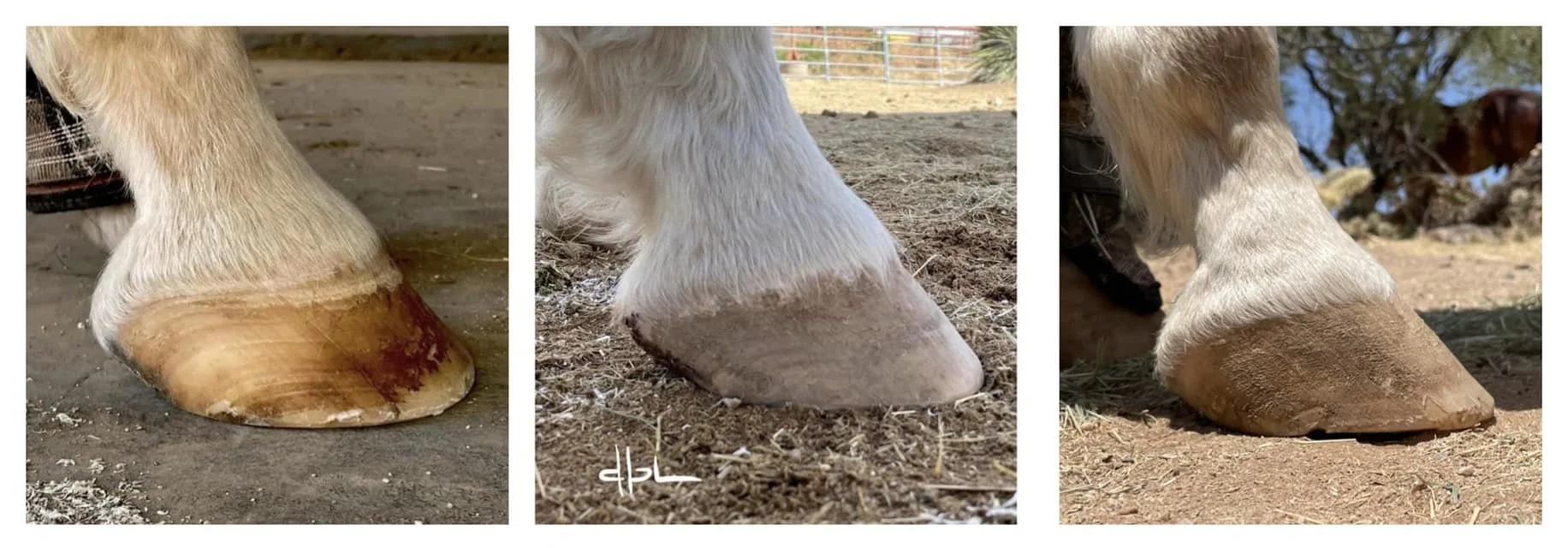
October 2021 - July 2022
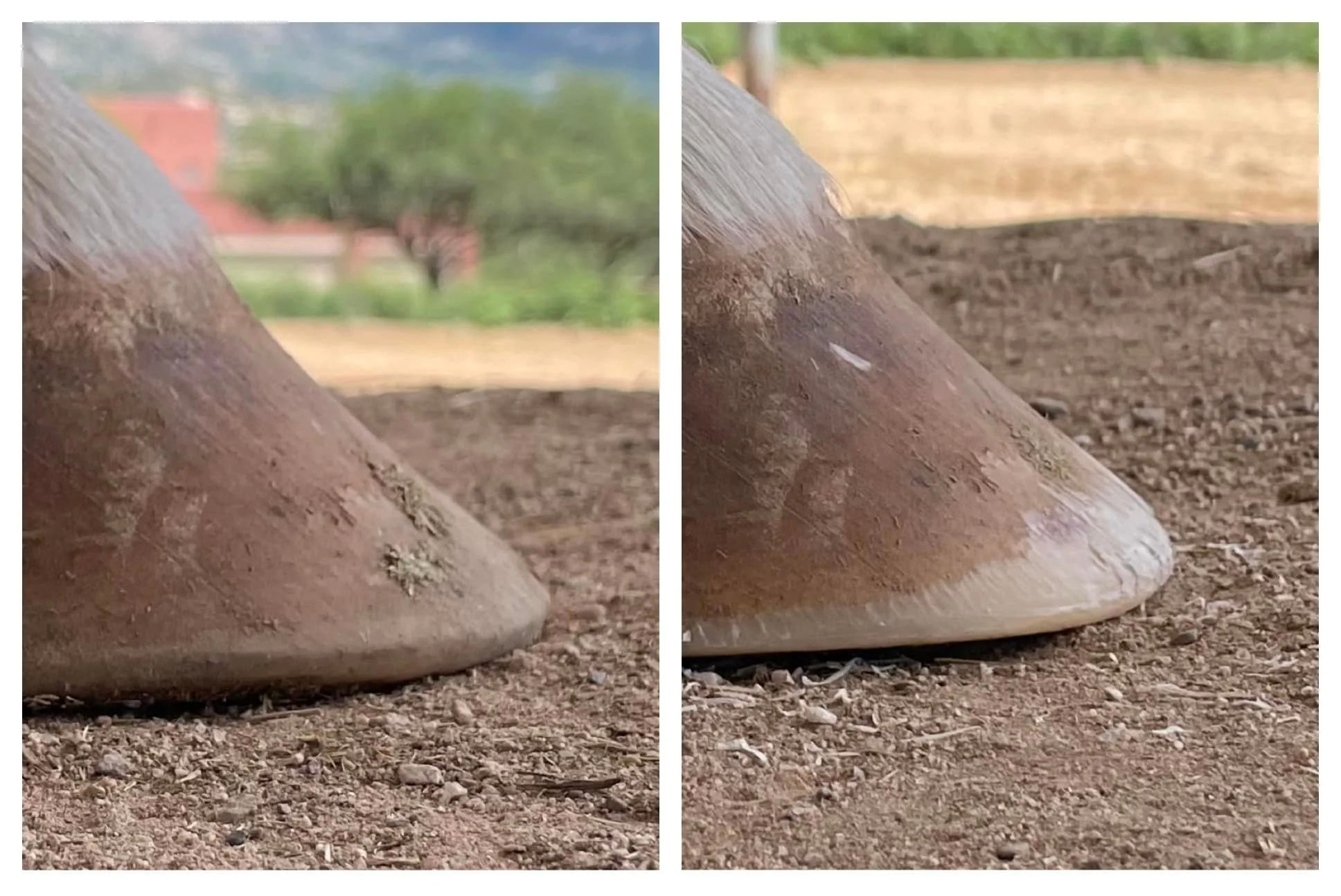
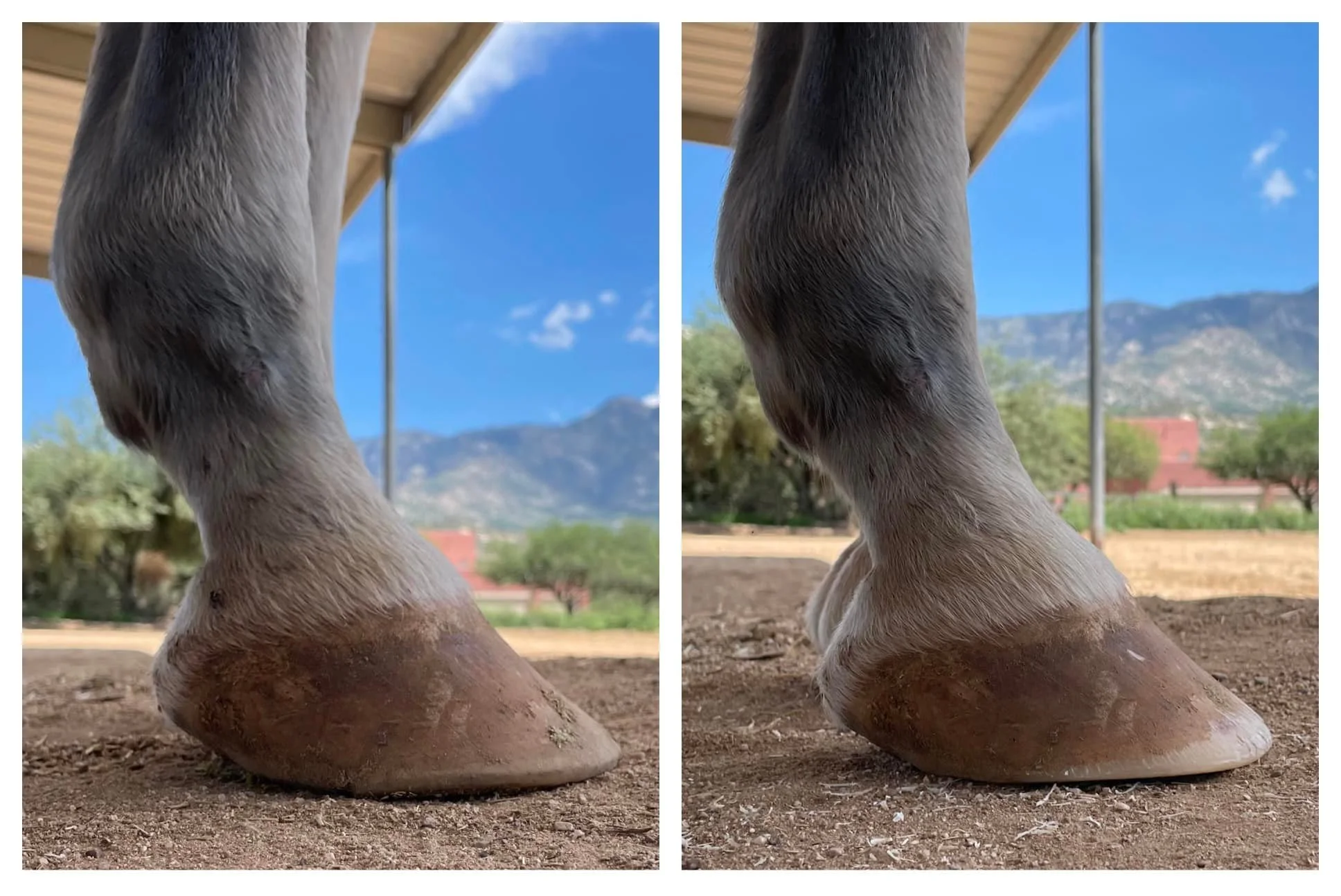
August 2022
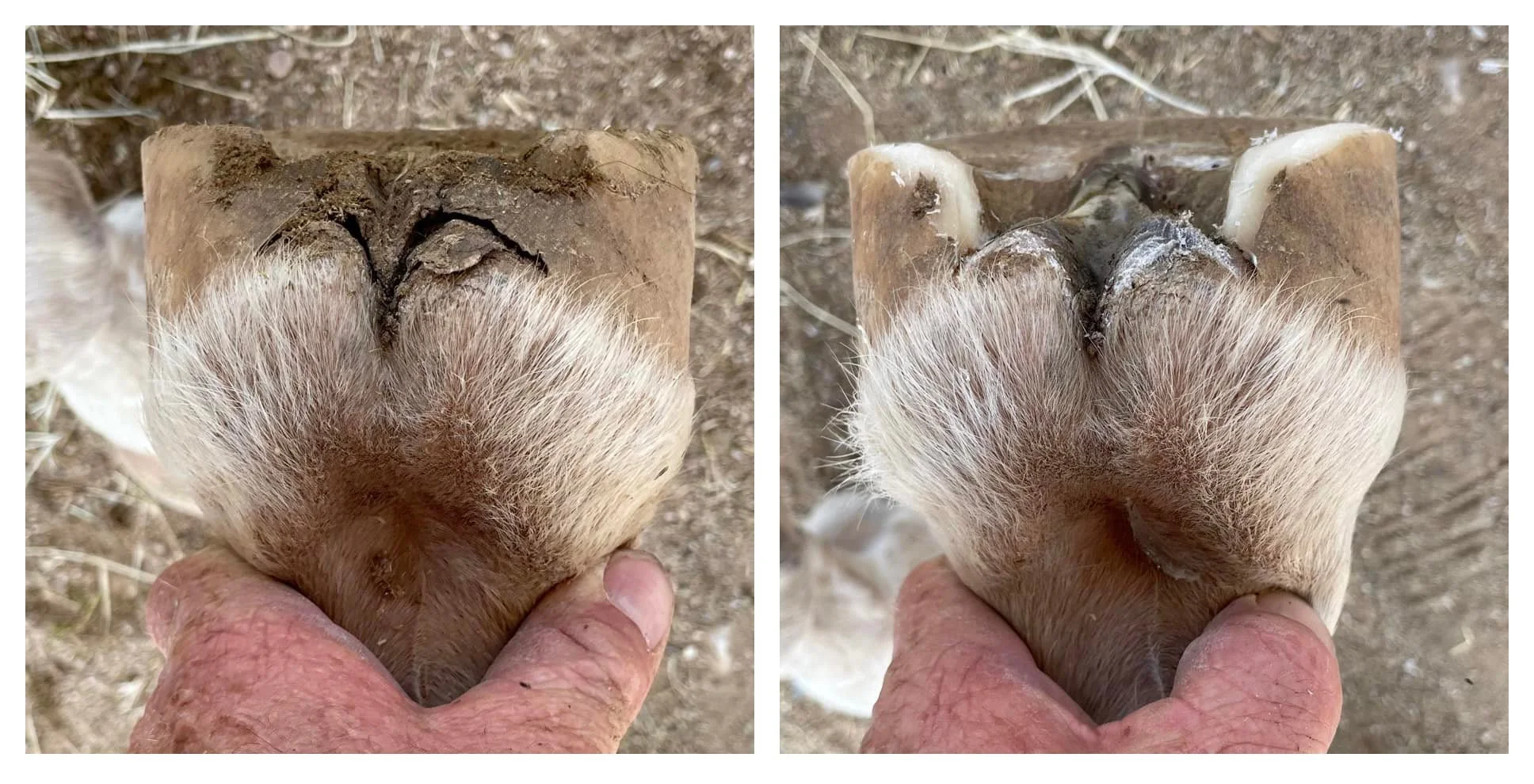
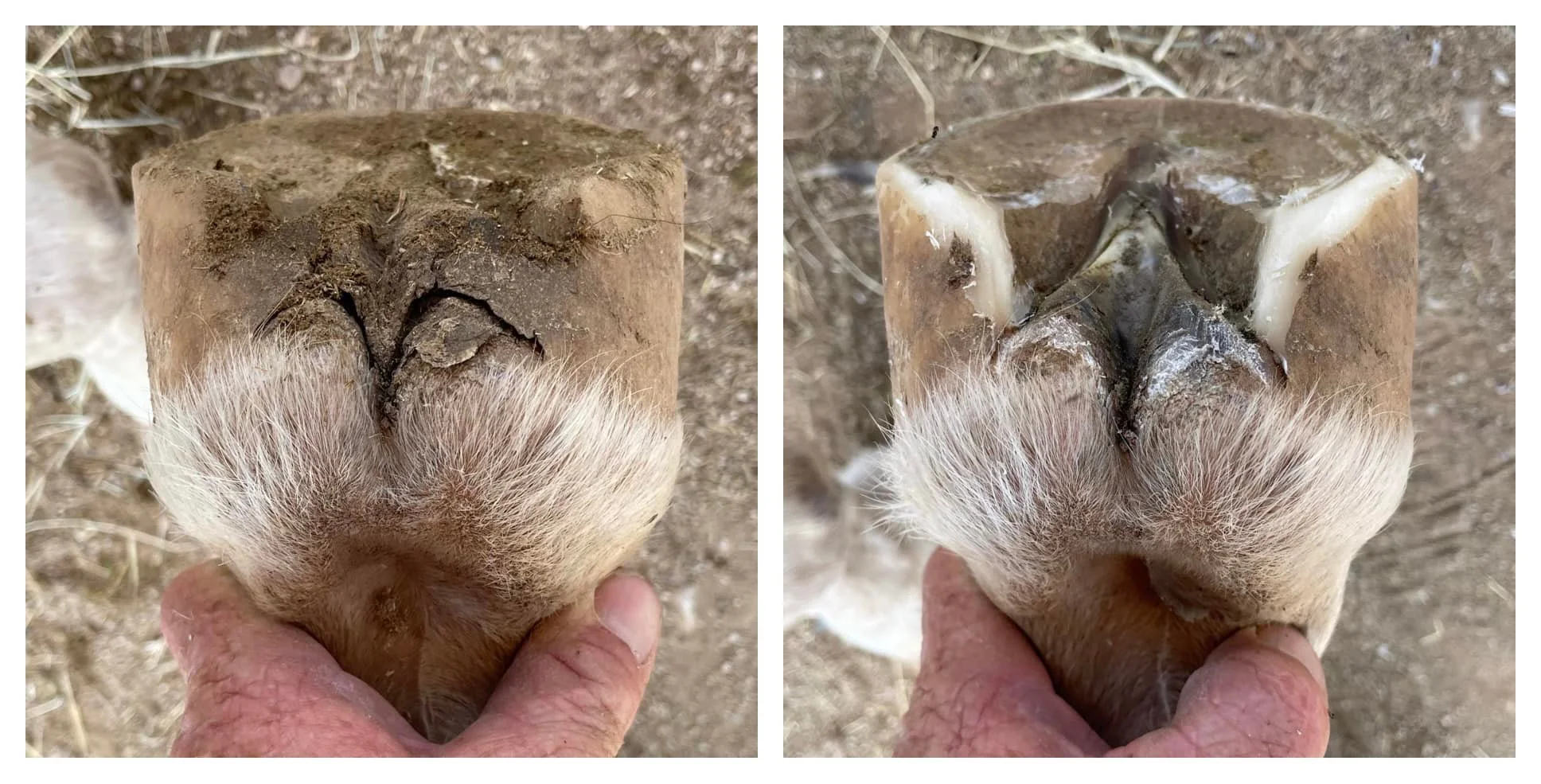
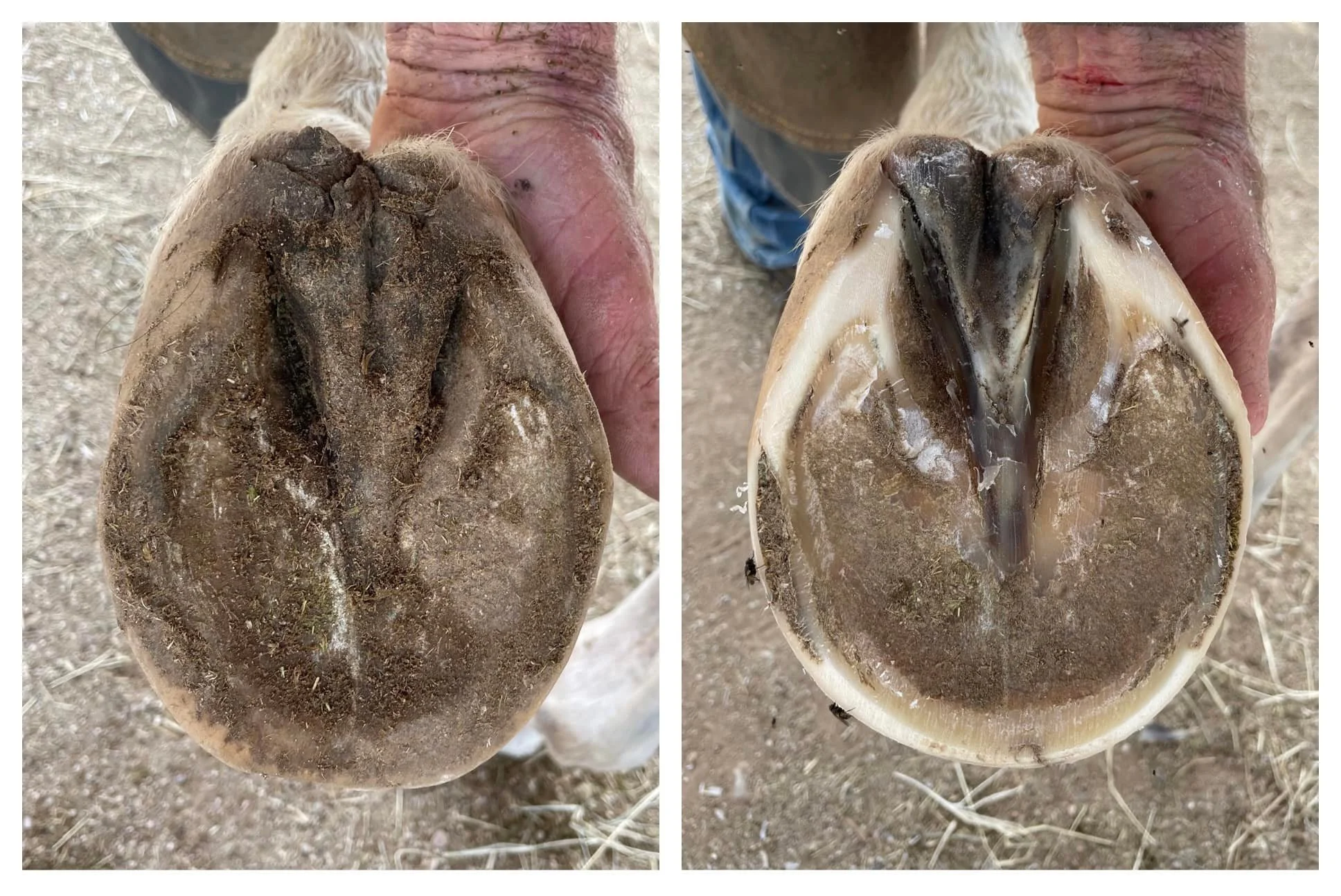
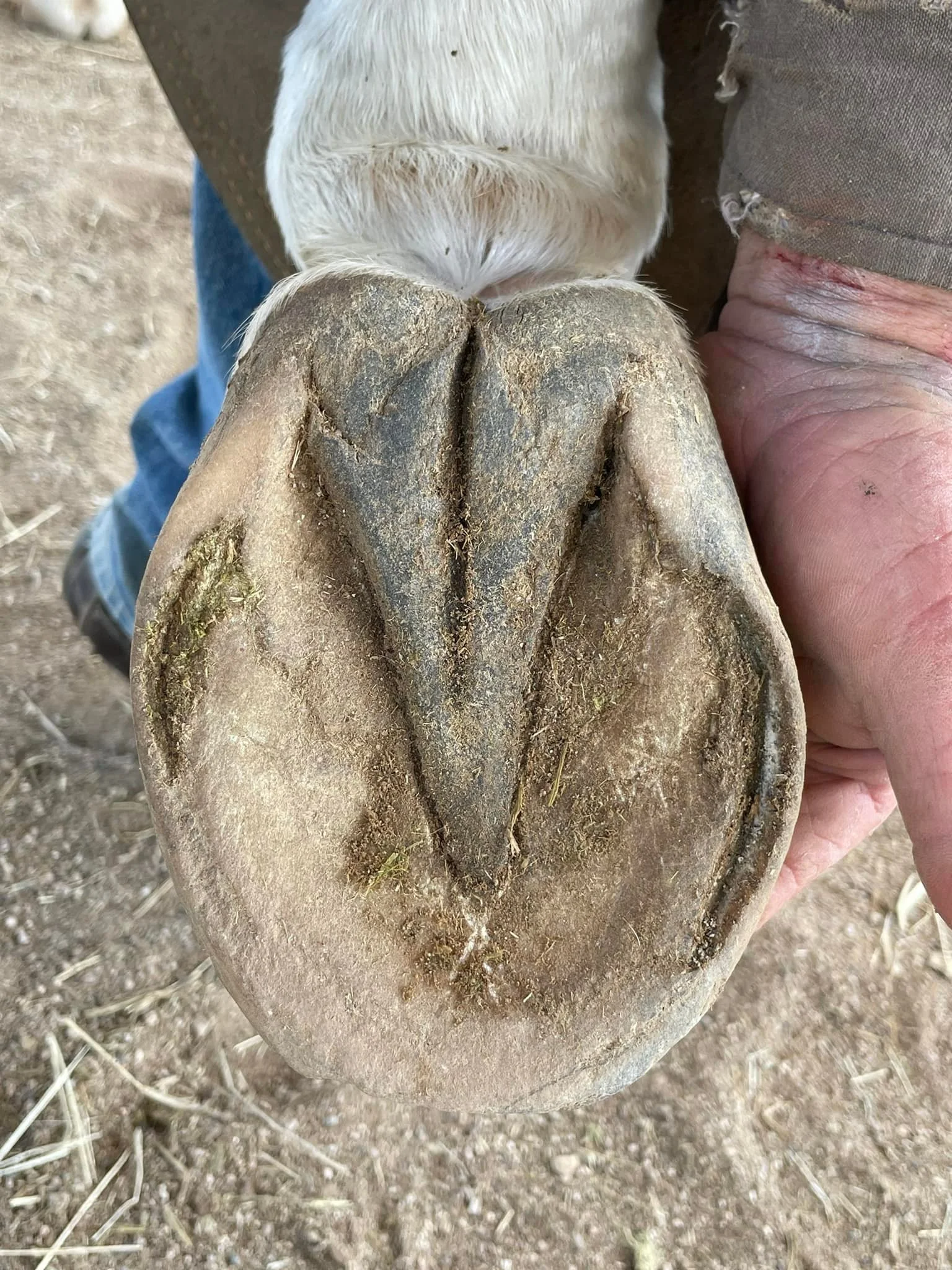
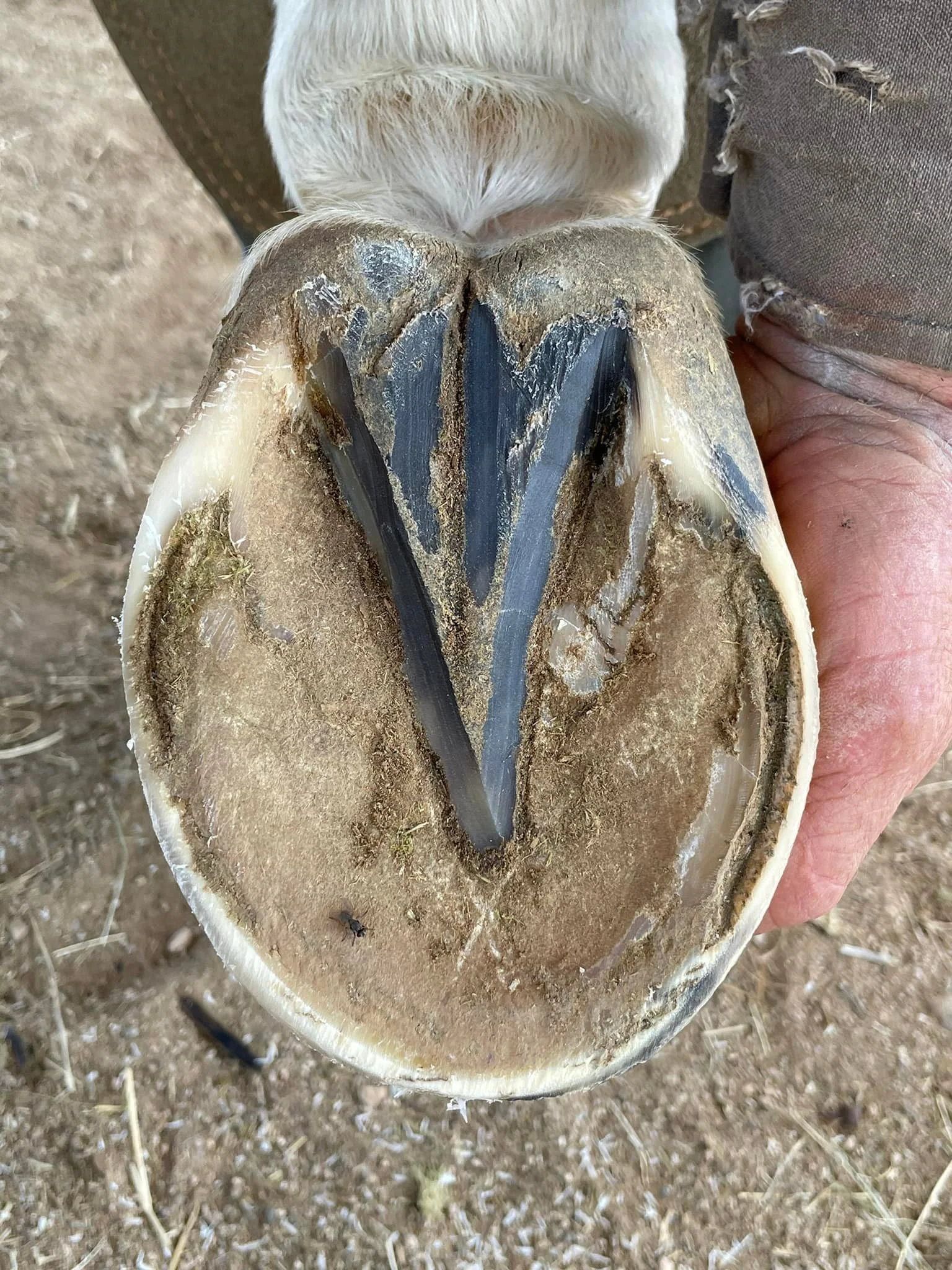
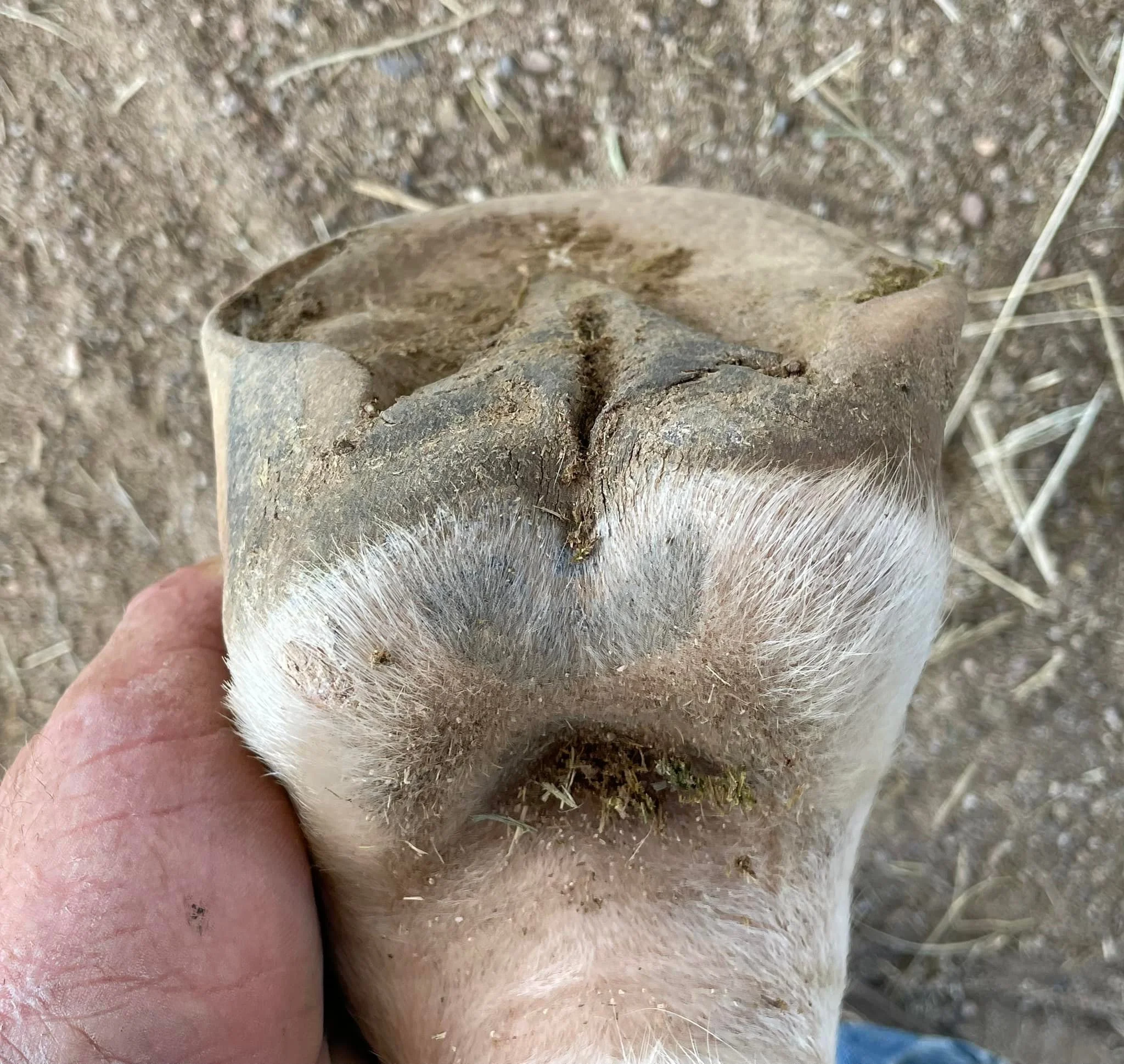
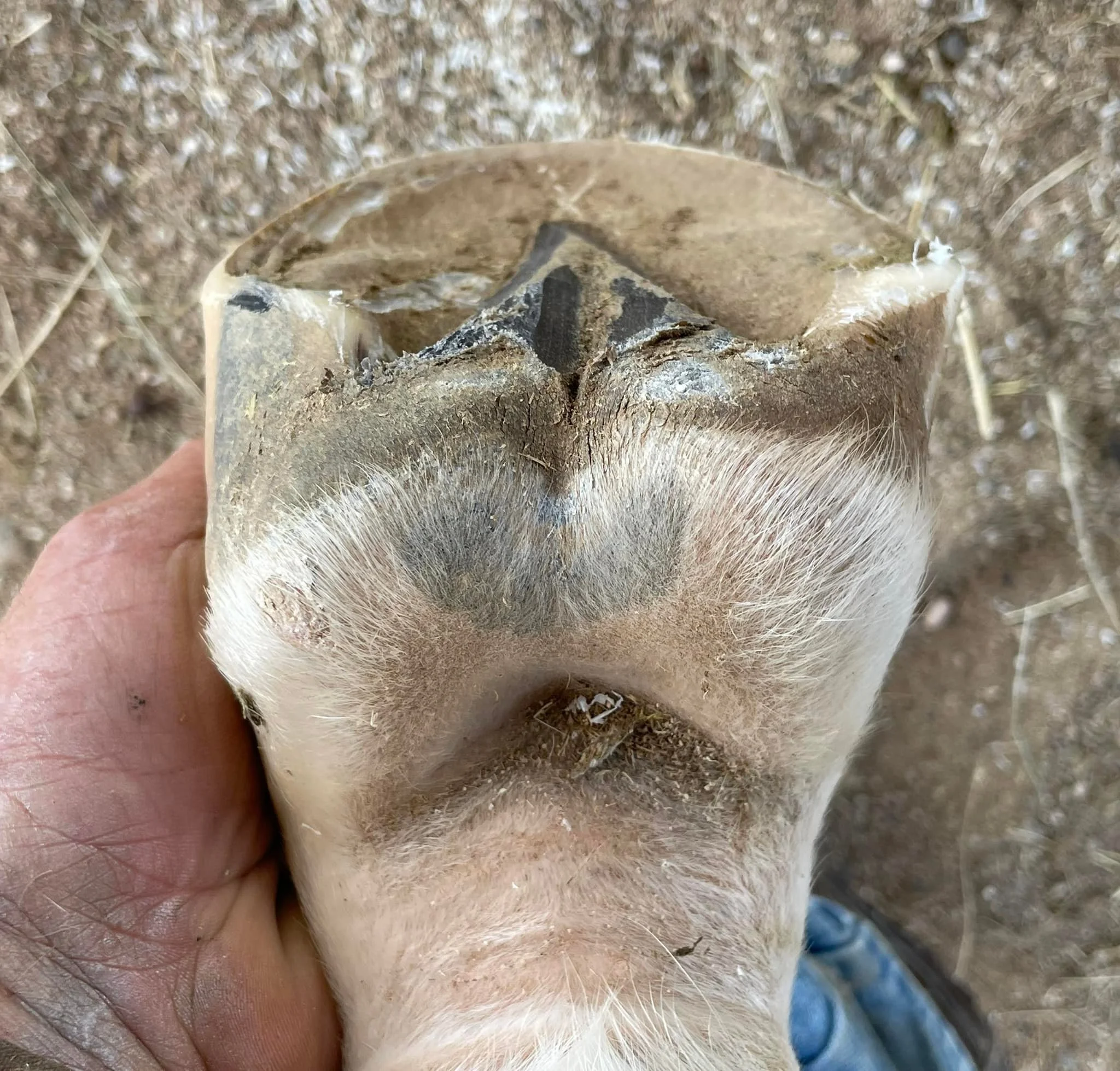
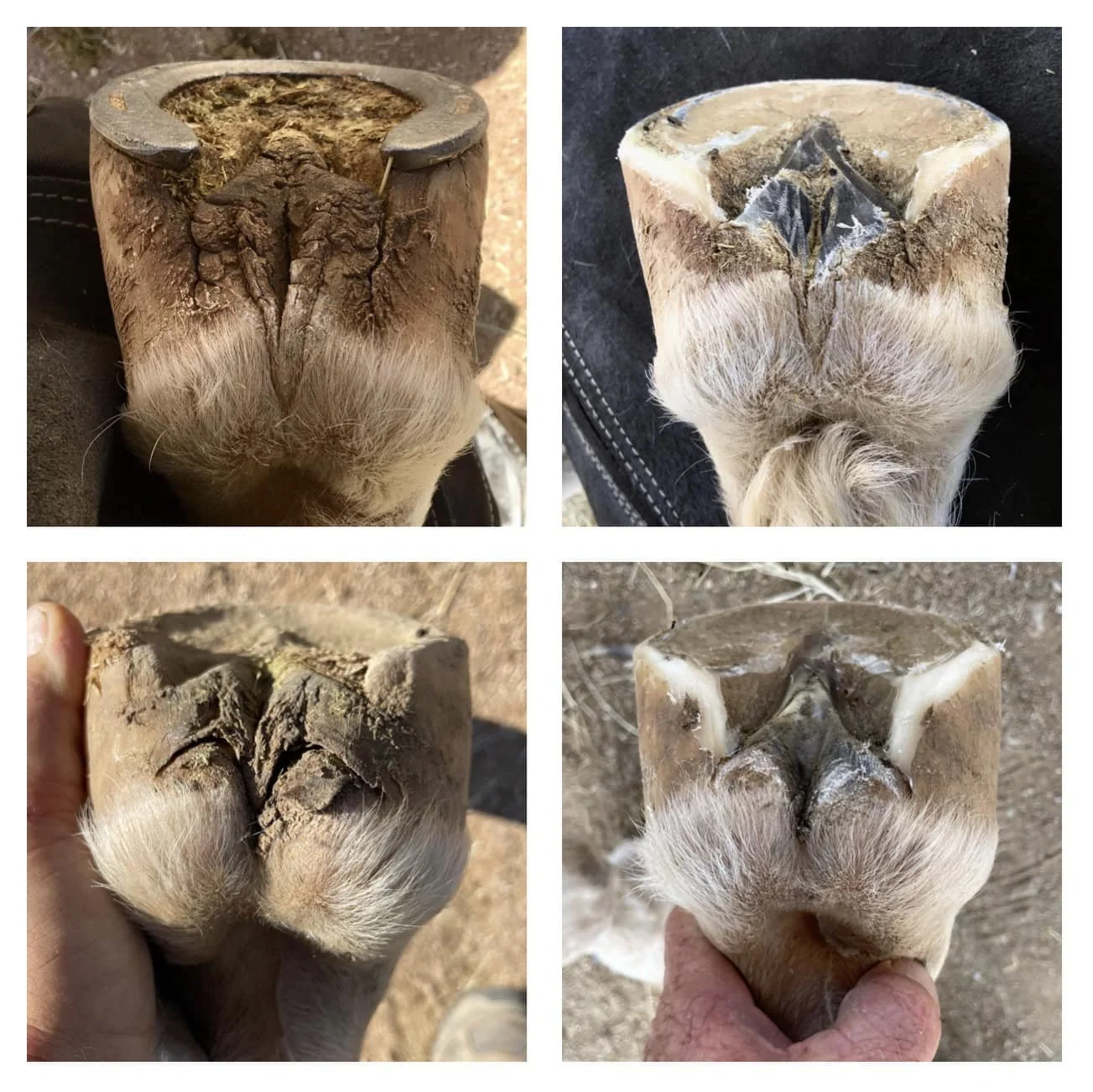
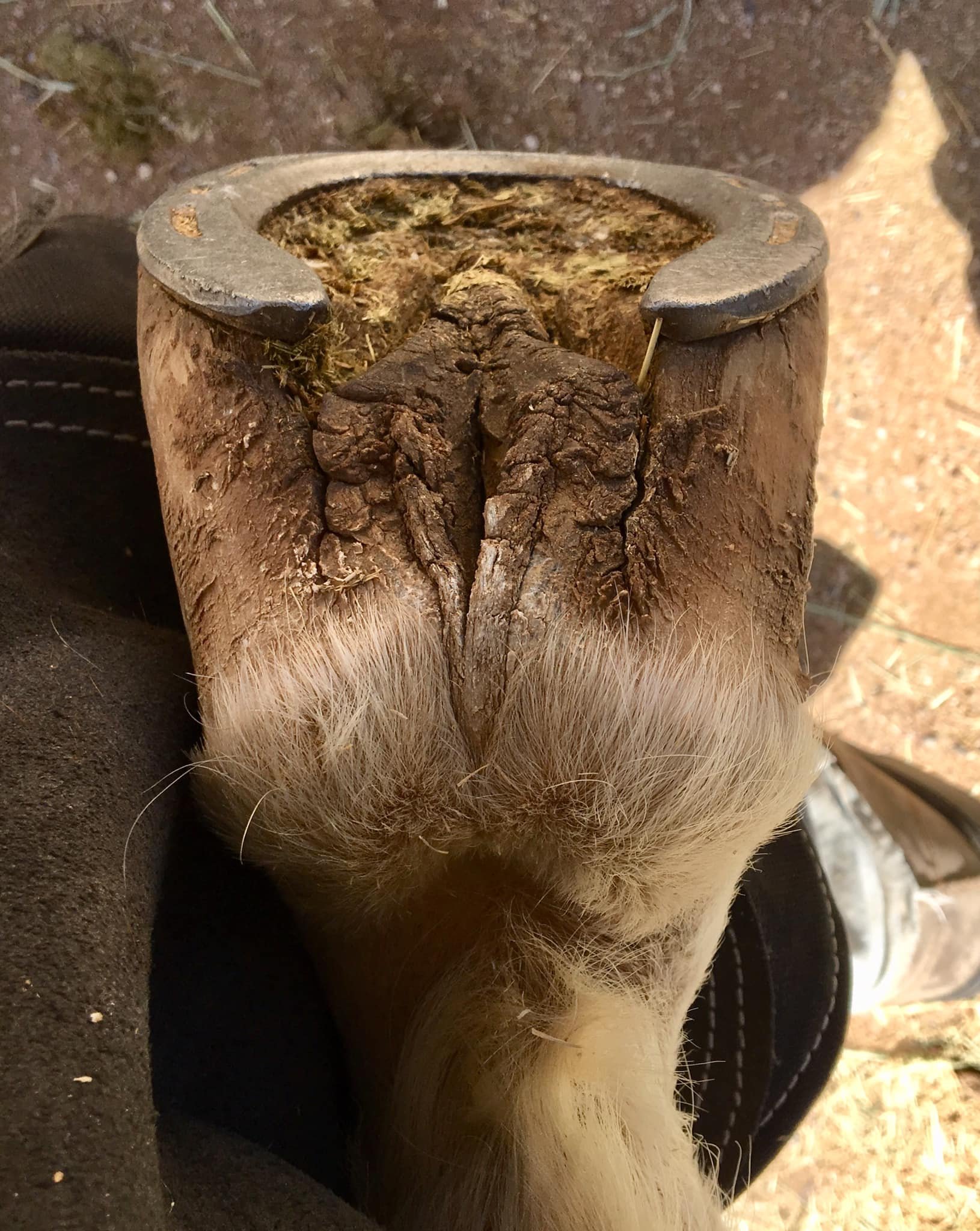
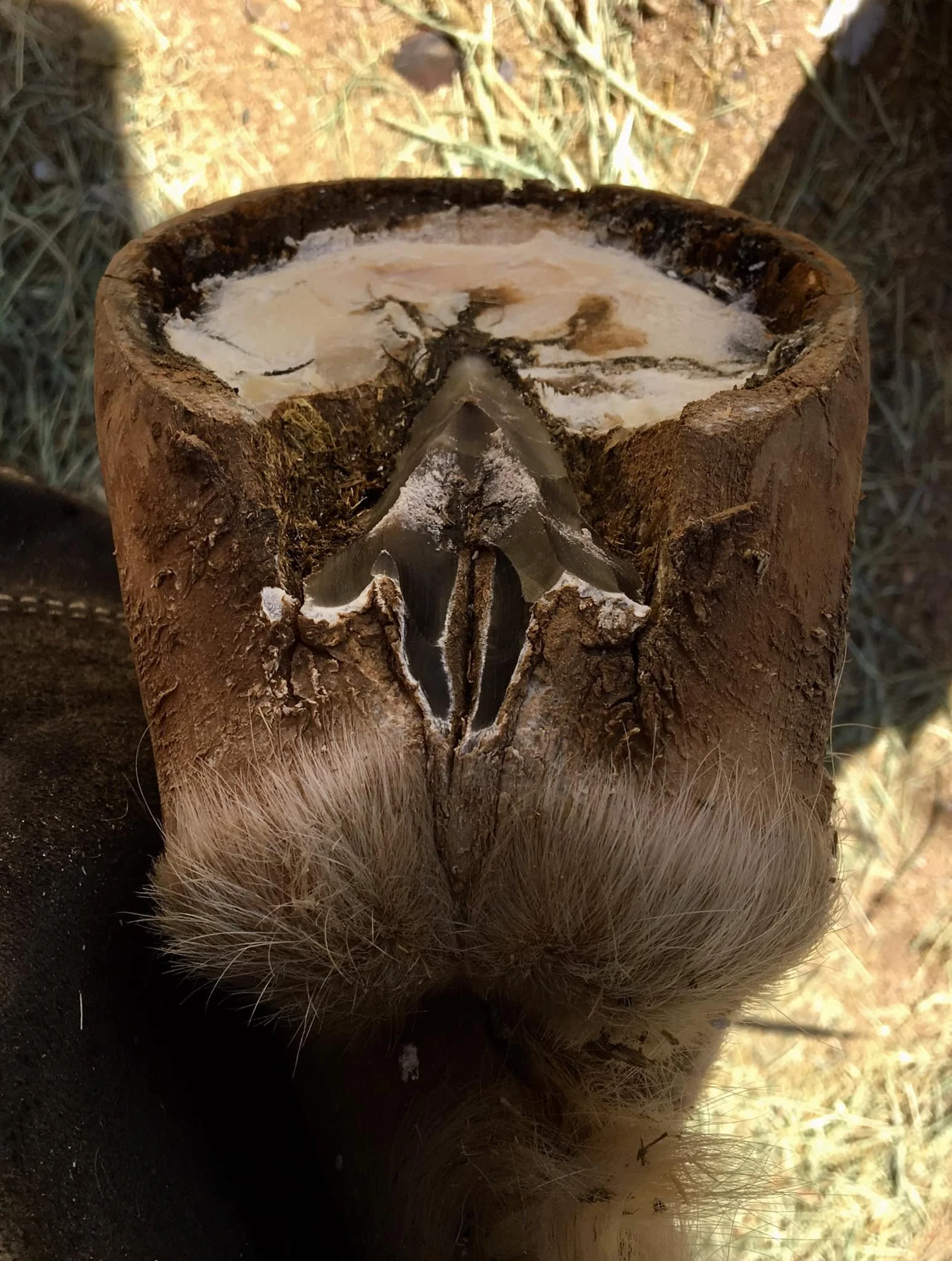
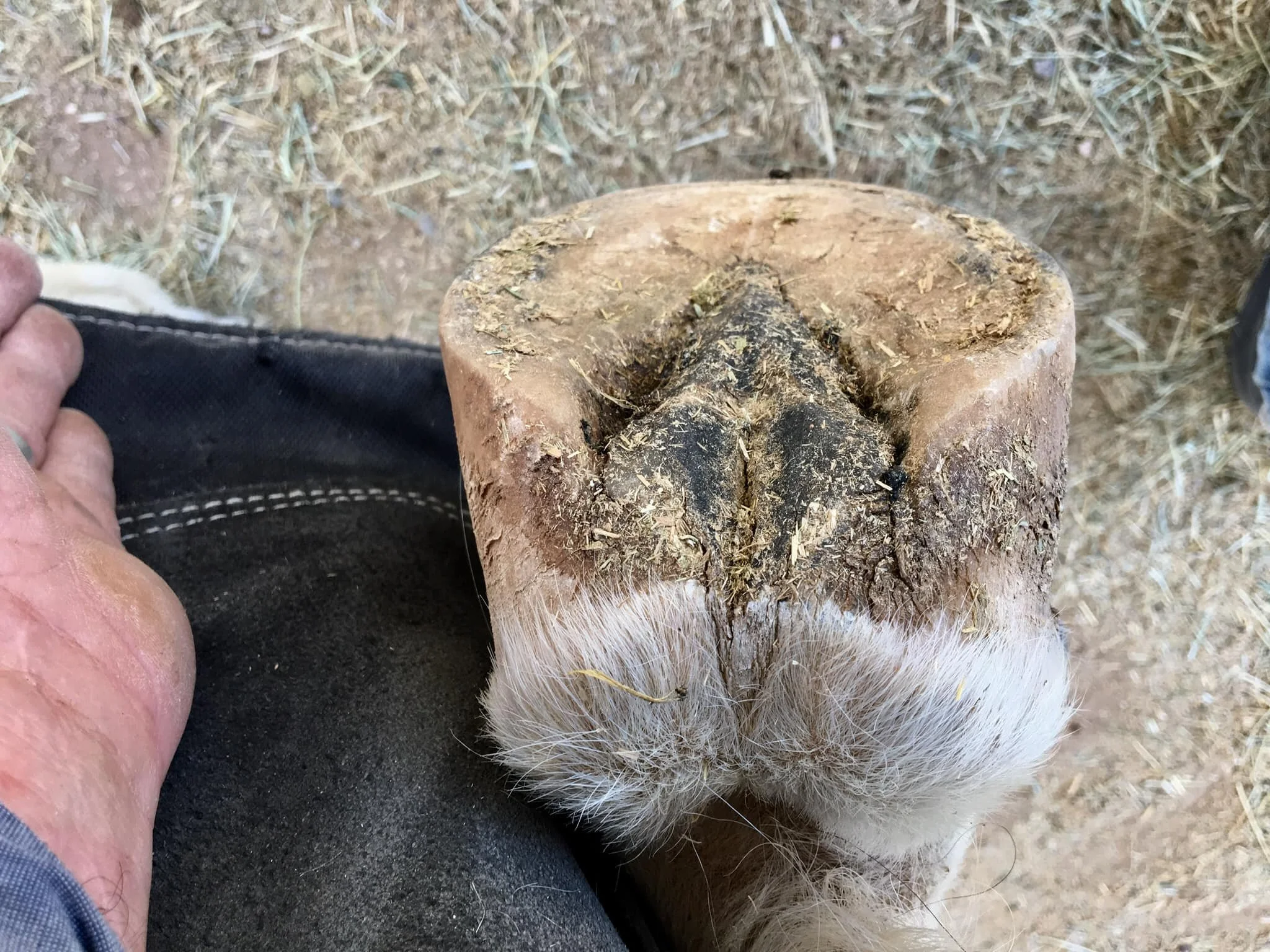
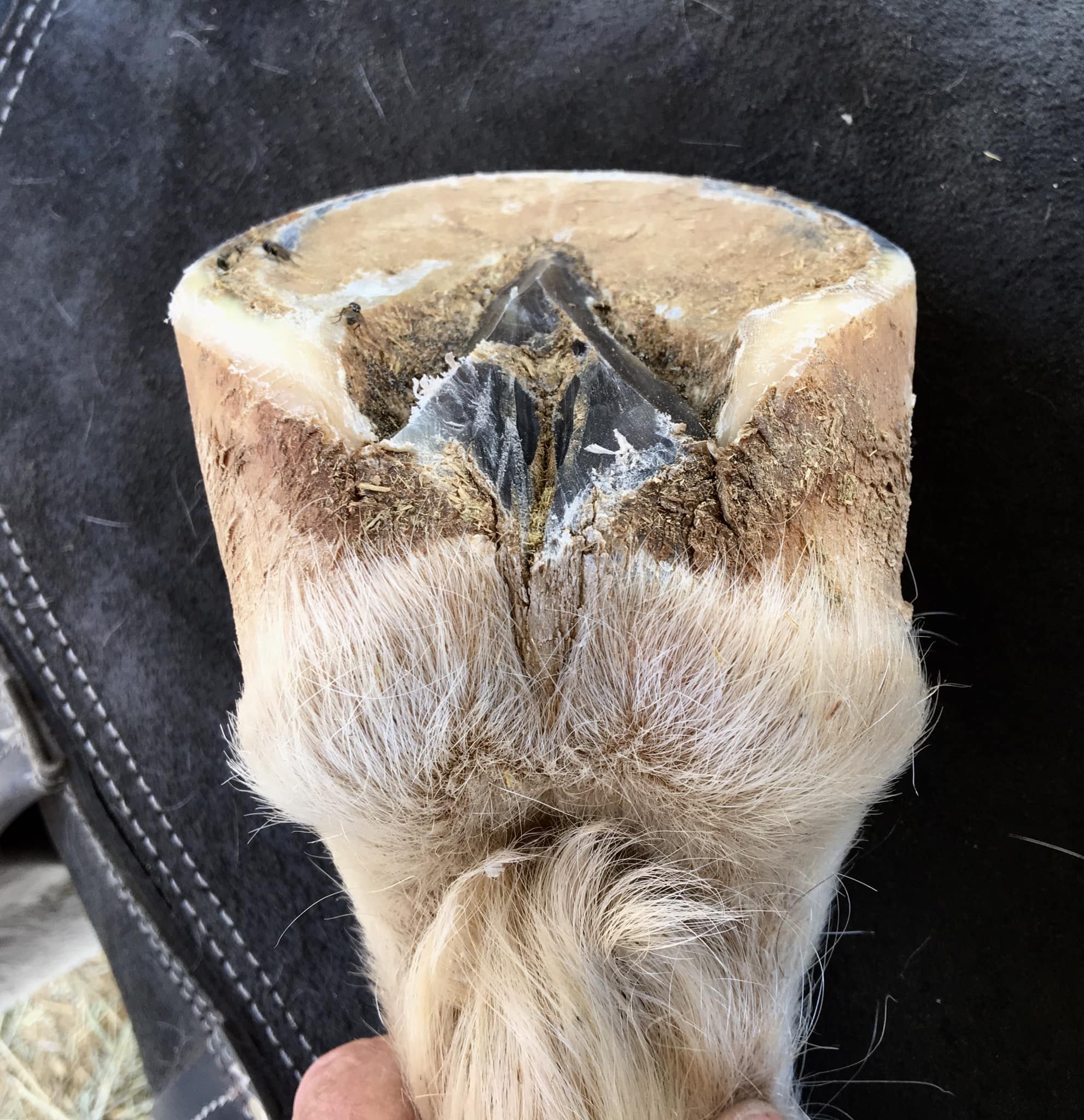
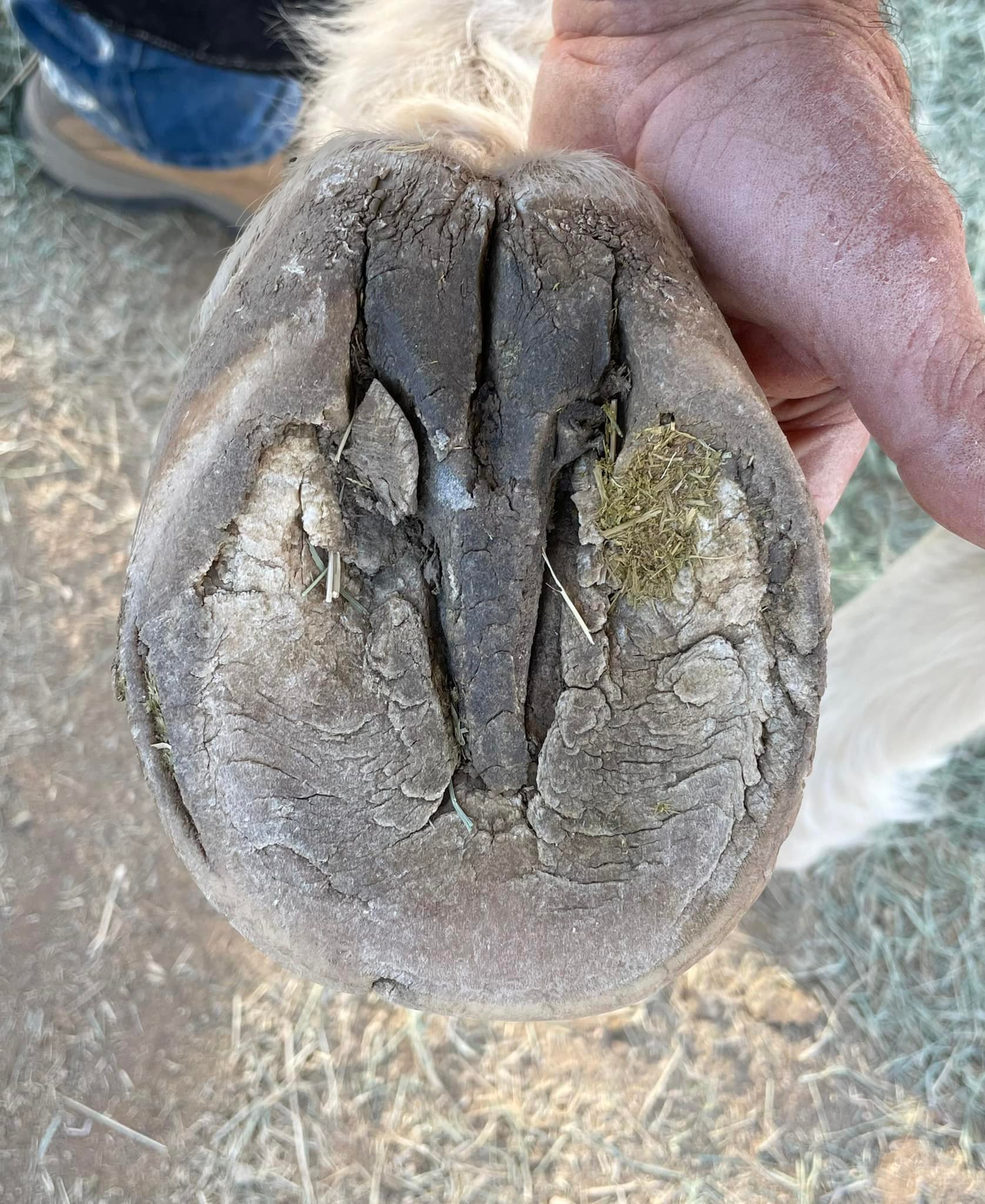
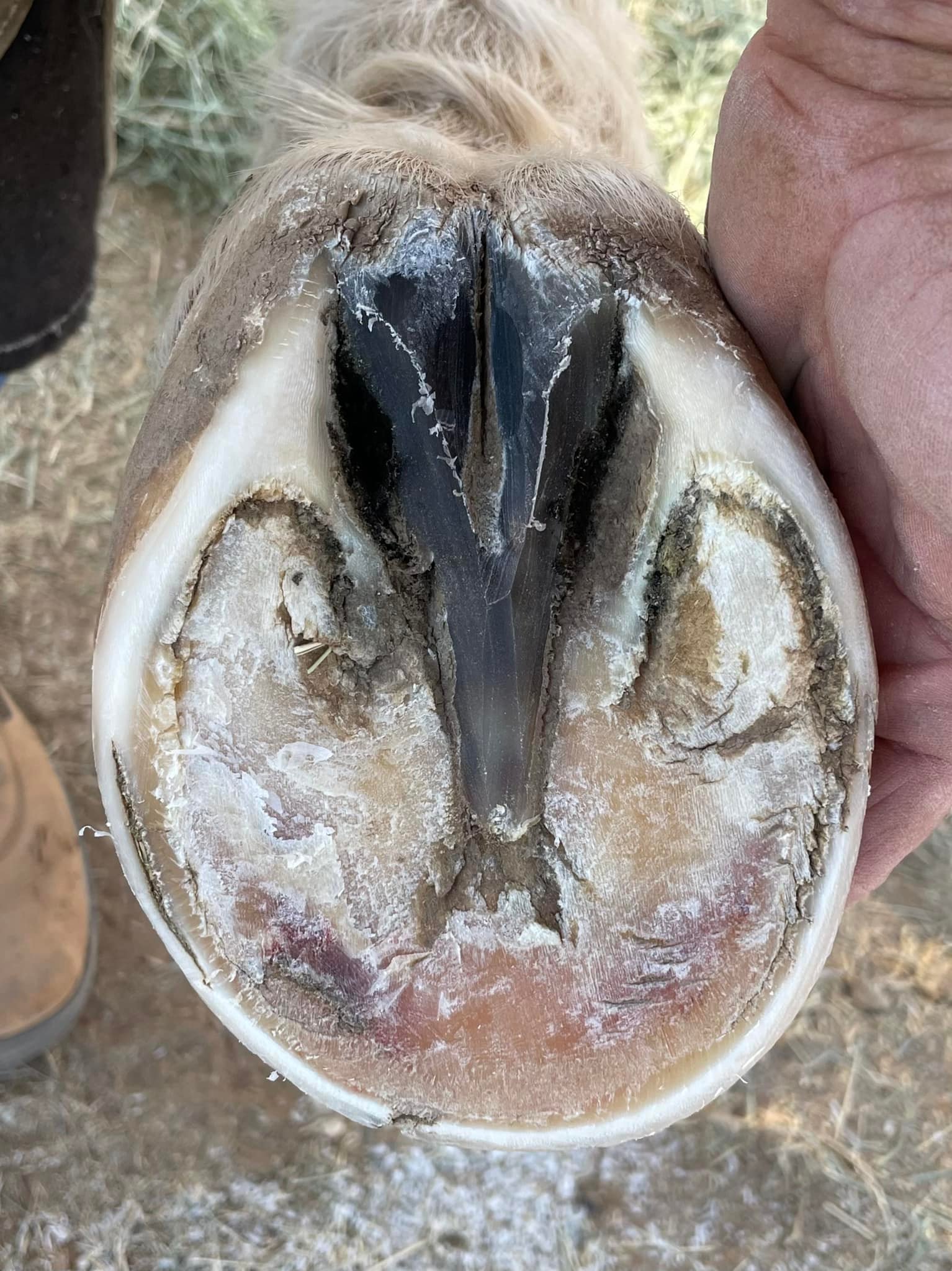
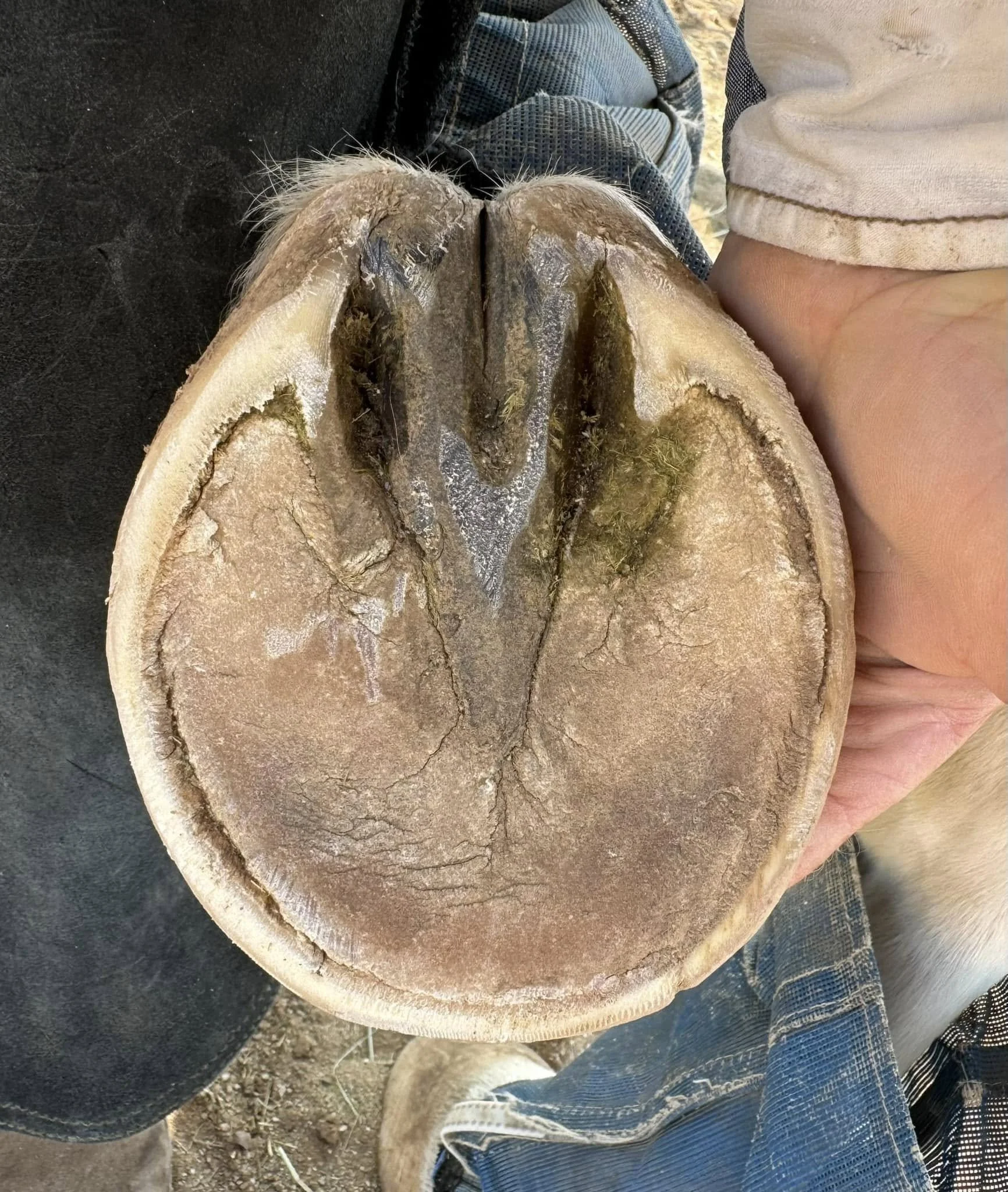
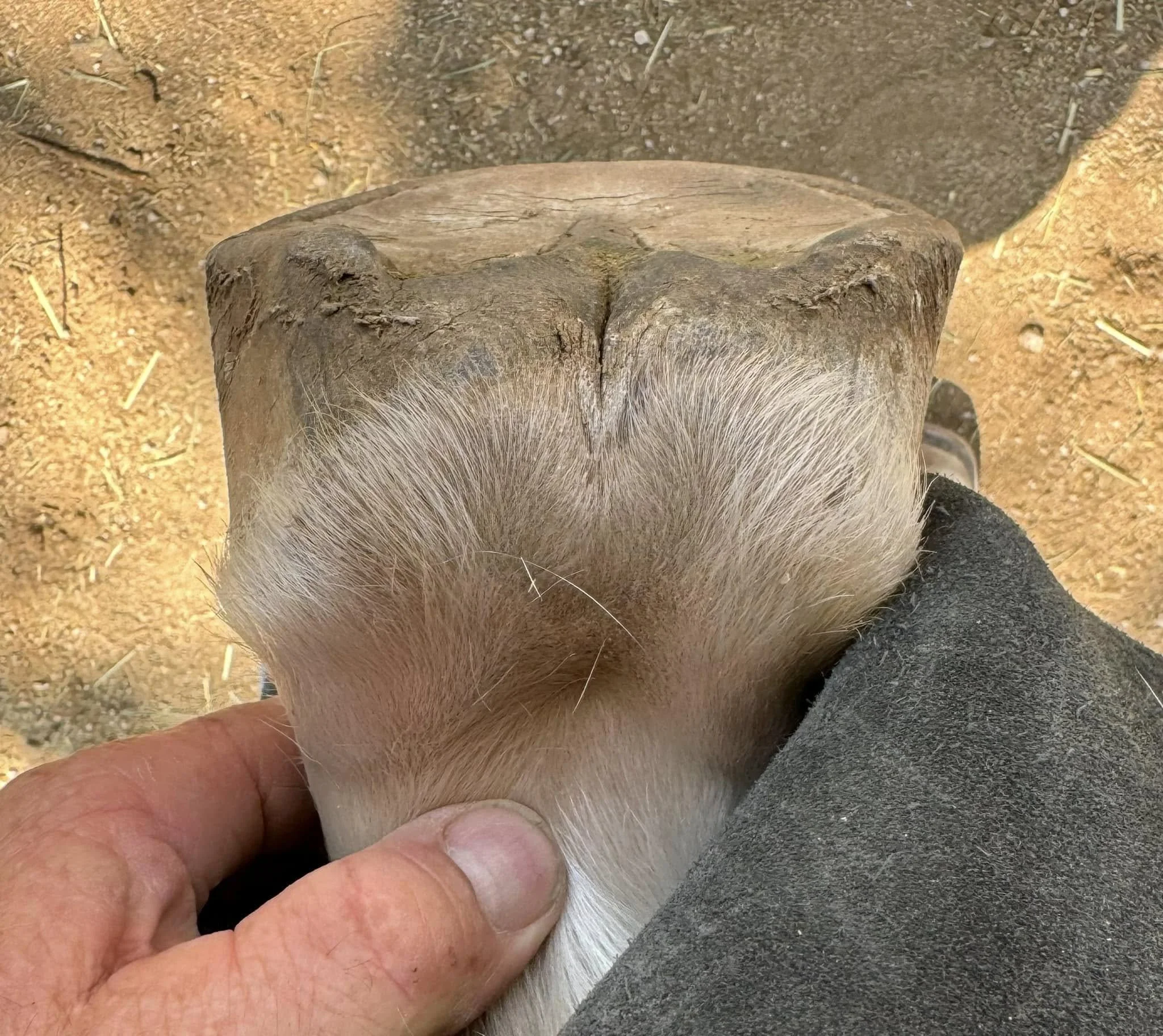
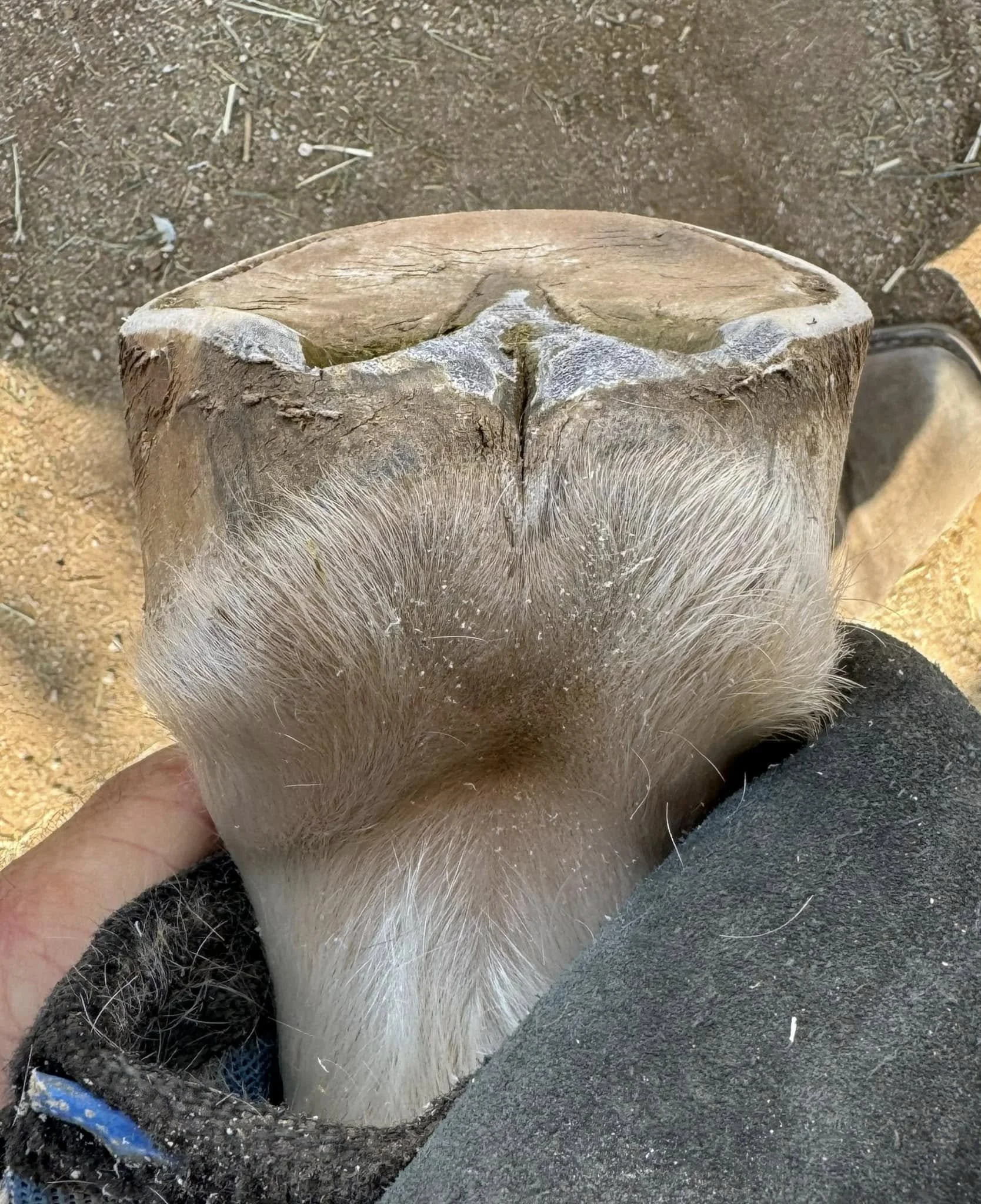
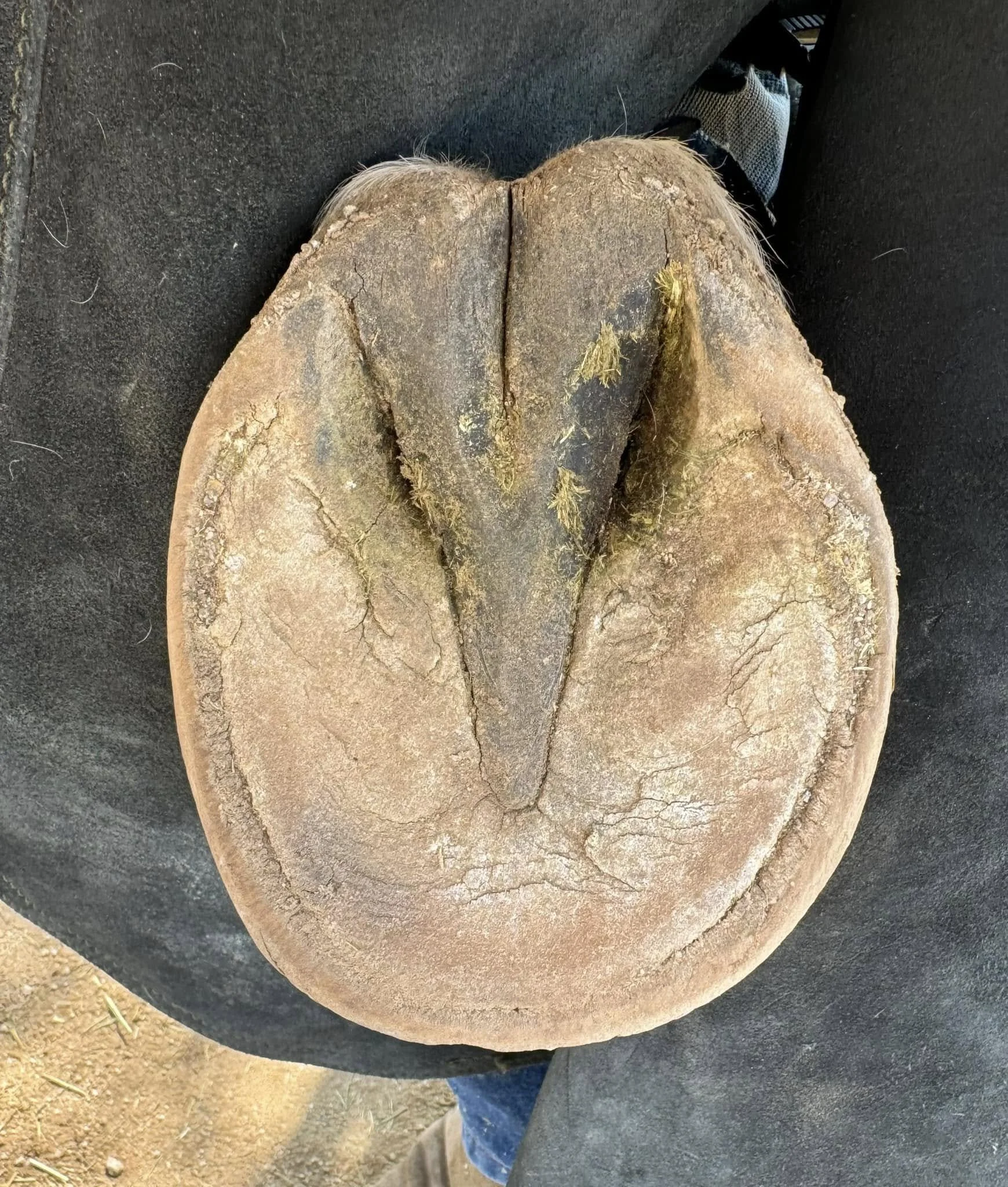
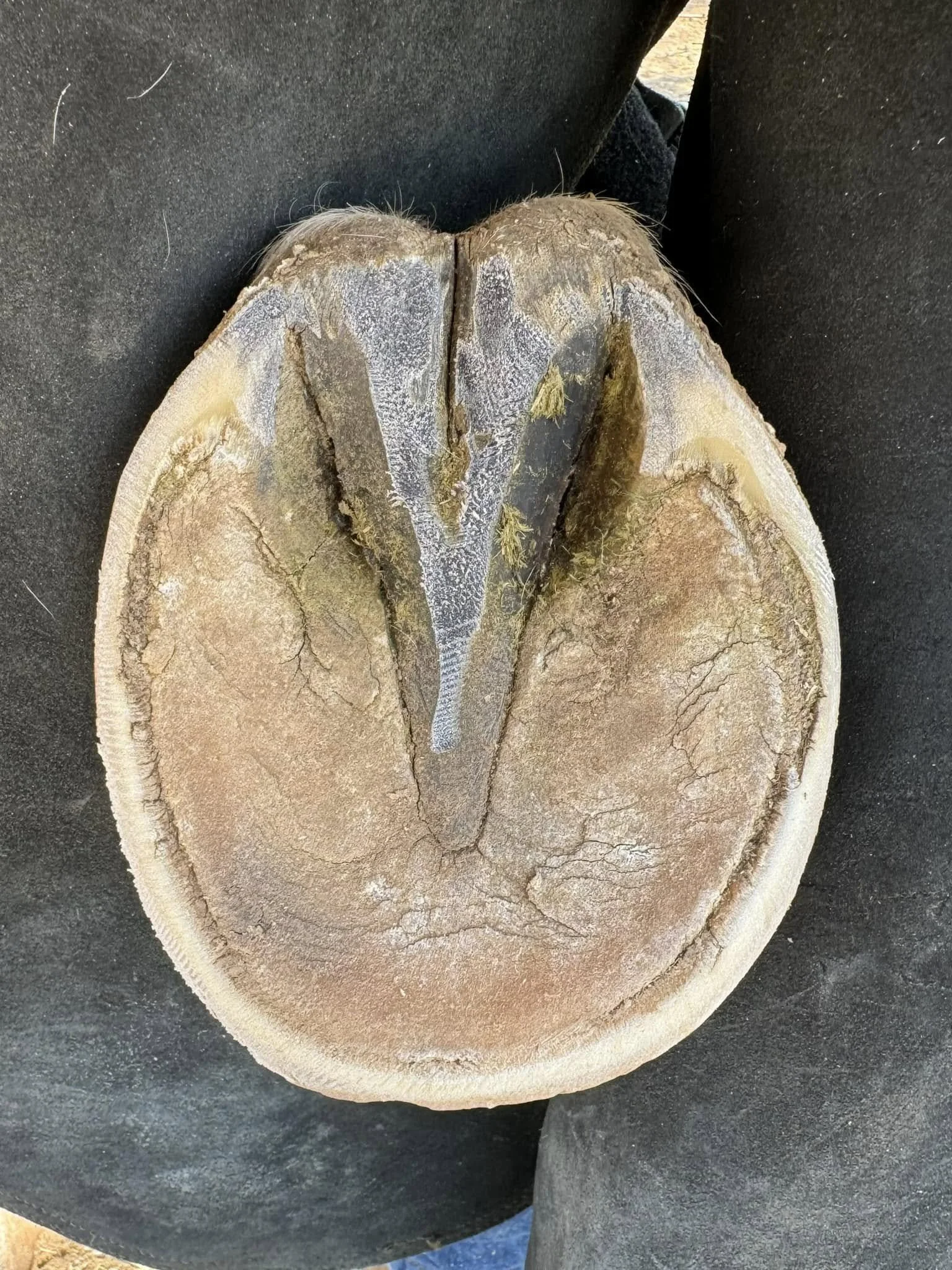
May 2021 - August 2022 | I’ve heard the trim “frog stay” or “frog spine” used as an anotomical name/description for the external ridge of insensitive frog that fits into the internal frog corium at the digital cushion. I don’t believe this is an natural anotomical feature. It’s just an accumulation of dead frog skin that gets wedged in a deep atrophied central sulcus and sandwiched between contracted heels…and it’s painful. It typically takes months to trim these dead frog skin wedges out of the central sulcus. Horses are alway relieved when they come out. Sometimes they’re so deeply embedded that they have to grow out slowly. This can make it difficult to lower the heels and shift the majority of the weight over the back of the foot. They can also cause a frog abscess from the hard, dead, insensitive wedge jamming up into the soft, live, sensitive corium. The advantage of it abscessing is that the dead separates from the live making it easier to pull the entire mass out without doing any harm. It just shows how accustomed people have become to pathological feet. They start naming retained dead formations that are meant to be taken away…not stay
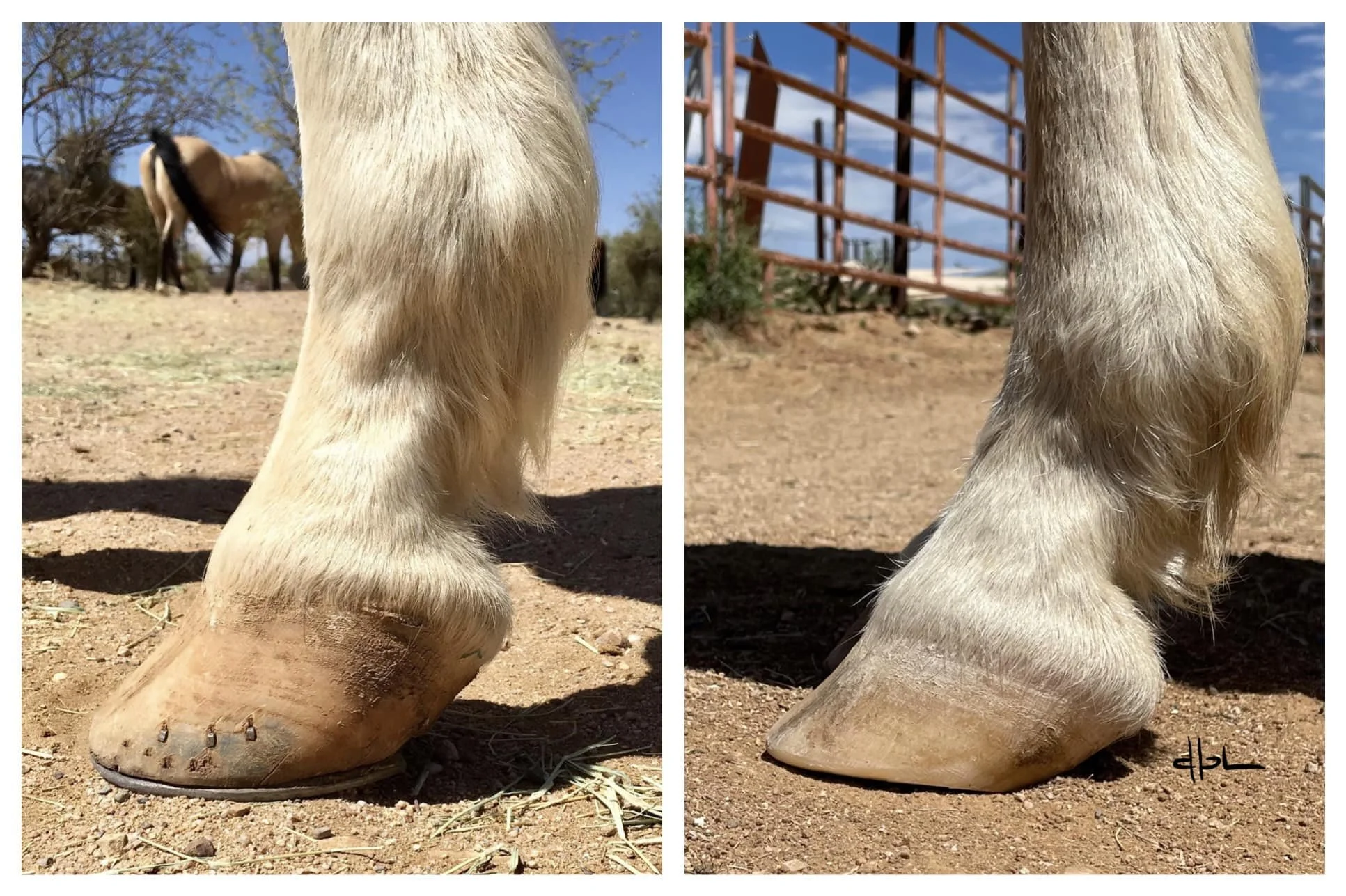
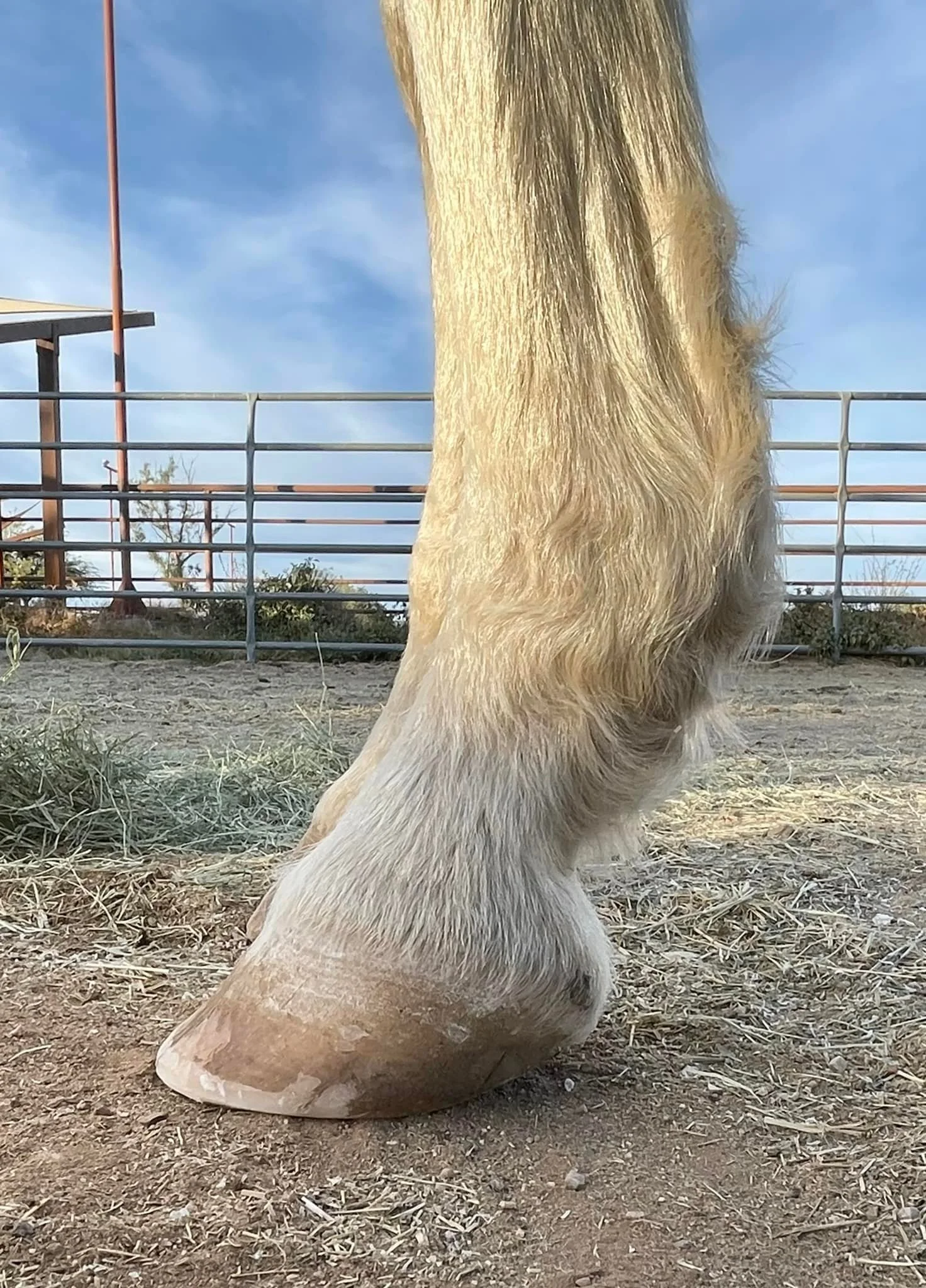
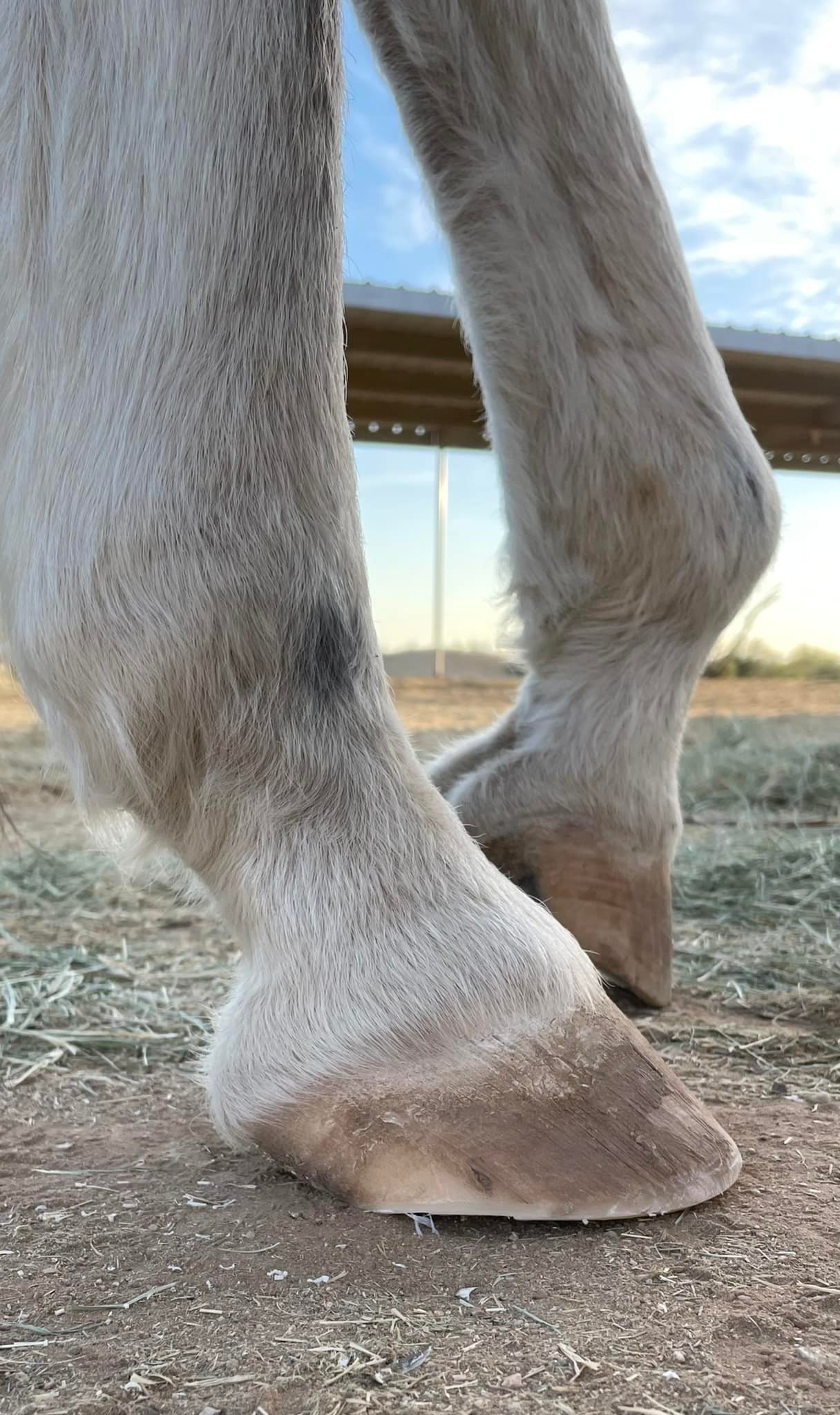
May 2021 - September 2023
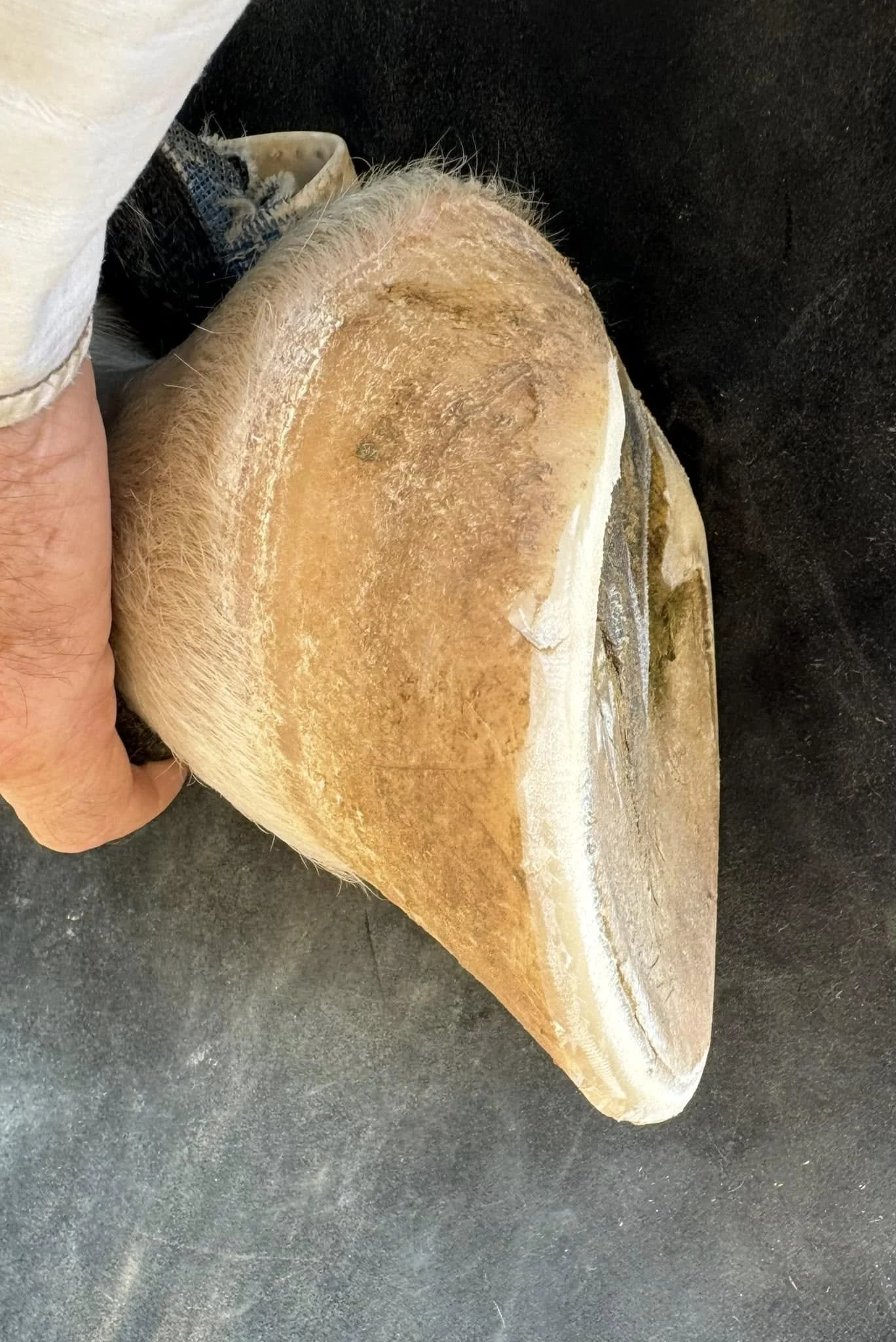
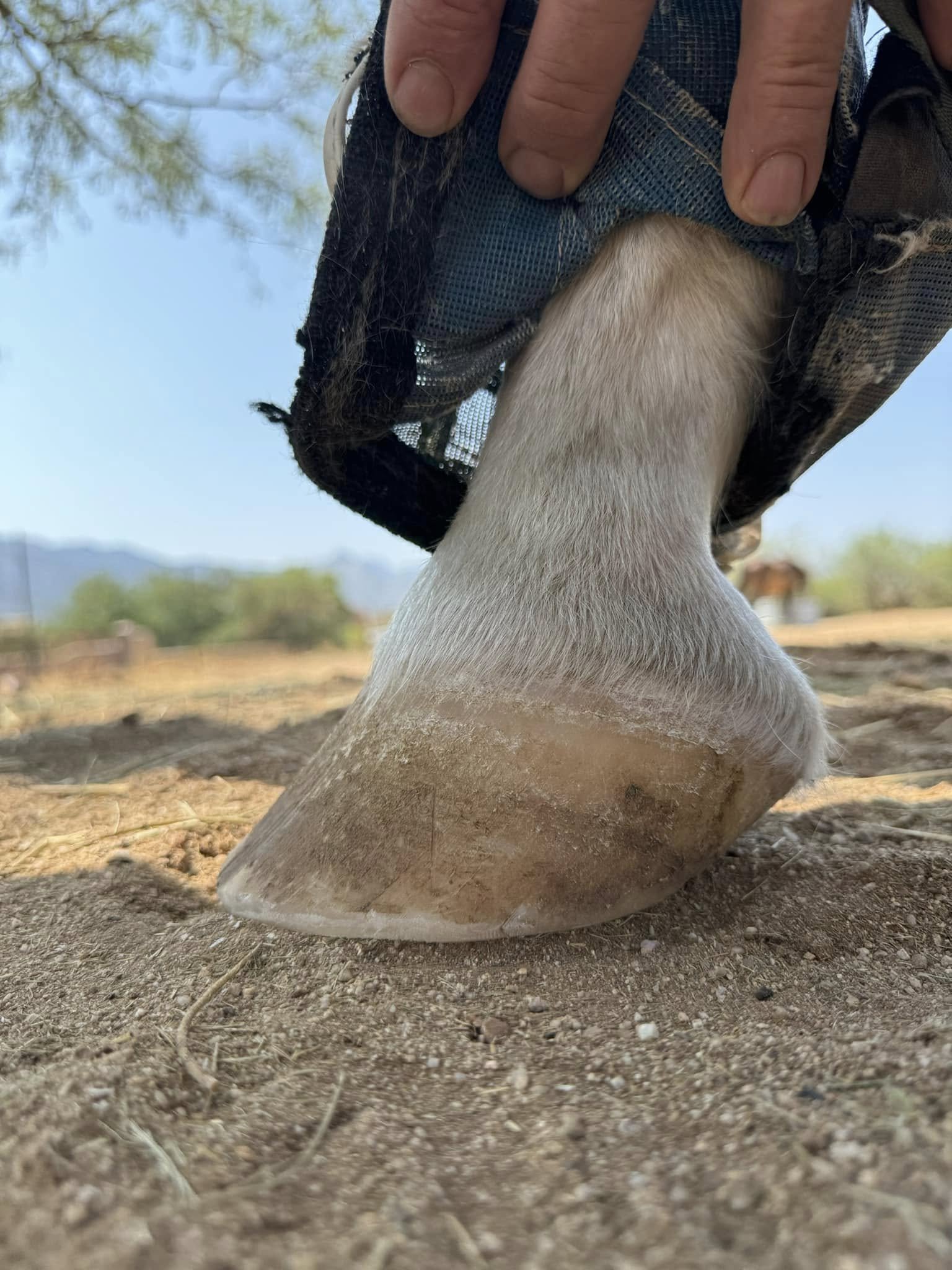
July 2024
Bonus Video - Trimming after a Frog Abscess
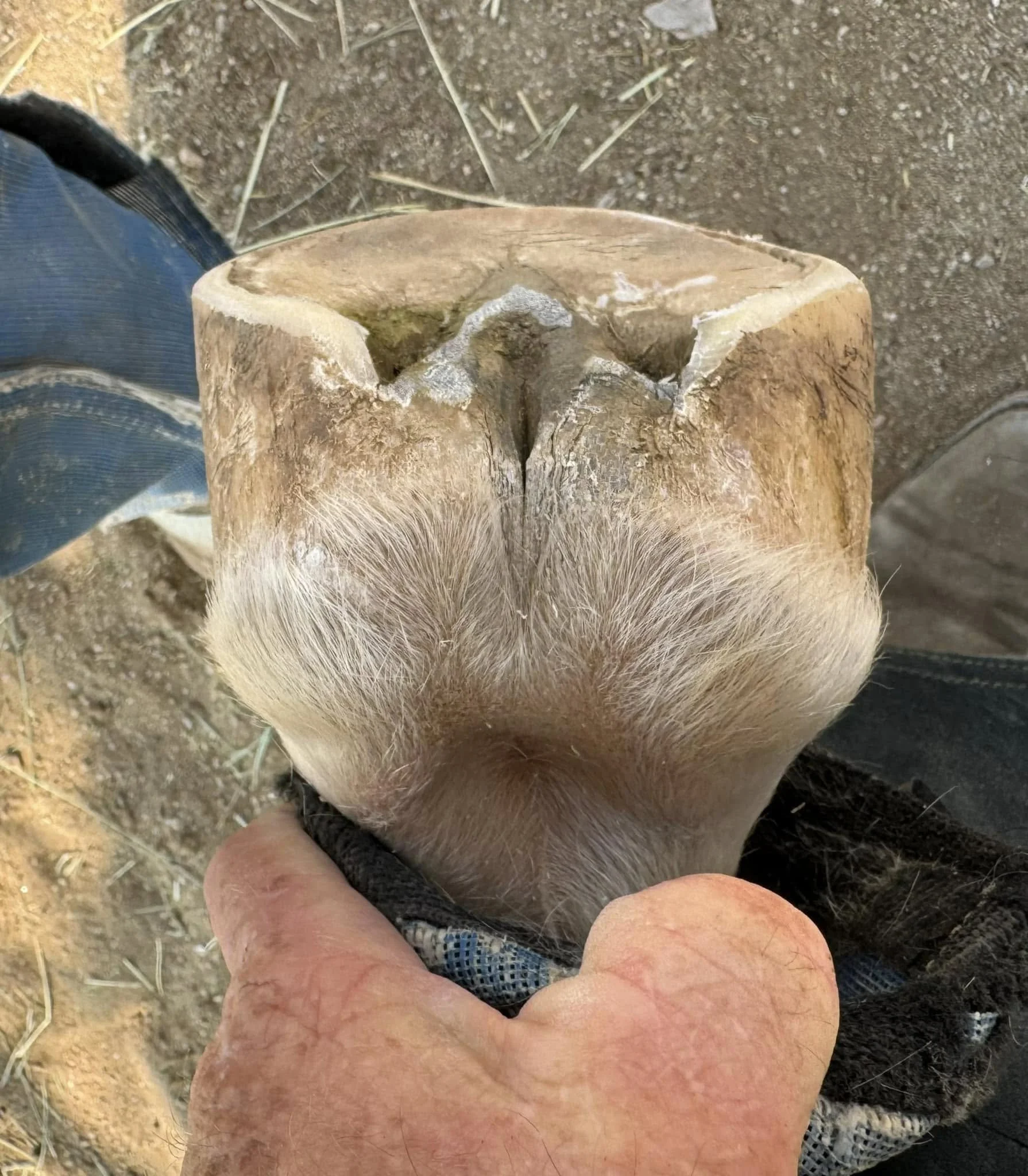
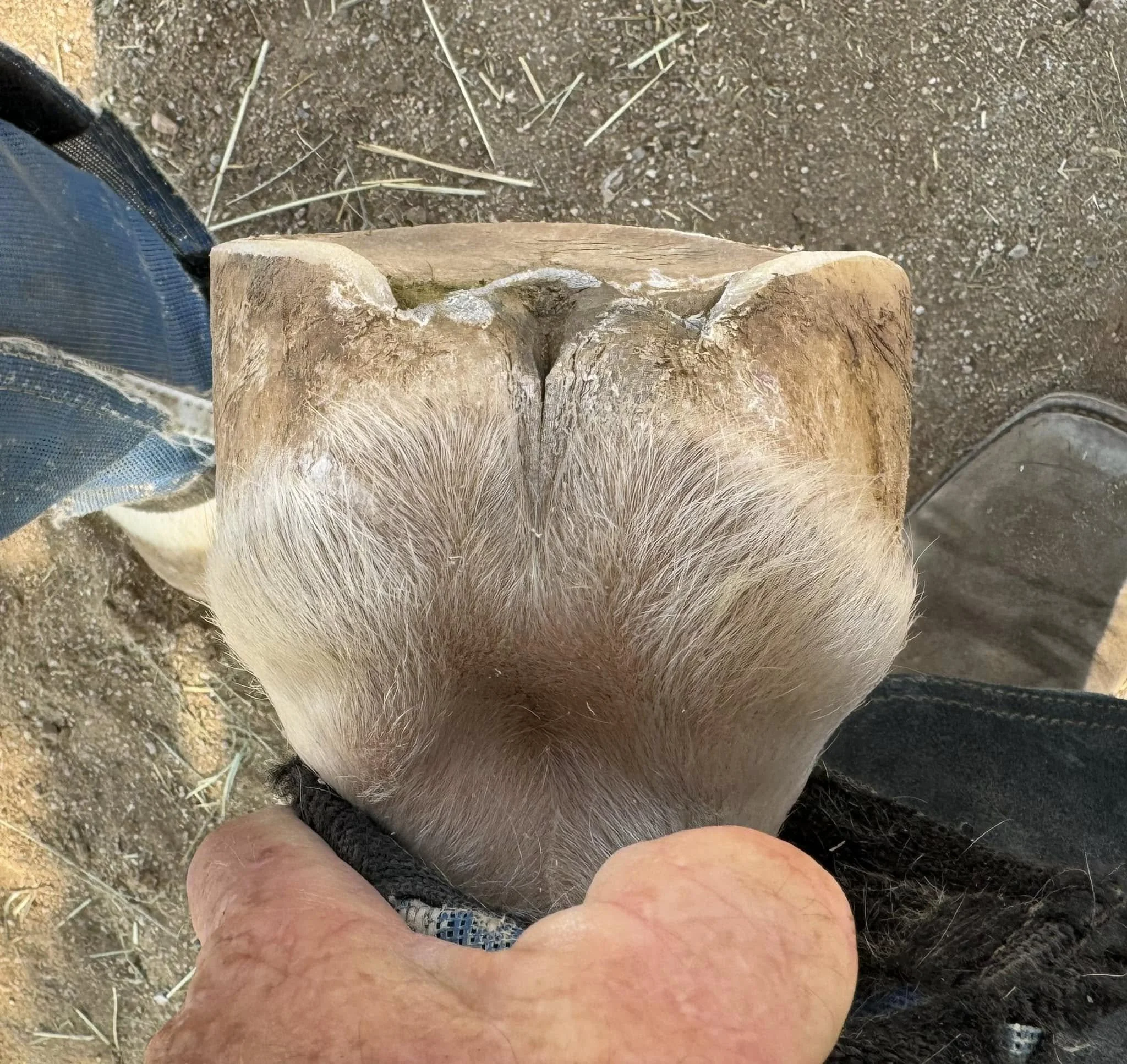
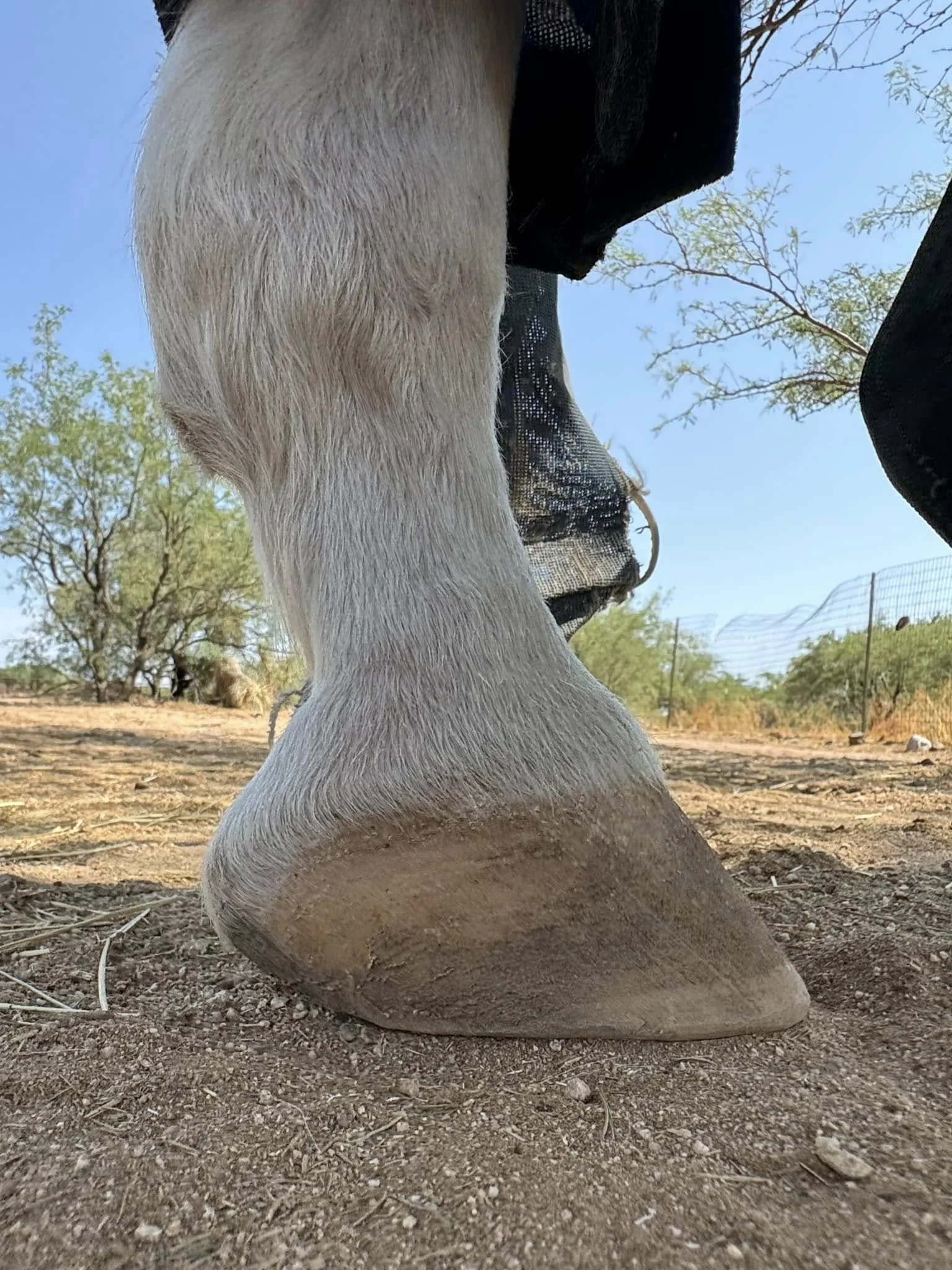
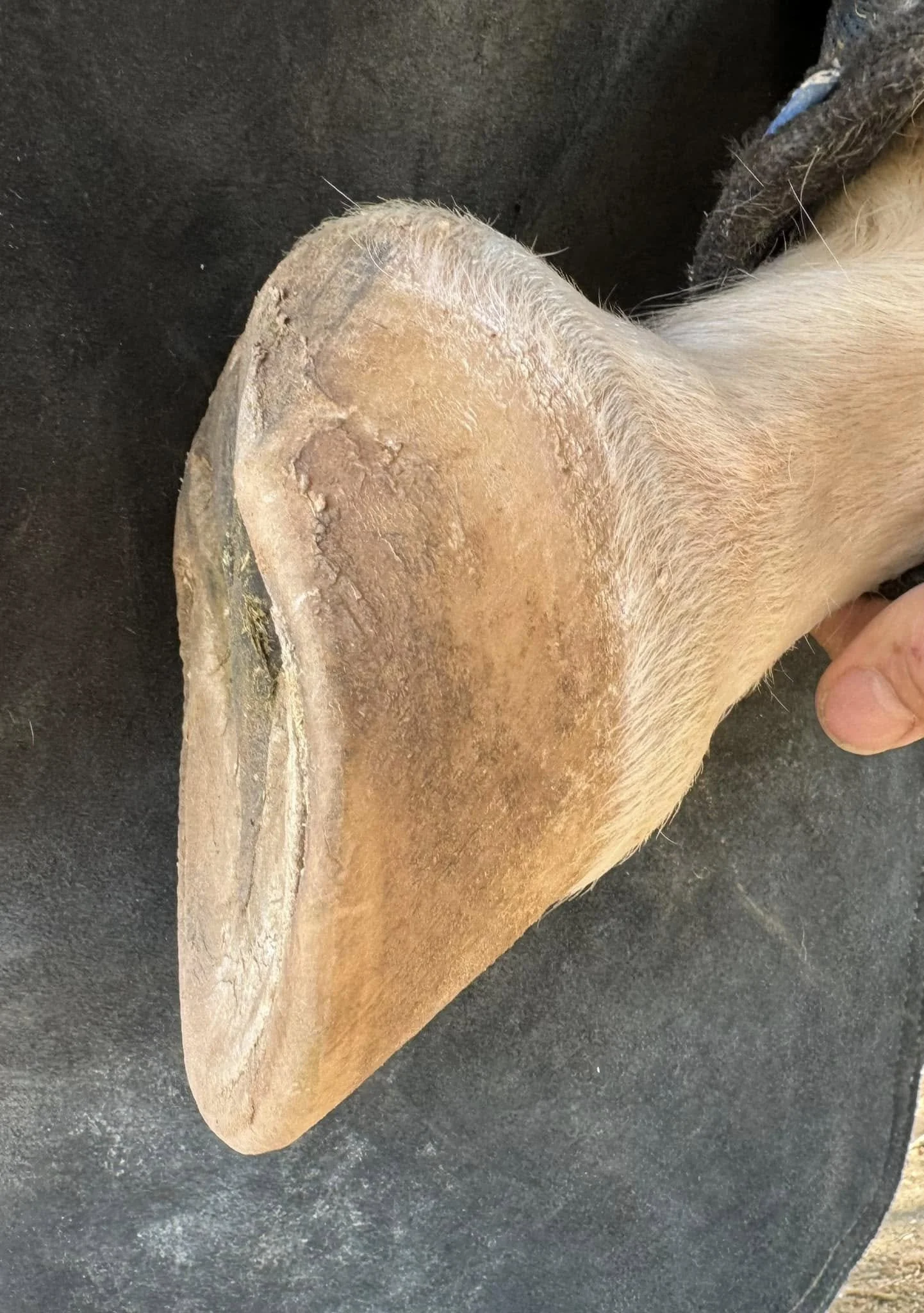
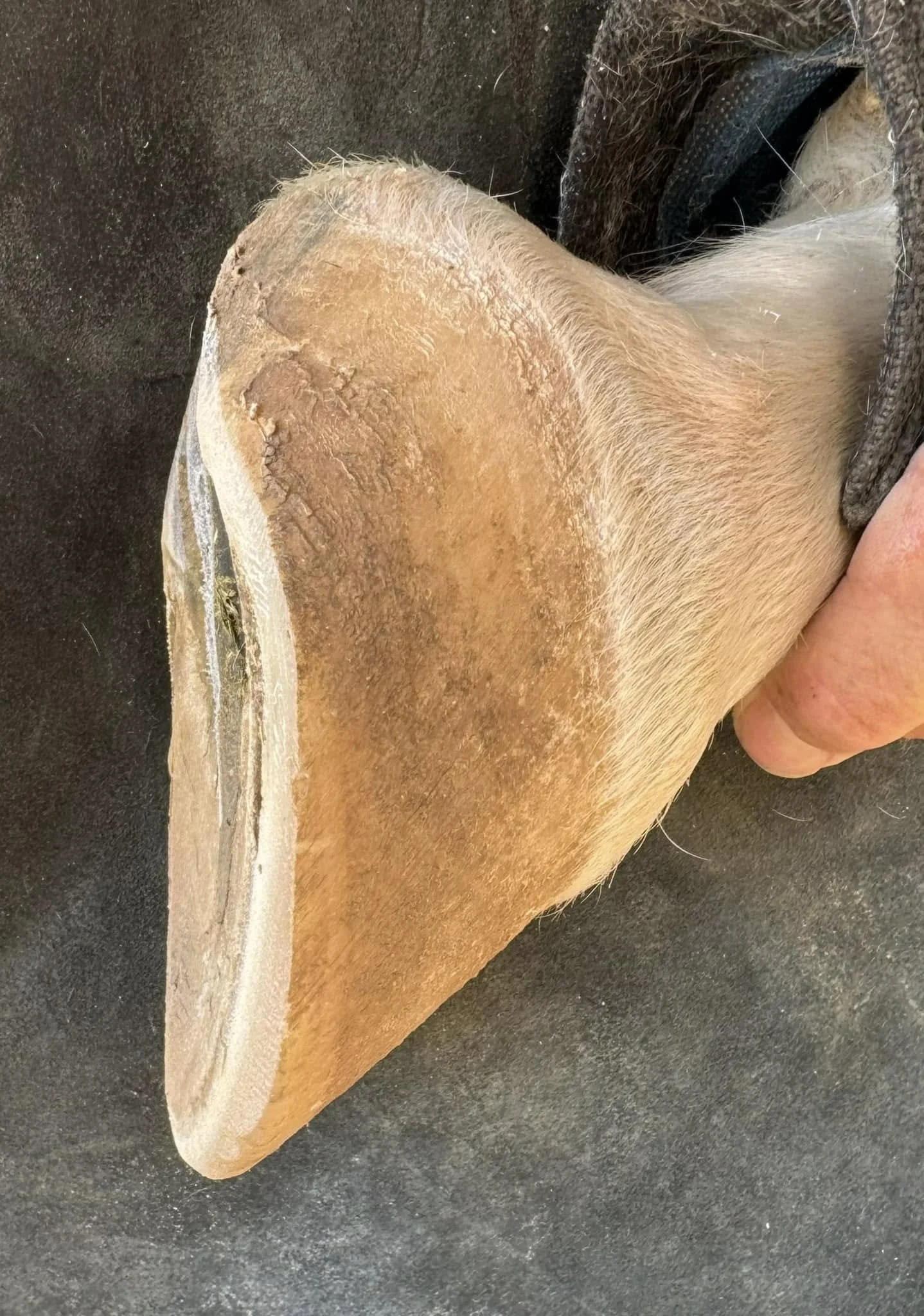
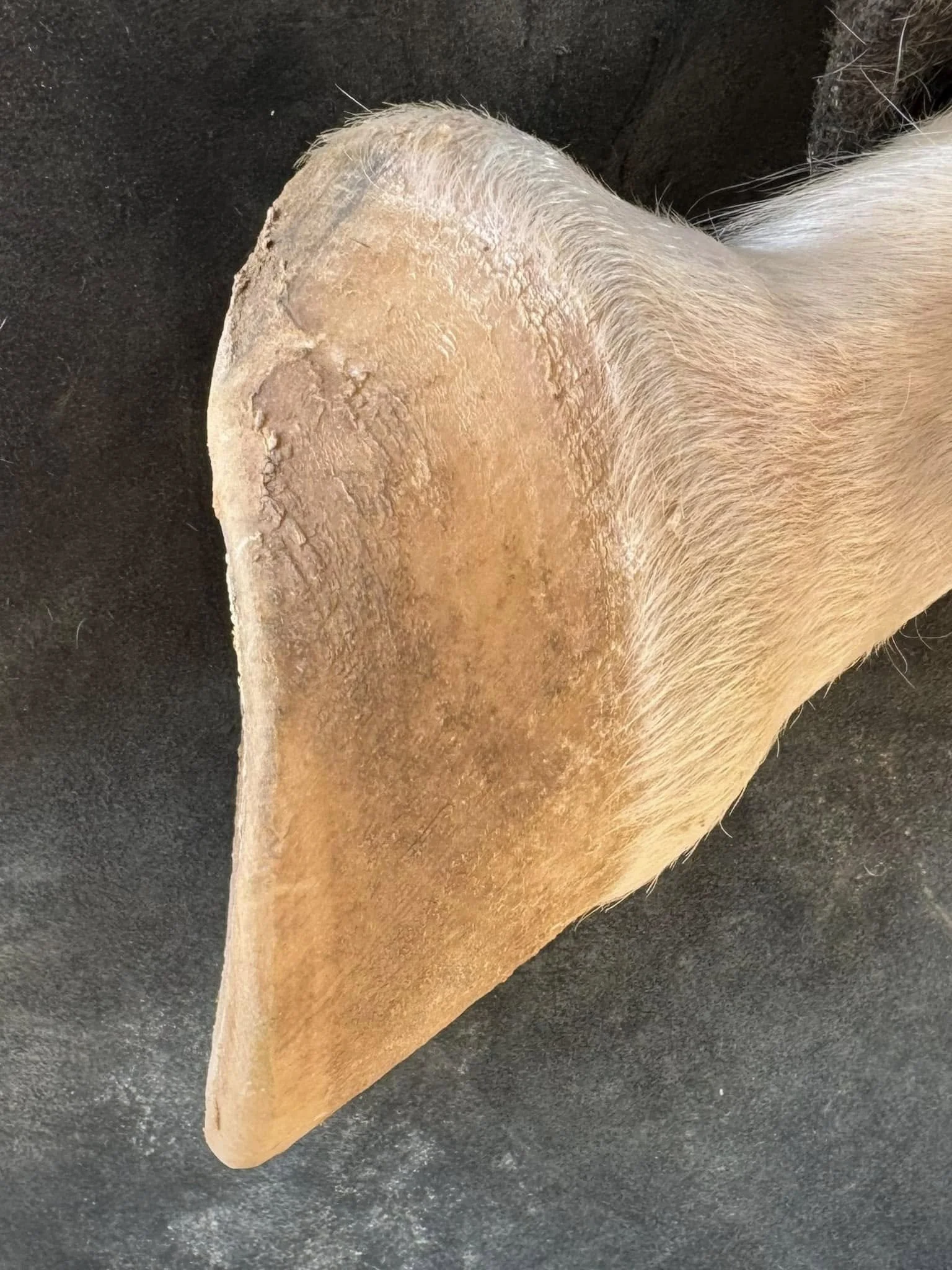
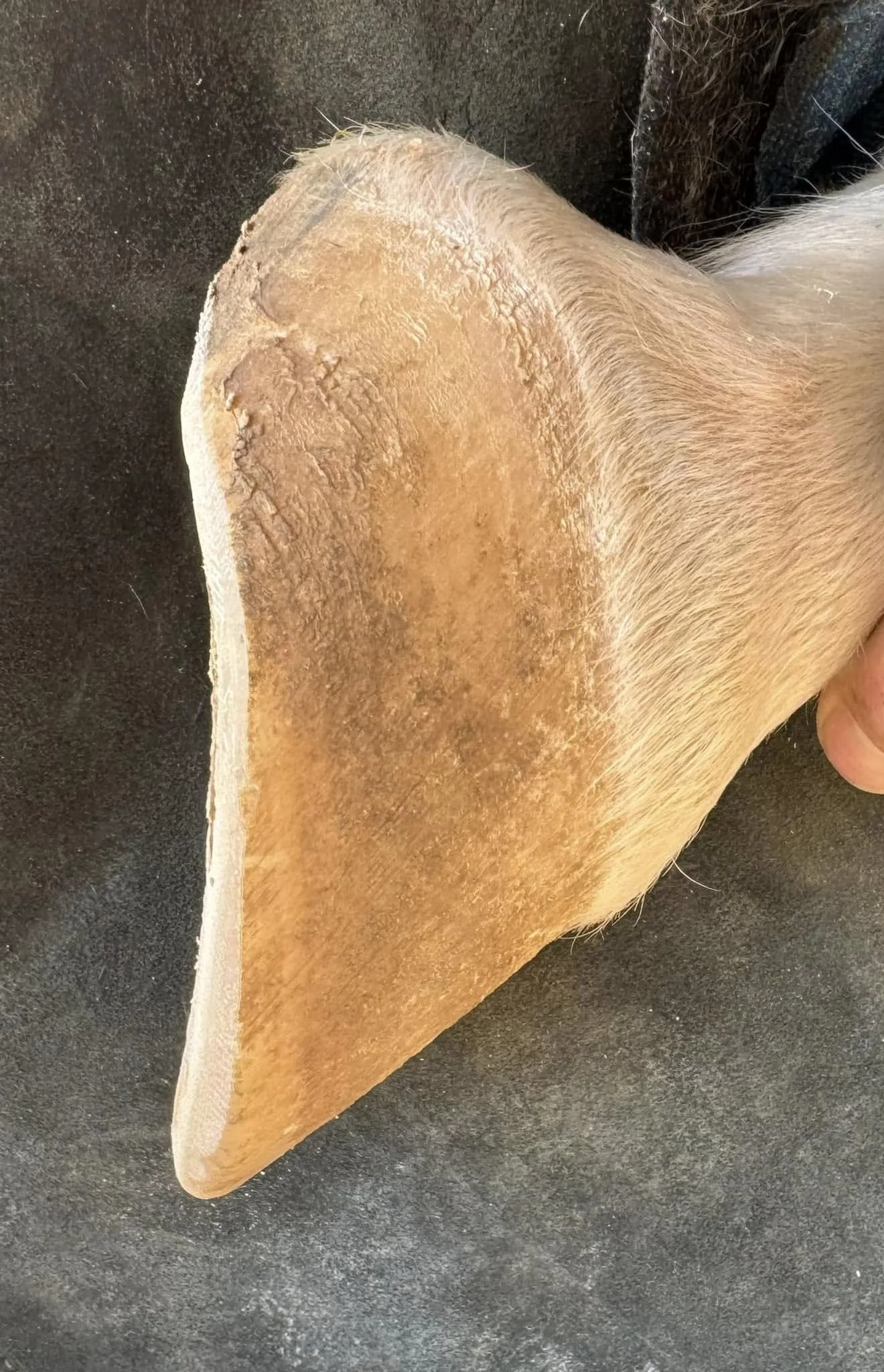
This is a short video taken around one year into Wynn’s rehab, after he blew an abscess.
There are over 200 videos in the Hoof Builders Video Library.