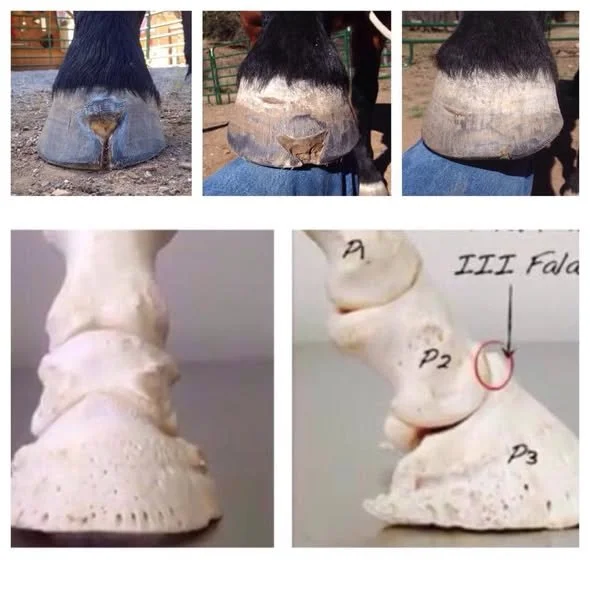
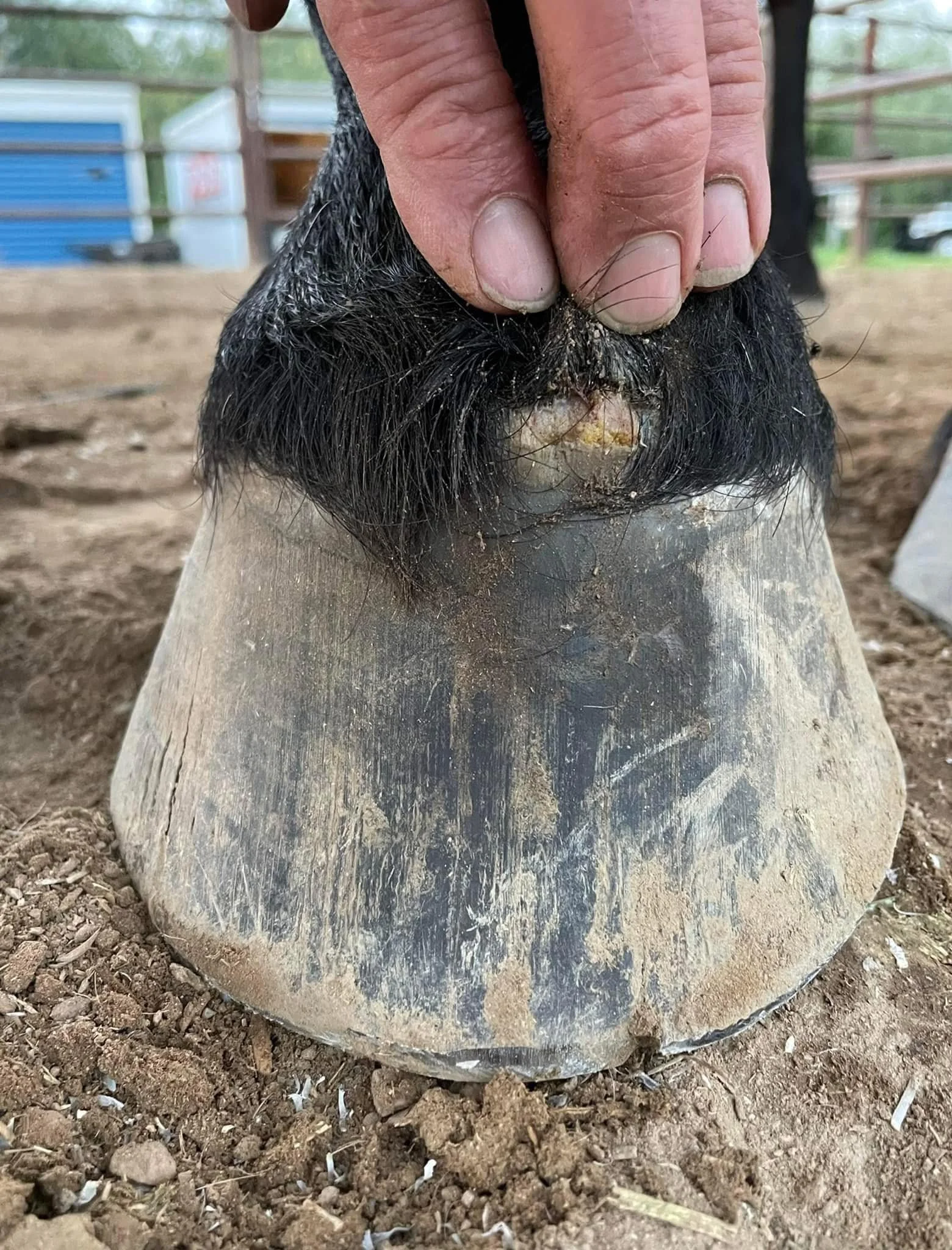
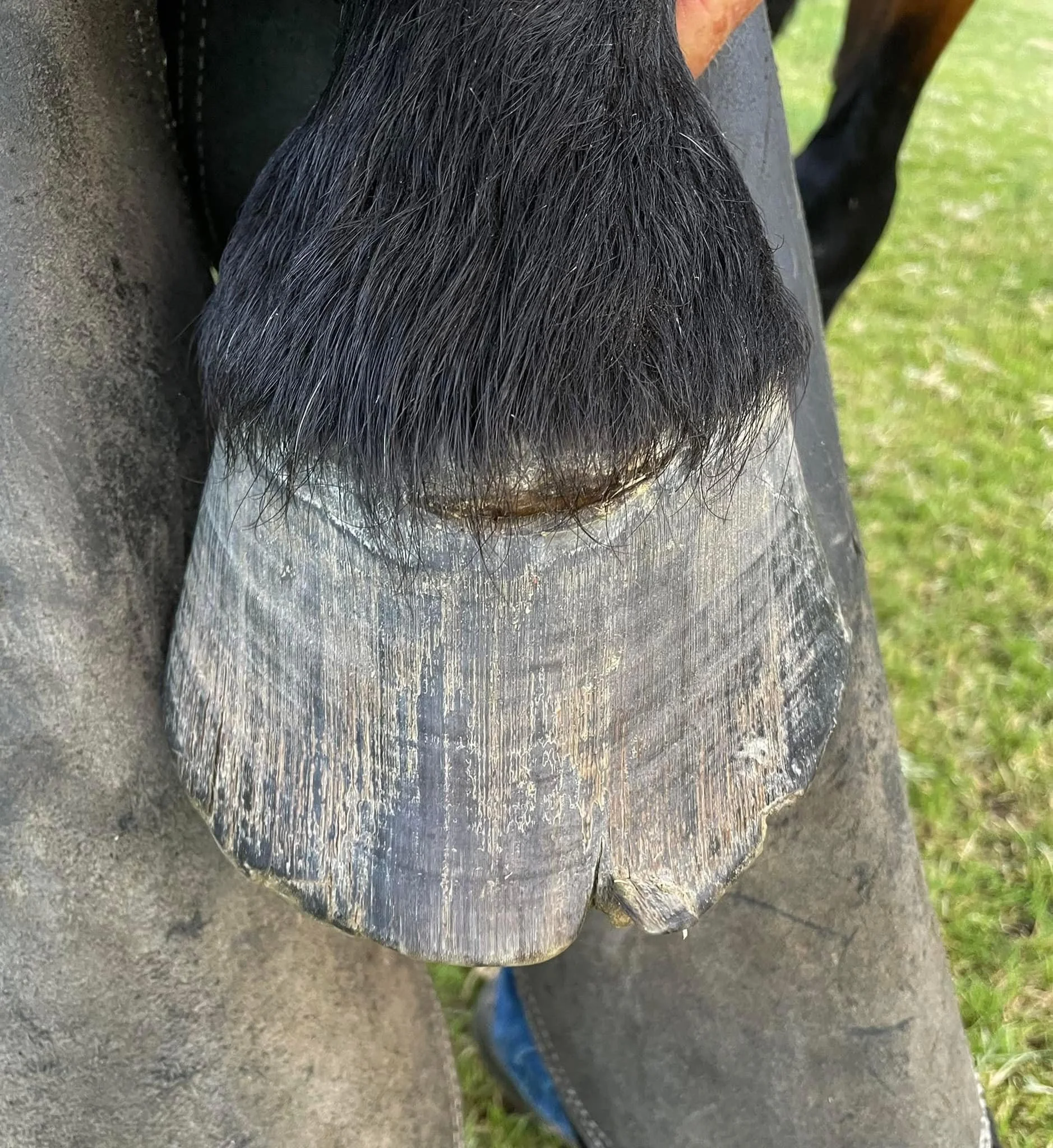
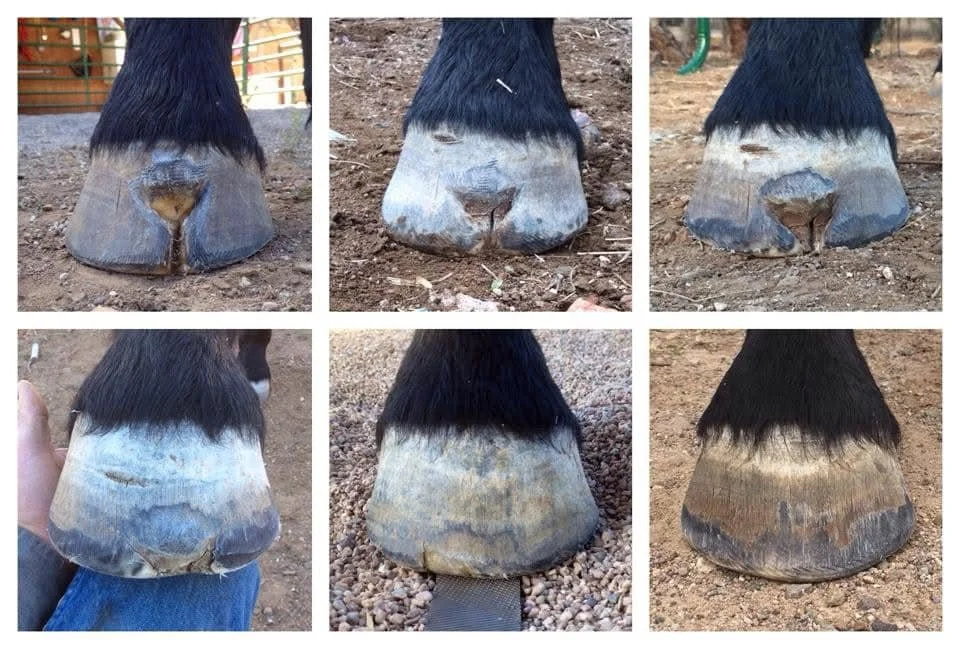
How does improper weight distribution cause WLD, wall cracks, abscesses, and possibly even keratomas?
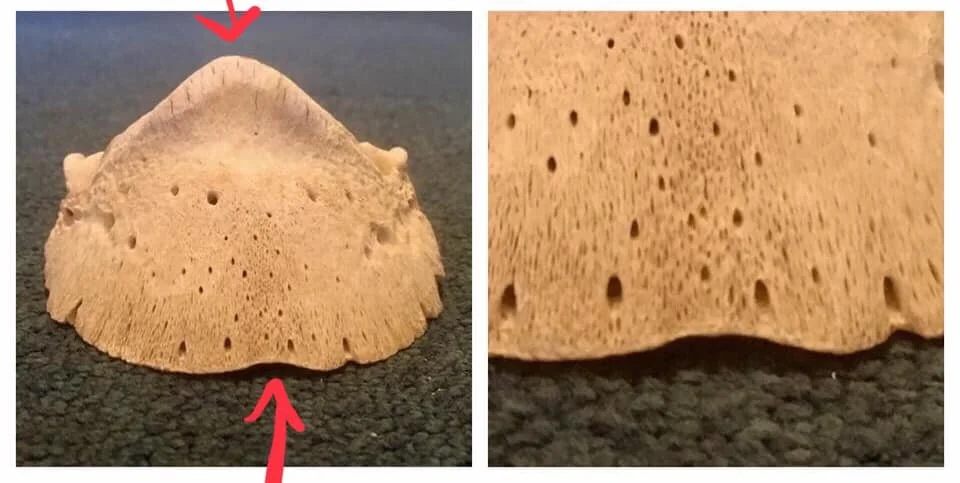
The space between the extensor process and the crena is a vulnerable area. Steel shoes and/or poor trimming adds more stress. The crena is a natural anatomical feature that should not be load bearing. Most domestic horses are chronic toe loaders with underdeveloped soft tissue due to steel shoes, poor trimming, and/or infrequent trim cycles. This will affect the lamina which is attached to the bone. The bone is affected less in the short term and more in the long term. The acute pressure from chronic toe loading causes more strain in an area that is already prone to wall cracks and separation. Long term toe loading causes erosion at the tip of the coffin bone and magnifies the divot at the crena. The surface of the hoof capsule just indicates the damage below the surface. Addressing these issues with any trimming at the front of the foot is only addressing the symptom. The remedy is trimming and shaping the back of the foot so the horse can take advantage of their highly regenerative soft tissue and build a brand new stronger foot. This shifts the majority of the weight bearing off of the toe and onto the heels, “floating” P3 and engaging the digital cushion and lateral cartilages.