Just Released
The term “retracted sole” has never really made sense to me, but I got in the habit of using it, for lack of a better one, and because it was commonly used. I think it’s very important to be specific with words, especially words that describe conditions that call for intervention. Words are meant for communication and communication can very easily end up becoming like the telephone game where the information gets distorted as it passes from one person’s perception to the next. I haven’t been able to come up with a term that describes what I think is actually occurring here, but I can try to describe it.
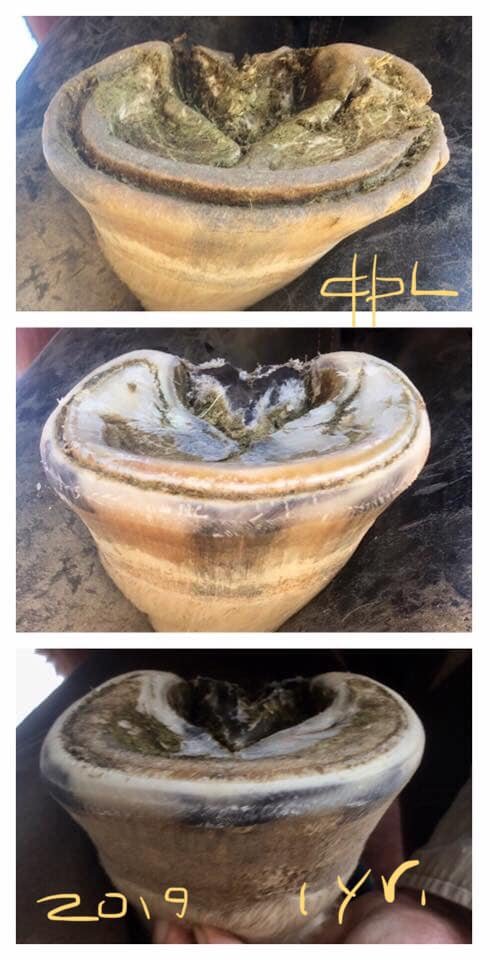
Sole thickness is hard to assess, regardless of whether you’re reading a radiograph or just reading the foot that’s right in front of you. There is an illusion that can easily distort judgement and hide the truth. It’s hard to tell the difference between live calloused sole and dead calloused sole...that is until the dead calloused sole starts to release on its own. This can be due to weather conditions such as wet to dry or vice versa. Sometimes an even layer will peel off and a beautiful smooth live sole will be revealed underneath. This typically happens to well balanced hoof capsules that are long over due for a trim or ones that have been trimmed well but just too conservatively. At other times, different parts of the sole exfoliate or loosen up and release at different rates. In the case of what’s formerly been described as retracted sole, the retained dead calloused sole is thick and firmly attached around the edges at the lamina but the live calloused sole is thin and has a flatter look in the bottom of the bowl. There can be a seamless transition from the collateral grooves to the peripheral edge of the sole giving an appearance of concavity. I refer to this as false concavity and it’s caused by toe loading. When conditions go from dry to wet this edge of dead sole can separate from the lamina all the way to the live sole attachment leaving the wall separated from the sole any where from a few mm to a cm or more. I see a correlation with the depth of wall separation and the border between the live and dead sole. Once it’s separated, chronic toe loading makes the dead retained edge of sole curl back over itself putting pressure on the thin live sole that is barely protecting the coffin bone. This can be exacerbated after the weather dries up. It’s just what skin does. In these cases, the dead retained sole doesn’t come loose or even show signs of delamination from the thin live sole so it just presents as sole. With the lifted edges causing an extremely cupped bowl, there is an illusion that the sole is being “sucked up”. I’m not sure there is any room for vertical displacement between the sole and the coffin bone except in cases of full solar abscesses. I’ve helped plenty of horses grow out of both of these conditions and I haven’t seen a reliable parallel. A more accurate description of what’s been called “retracted sole” would be “retained dead sole that’s lost its laminar connection and is curling in at the edges”. That’s pretty wordy, but the point is that it’s releasing at the edges, not necessarily retracting. This is a painful condition that needs to be remedied quickly and then watched so it’s prevented in the future.
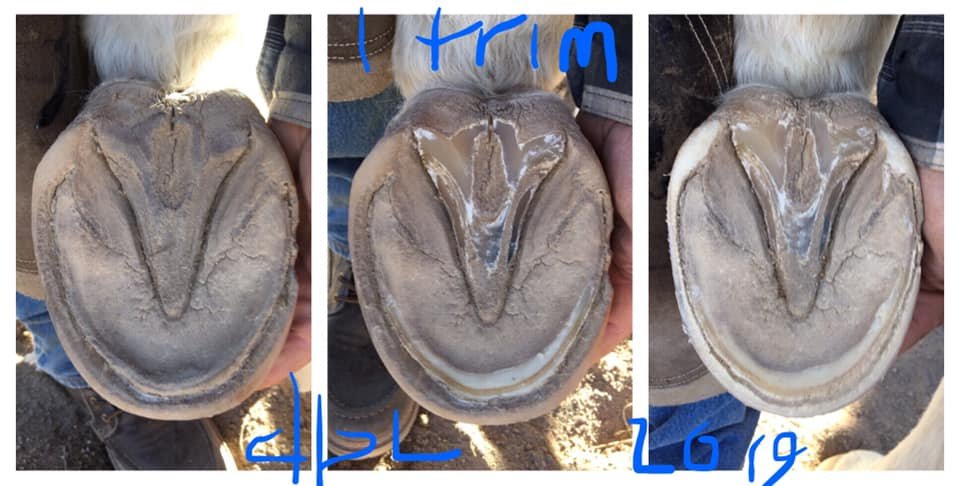
The best and quickest remedy that I’ve found so far is trimming the dead tissue as close to the live tissue as possible and finding the true shape of the foot within the available dead tissue without removing any live tissue. Leaving a thin even layer of dead retained sole until the live sole develops more true thickness always seems to keep horses more comfortable through the process. The way the back of the foot is addressed becomes more critical when this condition is present. In my opinion ( from experience ), this condition wouldn’t be there in the first place if the frog and heels were being shaped properly to encourage soft tissue development. Once the horse can comfortably lean back, I trim the curled dead retained sole with a knife to follow the live sole more closely. This exposes the extra wall length which I trim to be passive load bearing. I repeat this frequently until the back of the foot becomes sufficiently developed to take the majority of the weight bearing so the weight comes off of the toe and live sole can build true thickness with a stronger connection to the lamina and the delaminated, dead, retained hoof capsule grows all the way out.
Once the sole delaminates at the edges like this it’s likely to happen again. It’s just an indication that the inner structures are compromised. Chronic toe loading is almost always the culprit so building soft tissue at the back of the foot is almost always the remedy. I have not seen any limitations with this process. If I can keep a horse on a frequent trim schedule I can not only prevent this, but I can use it to build a better foot. For client’s horses it depends on my ability to accurately describe the condition to them ( so they are on board ) as well as describing the remedy. Then I’m just accountable for evidence based and timely results.
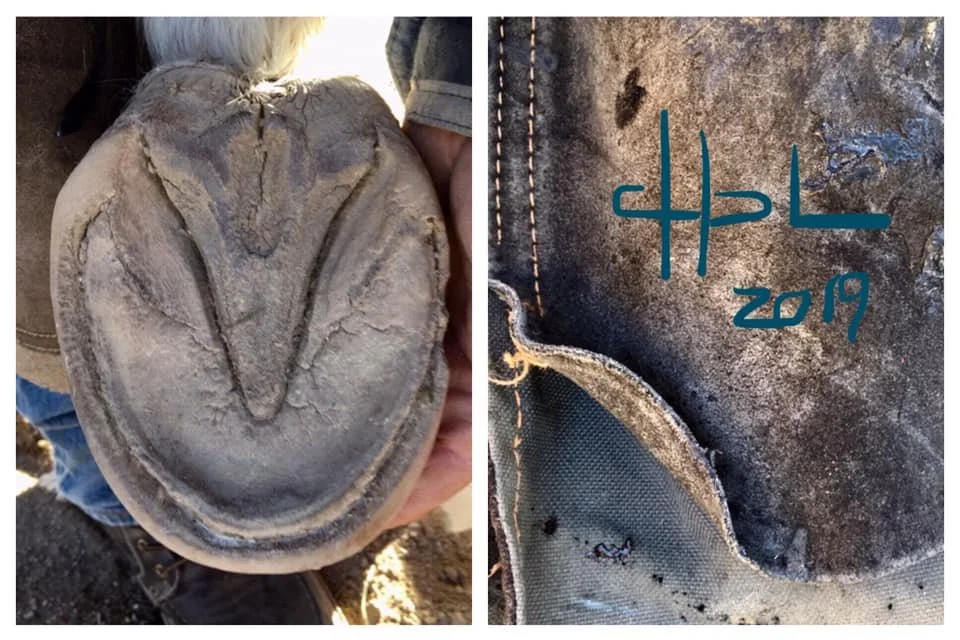
I still find pictures to be a more reliable way to communicate so I included one of my old trimming apron. The stitching has come undone and the edge of the leather panel has curled up.
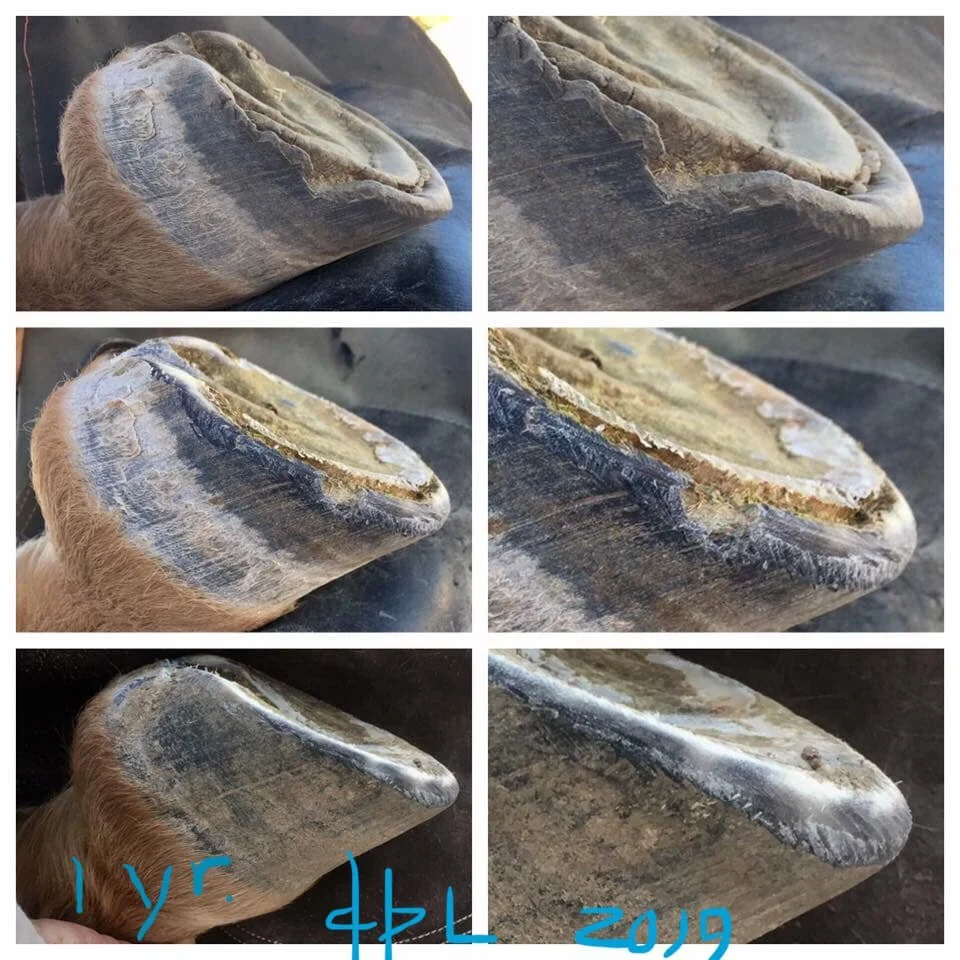
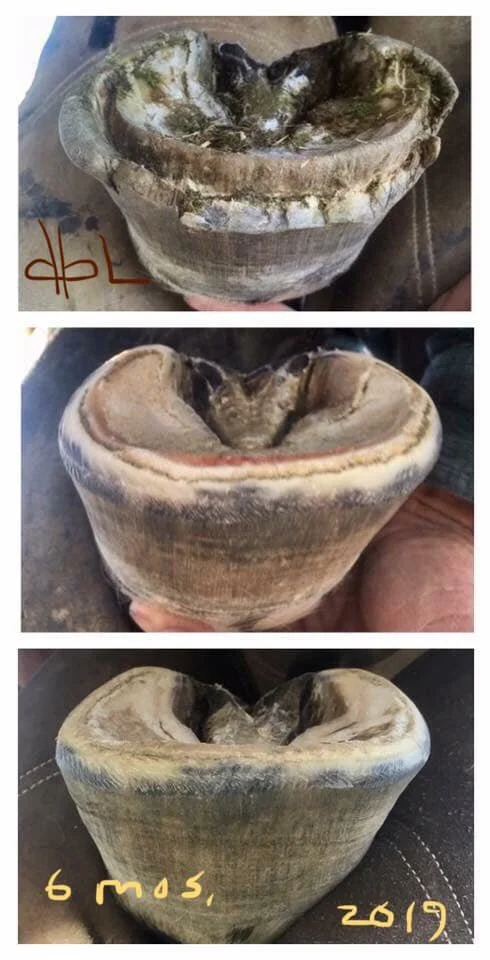
I also included a photo series showing how I trimmed that foot as well as some progress photos of other feet that had this problem.