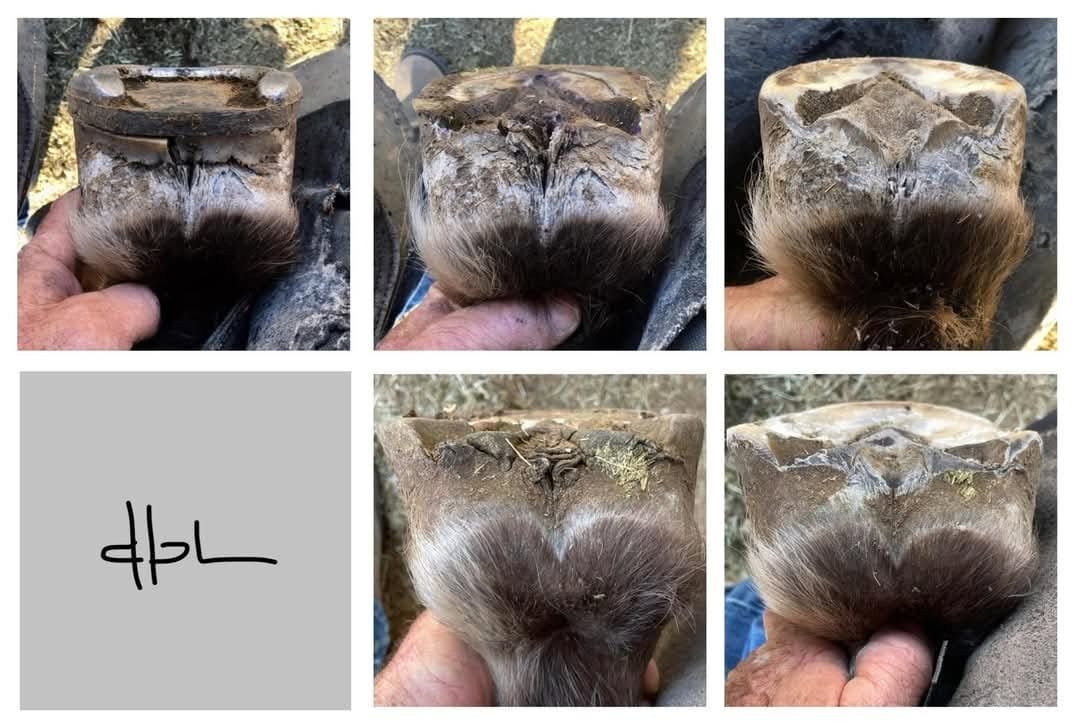
Heel Horn Height vs Soft Tissue Depth
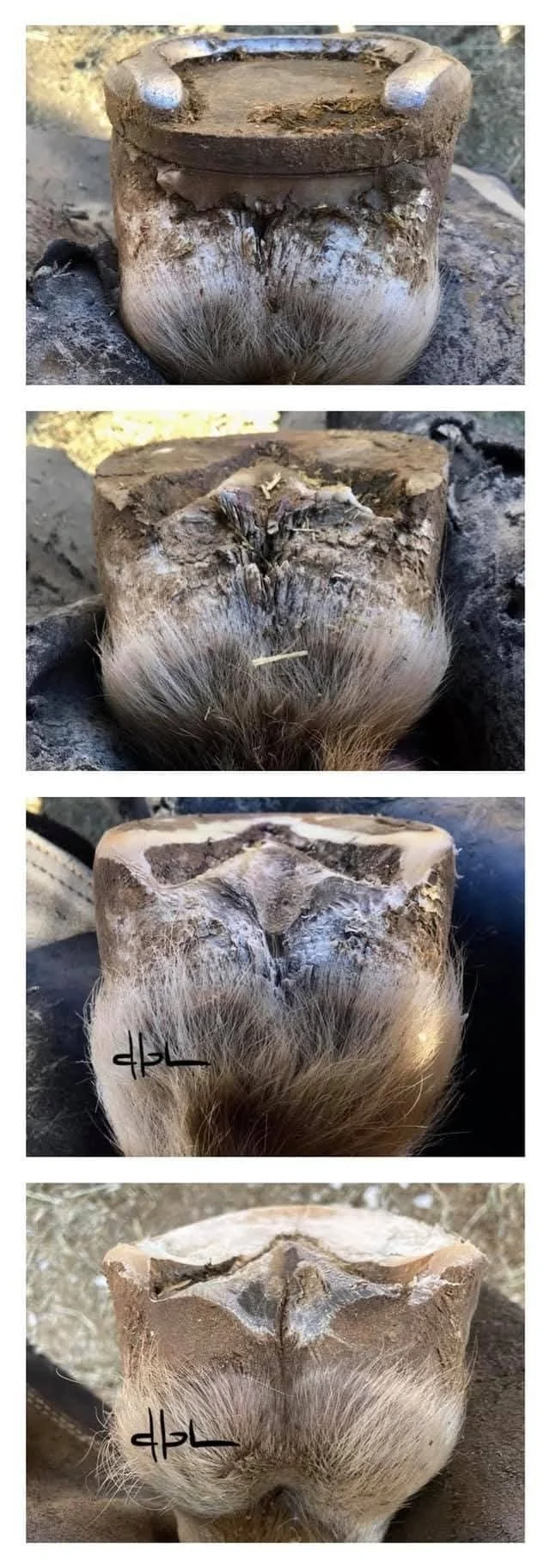
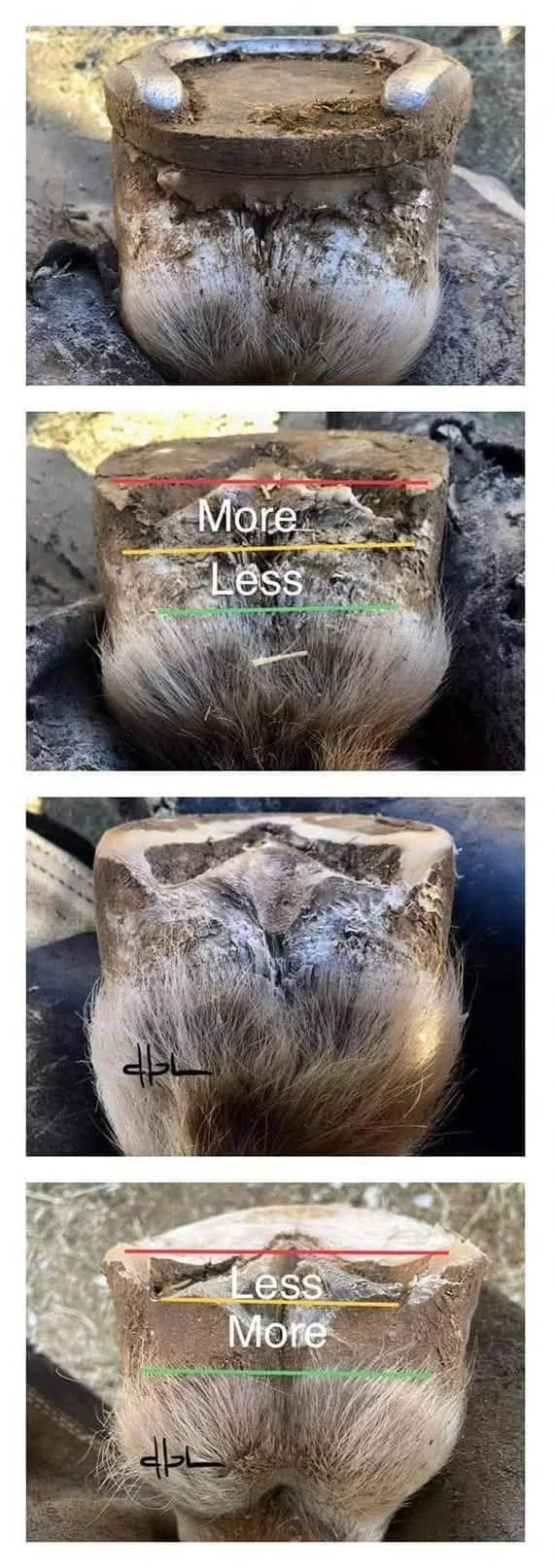
This 21 yr old TWH was retired and lame in shoes with wedge pads. The previous vet and farrier were trying unsuccessfully to improve his functional soundness by preserving dead heel horn height ( the space between the red and yellow lines in the caudal views ) and propping the back of the foot up even more with wedge pads. IMO, this may take tension off of the ddft and temporarily alleviate navicular pain but it also results in soft tissue atrophy and bone loss at the tip of P3…the definition of “robbing Peter to pay Paul.” In this case not only was it causing damage, but it wasn’t even giving temporary comfort.
I pulled his shoes 8 months ago and started trimming to build his soft tissue and live sole depth by aligning his outer solar structures more accurately with his inner solar structures. The improvements in soft tissue depth can be seen between the yellow and green lines in the caudal views.
It may be counter intuitive to lower an already low appearing heel, but true heel height isn’t in the heel horn. It’s in the soft tissue depth and the soft tissue development relies on properly shaped aligned , and loaded solar structures. It’s in the curves, not the angles. I’ve never seen steel shoes ( with or without wedge pads ) increase soft tissue depth. The flat trimming required to apply shoes securely inhibits the flexion needed to build live tissue depth and condition it to be strong enough to help support the horse’s weight. Without the naturally shaped “spring-like” palmar contours in the back, the horse leans forward on his toes crushing the sole, solar corium, and venous plexus between the shoe and the coffin bone. The chronic pressure and the lack of blood flow causes the coffin bone to erode over time. The horse compensates for bone loss and “live sole” depletion by retaining “dead sole.” The difference isn’t always obvious and simply appears as improved “sole depth” to someone relying on a radiograph to determine P3’s position within the hoof capsule. When the shoes and pads come off there can be a considerable amount of prolapsed dead sole with poor ( or no ) connection to the hoof wall and minimal live sole thickness underneath. This puts the horse and the farrier in a vulnerable position. In my experience, this approach is degenerative, but some horses remain standing longer than others.
In many cases the shoes can be pulled and the horse can be rehabilitated in spite of the damage at the front of the foot. The reason this is possible is due to the highly regenerative qualities of the soft tissue in the back of the feet. The only silver lining to chronic toe loading that I can think of is the back of the foot is in storage…so to speak. Once the majority of the weight bearing is comfortably transferred to the back of the foot, the horses can heal themselves with their own weight. This is what I refer to as, “using a horse’s weight for them,
instead of against them.”
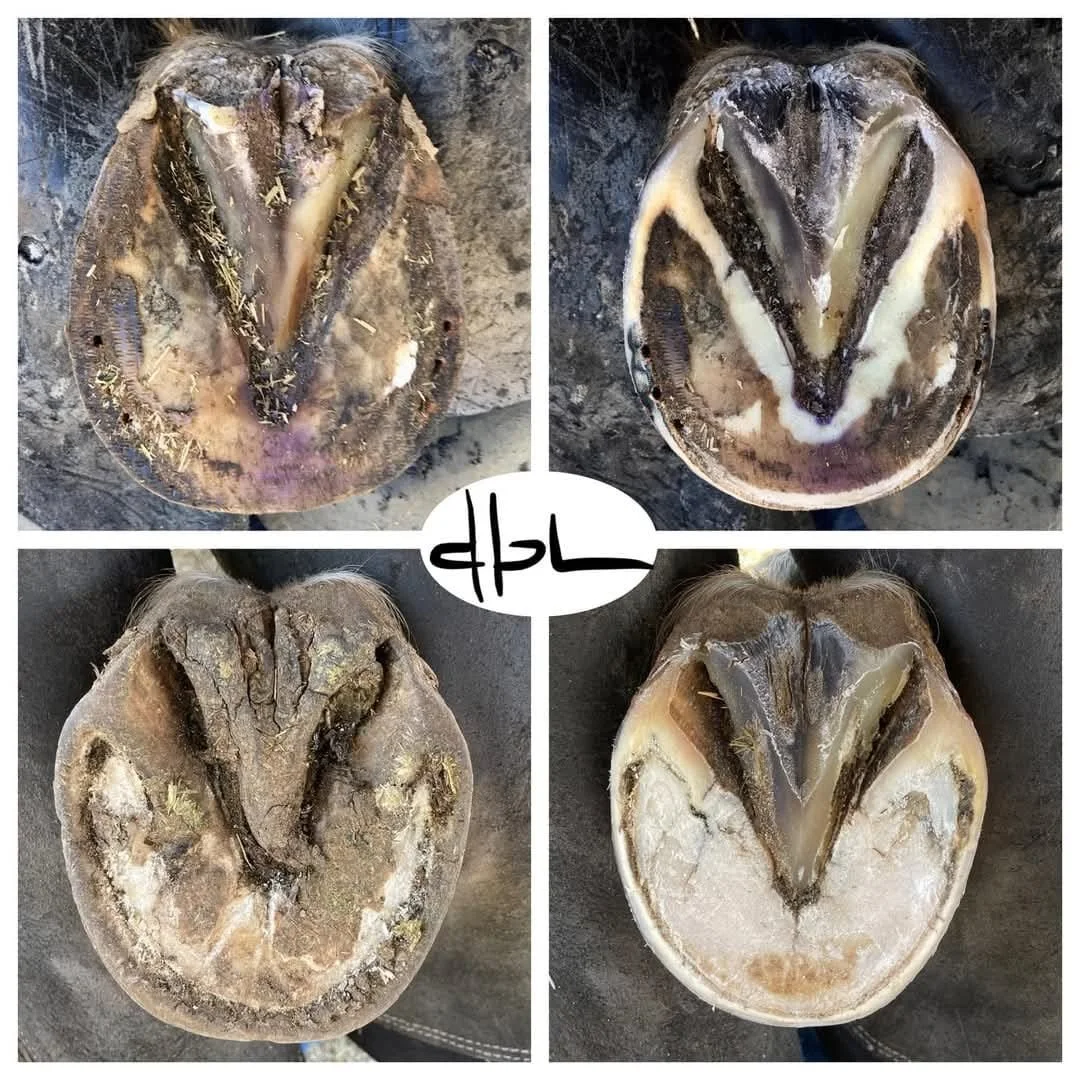
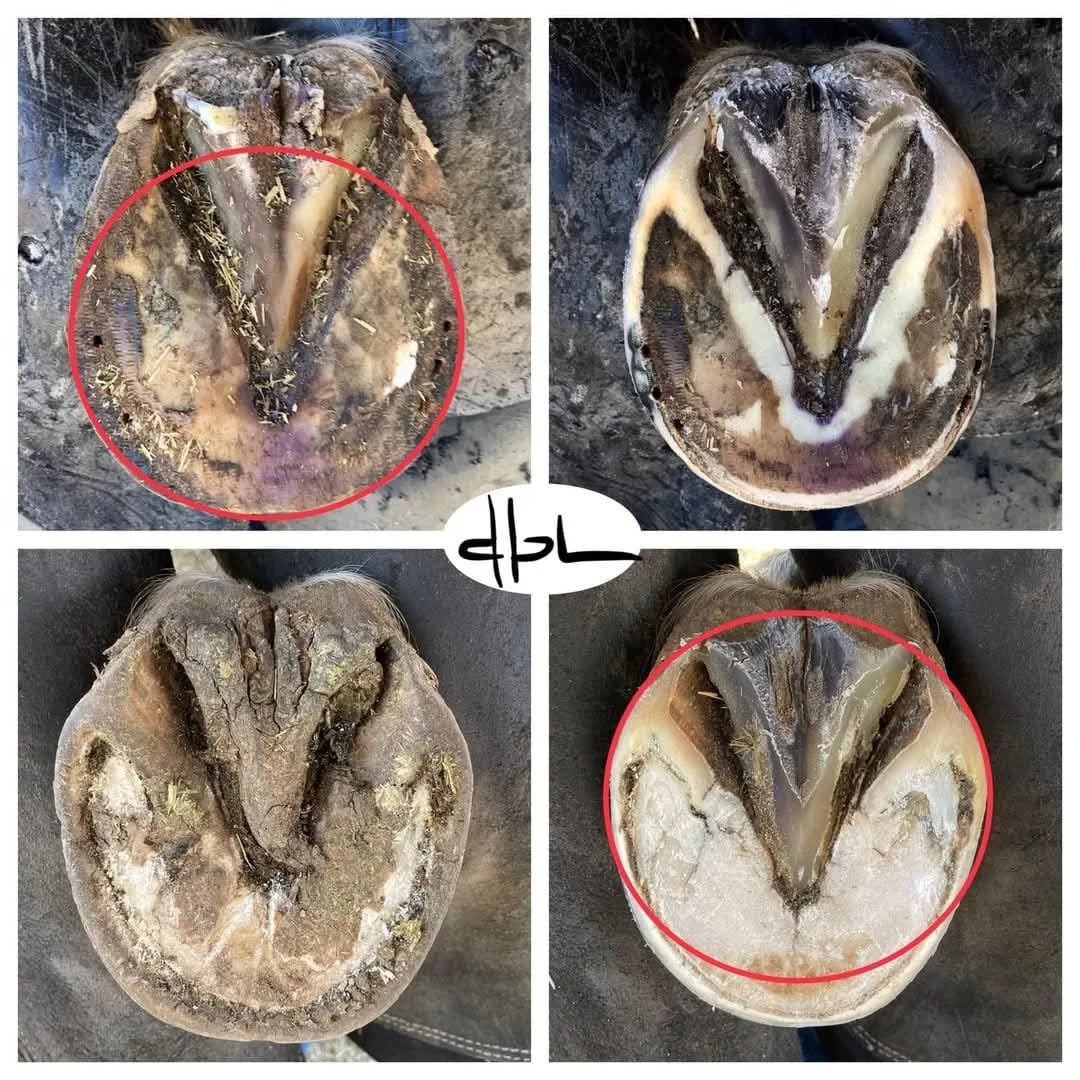
These solar views show the majority of the weight bearing being shifted from the front of the foot to the back of the foot over 8 months of regenerative trimming ( red circles ). This coincides with the space between the yellow and green lines on the caudal view.
This horse is slowly coming out of retirement and going back out on light trail rides with his owner. Riding again wasn’t the goal, but I believe the owner and the horse have been pleasantly surprised. Trail riding was something they both enjoyed and this horse did not like being left behind. He is on the path to recovery.
Top pics are pre trim/post trim Dec 2020.
Bottom pics are pre trim/post trim July 2021