Behind Bars
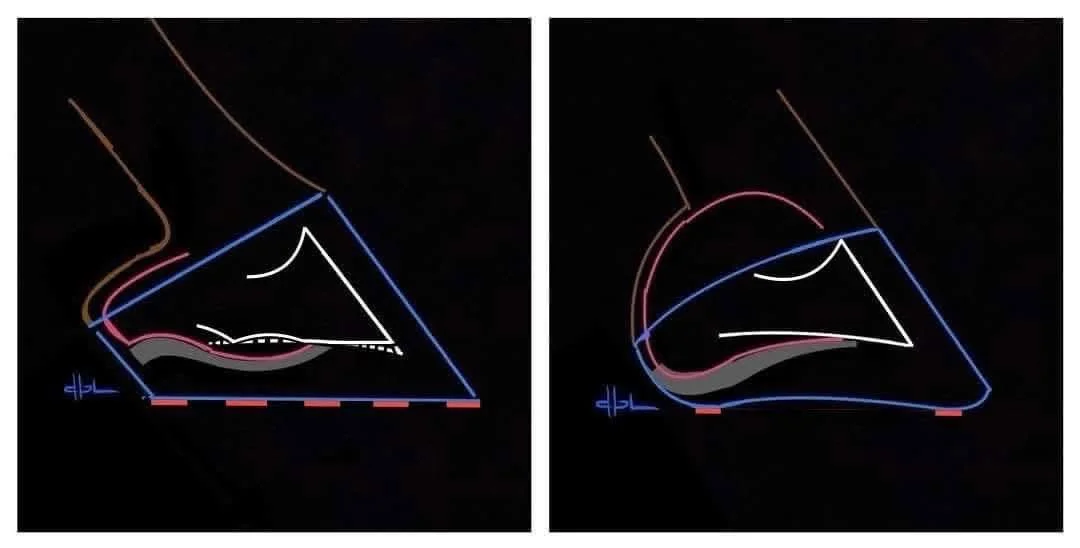
When the majority of the weight bearing is behind the bars, on heels that are properly contoured around the insensitive live sole at the seat of corn, it doesn’t matter so much whether they’re long, short, or flush with the rest of the insensitive live sole. A properly developed hoof will have at least 10 mm of true sole concavity. As long as the inner wall is the primary support (especially at the ground contact points), the bars are not a load bearing structure. It’s when they become load bearing that it becomes a problem.
This is why steel shoes have been used to provide temporary functional soundness. They raise the foot and give the bars and frog a little more room to grow when you’re over extending the trim schedule. The problem with steel shoes is that they’re flat/inflexible and they put too much of the load on the laminar and coronary coriums. They’re expensive so that promotes long schedules, and long schedules prevent frequent touch ups that may be necessary for a constantly growing system. This just allows you to use your horse while causing more damage in different areas.
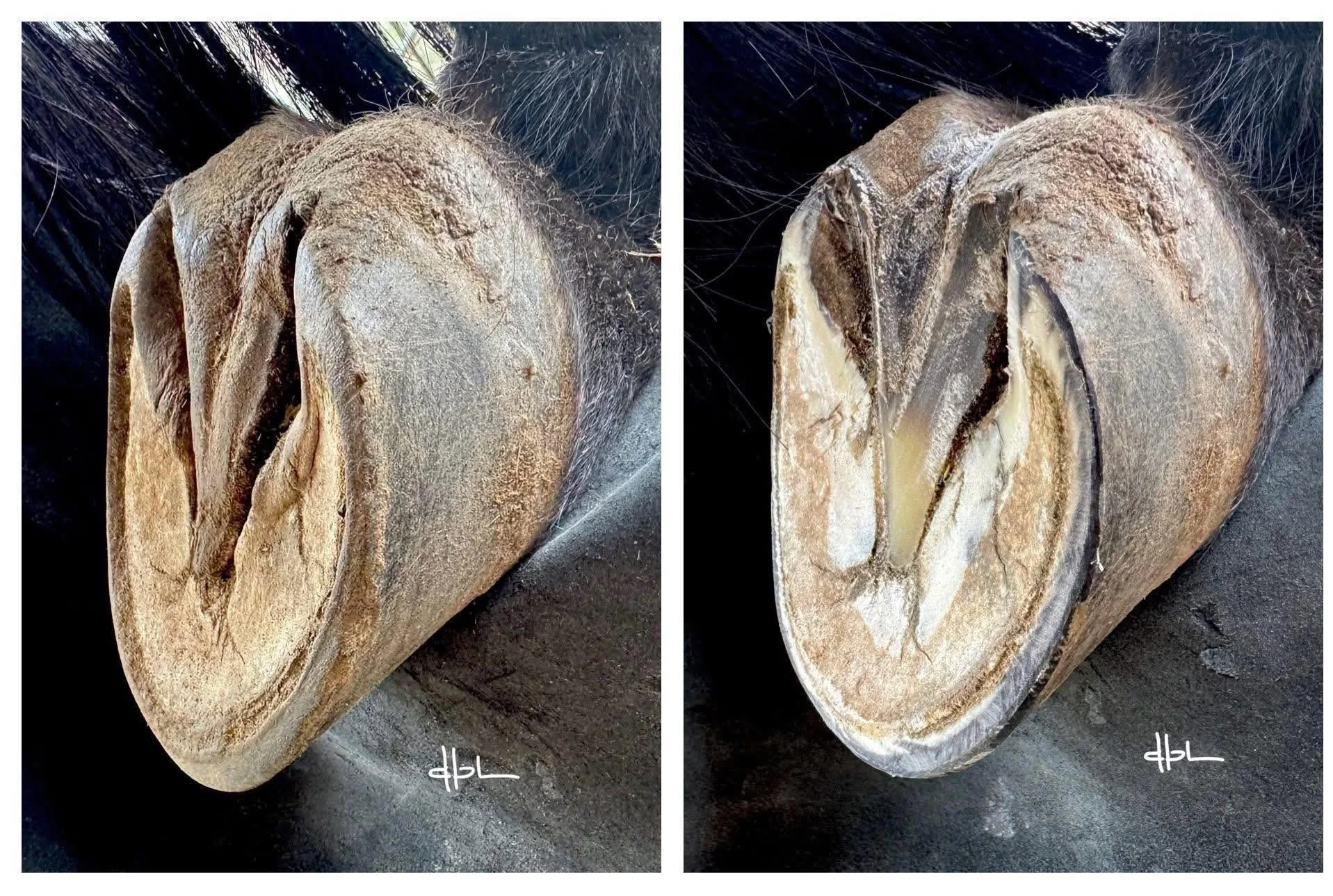
In an optimally built hoof, the bars are flush with the sole like the rest of the wall. They’re just an extension of the wall on the inside of the coffin bone wings. They’re not that much different than the heel quarter walls. The wall just wraps around the return of the heel. Due to the domed shaped insensitive live sole (in a properly built hoof) the bar side of the seat of corn is higher off the ground than the heel quarter side. This is a very important detail to understand and respect if you’re trying to reduce damage and increase comfort/structural soundness.
Just arguing about whether to trim the bars or leave the bars, or arguing about chopping long toes or leaving long toes is not helpful. It shows a lack of understanding of the biomechanics of a properly functioning hoof, the difference between structural soundness and functional soundness, and the difference between a hoof with an elevated internal arch and a collapsed internal arch.
The goal is to keep the majority of the weight behind the bars, over the heel contact points, so the bars can work as an internal bridge instead of an external load bearing wall.
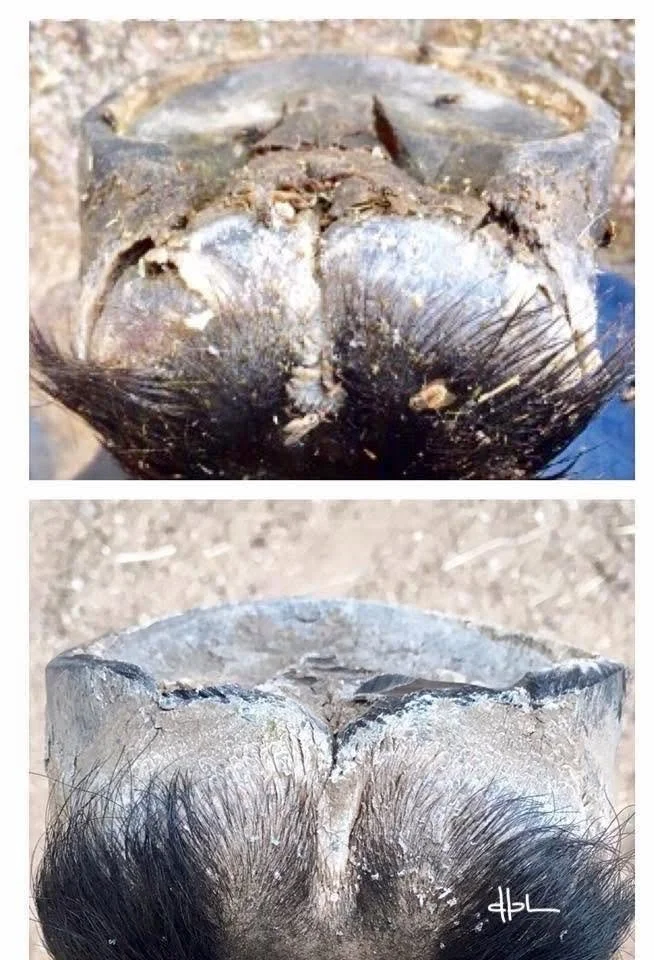
Many people get hung up on the bars because they don’t understand the shapes of the palmar contours that are behind the bars.